
Table of Contents
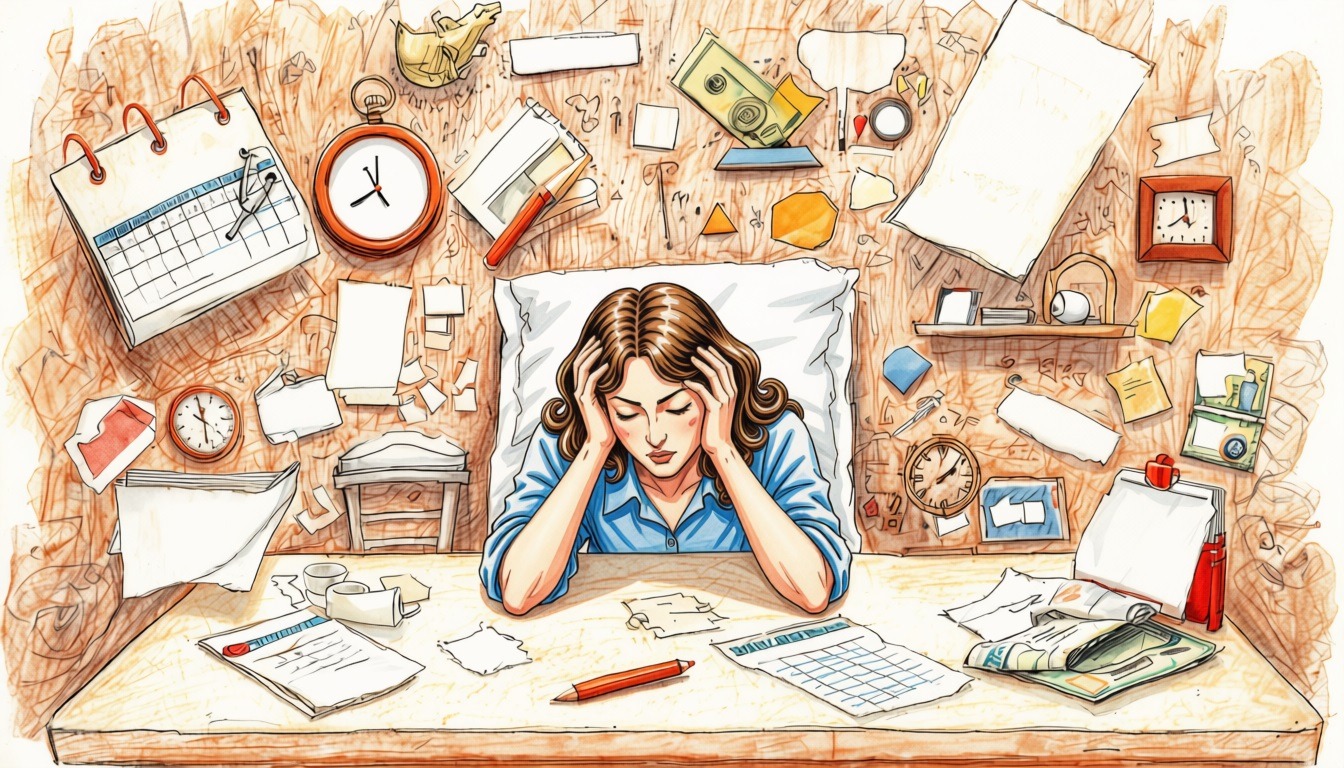
There comes a point in many people’s lives when the mirror starts to feel louder than the mind. You wake up and check your face before you check in with your feelings. You think about how you look before you think about what you need. You measure the day by angles, clothes, lighting, bloating, compliments, photos, silence, and whether your reflection seems “acceptable” enough to be seen.
That kind of living is exhausting.
And yet it is also strangely normalized. We are surrounded by messages telling us that appearance is not just something we have, but something we are. In that environment, it becomes easy to confuse self-awareness with self-surveillance, self-care with self-correction, and confidence with successful presentation.
Research on self-objectification, body image, and social media appearance preoccupation suggests that when appearance becomes overly central to self-evaluation, people are more likely to monitor themselves from the outside, compare more, and feel less psychologically at ease in their own bodies.
At the same time, work on self-connection, self-compassion, positive body image, self-concept clarity, and authenticity points in a more healing direction: people tend to do better when they know themselves more clearly, treat themselves more kindly, and live in alignment with values that go beyond looks.
This article is not about pretending appearance does not matter at all. It does matter in the social world. It affects how we feel, how we are perceived, and sometimes how we are treated. But it should not be the entire center of your identity. Your face is not your full biography. Your body is not your only offering. Your worth is not supposed to rise and fall according to lighting, symmetry, weight, youth, or approval.
The goal of this 10-day practice is not to make you “love how you look” every second of the day. For many people, that is too much pressure. A more sustainable starting point is this: to remember that you are a whole person even on days when you do not feel beautiful, polished, admired, or photogenic. That shift is closer to body neutrality, authenticity, and self-connection than to performance-based self-esteem. It is gentler, sturdier, and far more livable.
How do you reconnect with yourself beyond appearance?
You reconnect with yourself beyond appearance by shifting attention from how you are seen to how you actually live, feel, value, choose, and relate. In practice, that means reducing appearance-based self-monitoring, strengthening self-compassion, clarifying your identity and values, and creating daily rituals that help you experience your body as a place you live in rather than a project you must constantly manage.
Why appearance can become the language of self-worth
When appearance becomes the main lens through which you interpret your value, life narrows. You do not simply have a body anymore; you manage an image. You do not simply get dressed; you calibrate your acceptability. You do not simply go outside; you prepare for evaluation.
This happens for understandable reasons. Many of us were praised first for being pretty, neat, slim, stylish, youthful, or “well put together” long before anyone taught us how to identify a need, recover from shame, or define ourselves internally. If appearance was one of the earliest ways you received attention, approval, safety, or belonging, it makes sense that your nervous system may still treat it like a survival category.
Research in body image and self-objectification consistently shows that appearance-focused environments can intensify comparison, body surveillance, and dissatisfaction. Social media appearance preoccupation is especially tied to self-objectification and poorer body image, while idealized norms can deepen shame and turn the body into a site of constant evaluation.
But there is another cost that is talked about less often: the erosion of inner orientation. When you are overly trained to look at yourself from the outside, you can slowly lose contact with the inside. You may know how you appear, but not how you feel. You may know what looks good on you, but not what is good for you. You may know how to present yourself, but not how to return to yourself.
That is why reconnecting beyond appearance is not a superficial “confidence” project. It is identity work. It is emotional work. It is relational work. It is, in many cases, grief work too, because you may have to grieve the version of you that believed being lovable required being visually impressive.
The real shift this practice is trying to create
Here is the movement we are making over these 10 days:
Old loop: appearance cue → comparison → self-correction → temporary relief → renewed insecurity
New loop: inner cue → awareness → acceptance → aligned action → steadier self-trust
This is not anti-beauty. It is anti-reduction. It is the decision to stop reducing a human life into a visual score.
Your 10-day reconnection map

Before You begin
Do not aim to become a totally different person in 10 days. Aim to become more available to yourself. The point is not to erase insecurity. The point is to loosen its authority.
A surprisingly effective way to do that is not by obsessing harder over confidence, but by building self-connection. A useful framework describes self-connection as three things working together: awareness of oneself, acceptance of oneself, and alignment between inner knowledge and outer life. That is exactly what this article is designed to help you practice.
Day 1: Notice the mirror mind
Your first task is not to fix anything. It is simply to see how often appearance interrupts your relationship with yourself.
For one full day, keep a quiet note in your phone or notebook and record every moment when appearance becomes the main channel through which you interpret the present moment. Do not overthink it. Just notice. “Saw my reflection in the elevator and felt my mood drop.” “Changed outfit three times before a simple errand.” “Checked my face on camera instead of listening in the meeting.” “Did not enjoy lunch because I felt bloated.” “Felt more confident only after someone complimented me.”
This practice matters because awareness comes before change. Many people assume they have a body image issue only when they feel dramatic self-hatred. But often the deeper problem is chronic mental occupation: how much of your attention gets siphoned away from life and redirected into monitoring how you look. When that pattern becomes ordinary, it becomes invisible. Naming it is the first interruption.
By the end of the day, review your notes and ask: What tends to trigger the mirror mind most—reflections, photos, other people, specific clothing, social media, hunger, fatigue, dating, work, or silence? Your answer will show you where your self-worth is most externally hooked.
Do not judge what you find. This is data, not failure.
Day 2: Change the language of the body
The way you speak to yourself shapes the emotional climate you live in.
Many people do not realize how much body distress is carried not only by images, but by language. “I look awful.” “My stomach is disgusting.” “My skin is a mess.” “I need to fix myself.” Harsh self-talk makes your body feel like an adversary. It deepens shame and keeps attention trapped at the level of flaw detection.
Research on self-compassion and body image suggests that kinder, less punitive inner dialogue can support healthier coping, greater body appreciation, and better psychological outcomes. Even text-only self-compassion content, without appearance-focused images, has been shown to improve state body appreciation, satisfaction, and self-compassion.
Today’s practice is a body-neutral rewrite. Take five common self-critical appearance thoughts and translate them into language that is more accurate, neutral, and humane.
For example:
“I look terrible today.”
becomes
“I do not feel visually confident today, and that is affecting my mood.”
“My stomach is gross.”
becomes
“I am feeling tense and preoccupied with my stomach right now.”
“My face is a disaster.”
becomes
“I am having a hard day with how my skin looks, and I want to respond gently instead of attacking myself.”
Notice what this does. Body neutrality does not force false positivity. It does not require you to declare your body beautiful on command. It simply asks you to stop turning discomfort into cruelty. Work on body neutrality increasingly frames the body as something fundamentally normal, human, and not equal to a person’s worth. That shift can reduce the emotional intensity that comes from constant aesthetic judgment.
Today, your goal is not admiration. Your goal is decency.
Day 3: Return to the lived body, not the displayed body
A body can be experienced in two very different ways. It can be experienced as an image, or as a living place.
When people are disconnected from themselves, they often know the body visually but not sensorially. They know how it photographs, but not how it breathes. They know how it compares, but not how it feels after sleep, movement, warmth, music, nourishment, crying, rest, or sunlight. Reconnection begins when the body stops being only a surface and becomes a source of information again. Positive body image research increasingly highlights not only satisfaction with appearance, but a more respectful, less adversarial relationship with the body overall.
Today’s exercise is the seven-minute lived-body check-in.
Sit somewhere quiet. Do not use a mirror. Do not take a progress photo. Do not “evaluate” your posture. Instead, ask:
- What is the temperature of my body?
- Where am I holding tension?
- Do I feel hungry, overstimulated, tired, numb, or rushed?
- What sensation is strongest right now: heaviness, buzzing, pressure, softness, emptiness, warmth?
- If my body could ask for one thing without being judged, what would it ask for?
This may sound simple, but it is radical if you are used to treating the body as a visual project. This practice says: I am willing to know myself from the inside.
And if you feel almost nothing at first, that does not mean you are failing. It may simply mean you have spent a long time living outside yourself.
Day 4: Recover Your values
One of the clearest ways to reconnect beyond appearance is to answer a question that appearance can never answer: What kind of person do I want to be?
Not what kind of person do I want to seem like. Not what kind of person gets admired fastest. Not what kind of person photographs well. What kind of person do I want to be when no one is looking?
Values work matters because appearance can easily become a substitute for direction. When people feel uncertain, unanchored, or emotionally far from themselves, they often overinvest in what can be controlled externally. Values restore inner direction. A recent activating-values intervention found that when participants identified what mattered to them and translated it into concrete action, well-being improved over the following weeks.
Today, draw four circles and label them:
- How I want to love
- How I want to work
- How I want to live
- How I want to treat myself
Under each circle, write three words. Examples might include honest, warm, devoted, brave, calm, curious, playful, grounded, generous, discerning, creative, faithful, or free.
Now choose one value that has been buried under appearance-management. Maybe you want to be present, but you keep missing your life because you are checking yourself. Maybe you want to be creative, but you spend your energy editing your image. Maybe you want to be intimate, but you keep performing attractiveness instead of allowing closeness.
Then write this sentence:
Today, I choose to be remembered more for my ______ than for my looks.
Fill in the blank.
That sentence is not anti-appearance. It is identity repair.
Day 5: Meet Your non-visual identity
Many people can describe their face, body, style, and “flaws” in extraordinary detail but struggle to answer a more intimate set of questions: What moves me? What calms me? What angers me? What is changing in me? What am I becoming? What kind of presence do I bring into a room that has nothing to do with aesthetics?
This day is about recovering your non-visual identity.
Take a blank page and title it: Who am I beyond what can be seen?
Then write in full sentences, not just keywords. Write about your mind, your humor, your instincts, your tenderness, your contradictions, your timing, your attention, your imagination, your ways of loving, your moral sensitivities, your private strengths, your difficult seasons, your resilience, and the parts of you that have survived without ever being glamorous.
This practice helps build self-concept clarity, which is the extent to which your beliefs about yourself feel clear, stable, and coherent. Studies have linked greater self-concept clarity with better subjective well-being, while research also suggests that self-concept clarity may partly explain how self-compassion supports lower stress and better life satisfaction. In other words, knowing yourself more clearly is not trivial—it is psychologically protective.
One powerful prompt for today is this:
If I could no longer use appearance to introduce myself to the world, what would become more visible about me?
Stay there longer than is comfortable. That is often where the real person begins.
Day 6: Reclaim pleasure that has nothing to do with being seen
A life dominated by appearance often becomes a life organized around visibility. You ask, consciously or not: How am I coming across? How am I being perceived? How am I landing?
Today, we are stepping out of the audience.
Create one appearance-free pleasure hour. During that hour, you are not allowed to choose an activity because it makes you look productive, attractive, disciplined, enviable, or “together.” You must choose something because it makes you feel alive, soothed, or honestly present.
This might be slow cooking, reading fiction, dancing alone, gardening, sketching badly, sitting in the sun, making tea in silence, walking without headphones, listening to an old album, or taking a bath without turning it into a wellness performance.
Pleasure is not shallow. It is one of the ways the self returns. When life becomes overly performative, joy often disappears first. Reclaiming low-stakes, unphotographed pleasure helps teach the nervous system that existence is not only for display.
At the end of the hour, write this down:
How did it feel to do something that did not improve my image, but improved my experience?
That question can change a life.
Day 7: Practice visible imperfection
There is a particular kind of freedom that begins when you stop negotiating so intensely with being seen.
Today’s task is gentle but bold: choose one safe imperfection experiment. Go out without overcorrecting one thing you usually obsess over. Wear the outfit without checking it ten times. Join the call without monitoring your own image nonstop. Let your hair be good enough. Leave the house without turning the hallway mirror into a tribunal.
The goal is not neglect. The goal is tolerance. You are teaching yourself that mild visual discomfort is survivable. That you can still think, work, laugh, connect, and exist even when you do not feel perfectly presented.
This matters because appearance anxiety often grows through avoidance and ritualized control. The more we obey the rule that we must feel visually right before we can fully live, the stronger the rule becomes. By gently breaking that pattern, you weaken its grip.
During this experiment, notice what actually happens. Usually, the catastrophe does not occur. The world rarely collapses because your eyeliner was uneven, your skin was textured, or your body did not look exactly how you hoped.
What often collapses instead is the illusion that perfect presentation was ever the true condition for worthiness.
Day 8: Strengthen Your voice
For many people, appearance-management is deeply tied to approval-management. Looking acceptable becomes part of a broader strategy: do not be too much, do not be inconvenient, do not take up strange or difficult space, do not risk disapproval.
That is why reconnecting beyond appearance also means reconnecting with voice.
Today, practice one small act of honest expression. Say what you actually prefer. Decline something kindly. Ask for more time. Admit you are tired. Tell the truth about what you need. Offer an opinion without cushioning it to death.
Why does this belong in a body-and-self-worth article? Because a person who lives mainly through appearance can become fluent in being seen, but underdeveloped in being known. Voice is one of the ways you become real to yourself again.
Authenticity research is especially relevant here. Longitudinal evidence suggests that perceiving oneself as more authentic in social media contexts predicted fewer mental health symptoms later on, underscoring that congruence between the self you live and the self you present matters. While that study focused on digital self-presentation, the wider implication is powerful: psychological relief often increases when presentation and personhood move closer together.
Today’s sentence starter is simple:
A more honest version of me would say…
Finish it. Then say at least one version of it out loud to another human being, or write it in a message you genuinely mean.
Day 9: Clean Your inputs
You cannot reconnect with yourself while feeding yourself a steady stream of people who make you feel visually insufficient.
This does not mean social media is always harmful. Research on digital self-presentation and body image is more nuanced than simple panic narratives suggest. There can be supportive, empowering, and even beneficial content online. But there is strong evidence that heavy appearance preoccupation, idealized norms, and comparison-based browsing can harm body image and deepen self-objectification. At the same time, studies suggest that self-compassion content and more authentic forms of expression can be meaningfully better for well-being.
Today, do a digital curation reset.
Unfollow accounts that reliably make you feel tight, inadequate, or visually behind in life. Mute creators who trigger compulsive comparison, even if you “like” them. Save more text-based, reflective, educational, or self-compassionate content. Follow people whose presence expands your mind, not just your insecurity.
Ask yourself three questions about every account:
- Does this make me more human or more self-conscious?
- Does this deepen my life or just intensify my monitoring?
- Do I leave this content feeling connected, or corrected?
Body-neutral and self-compassion-centered content may not always be as algorithmically flashy as highly polished appearance content, but sometimes quieter inputs are exactly what help the nervous system unclench.
Curating your inputs is not vanity. It is emotional boundary-setting.
Day 10: Write Your new self-agreement
By now, you have gathered something more valuable than motivation. You have gathered evidence.
You have seen your triggers. You have changed your language. You have felt your body from the inside. You have named your values. You have described the self that exists beyond appearance. You have reclaimed pleasure, tolerated imperfection, strengthened your voice, and cleaned your inputs.
Now you need to turn all of that into a continuity practice.
Write a one-page self-agreement beginning with these words:
I am no longer willing to build my identity mainly around appearance.
Then continue.
Write what you are choosing instead. Write how you want to speak to yourself on hard body-image days. Write what you refuse to forget. Write what you will return to when comparison flares up again. Write how you want to feel in your own presence.
You might include lines like:
- I want my body to be a place I live from, not a problem I orbit around.
- I am allowed to have a full day even when I do not feel attractive.
- I will not delay joy until I look different.
- I want to be known for the way I think, love, create, notice, and care.
- I will remember that appearance is one aspect of my life, not the center of my identity.
Then finish with this question:
What would it look like to become loyal to myself in ordinary ways?
That is the real destination.
10 days to reconnect with Yourself beyond appearance, FREE PDF
A deeper truth worth keeping
The most profound change usually does not happen when a person finally loves every feature. It happens when appearance stops being the courtroom in which their whole existence is judged.
That is the kind of freedom this practice points toward.
Not a dramatic transformation.
Not a perfect self-image.
Not a glittery performance of confidence.
Just a quieter, stronger kind of return.
A return to the self that can still laugh on a bad skin day.
A return to the self that can still speak when feeling insecure.
A return to the self that can still choose values over visibility.
A return to the self that knows beauty may come and go, but personhood must remain.
If you take nothing else from this article, take this:
You do not need to disappear into attractiveness to deserve a meaningful life.
And maybe that is the beginning of real reconnection.
Related posts You’ll love
- Camera culture is quietly damaging how Women experience themselves
- Healing body image: Daily exercises to stop body checking in the mirror
- Body-neutrality mantras for camera days & selfies: A compassionate, research-backed guide to feeling present on both sides of the lens
- Letter to my body: The beautiful breakthrough that ends the evidence trap for good
- The “wrongness” detox: 7 considerate, research guided practices to unlearn beauty shame without forcing body positivity
- Visibility shame: Why You avoid posting, sharing, or creating online

FAQ
-
What does it mean to reconnect with yourself beyond appearance?
It means shifting the center of identity away from visual evaluation and back toward lived experience, values, emotions, voice, relationships, and inner direction. In practical terms, it means you stop treating looks as the main measure of whether you are okay and begin building self-worth on steadier foundations like self-knowledge, self-respect, authenticity, and aligned action.
-
Can I still care about beauty, style, or fashion and do this work?
Absolutely. Reconnecting beyond appearance does not require rejecting beauty or style. It asks only that these remain expressions of self rather than replacements for self. You can enjoy aesthetics without making them the sole basis of identity.
-
Why do I feel like my appearance controls my mood?
Because appearance is often tied to belonging, approval, safety, desirability, or self-esteem. If your mind has learned that “looking right” helps secure emotional comfort, then appearance naturally begins to affect mood. Social comparison and self-objectification research help explain why this link can become so intense.
-
Is body neutrality better than body positivity?
Not universally, but for many people it is more sustainable. Body positivity can feel uplifting for some, but also pressuring if it turns into another demand to feel good about appearance all the time. Body neutrality offers a calmer alternative by reducing judgment and emphasizing that worth is not dependent on looks.
-
How long does it take to stop obsessing over appearance?
There is no universal timeline. For some people, relief begins when they notice patterns and create healthier media boundaries. For others, deeper change takes months because appearance has been tied to identity for years. The goal is not instant perfection; it is gradual reduction in the power appearance has over your emotional life.
-
Can self-compassion really help body image?
Yes, a growing body of research suggests it can. Self-compassion is linked with healthier body image processes, and experimental work shows that even brief exposure to self-compassion-centered content can improve state body appreciation and satisfaction.
-
What if I understand all this logically but still feel ugly?
That is very common. Insight does not instantly erase emotional conditioning. Sometimes the work is less about convincing yourself you look good and more about learning that even when you feel unattractive, you are still allowed dignity, pleasure, connection, and rest.
-
How does social media affect self-worth and appearance anxiety?
It can intensify appearance preoccupation, comparison, and self-monitoring, especially when your feed is dominated by idealized or image-heavy content. But the impact depends on how you use it and what you consume. More authentic, reflective, or self-compassionate content may support better outcomes than purely appearance-driven content.
-
Why do values matter in healing body image struggles?
Because values give the self direction beyond visibility. When people reconnect with what matters deeply to them and take action from that place, they often experience greater coherence and well-being. Values reduce the vacuum that appearance often rushes in to fill.
-
What if my self-worth has always depended on being attractive?
Then this work may feel emotionally big, and that makes sense. If attractiveness has been your primary path to validation, changing that structure can feel like learning a new language. Go slowly. You are not losing your value; you are expanding the places where you know how to find it.
-
Should I seek therapy if appearance-based self-worth is overwhelming?
Yes, especially if body shame, appearance anxiety, disordered eating, compulsive checking, avoidance, or depression are significantly affecting daily life. A therapist can help you work through the deeper layers—shame, identity, trauma, comparison, perfectionism, and attachment—that often sit underneath appearance distress.
Sources and inspirations
- Bunker, C. J., Balcerowska, J. M., Precht, L.-M., Margraf, J., & Brailovskaia, J. (2024). Perceiving the self as authentic on social media precedes fewer mental health symptoms: A longitudinal approach. Computers in Human Behavior.
- Brasil, K. M., Mims, C. E., Pritchard, M. E., & McDermott, R. C. (2024). Social media and body image: Relationships between social media appearance preoccupation, self-objectification, and body image. Body Image.
- Coutts, J. J., Al-Kire, R. L., & Weidler, D. J. (2023). I can see (myself) clearly now: Exploring the mediating role of self-concept clarity in the association between self-compassion and indicators of well-being. PLOS ONE.
- Klussman, K., Curtin, N., Langer, J., & Nichols, A. L. (2022). The importance of awareness, acceptance, and alignment with the self: A framework for understanding self-connection. Europe’s Journal of Psychology.
- Mancin, P., Vall-Roqué, H., Grey, W., Griffiths, S., & Bonell, S. (2024). Let’s talk about body neutrality: Content analysis of #bodyneutrality on TikTok. Journal of Eating Disorders.
- Matera, C., Casati, C., Paradisi, M., Di Gesto, C., & Nerini, A. (2024). Positive body image and psychological wellbeing among women and men: The mediating role of body image coping strategies. Behavioral Sciences.
- Mills, J. S., Minister, C., & Samson, L. (2022). Enriching sociocultural perspectives on the effects of idealized body norms: Integrating shame, positive body image, and self-compassion. Frontiers in Psychology.
- Raque, T. L., Lamphere, B., Motzny, C., Kauffmann, J., Ziemer, K., & Haywood, S. (2023). Pathways by which self-compassion improves positive body image: A qualitative analysis. Behavioral Sciences.
- Russo-Netzer, P., & Atad, O. I. (2024). Activating values intervention: An integrative pathway to well-being. Frontiers in Psychology.
- Sullivan, E. J., Trammell, J. P., & Harriger, J. A. (2024). Two sides of the self-love coin: Self-compassion text-only posts and body positive photo-based content both positively affect body image. Body Image.
- Xiang, G., Teng, Z., Li, Q., & Chen, H. (2023). Self-concept clarity and subjective well-being: Disentangling within- and between-person associations. Journal of Happiness Studies.



Leave a Reply