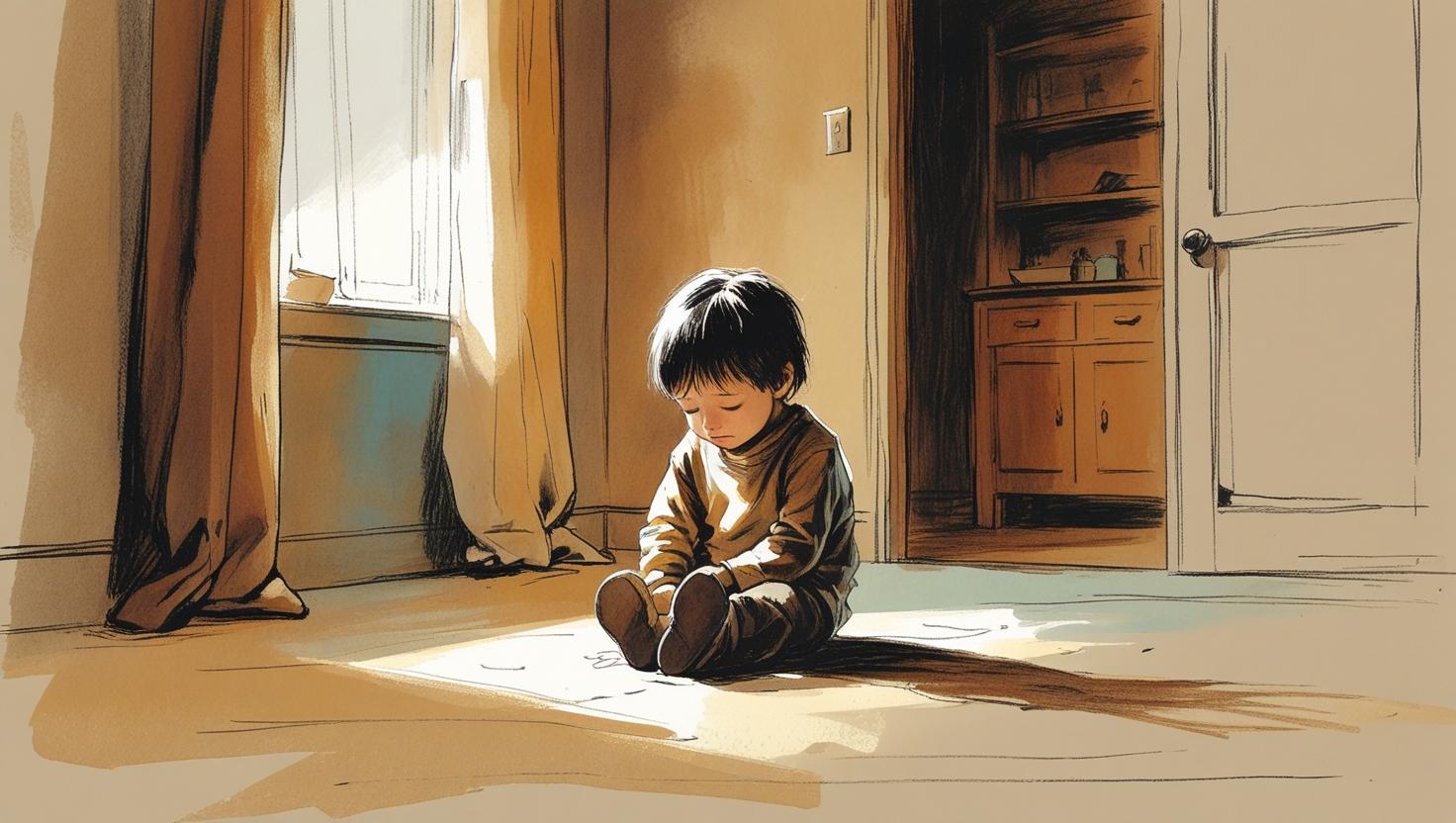
You may not remember being neglected. But your self-worth might.
It’s a strange, disorienting feeling to grow up in a “normal” family, only to find yourself, years later, silently battling feelings of unworthiness. Maybe you excel professionally, care deeply about others, and keep your life together on the surface. And yet, there’s a quiet voice inside whispering, “You’re not enough.”
This invisible wound — often misdiagnosed or dismissed — might stem from something that doesn’t leave physical scars, but can deeply shape the way you view yourself: childhood emotional neglect.
Emotional neglect: The wound that’s hard to see
Unlike physical or verbal abuse, emotional neglect isn’t something that happens to you. It’s something that doesn’t happen — a lack of emotional attunement, attention, or validation. This form of neglect occurs when caregivers fail to respond adequately to a child’s emotional needs. There may be no yelling, no violence, and no drama — which is why it often goes unnoticed and unacknowledged for decades.
You might have been raised in a home where your physical needs were met — food on the table, a roof overhead, perhaps even birthday parties and goodnight kisses. But what was missing was emotional presence. No one asked how you really felt. No one held space for your sadness or anger. You learned to cope by not needing too much, by not showing too much, by not being “a burden.”
This emotional absence teaches a child a powerful, painful lesson: my feelings — and therefore I — don’t matter.
How neglect turns into a deep sense of unworthiness
Emotional neglect isn’t always remembered clearly because it’s not about what happened — it’s about what didn’t. And yet, its impact can be profound and lifelong. When a child’s emotions are ignored or invalidated, the child naturally tries to make sense of it. The conclusions are rarely kind.
Children, by nature, personalize their environment. If your feelings were routinely overlooked, you may have internalized the message that there was something wrong with you. That maybe your needs were too much, or not enough. That love had to be earned. Or worse — that you weren’t worthy of it in the first place.
Over time, these internalized messages shape your identity. You grow up with a distorted mirror, seeing a flawed version of yourself that was never truly yours to begin with.
Signs You may have experienced emotional neglect
Because emotional neglect is subtle and often unconscious, many adults don’t realize they’ve been affected by it. But the emotional blueprint it creates shows up in adulthood in deeply familiar ways.
You may find yourself feeling disconnected from your own emotions, struggling to name what you feel or why you feel it. Setting boundaries may feel nearly impossible — especially when your default mode is pleasing others to feel worthy. You might work excessively hard to gain approval, but find that compliments or success never really sink in. There’s always an inner critic waiting to dismiss your worth.
Another common pattern is emotional numbness. Not sadness — but a hollow kind of nothingness, where it’s hard to feel excited, vulnerable, or deeply present. This emotional flatness is often the mind’s way of protecting itself from wounds it never processed.
Perhaps most heartbreaking is the quiet belief that your needs don’t deserve space. That your pain is insignificant. That you should “just be grateful” because others had it worse.
The neuroscience of neglect: Why it affects You so deeply
Childhood is a critical period for brain development, and emotional input is a key part of that growth. When a child receives consistent emotional validation and nurturing, the brain wires itself for connection, regulation, and self-awareness. But in the absence of that emotional input, key neural pathways may become underdeveloped.
Research from Harvard Medical School (Teicher et al., 2003) shows that childhood neglect can alter the development of areas in the brain related to emotional regulation, attachment, and self-worth. This means the effects of neglect aren’t just psychological — they’re neurological.
But there’s hope. The brain is plastic, which means that with intentional healing, support, and new experiences, these pathways can be rewired. Your sense of worth can be restored. You are not permanently damaged — you were simply emotionally underfed.

Reclaiming self-worth: The journey of reparenting
Healing from emotional neglect begins with acknowledgment. It’s not about blaming your parents or revisiting every detail of your childhood. It’s about recognizing, with compassion, that your emotional needs weren’t seen in the way you needed. That matters.
Reparenting is the process of giving yourself what you didn’t receive. It might start with learning to recognize your own feelings — journaling, meditating, or pausing throughout the day to ask yourself what you need emotionally. It might involve replacing your inner critic with a more nurturing inner voice, one that speaks to you with the kindness you never got as a child.
Therapeutic support can be transformational. Trauma-informed therapists, especially those trained in Internal Family Systems (IFS), somatic experiencing, or schema therapy, can help you untangle the false beliefs you absorbed in childhood and reconnect you with your authentic self.
It’s also crucial to begin validating your own experience. Self-worth doesn’t grow from external achievements — it grows when you begin to trust your own emotions, your inner knowing, your right to exist exactly as you are.
You are worthy — even if no one ever told You
If you’ve felt like something was “missing” in your life but could never quite explain it, know this: emotional neglect may have silently shaped your self-worth, but it doesn’t have to define it.
Healing is possible — and it begins with believing your experiences matter. That your pain was real. That your needs were valid, even if they were never met.
You are not too much. You were not too sensitive. You didn’t ask for too much love. You were simply not seen in the way every child deserves to be seen.
But now, you can learn to see yourself. Fully. Clearly. And with the kind of love that heals.
Related posts You’ll love:
- Why You struggle to receive love — and how to change that
- Toxic positivity vs. genuine healing: Know the difference (before it sabotages Your emotional growth)
- 30 healing inner child affirmations that will transform Your emotional life – Even if You’ve tried everything else
- How to forgive Yourself and move on: A psychology-based guide to healing guilt, shame, and self-criticism
- Childhood roles in marriage: 7 powerful exercises to stop reacting on autopilot
- Reclaiming Your daughterhood: Practices to heal when You’ve been both the mother and the child
FAQ – Frequently Asked Questions
-
What is childhood emotional neglect?
Childhood emotional neglect happens when a child’s emotional needs are consistently ignored, minimized, or unacknowledged by caregivers. Unlike physical abuse, emotional neglect is about what’s missing — attention, validation, and emotional support — rather than what is done.
-
Can childhood neglect cause low self-esteem in adults?
Yes. Childhood neglect, especially emotional neglect, can lead to chronic low self-esteem. When a child doesn’t receive emotional validation, they may internalize the belief that their feelings — and by extension, their self — don’t matter. This can persist into adulthood as self-doubt, people-pleasing, or feeling “not good enough.”
-
What are the signs I was emotionally neglected as a child?
Common signs include difficulty identifying or trusting your emotions, feeling emotionally numb or empty, struggling with boundaries, perfectionism, and a deep fear of rejection. Many adults feel like something is “off” but can’t explain why — emotional neglect is often the hidden reason.
-
How does emotional neglect affect self-worth?
When your emotional needs are ignored as a child, you may grow up believing that your emotions are unimportant, inconvenient, or shameful. This creates a distorted internal belief system that says, “I don’t deserve love or care,” which undermines self-worth.
-
Is emotional neglect considered trauma?
Yes, emotional neglect is now recognized as a form of complex trauma. While it may not involve overt abuse, the absence of emotional attunement can impact brain development and emotional regulation, leading to long-term psychological effects.
-
Can I heal from childhood emotional neglect?
Absolutely. Healing begins with awareness. Through self-compassion, therapy (especially trauma-informed approaches like IFS or somatic work), inner child work, and boundary setting, you can rewire the beliefs and patterns formed in childhood and rebuild your self-worth.
-
Do I need therapy to heal from emotional neglect?
While therapy is often helpful — especially with a trauma-informed or inner child–focused therapist — healing can also involve journaling, self-education, mindfulness, and reparenting practices. Support groups and self-help books are also excellent tools on the healing journey.
-
Can emotionally neglectful parents still love their children?
Yes, many emotionally neglectful parents love their children but lack the emotional awareness or tools to meet their child’s emotional needs. Understanding this doesn’t excuse the neglect, but it can help you process it with clarity and compassion.
-
Why do I feel guilty exploring my childhood neglect?
Many people feel guilty or disloyal when examining childhood emotional neglect — especially if their parents “did their best.” But healing doesn’t require blame. It requires honesty. You can honor your experience and love your caregivers while still acknowledging what was missing.
Sources and inspirations
- Teicher, M. H., Tomoda, A., & Andersen, S. L. (2003). Neurobiological consequences of childhood neglect. CNS Spectrums.
- Webb, J. (2012). Running on Empty: Overcome Your Childhood Emotional Neglect. Morgan James Publishing.
- van der Kolk, B. (2014). The Body Keeps the Score: Brain, Mind, and Body in the Healing of Trauma. Penguin Books.
- Walker, P. (2013). Complex PTSD: From Surviving to Thriving. Azure Coyote Publishing.
- Gerhardt, S. (2004). Why Love Matters: How Affection Shapes a Baby’s Brain. Routledge.
- Bowlby, J. (1988). A Secure Base: Parent-Child Attachment and Healthy Human Development. Basic Books






Leave a Reply to Swamigalkodi AstrologyCancel reply