Table of Contents
The hidden language of laughter
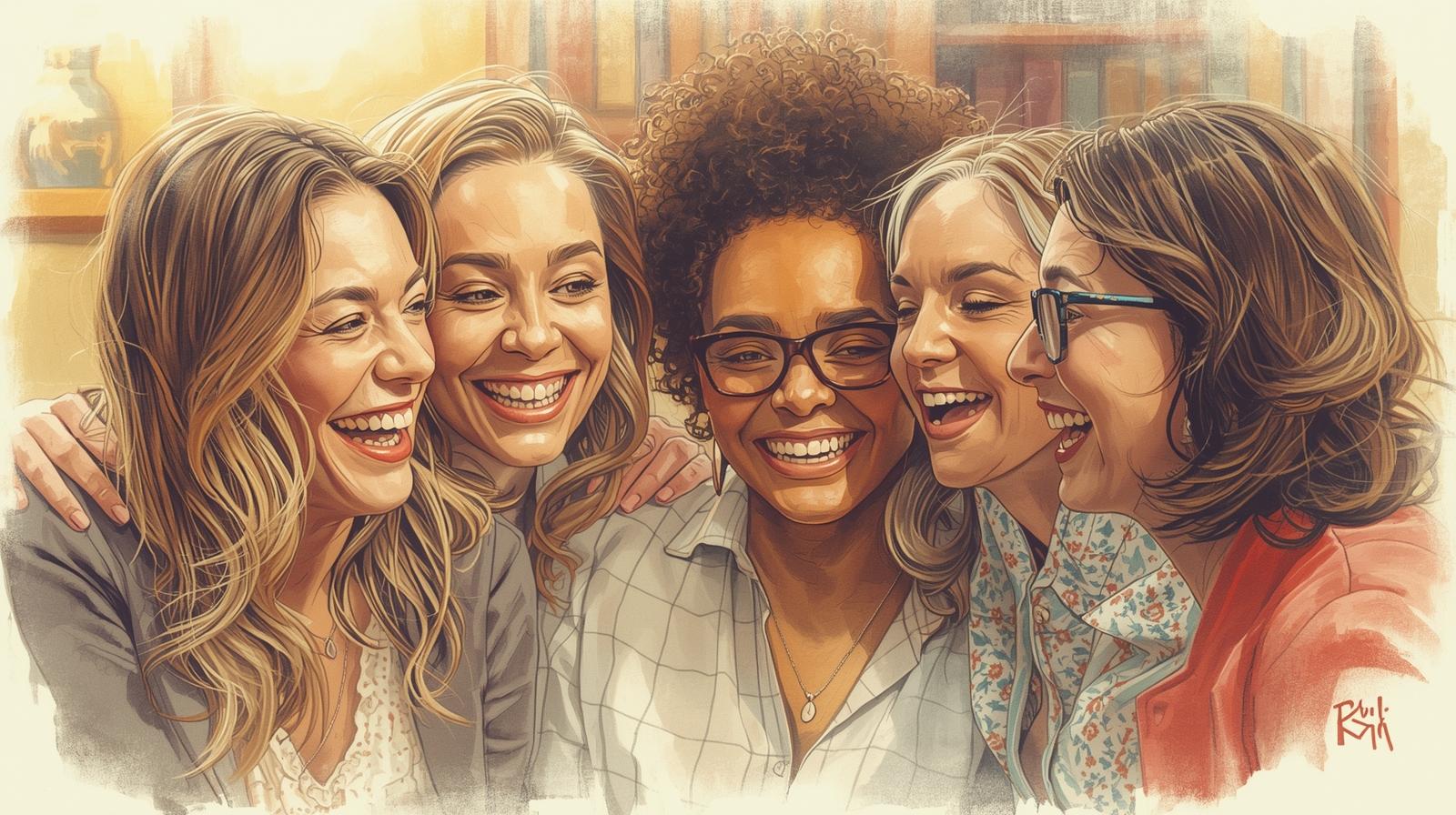
There is something magnetic about women who can make people laugh. A witty remark, a playful comeback, or even a perfectly timed self-deprecating joke often creates instant connection. Humor feels like lightness, but beneath the surface it can be deeply complex. For women in particular, laughter is rarely just laughter. It can be a shield, a strategy, and sometimes even a survival mechanism. While humor opens doors to connection, it also conceals an extraordinary amount of unspoken power. Many women intuitively learn to soften their intelligence or disguise their strength with jokes, choosing to laugh at themselves rather than risk being seen as threatening. This is not because women lack power, but because their power has historically been policed.
We will look at how humor functions not only as entertainment, but also as a coded language of resilience, resistance, and sometimes self-erasure. Understanding the psychology, history, and emotional cost of humor reveals how women hide their power inside laughter—and what it takes to reclaim it without apology.
The psychology of humor: More than a punchline
To truly understand how humor becomes a vessel for hidden power, we need to explore what humor is in the first place. Psychologists have long studied humor as more than entertainment. Sigmund Freud once proposed the “relief theory” of humor, suggesting that laughter is a way of releasing tension or suppressed emotion. Other models, such as “superiority theory,” suggest we laugh because we feel above others in a moment of wit. The “incongruity theory,” widely discussed in modern psychology, frames humor as a way of resolving contradictions in thought—when two seemingly opposite ideas collide, laughter bridges the gap.
Humor is therefore not trivial. It is deeply tied to survival, social bonding, and identity. In groups, shared laughter creates belonging, a subtle agreement of “we understand each other.” Individually, humor can soften pain, reframe trauma, or serve as a sophisticated coping mechanism. What becomes striking is how women, far more than men, learn to wield humor as a complex psychological tool. This is not merely a quirk of personality. It is shaped by centuries of cultural expectations around how women should be heard—or not heard.
Women and humor in a historical context
Throughout history, women’s humor has been both feared and dismissed. In many cultures, women were discouraged from being publicly witty, as intelligence expressed through humor could be read as arrogance or rebellion. In early literature, women’s voices were often silenced unless softened through irony or jest. A sharp observation might be tolerated only if disguised as a joke, something that made men laugh rather than feel challenged.
Even in modern history, women comedians and writers have had to navigate the razor’s edge between subversion and likability. Figures such as Dorothy Parker, Lucille Ball, and Joan Rivers disrupted cultural norms with their wit, but each faced criticism that their humor was “too sharp,” “too crass,” or “unfeminine.” The cultural narrative has often reduced women’s humor to charm or frivolity, while men’s humor has been celebrated as genius or intellectual.
What is clear is that women have historically used humor not just for entertainment but as a covert form of resistance. Jokes became safe containers for truths that were too dangerous to state plainly. Humor allowed women to speak, but always in a language coded enough to escape punishment. This tension still lingers today.
Humor as a survival strategy
For many women, humor begins as a survival strategy. From a young age, girls often discover that making others laugh diffuses tension. It can calm a parent’s temper, shift focus in a classroom, or reduce the sting of bullying. Humor becomes an instinctive way to deflect danger and gain acceptance. As women grow older, this instinct does not fade—it deepens.
In professional environments, humor may be used to soften authority, making strong ideas more palatable. In family dynamics, it might help keep peace or avoid conflict. In friendships, women often rely on playful banter to strengthen bonds while concealing personal struggles. Over time, this constant use of humor as a shield can take a toll. While laughter may protect in the moment, it often leaves the deeper truth unspoken.
Humor, then, is not just about being lighthearted. It is about managing risk, navigating social expectations, and preserving safety in environments where direct power can provoke backlash. This survival strategy is effective, but it also comes with a cost: the gradual habit of hiding one’s authentic voice behind the sound of laughter.
The double bind: Funny but not too funny
One of the most exhausting dynamics women face with humor is the double bind of being encouraged to be funny, but only in certain ways. Society often welcomes women who are charming, playful, and self-deprecating, yet grows uncomfortable when women are too clever, too biting, or too bold. The same sharp wit that makes a man seem charismatic can make a woman seem abrasive. This is the paradox: women are rewarded for humor when it reinforces likability, but punished when it asserts authority.
Research into gendered communication highlights that women are far more likely to use self-directed humor—joking at their own expense—while men tend to make observational or even aggressive jokes. This pattern is not accidental. Women quickly learn that self-deprecating humor keeps them safe. It makes them approachable, diminishes perceived threat, and ensures they are not accused of arrogance. Yet this constant leaning into self-mockery comes at the price of confidence. The more a woman learns to laugh at herself, the more others may unconsciously take her less seriously.
This double bind extends to professional and creative spaces. A woman who cracks clever jokes in a meeting risks being labeled “too much,” while a man doing the same is often called “brilliant.” Female comedians who use humor to critique sexism or politics are frequently met with criticism that they are “angry” rather than funny. The message is clear: women are allowed to be funny, but not in ways that threaten existing power structures.
Humor and hidden power
What makes this paradox fascinating is that humor itself is an undeniable form of power. To make someone laugh is to control their emotional state, even briefly. Humor requires quick thinking, insight, and social intelligence. It reveals deep awareness of timing, language, and psychology. Yet women often camouflage this power because showing it too directly can feel unsafe. Instead of wielding humor as a sword, they disguise it as a ribbon.
Many women mask their ambition, sharpness, or authority by wrapping it in a joke. A bold idea may be softened with humor so it lands without backlash. A truth may be told in a playful tone so that it is palatable. This is where women’s humor becomes both brilliant and tragic—it holds immense power, but that power is hidden beneath layers of performance.
The role of humor in friendships highlights this hidden dynamic. Many women become the “funny friend,” the one who provides comic relief, carries the emotional tone of the group, or eases tension with laughter. While this role creates closeness, it can also reduce how seriously their needs and feelings are taken. The responsibility of being the one who lightens the room may prevent them from expressing darker emotions, keeping their real struggles invisible.
Humor, in this way, becomes a double-edged gift. It is an extraordinary demonstration of power and intelligence, but one that women often cloak so well that its full force remains unseen.

Humor as self-protection
The protective role of humor runs deeper than social expectations. For many women, humor becomes a way of shielding themselves from vulnerability. A joke can disguise pain, redirect attention, or cover insecurities. Someone might crack a joke about their appearance to preempt criticism, or make light of a serious situation to avoid the discomfort of silence. In moments of fear or sadness, humor can provide a safe mask that prevents others from seeing raw emotion.
Psychologists have found strong links between humor and coping. Studies show that humor helps regulate stress, offers perspective in difficult situations, and creates a sense of resilience in the face of adversity. Yet not all humor is created equal. While “affiliative humor” (jokes that strengthen social bonds) and “self-enhancing humor” (finding lightness in tough moments) can be healing, “self-defeating humor” (making oneself the butt of the joke) is associated with lower self-esteem and greater risk of depression. Women disproportionately lean toward this last category, not because they lack confidence, but because it feels safer than asserting themselves directly.
The therapeutic power of humor is undeniable—it allows people to laugh even in the darkest times. But when humor is used exclusively as self-protection, it can blur the line between resilience and avoidance. Instead of facing pain directly, a woman may keep covering it with jokes, even when what she truly needs is to be seen and heard.
The risk of self-erasure
Over time, the habit of masking feelings and truths with humor can create a subtle but profound form of self-erasure. A woman who constantly makes herself the punchline may internalize the idea that she is less worthy or less capable than others. Laughter becomes a way of minimizing not just tension, but herself.
This erosion of self-worth is rarely immediate. It builds slowly, shaped by countless small moments: the times she laughs off a promotion she didn’t get, the times she makes a joke about her body before someone else can, the times she hides grief under a playful smile. Each moment seems harmless, even clever, but together they create an identity where being seen as serious, powerful, or commanding feels impossible.
The long-term effects can show up in relationships and careers. In dating, humor might cover vulnerability but prevent intimacy. In professional spaces, it might lighten the room but obscure competence. In personal growth, it might mask wounds that remain unhealed because they are never acknowledged.
What makes this particularly insidious is how invisible it can be. Others may see only a confident, funny woman, unaware that beneath the laughter lies a history of silenced truths. The world may celebrate her humor without realizing the cost she has paid in authenticity. And she, in turn, may struggle to separate the joy of genuine laughter from the reflex of hiding.
Humor in relationships: Power and intimacy
Humor weaves itself into the fabric of relationships in ways both tender and complicated. In the early stages of dating, laughter often becomes a tool of attraction. Many women are praised for their “great sense of humor” or for being “fun and easygoing.” Yet the unspoken expectation behind these compliments is often that women should be humorous in a way that comforts and entertains, rather than challenges or confronts. Joking about one’s own quirks or flaws is welcomed, while humor that points out inequality or dissatisfaction can be met with resistance.
Within long-term relationships, humor frequently becomes the glue that holds partners together during difficult times. Shared laughter can soothe conflict, create intimacy, and lighten the weight of daily stress. But when humor is used primarily to avoid deeper conversations, it can obscure problems rather than resolve them. Women in particular may resort to jokes to sidestep uncomfortable truths—about unmet needs, unspoken resentments, or imbalances in responsibility. By laughing off frustrations, they protect harmony in the short term, but at the expense of honesty.
There is also a hidden power dynamic at play. When women are expected to be the source of levity, the ones who lighten the mood or make peace with a smile, they may suppress their authentic emotions to maintain stability. This role can be exhausting, because humor in relationships then becomes less about connection and more about labor—an invisible effort to sustain balance and keep others comfortable.
True intimacy requires the courage to laugh together without using humor as a shield. When women reclaim humor as an equal exchange rather than a performance, it transforms from a tool of survival into a genuine expression of joy and closeness.

Breaking the pattern: Reclaiming humor as power
Recognizing when humor conceals rather than reveals is the first step toward reclaiming it as a source of empowerment. Many women are not even conscious of how often they minimize themselves through jokes. The shift begins with noticing: what kinds of jokes feel natural and uplifting, and which ones leave a residue of discomfort or smallness? This awareness can be uncomfortable at first, but it opens the door to change.
Reclaiming humor means learning to use it as a tool of truth rather than concealment. Humor can be just as effective when it uplifts rather than diminishes the self. For example, instead of laughing at one’s own perceived flaws, humor can highlight absurdities in cultural expectations, social systems, or the unrealistic demands placed on women. This kind of humor does not erase identity; it strengthens it.
On a personal level, women can experiment with humor that reflects confidence rather than insecurity. This does not mean giving up playfulness or lightheartedness, but rather allowing humor to serve authenticity instead of avoidance. In professional spaces, this might look like using wit to emphasize a strong point without apologizing for authority. In friendships, it might mean being funny without always playing the clown. In relationships, it might mean allowing jokes to coexist with honest conversations rather than replace them.
Feminist comedy and storytelling movements offer inspiring models of this reclamation. From stand-up comedians who dismantle stereotypes with biting humor, to writers who infuse wit into critiques of culture, women are increasingly showing how laughter can be a powerful form of truth-telling. These examples remind us that humor does not need to hide power—it can broadcast it unapologetically.
Humor and collective healing
While humor can be used individually to mask pain, it also has the potential to be a force for collective healing. Women’s shared laughter has always been a quiet revolution, a way of building community and resilience in the face of oppression. In women’s circles, friend groups, or activist spaces, humor often becomes the language of solidarity. It allows people to connect across shared struggles, to take back control of narratives, and to find light even in dark times.
Throughout history, humor has played a crucial role in movements for social justice. Women have used satire, parody, and wit to critique systems of power in ways that are both sharp and accessible. Laughter in these contexts is not a dismissal of pain but a reimagining of it—a way of transforming suffering into something that strengthens rather than diminishes.
Even in therapeutic spaces, group laughter has been shown to create a sense of belonging that eases isolation. When women laugh together, they validate one another’s experiences, signaling, “You are not alone in this.” This shared humor does not erase the seriousness of struggles, but it reframes them in a way that makes them feel more bearable. In this way, humor becomes not just a survival strategy but a healing strategy.
The future of Women’s humor: From mask to microphone
The cultural landscape of women’s humor is shifting rapidly. Social media platforms, podcasts, and digital storytelling have opened new spaces for women to express themselves without the gatekeeping that once dictated what kinds of humor were acceptable. Women comedians, writers, and creators are increasingly unapologetic, using humor not as a mask but as a microphone. Their laughter is not softened for likability; it is amplified for impact.
This transformation reflects a broader cultural awakening. As conversations about gender, identity, and power become more mainstream, women are reclaiming humor as a visible, undeniable force. Younger generations, in particular, are less willing to accept humor that diminishes themselves. Instead, they embrace wit that is sharp, honest, and boundary-breaking.
The future of women’s humor lies in this shift from concealment to clarity. Humor will always carry the capacity to soothe and protect, but it does not need to silence. As more women stand in their humor without apology, they model a new form of power—one that does not hide in laughter but shines through it.
Laughing without apology
Humor has always been more than a punchline. For women, it has been a language of survival, a way to deflect danger, a shield against judgment, and a tool of connection. Yet within this laughter lies a paradox: while humor has protected women, it has also hidden their power. The jokes that keep peace in relationships, that soften authority at work, that turn pain into comedy—they all reveal extraordinary resilience, but they also conceal the full force of women’s voices.
To laugh without apology is to shift this dynamic. It means recognizing when humor masks self-erasure and when it amplifies truth. It means no longer reducing oneself to the punchline, but instead using humor to highlight contradictions in culture, to build solidarity, and to tell stories that matter.
The hidden language of laughter does not need to stay hidden. Women can reclaim humor as a microphone rather than a mask, choosing to wield it with intention rather than obligation. By doing so, they do not lose the joy of playfulness; they rediscover it, free from the weight of expectation. The power of women’s humor lies not in hiding, but in standing boldly in the light, laughing not to diminish themselves but to declare their strength.
Related posts You’ll love:
- Speaking without the joke: Practicing direct, powerful expression
- Why Women romanticize suffering as depth — and how to reclaim true emotional power
- The feminine myth of “fixing” a partner: Why love shouldn’t mean healing someone else’s wounds
- How society rewards women for silence: The hidden costs of suppressing voices
- Why society judges child-free Women so harshly
- The quiet shame of body checking in the mirror
- Due diligence report on weaponized humor: Red flags that hide behind “just joking” and how to respond with quiet power
- Micro disrespect: The tiny phrases that quietly erode Women and how to rewrite them into power

Frequently Asked Questions (FAQ)
-
Why do women often use humor to downplay themselves?
Many women learn early on that self-deprecating humor makes them more likable and less threatening. While it can feel playful, this pattern often reflects deeper cultural pressures to appear humble, approachable, or non-competitive. Over time, it can lead to minimizing one’s own power without realizing it.
-
Is women’s humor really different from men’s humor?
Research shows that humor is shaped by gender norms. Men are often encouraged to be bold, witty, or even aggressive with their jokes, while women are socially rewarded for humor that is self-directed, charming, or relational. These differences don’t come from ability, but from societal expectations about how women and men “should” express themselves.
-
How can humor be both empowering and limiting for women?
Humor is empowering when it helps women connect, cope with stress, or express truth in creative ways. It becomes limiting when it consistently hides vulnerability or reduces confidence. The key difference lies in whether humor is used as a tool of authenticity or as a mask to stay safe.
-
Why is self-deprecating humor so common among women?
Self-deprecating humor is often a strategy to avoid criticism. By joking about themselves first, women may feel they are protecting against others’ judgment. While this can create temporary ease, it can also reinforce negative self-perceptions and prevent others from seeing their full strength.
-
Can humor help women heal from trauma?
Yes, when used mindfully, humor can be a powerful coping tool. Studies in psychology highlight that laughter reduces stress hormones, builds resilience, and creates a sense of community. However, when humor is only used to deflect pain, it can stall the healing process by keeping deeper feelings unacknowledged.
-
How does humor affect women in relationships?
In relationships, humor can build intimacy and strengthen bonds. Yet women often use humor to keep peace, hide frustrations, or downplay unmet needs. When humor replaces honest communication, it can lead to emotional distance and unspoken resentments.
-
What does it mean to reclaim humor as power?
Reclaiming humor means shifting from self-minimizing jokes to humor that affirms identity and challenges social norms. It’s about using wit to highlight truths, critique injustice, or simply share joy—without apology. This transformation allows women to laugh in ways that express strength rather than hide it.
-
Are women comedians changing the cultural conversation about humor?
Absolutely. Women comedians, writers, and creators are reshaping how humor is perceived. Instead of softening their jokes to be likable, they increasingly use comedy as a tool of critique, truth-telling, and empowerment. Their voices model what it looks like to laugh without hiding.
-
Why does society react differently when women are “too funny”?
The discomfort often comes from power dynamics. Humor requires intelligence, timing, and control of a room—all forms of authority. When women display these qualities through sharp humor, it can challenge traditional expectations of femininity, leading to pushback.
-
How can women use humor more mindfully?
The first step is noticing when humor uplifts versus when it erases. Choosing humor that reflects confidence, creativity, and truth allows women to connect without minimizing themselves. In practice, this means laughing with others rather than always laughing at oneself.
Sources and inspirations
- Ahmed, Sara. The Cultural Politics of Emotion. Routledge, 2014.
- Billig, Michael. Laughter and Ridicule: Towards a Social Critique of Humour. SAGE Publications, 2005.
- Butler, Judith. Gender Trouble: Feminism and the Subversion of Identity. Routledge, 1990.
- Freud, Sigmund. Jokes and Their Relation to the Unconscious. W. W. Norton & Company, 1960.
- Kuipers, Giselinde. Good Humor, Bad Taste: A Sociology of the Joke. De Gruyter, 2006.
- Martin, Rod A. The Psychology of Humor: An Integrative Approach. Academic Press, 2007.
- Mizejewski, Linda. Pretty/Funny: Women Comedians and Body Politics. University of Texas Press, 2014.
- Walker, Nancy A. A Very Serious Thing: Women’s Humor and American Culture. University of Minnesota Press, 1988.
- Watson, Sophie. Feminist Theory and Humor. Palgrave Macmillan, 2012.
- Zillmann, Dolf, and Joanne R. Cantor. “A Disposition Theory of Humour and Mirth.” In Humor and Laughter: Theory, Research and Applications, edited by Anthony J. Chapman and Hugh C. Foot, Routledge, 1977.




Leave a Reply