
Table of Contents
Imagine this.
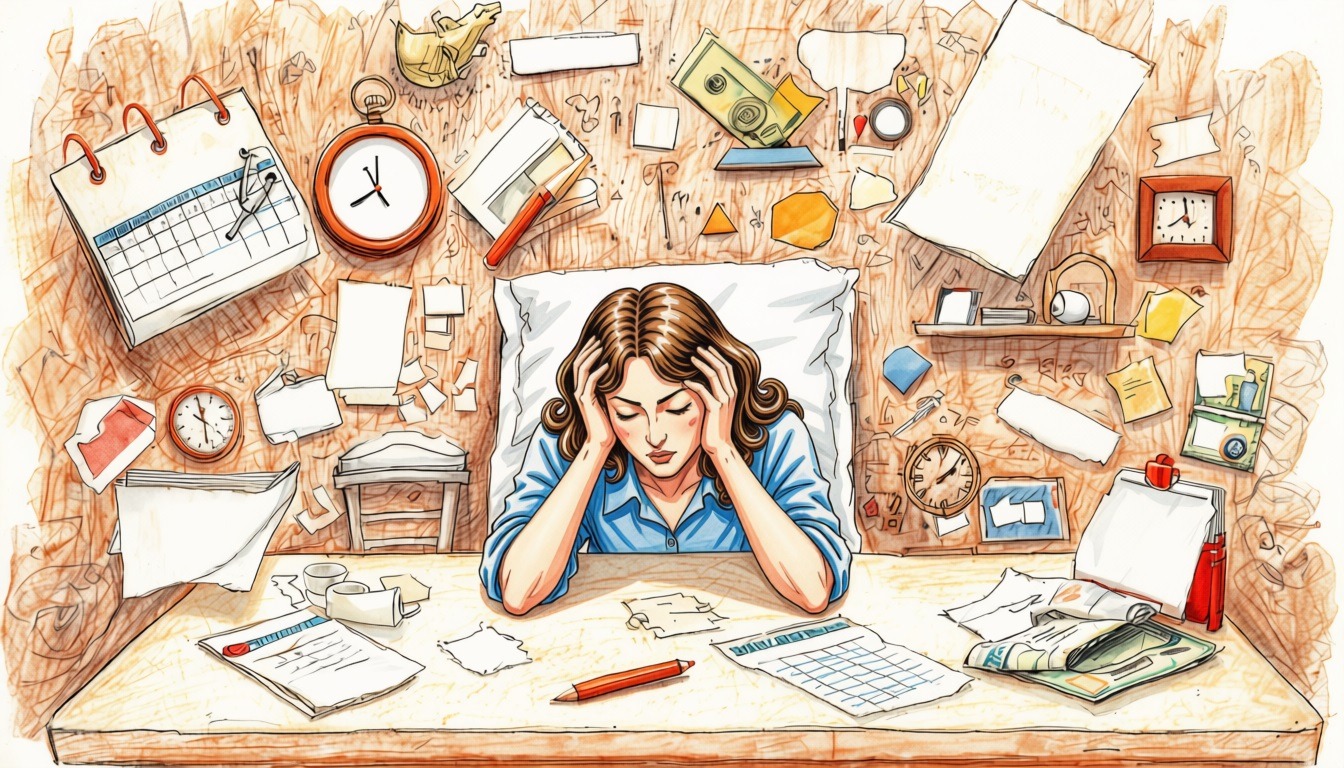
You sign up for a course, download a habit tracker, buy a beautiful journal, or commit to finally taking care of your body. For a few days or weeks you feel clear, focused and strangely proud of yourself. Then, almost without noticing when it happens, the energy fades. You open the app less often. You “forget” your routine. You start negotiating with yourself. At some point you quietly stop, and the familiar inner story appears: “I guess I just can’t stick to anything.”
That painful moment is what we will call the motivation dip. It is the emotional and energetic crash that so often follows a strong beginning. This article will walk you through why that happens, what science is discovering about motivation over time, and how you can relate to this dip more gently and intelligently instead of using it as proof that you are broken.
This is not a hustle manual about “staying disciplined at all costs.” It is an invitation to understand your brain, your nervous system, your emotions and your environment so that you can create calmer, kinder and more sustainable change.
What is the motivation dip, really?
The motivation dip is not simply “laziness.” It is a predictable shift in how your brain and body relate to a goal over time. At the beginning, almost any new goal comes with a burst of novelty. Your brain releases more dopamine in response to new rewards and possibilities. The idea of a better future version of you feels close and vivid, and that proximity matters more than people often realise.
As days or weeks pass, several quiet things happen at once. The work becomes more familiar and sometimes more difficult. The reward feels further away or less magical. Real life stressors compete for the same energy. Subtle self-doubt, perfectionism, or shame wakes up. The result is a felt sense of “drag” where starting feels heavy, continuing feels pointless and stopping feels both guilty and relieving.
Importantly, research suggests that motivation typically does not increase in a straight line. Longitudinal studies with students and professionals show that interest, enjoyment and perceived value of a task often decline over a semester or training programme, even when people are still showing up and performing outwardly.
So if you have felt this dip, you are not alone and you are not uniquely flawed. In many ways, you are experiencing a very human pattern that shows up across different ages, cultures and domains.
The hidden arc of motivation: Why the middle is so hard
We often imagine motivation as something we either “have” or “do not have.” In reality, motivation is dynamic and changes from day to day and even hour to hour. Studies that track people’s motivation across many days show that it fluctuates with mood, satisfaction and previous experiences of success or failure.
At the beginning of a project, three psychological ingredients usually cooperate. First, your expectancy is high: you truly believe you can do this. Second, the value feels strong: the goal matters, and you are emotionally connected to the outcome. Third, the perceived cost still seems low: the effort, time and discomfort feel manageable, at least in your imagination.
As you move into the messy middle, these ingredients shift. Obstacles erode your sense of “I can.” The emotional shine of the goal fades as it becomes routine. The costs feel heavier because you are now paying them in real time, not in fantasy. Meanwhile, daily life keeps adding more demands.
Studies tracking students across weeks and months find that perceived interest and utility value of a subject often decline over time, while experience of cost and psychological strain rises. When motivation dips in this way, people do not necessarily become lazy. Instead, they begin to question whether the effort is worth it and whether they have enough emotional fuel to keep going.
In other words, the motivation dip is often the moment when reality gently taps you on the shoulder and asks: “Is this still meaningful enough to justify the cost?”
Temporal motivation theory: Your brain’s time-bound calculator
One of the most useful scientific lenses for understanding the motivation dip is Temporal Motivation Theory (TMT). This framework suggests that our motivation at any given moment depends on four forces: how much we value the outcome, how confident we feel we can achieve it, how far away the reward is in time and how impulsive or distractible we are.
Put simply, your brain is constantly solving a quiet equation that sounds like: “How much do I care about this? How likely is it that I will succeed? How soon will I feel the reward? And what else is pulling at my attention right now?”
At the beginning of a new habit, the vividness of the imagined outcome can make the reward feel psychologically close, even if it is months away. There is a strong emotional story: “In ninety days I will feel like a different person.” This imagined proximity boosts your motivation.
As weeks pass, two things often occur. First, the time horizon widens again; the brain realises that the full benefits are still far away. Second, short term temptations become more salient: scrolling, resting, doing the easy tasks that offer immediate mood relief. Studies on procrastination and TMT show that as deadlines move further away, people are more likely to delay, even when they genuinely care about the outcome. Motivation spikes only as the deadline approaches or when consequences feel near.
For lifestyle changes, there is rarely a concrete deadline, which means you do not get that last minute motivational surge. The result is a slow sag in effort that is entirely consistent with how this time sensitive motivational system works. There is nothing morally wrong with you. Your brain is simply giving more weight to what feels immediate.

Self determination theory: Why “should” goals crash aster
Another powerful perspective comes from Self Determination Theory (SDT), which distinguishes between autonomous motivation and controlled motivation. Autonomous motivation means doing something because it feels aligned with your values, interests or sense of self. Controlled motivation means doing it because you feel pressured, guilty, or afraid of disappointing others.
Research across health, education and work settings consistently finds that autonomous motivation predicts more persistence, better performance and greater wellbeing. In contrast, when a goal is driven mostly by shame, fear or external pressure, people often comply for a while but burn out emotionally and disengage.
Now think about the goals where your motivation crashes fastest.
If you look closely, you may notice that many of them are “I should” goals rather than “I deeply want” goals. You may be trying to fit a cultural ideal of productivity, attractiveness or success more than listening to what truly matters to you. In that case, the motivation dip is not a sign of weakness. It is a sign of inner resistance to living a life that is built around other people’s values.
Longitudinal studies of motivation trajectories show that when people feel autonomy, competence and relatedness, their motivation tends to stay higher and more stable over time. When these psychological needs are thwarted, motivation decays more steeply and is associated with more emotional exhaustion.
From a Mindul Reads perspective, this is an important reframe. Instead of berating yourself for losing steam, you can gently ask: “Was I ever truly choosing this for me, or was I trying to earn my worth?”
Habits, not hype: What actually keeps behaviour going
Motivation dip conversations often ignore a simple but uncomfortable truth: long term change rarely depends on staying inspired. It depends on whether the behaviour becomes automatic enough that you do it even when you do not feel like it.
Psychological research on habit formation suggests that repeated behaviours in stable contexts gradually become more automatic, guided by cues and routines rather than ongoing conscious decision making. Over time, context triggers the action: you walk into the kitchen and automatically drink a glass of water; you sit at your desk and automatically open the project file instead of social media.
Field studies following people over weeks and months show that habit strength often increases substantially across the first two to three months of consistent practice. When habit strength reaches a certain threshold, people are more likely to maintain the behaviour in the long term, even if their moment to moment motivation fluctuates.
More recent meta analyses and conceptual papers highlight an important nuance. Habit formation helps maintain behaviour but is neither magically sufficient nor strictly necessary. It interacts with goals, attitudes, environmental cues and self regulation skills in complex ways.
What does this mean for the motivation dip?
It means that the period after the shiny beginning is not merely a test of willpower. It is the phase where you are either quietly building a habit scaffold strong enough to carry you through future low motivation days, or you are relying on initial excitement and self criticism to drag you forward. In the second case, the whole structure collapses as soon as the emotional high disappears.
From a self love perspective, there is a gentler approach. Instead of asking yourself to stay endlessly fired up, you can ask: “How can I make this behaviour smaller, simpler and more anchored into my day so that it needs less emotional negotiation?”
The emotional undercurrent: Shame, fear and the quiet saboteurs
So far we have looked at cognitive and behavioural frameworks. But for many people, the motivation dip is less about formulas and more about feeling. The crash does not just feel like boredom. It feels like disappointment in yourself.
This is where unhealed emotional patterns often amplify the dip. If you grew up in environments where love and approval were conditional on performance, any wobble in consistency can trigger deep shame. Suddenly missing three workouts is no longer a neutral fact; it becomes proof that “I am a failure.”
When a goal becomes fused with your sense of worth, your nervous system treats setbacks as threats. Your body responds with stress, avoidance and sometimes dissociation. On the surface this looks like procrastination or “not being motivated.” Underneath, it is self protection. Your system is trying to shield you from the pain of confirming a negative story about yourself.
Research on self determination and motivation supports this emotional picture. When people feel controlled, judged or evaluated, motivation becomes more fragile, and setbacks lead more quickly to disengagement. When people feel supported, accepted and allowed to be imperfect, they are more willing to re engage after difficulties.
This is one reason why self compassion has been gaining attention in health and behaviour change fields, even if it is not always the headline topic of motivation research. Treating yourself kindly after a lapse reduces shame and makes it easier to restart, which indirectly protects motivation over the long term. While many of the large trials focus on specific behaviours like physical activity or diet, a consistent pattern emerges. People who feel less harsh self judgment are more likely to sustain efforts.
In personal language, that means the way you speak to yourself after you crash matters at least as much as the habit itself.
Your nervous system is not a machine: Energy, stress and micro burnout
Another layer of the motivation dip has nothing to do with character and everything to do with biology. Your brain’s motivational chemistry is linked to your sleep, stress levels, hormones, nutrition and general nervous system regulation.
Chronic stress and inadequate recovery change how rewarding effort feels. Tasks that once gave you a sense of progress now feel heavy, because your baseline energy is already low. In this state, the brain naturally prioritises short term relief over long term growth. Rest, distraction or numbing behaviours win over disciplined practice simply because your body is tired.
Some of the studies on motivation trajectories in students and workers suggest exactly this pattern. As a semester or training period progresses, cognitive competence can increase while motivational enjoyment decreases, a pattern sometimes described as affective motivational fatigue.
If you are living with ongoing anxiety, caregiving stress, financial pressure or unresolved trauma, your nervous system is already carrying a lot. The motivation dip might then be less about weakness and more about your system quietly saying, “I cannot hold one more demanding thing without rest or support.”
For readers of CareAndSelfLove, this is crucial. You cannot separate motivation from nervous system safety. Any conversation about “sticking with goals” that does not acknowledge exhaustion, neurodiversity, hormonal cycles or mental health is incomplete.
Modern life secretly deepens the motivation dip
If motivation has always been dynamic, why does it feel particularly fragile today? Part of the answer lies in the structure of modern attention.
Many of the platforms and tools we use every day are designed to deliver rapid, small, unpredictable rewards. Your phone offers micro dopamine hits in response to notifications, likes and new content. Over time, this shapes your nervous system to expect frequent stimulation and visible progress.
Deep work on non glamorous tasks offers the opposite: long stretches of effort with delayed or invisible payoffs. That means when you try to sustain a practice like reading, learning, exercising or creative work, your brain is asking you to swim against a powerful current of instant gratification culture.
At the same time, you are exposed to endless highlight reels of other people’s achievements. You watch condensed “before and after” journeys that compress months or years of effort into a thirty second clip. Subconsciously, your brain starts to expect that your progress should also be fast, linear and dramatic. When your real life pace is slower and more irregular, your motivation crashes not because the progress is bad, but because it fails to match an unrealistic internal benchmark.
Motivation science does not yet capture this entire cultural context, but some newer research on situational and daily motivation emphasises just how sensitive motivation is to context, cues and the emotional texture of the learning or working environment.
It is important not to interpret a very modern struggle as a purely personal flaw. The ecosystem you live in is constantly training your brain to prefer quick visible rewards over slow invisible ones. No wonder the middle of the journey feels harder than the first week.

Working with the dip instead of against Yourself
So what can you do with all of this?
First, you can stop taking the motivation dip as a diagnosis. Instead, you can treat it as a signal and a phase. Each time you feel that familiar sag, you can ask a series of gentle questions.
You can ask whether the goal is truly yours. If it is mostly powered by shame or external pressure, losing motivation may be an act of quiet self protection. In that case, renegotiating or releasing the goal is not failure, it is alignment with your values. This is entirely consistent with SDT findings that autonomous motivation supports sustainable engagement while controlled motivation predicts burnout and dropout.
You can ask whether the cost has quietly become too high. Perhaps you layered this new habit on top of an already overloaded life. If your nervous system is stretched thin, the dip might be your body’s request for rest, boundaries or support, not more discipline.
You can ask whether you are depending solely on feelings to drive behaviour. If the answer is yes, this is an opening to build a more solid habit structure. Habit research suggests that repeating a small behaviour consistently in a stable context gradually shifts it from effortful to more automatic. That means a tiny, regularly repeated version of your habit may do more for your long term change than occasional heroic bursts of effort.
You can also recognise that motivation is not a moral scoreboard. Diary and longitudinal studies show that it is natural for your sense of “I want to do this” to rise and fall over time. What matters is not whether you always feel like showing up, but how you relate to yourself when you do not.
A self compassionate response to the dip might sound like: “Of course I feel tired and discouraged right now. A lot is happening in my life. My brain is wired to prefer easy rewards. And this is the messy middle of habit formation where things feel boring and hard. I can choose a tiny version today, or I can rest and decide again tomorrow. Either way, my worth is not at stake.”
This kind of inner dialogue does not magically remove the dip, but it changes its meaning. Instead of being a verdict on you, it becomes information you can use.
A calmer story about change
When you think about the goals you have abandoned in the past, it is tempting to focus only on the visible behaviour: “I stopped going” or “I quit.” But beneath that behaviour there were likely many invisible forces at play. Shifting motivational beliefs. Rising perceived cost. Cultural pressure. Emotional wounds. Nervous system overload. Contexts that either supported or undermined the slow formation of habits.
Recent motivation science invites us to take a more nuanced view. Motivation is not a single trait that some people have and others lack. It is a living process that moves over time. It is shaped by how you see your chances of success, how deeply the goal feels like yours, how exhausted or safe your nervous system feels and how your environment cues or distracts you.
For readers of CareAndSelfLove, there is a beautiful invitation here. You are allowed to design change that respects your humanity. You are allowed to expect a motivation dip and to plan for it kindly. You are allowed to choose goals that come from love rather than from fear. You are allowed to make the behaviour so small and so woven into your days that you can keep going in a softly imperfect way.
Most of all, you are allowed to stop telling the story that a crash in motivation means you are not enough.
The next time you start strong on something and feel yourself sliding, pause before you declare a verdict on your character. Remember what you now know about temporal motivation, self determination, habit formation and emotional safety. Ask gentle questions. Adjust the goal, the environment or the size of the habit. Offer yourself the kind of encouragement you would give to a dear friend who is tired and trying.
Change, in this calmer view, is not a straight line powered by constant enthusiasm. It is a series of imperfect, human attempts carried by curiosity, kindness and slowly strengthening habits. The motivation dip is not the end of the story. It is simply one chapter in how your nervous system learns to live a different life.
Related posts You’ll love
- Practice corner: 7 unconventional daily exercises to move through the motivation dip without beating Yourself up. FREE PDF!
- The chameleon syndrome: Why so many Women shape-shift to survive (and how to feel safe being Yourself)
- The silent relationship killer: When one person grows and the other doesn’t
- Why You’re addicted to checking who viewed Your story: The hidden psychology of approval
- Limerence literacy: How to tell healthy romantic chemistry from obsessive fixation (backed by new psychology research)
- Why Women feel guilty for wanting more than “he’s nice”
- How intelligent Women talk themselves out of their own brilliance (and how to finally stop)
- The Tuesday proof practice: 9 repair rituals to break the Monday reset addiction without forcing motivation

FAQ: The motivation dip
-
What is the motivation dip?
The motivation dip is the natural drop in energy, focus and enthusiasm that often appears after the excited beginning of a new goal, habit or project. At first you feel inspired and clear, but as novelty fades and real life demands show up, it becomes harder to keep going. This dip is not a sign that you are lazy or broken. It is a predictable phase where your brain starts to question whether the effort, time and emotional cost are still worth it.
-
Why do I always start strong and then lose motivation?
You often start strong because new goals feel exciting and rewarding in your imagination. Your brain releases more dopamine in response to novelty and the promise of a better future. Over time, the work becomes routine, the reward feels further away, and daily stress competes for your attention. At that point the brain naturally favours easy, short term comfort over long term change, and your motivation dips. This is how a human nervous system works, not proof that you “cannot stick to anything.”
-
Is the motivation dip a sign that I chose the wrong goal?
Not always. Sometimes the motivation dip simply means you have reached the hard, unglamorous middle of the process where consistency matters more than passion. However, if the goal is driven mainly by guilt, shame or pressure from others, losing motivation can be a sign that the goal is not aligned with your real values. When you are trying to live up to someone else’s standards, your energy will often crash faster than when you are pursuing something that genuinely feels like yours.
-
What does psychology say about motivation dropping over time?
Psychological research shows that motivation is not stable. It changes over days, weeks and months. Studies with students and professionals find that interest and enjoyment often decline in the middle of a course or project, even when performance stays the same or improves. Other theories, like Temporal Motivation Theory and Self Determination Theory, show that motivation depends on perceived value, confidence, time until reward, and whether the goal feels freely chosen or controlled. When those elements shift, your motivation naturally rises or falls.
-
How can I stop relying only on motivation to maintain habits?
You can move away from a “motivation only” approach by focusing on habits and environment instead of mood. That means making your behaviour small and repeatable, linking it to clear cues in your day, and designing your space so that the desired action is easy and obvious. Over time, repetition in a stable context turns effortful actions into more automatic habits. When that happens, you can keep going even when your motivation dips, because the behaviour is partly running on routine rather than emotion.
-
How long does it take to build a habit that survives the motivation dip?
There is no single perfect number of days, but research suggests that many everyday habits become fairly automatic after several weeks to a few months of consistent repetition. Habit strength usually increases gradually, not overnight. The key is not perfection but persistence: repeating a realistic version of the behaviour often enough, in similar situations, so that it becomes part of your normal life. Expecting some low motivation days during this period is realistic and healthy.
-
Is it normal to feel shame when my motivation crashes?
Yes. Many people were taught, directly or indirectly, that their worth depends on their productivity, appearance or success. When motivation drops and routines slip, old shame stories get triggered: “I am a failure,” “I never finish anything.” That shame can make you avoid the goal entirely. In reality, lapses are part of every long term change process. The way you talk to yourself after a setback is often more important than the setback itself. Gentle self talk makes it easier to restart; harsh self criticism makes quitting more likely.
-
Can stress or burnout cause a motivation dip?
Chronic stress, anxiety, poor sleep and burnout can all deepen the motivation dip. When your nervous system is overloaded, tasks that once felt meaningful or energising start to feel heavy and draining. In that state, your brain understandably seeks short term relief instead of long term effort. If you are in a season of high stress, your apparent “lack of motivation” might actually be a sign that your body needs rest, boundaries and support, not more pressure.
-
Why do I lose motivation faster today than I did years ago?
Modern life constantly trains your brain to expect quick, visible rewards. Social media, notifications and short form content offer fast hits of stimulation. In contrast, deep learning, healing and personal growth offer slower, quieter payoffs. When your attention is shaped by constant novelty, sticking with something long enough to see deeper transformation feels unusually hard. The problem is not only inside you; it is also in an environment that glorifies instant results and hides the slow reality behind real change.
-
How do I stay motivated without burning out?
You can protect your motivation by choosing fewer, more meaningful goals, connecting them to your values and making them emotionally realistic. Break large ambitions into small, sustainable actions that fit your current energy level. Create routines and cues that support those actions, and give yourself permission to adjust based on your season of life. Practise self compassion on low energy days instead of forcing yourself through every dip. Sustainable motivation lives at the intersection of alignment, small habits and nervous system safety.
-
Should I push through the motivation dip or listen to it?
Both response styles can be wise in different situations. If the goal truly matters to you and your basic needs are reasonably met, gently “leaning in” through the dip with tiny, manageable actions can strengthen your habits and confidence. If you are overwhelmed, unwell or clearly pursuing a goal that comes from fear or social pressure, listening to the dip and recalibrating is often the healthiest choice. Checking in with your body, your values and your emotional state can help you decide whether this is a moment for persistence or for kind pause.
-
How can self compassion help when my motivation drops?
Self compassion means treating yourself with the same understanding and care you would offer a close friend. When your motivation crashes, that might sound like: “Of course this feels hard right now. I am human. I can choose one tiny step or I can rest and try again later.” Research suggests that people who respond to setbacks with self compassion, rather than self attack, are more likely to re engage with their goals over time. It is not indulgence; it is a powerful way to reduce shame and keep going.
Sources and inspirations
- Steel, P., Svartdal, F., Thundiyil, T., & Brothen, T. (2018). Examining procrastination across multiple goal stages: A longitudinal study of temporal motivation theory. Frontiers in Psychology.
- Ryan, R. M., & Deci, E. L. (2020). Intrinsic and extrinsic motivation from a self determination theory perspective: Definitions, theory, practices, and future directions. Contemporary Educational Psychology.
- Ntoumanis, N., Ng, J. Y. Y., Prestwich, A., Quested, E., Hancox, J. E., Thøgersen Ntoumani, C., & Deci, E. L. (2021). A meta analysis of self determination theory informed intervention studies in the health domain: Effects on motivation, health behavior, physical and psychological health. Health Psychology Review.
- Nuutila, K., Tuominen, H., Tapola, A., Vainikainen, M. P., & Niemivirta, M. (2021). Mutual relationships between the levels of and changes in interest, self efficacy, and perceived difficulty during a task. Learning and Instruction.
- Bellhäuser, H., Leppin, A., & Renkl, A. (2021). Daily fluctuations in motivation: A longitudinal diary study on the role of previous day’s study satisfaction. Psychologische Rundschau.
- Gardner, B., Rebar, A. L., & Lally, P. (2021). Developing habit based health behaviour change interventions: Twenty one questions to guide future research. Psychology & Health.
- van der Weiden, A., Benjamins, J., Gillebaart, M., Ybema, J. F., & de Ridder, D. (2020). How to form good habits? A longitudinal field study on the role of self control in habit formation. Frontiers in Psychology.
- Verplanken, B. (2022). Attitudes, habits, and behavior change. Annual Review of Psychology.
- Sandrin, É., Morin, A. J. S., Bruyère, É., & Guay, F. (2022). Nature, predictors, and outcomes of autonomous and controlled motivation trajectories during a professional training program. Motivation and Emotion.
- Capelle, J. D., Paas, F., & van Gog, T. (2023). Deadlines make you productive, but what do they do to motivation? Frontiers in Psychology.
- Gardner, B., Sheals, K., & Michie, S. (2023). Developing habit based health behaviour change interventions: A systematic review of habit formation interventions. Psychology & Health.
- Wood, W. (2024). Habits, goals, and effective behavior change. Current Directions in Psychological Science.
- Singh, B., Tohi, A., & Gardner, B. (2024). Time to form a habit: A systematic review and meta analysis. Health Psychology Review. Advance online publication.
- Garn, A. C., Simonton, K. L., & Dwyer, T. (2024). University students’ daily motivation regulation and academic outcomes: A multilevel study. Educational Psychology, advance online publication.
- Yoshizawa, T., (2025). Relationships between learning motivation, study time and other factors among university students: A longitudinal analysis. Contemporary Educational Psychology.



Leave a Reply