Table of Contents
There’s a moment many women know too well.
A man says, “I’m a feminist,” or “I’m an ally,” and the words sound right. He might even sound emotionally fluent. He knows the language of equality. He knows what women want to hear. He might be charming in a gentle way that feels like relief.
And still, something in you doesn’t fully soften.
It’s not cynicism. It’s not you being “too guarded.” Often, it’s your nervous system trying to protect you from a pattern you’ve met before: people who perform goodness when it benefits them, then disappear or become defensive when goodness costs them.
This Practice Corner guide is for that exact moment. It’s not a debate about whether men can be feminists. Many men genuinely support feminist values and show up with humility and consistency. The goal here is discernment: learning how to tell real values from personal branding without turning into a detective, and without gaslighting your intuition just because you cannot “prove” it yet.
We’ll use an evidence informed lens. Research on performative allyship highlights that some “ally” behavior can be easy, low cost, and motivated by personal benefit rather than solidarity, and that it can ultimately harm marginalized groups or undermine social change.
We’ll also use insights from research on moral grandstanding, which describes status seeking motives in moral talk and how that can shape behavior when someone’s image is threatened. And we’ll use a crucial distinction from social psychology: men can confront sexism for egalitarian reasons or for paternalistic reasons, and those pathways can look similar on the surface while leading to very different outcomes under stress.
Then we’ll translate all of it into one simple practice you can actually use.
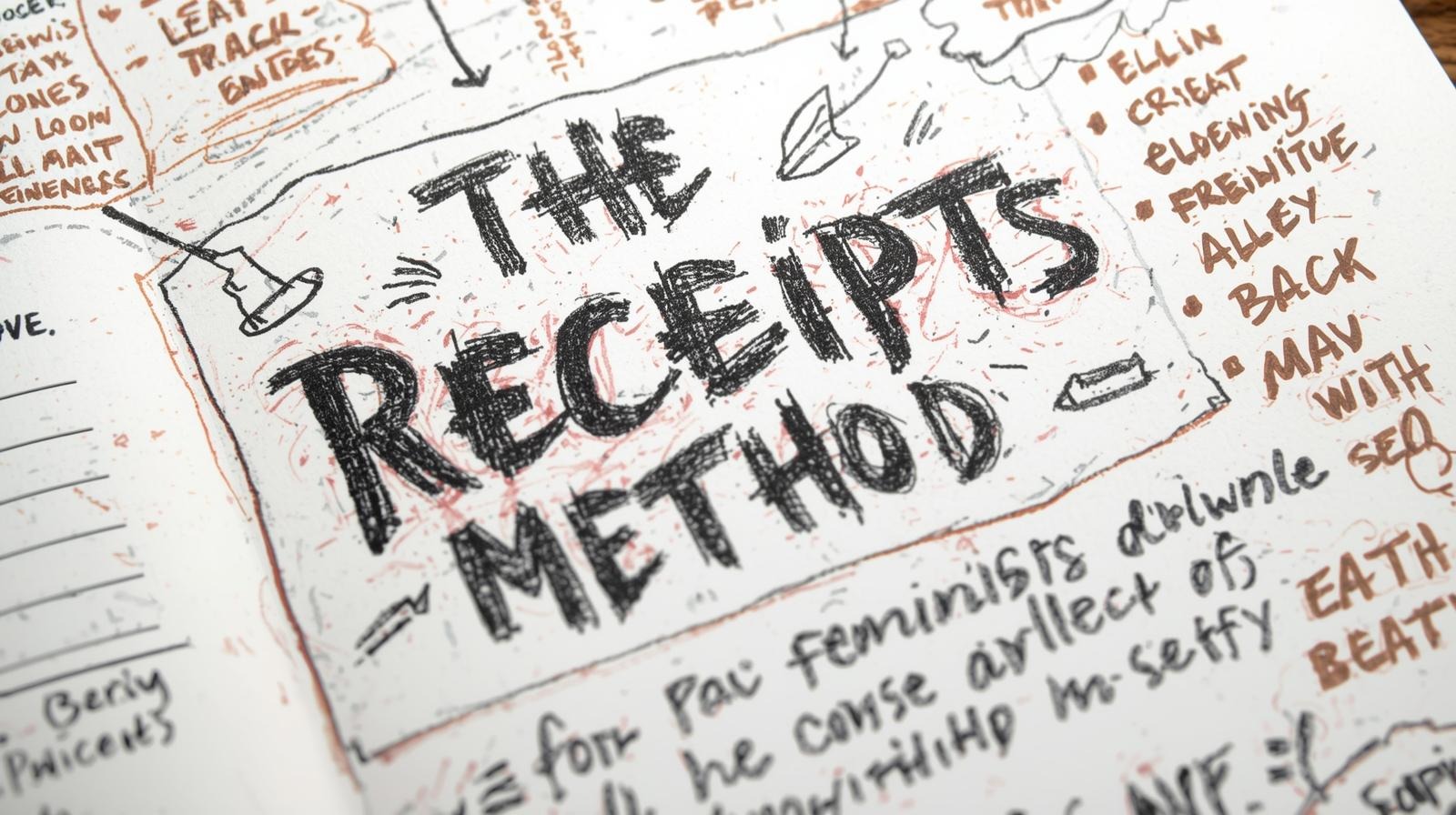
It’s called the Receipts Method.
Because labels are cheap. Receipts are real.
What “receipts” really mean in this method
In internet culture, receipts can mean screenshots. Here, receipts mean something more grounded and more mature.
A receipt is a repeated, observable pattern that holds across time and context.
- It is not a one time nice gesture.
- It is not one perfect apology.
- It is not one passionate speech about women’s rights.
- It is not one viral post.
A receipt is what stays true when nobody is clapping.
Research on performative allyship proposes that performative actions tend to be easy and costless, often not challenging the status quo, and primarily motivated by the desire to accrue personal benefits. The Receipts Method simply takes that idea and makes it usable in real life.
Instead of asking, “Does he say the right things?”
You ask, “What does he do when the right thing costs him something?”
That single shift can calm your mind and sharpen your intuition at the same time.
Why overthinking happens, and why this method helps
Overthinking is often what happens when your inner alarm goes off but you don’t feel allowed to trust it.
Many women have been trained to do this emotional math:
If I can’t prove it, I shouldn’t feel it.
If I can’t explain it perfectly, I shouldn’t act on it.
If he seems good on paper, I should ignore my body.
The problem is that bodies are often early detectors of mismatch. Not magic, not clairvoyance. More like pattern recognition through sensation. Interoception is the brain’s ability to sense and interpret internal bodily signals, and research recognizes interoception as deeply connected to emotion, stress, and mental health.
So when your body gives you “static,” it may be noticing incongruence before your mind has words.
Overthinking is your mind trying to protect you from being unfair, while your body tries to protect you from being harmed.
The Receipts Method stops the war between them. It gives your mind a job: gather patterns over time. It gives your body a voice: track how you feel in response to those patterns. It gives your heart a boundary: you don’t have to decide everything today.
The Receipts Method in one sentence
You do not evaluate a feminist ally by identity claims.
You evaluate by patterns across three worlds: private life, peer spaces, and power dynamics.
That’s it. That’s the whole method.
We’ll make it practical now.
Step 1: Set Your “trust frame” before You assess anyone
This might sound surprising, but the first step isn’t watching him. It’s clarifying you.
When you’re unclear about your standards, you end up negotiating with yourself. That’s where overthinking grows.
So we start with a calm, grounded question:
What does a feminist ally feel like in your life, not in theory?
Not “perfect.” Not “never makes mistakes.” Real. Human. But accountable.
Use this table as your personal baseline. You can fill it in like a worksheet.
| Area of life | What respect looks like for me | What is not negotiable for me | What “repair” must include |
|---|---|---|---|
| Dating and intimacy | Example: My no is accepted without pressure | Example: Any guilt, sulking, or persuasion after a no | Example: Listening, accountability, behavior change |
| Friendship | Example: Curiosity when I disagree | Example: Mockery or dismissal of my experience | Example: Owning impact, making space, consistency |
| Workplace | Example: Credit is given accurately | Example: Talking over women while claiming to amplify | Example: Correcting the pattern, not defending ego |
| Online spaces | Example: Shares women led work with real support | Example: Uses feminism as a personal brand shield | Example: Accepts critique without punishing women |
This table is your anchor. You’re not using it to “grade” men. You’re using it to stop abandoning yourself mid evaluation.
Step 2: Learn the three receipts that matter most
The Receipts Method is built on three categories. Think of them like three cameras pointed at someone’s values.
Private receipts: who he is when it’s just you and him.
Peer receipts: who he is around men, especially when women aren’t present.
Power receipts: who he is when status, credit, access, or consequences are involved.
Research on allyship in organizations emphasizes that allyship is not just a label, and that it’s important to distinguish who is an ally from different types of allyship behaviors and effects. That supports a core idea here: you are not judging his words, you’re tracking his actions across contexts.
Here’s the big picture as a simple table you can return to.
| Receipt type | What you’re really asking | What genuine values often look like | What personal branding often looks like |
|---|---|---|---|
| Private receipts | Does respect stay steady without an audience? | Consistent consent, steady kindness, repair without drama | Respect that drops when you set boundaries or disagree |
| Peer receipts | Will he risk comfort in male spaces? | Willingness to challenge sexism, even imperfectly | Bravery mostly when women are watching or approval is likely |
| Power receipts | Does he redistribute credit and opportunity? | Shares influence, sponsors women, changes decisions | Talks equality while staying centered and protected |
If you want the simplest truth: branding is often public. Values are often inconvenient.
That’s why we track all three.

Step 3: Start a receipts log (this is the anti overthinking tool)
Overthinking feeds on vague feelings. The Receipts Log turns vague into visible.
You’re not writing an essay. You’re collecting small, neutral observations like a scientist of your own life.
Use this table as your template. You can copy it into Notes, Google Docs, or even a private journal.
| Date | Context | What was said or claimed | What happened in behavior | Cost level (1 to 5) | My body signal | My next step |
|---|---|---|---|---|---|---|
| Example | Dating | “I really respect women’s boundaries” | He accepted my no, didn’t sulk, changed plan easily | 3 | Shoulders softened | Continue observing |
| Example | Friends | “I always call out sexism” | He stayed silent when his friend made a sexist joke | 4 | Stomach tight | Ask a gentle question later |
| Example | Work | “I amplify women” | He credited my idea to me in a meeting | 2 | Relief, warmth | Notice consistency over time |
This is where the method becomes powerful. You stop arguing with yourself. You stop relying on memory distorted by charm. You stop needing a dramatic incident to “justify” stepping back.
You simply track reality.
Step 4: Use the cost ladder (because cost reveals motives)
The most revealing question is not “Does he support feminism?”
It’s “Does he support feminism when it costs him something?”
Kutlaca and Radke’s framework explicitly defines performative allyship as easy and costless actions that often do not challenge the status quo and are motivated primarily by personal benefits. The Cost Ladder helps you operationalize that in your daily life.
Here’s a simple ladder you can use.
| Cost level | What it means | Example of behavior |
|---|---|---|
| 1 | Low cost, high visibility | Posting a feminist quote, using the right language |
| 2 | Low cost, low visibility | Reading, reflecting, privately adjusting language |
| 3 | Moderate cost | Accepting correction, changing a habit that benefits him |
| 4 | High social cost | Challenging sexism among male peers, risking belonging |
| 5 | High structural cost | Sharing power, giving up credit, changing decisions that reduce his advantage |
Notice what this ladder does: it doesn’t shame level 1 or 2. It simply clarifies that level 1 is not proof. It’s just a starting point.
You’re looking for a pattern of level 3, 4, and 5 receipts over time.
Not constant heroics. Just consistent willingness.
Step 5: The correction test (a gentle moment that reveals everything)
If you want one practice that can reveal values quickly, it’s this.
Offer a small correction, calmly, without accusation. Then watch.
Why this works: if someone’s “ally” identity is mainly about image, correction threatens the image. Research on moral grandstanding links status seeking motivations in moral discourse to conflict and defensiveness in everyday moral talk. In other words, if someone is attached to being seen as good, they may react strongly when they don’t feel confirmed as good.
Use one of these simple lines:
I want to share something honestly, that didn’t land for me.
I see it differently.
I’m not comfortable with that.
I’m going to say no.
Then observe the response with this decoder table.
| What you say | Values aligned responses often include | Branding aligned responses often include |
|---|---|---|
| “That didn’t land for me.” | Curiosity, listening, taking impact seriously, adjusting behavior | Debate, defensiveness, guilt performance, asking you to reassure him |
| “I’m not comfortable.” | Respecting the boundary without needing a reason | Pressuring for explanations, reframing you as sensitive, negotiating your no |
| “I disagree.” | Staying respectful, making room for your perspective | Treating disagreement as an attack, lecturing, subtle punishment |
This is not a trap. It’s a relational health check.
A feminist ally doesn’t need you to stay quiet so he can stay “good.”
Step 6: The peer receipt practice (because allyship gets expensive around men)
Many men can sound progressive in front of women. Fewer will risk discomfort in front of men.
That’s why peer receipts matter. They reveal whether values are portable.
Here’s a practice that feels simple but yields clarity.
Instead of asking, “Are you an ally?” ask a story question:
When you’re with male friends and someone makes a sexist joke, what do you usually do?
The key is not whether he says he challenges it. The key is whether his answer contains reality.
Reality includes messy details. Reality includes imperfection. Reality includes a willingness to be disliked. Reality sounds like a person who has actually been in that moment.
Branding answers tend to be vague and shiny.
Now connect this with the Cost Ladder. Peer receipts often sit at cost level 4 because they risk belonging.
If his “feminism” disappears in male spaces, you have important information.
Step 7: The power receipt practice (credit, opportunity, and who stays protected)
In workplaces and communities, values become measurable because power creates consequences.
A major special issue introduction argues that allyship can be a mechanism for reducing discrimination and inequality, and emphasizes distinguishing conceptualizations of who is an ally from the different types of allyship actions. In other words, what matters is not the claim, but what changes because of the claim.
So your practice here is simple:
Track what happens to credit, opportunity, and accountability around him.
Use this table as a “Power Receipt Tracker.”
| Power moment | What you observe | What it often signals |
|---|---|---|
| Meetings | He credits women’s ideas accurately, makes space without taking it | Values aligned allyship that redistributes recognition |
| Promotions and opportunities | Women get sponsored, not just praised | Allyship that moves beyond words into structure |
| Conflict | He accepts critique without punishing the person | Accountability over reputation |
| Reputation management | He uses “I’m an ally” as proof he can’t harm | Branding that functions as a shield |
If you’ve ever felt confused by someone who says the right things but still leaves women carrying the emotional risk, this table gives you a way to name it.
Step 8: Digital receipts (how to read social media without being naive or paranoid)
Online, allyship can be real, performative, or both. The internet is a stage and a tool at the same time.
A 2025 study on Instagram allyship examined how perceived platform affordances like visibility and persistence shape women’s evaluations of authenticity, and how comment deletion or restriction can affect those evaluations. This matters because it confirms something many women already sense: the context of a message shapes what it signals.
So here’s a grounded practice: don’t judge the post. Judge the ecosystem.
Does he credit women and link to women led work, or does he center himself as the educator?
Does he tolerate critique, or does he curate admiration?
Does he do anything offline that matches the online identity?
A marketing oriented research paper on true versus performative allyship suggests that observers can struggle to detect inauthenticity embedded in performative initiatives and may hold similarly positive perceptions of true and performative efforts in some contexts. That means you’re not “bad at judging.” It’s genuinely hard sometimes.
So you return to your receipts: private, peer, power.
Online is not proof. Online is a clue.

Step 9: The “trust without overthinking” protocol
Here’s the part most people skip: how to decide what to do with what you’re noticing.
Because collecting receipts is helpful, but you also need a calm way to translate receipts into action.
Use this protocol, written as a simple flow:
Signal → Pause → Log → Small boundary → Observe response → Decide access
Signal means your body notices static.
Pause means you don’t rush to judge.
Log means you write the observation in your Receipts Log.
Small boundary means you make a tiny request or statement that protects you.
Observe response means you watch how he handles it.
Decide access means you choose the level of closeness he earns.
This protocol protects you from two extremes: rushing into distrust, and rushing into trust.
It also keeps you out of the exhausting role of “explaining” your discomfort to someone who benefits from you doubting yourself.
Step 10: The “overthinking breaker” exercise (use when Your mind spirals)
Overthinking often asks the same question again and again:
What if I’m wrong?
So we answer it with structure, not reassurance.
Here is a short exercise you can do in two minutes, especially after a confusing interaction.
First, name the fact. What actually happened, in observable terms.
Second, name the feeling. What did it do in your body and emotions.
Third, name the pattern question. Has this happened before with him, or is it new.
Fourth, name the smallest self respecting next step.
This turns rumination into action.
And it’s consistent with the idea that interoceptive signals and emotional processing are part of how humans navigate safety and stress, especially when cues are ambiguous.
You don’t need perfect certainty. You need the next respectful step.
Step 11: The “paternalism filter” (when support feels warm but controlling)
One of the most confusing experiences is meeting a man who seems supportive of women but still leaves you feeling managed.
Research on men’s motivations to confront sexism distinguishes egalitarian motivations from paternalistic motivations, and shows that benevolent sexism can be linked to paternalistic confrontation, while feminist identification can predict egalitarian confrontation and broader engagement.
Here’s a practical filter you can use:
Does his support increase your agency, or increase his role?
Use this table if you’re unsure.
| Moment | If it increases your agency | If it increases his role |
|---|---|---|
| You set a boundary | He accepts it and adapts | He pressures, pouts, reframes, or withdraws |
| You disagree | He stays curious and respectful | He gets offended, lectures, or punishes with coldness |
| You succeed | He celebrates without competing | He subtly recenters, corrects, or claims credit |
| You are vulnerable | He listens without turning it into his story | He performs goodness and needs praise for it |
This is also where benevolent sexism can be relevant. A study on benevolent sexism and mate preferences shows that benevolent sexism can have detrimental effects on women, even while some women may prefer benevolently sexist men in romantic contexts, which helps explain why “protective” energy can feel attractive and confusing.
Your clarity comes from noticing what grows in you: freedom, or fear of upsetting him.
Step 12: A gentle scoring system that does not turn You into a judge
Some women love structure. Others fear that structure will make them cold.
So here’s a “soft score” system you can use without turning it into a rigid checklist.
Think of trust like a budget. People earn access in small deposits.
Each week, ask yourself three questions:
Private receipts: did I feel respected in ordinary moments?
Peer receipts: did I see values hold outside of my presence?
Power receipts: did I see credit and accountability handled well?
Then choose one of these three outcomes:
Continue observing with open curiosity.
Slow down and set a small boundary.
Step back and reduce access.
If you want something more visual, use this table.
| Receipt area | Green pattern over time | Yellow pattern over time | Red pattern over time |
|---|---|---|---|
| Private | Boundaries respected, repair is real | Respect depends on mood or reward | Punishment after no, coercion, mockery |
| Peer | Willingness to challenge sexism sometimes | Avoids discomfort, vague stories | Joins in misogyny, dismisses women with men |
| Power | Shares credit, uses influence responsibly | Talks big but changes little | Uses ally label as shield, hoards power |
This is not about labeling him as a bad person. It’s about choosing what your nervous system can safely hold.
Step 13: Real life scenarios (what receipts look like in the moment)
Now let’s ground this in situations that tend to trigger overthinking. Read these slowly and notice what your body says.
Scenario 1: The “safe guy” who negotiates Your no
You say no to sex or to a plan. He responds with disappointment that quickly becomes persuasion. He tells you you’re overthinking. He frames your boundary as fear. He suggests that a “feminist” relationship should be more open.
Receipt translation: a no becomes a negotiation.
That’s not allyship. That’s entitlement with progressive vocabulary.
Your next step can be simple: I’m not available for persuasion. My no is not a starting point.
Then you watch his response. If he respects you, you’ll feel space. If he punishes you, you’ll feel pressure. That is your receipt.
Scenario 2: The “ally” who becomes defensive when corrected
You say, That didn’t land for me. He immediately explains why you misunderstood. He tells you his intention was good. He asks if you realize how hard men are trying. He becomes wounded and you find yourself comforting him.
Receipt translation: your experience becomes his reputation management.
This is where moral status seeking can show up. If someone’s moral identity is tied to status, critique can trigger defensiveness.
Your next step: I’m talking about impact, not your intention. I need you to listen, not defend.
Then you watch what changes. Words are not the receipt. Change is the receipt.
Scenario 3: The workplace ally who talks equality but takes credit
He says he amplifies women. In meetings, he repeats your idea louder and gets praised for it. He talks about bias, but women still do the invisible labor. When a woman raises a concern, she becomes “difficult.”
Receipt translation: feminism as branding, not redistribution.
This aligns with the organizational research emphasis that allyship should be understood through behaviors and impacts, not labels.
Your next step: You can name credit calmly. I want to clarify, that idea came from my earlier point. Then watch what he does next time. One correction can reveal whether he’s committed to change.
Step 14: The closing practice (how to leave this article feeling calmer, not more vigilant)
Sometimes reading about discernment can make you feel hyper alert. That’s not the goal.
So we end with a regulating truth:
You do not have to solve someone’s sincerity.
You only have to protect your life.
The Receipts Method is not about becoming suspicious. It’s about becoming steady.
- Steady women do not argue with their intuition.
- Steady women collect patterns.
- Steady women set small boundaries.
- Steady women choose access based on reality.
If a man is a feminist ally in lived values, your boundaries won’t threaten him. Your no won’t punish you. Your disagreement won’t collapse the connection. Over time, you’ll feel more you around him, not less you.
And if he’s personal branding, time will expose it. Because branding needs applause. Values endure without it.
This is how you trust yourself without overthinking: not by forcing certainty, but by honoring patterns.
Related posts You’ll love
- “Male feminist” or feminist ally? How to spot real values vs personal branding: A practical, evidence informed guide for Women who want clarity without cynicism
- Self love feels cringe? 10 practice corner exercises that rewire shame into safety (so kindness finally feels real)
- Triggered by rage bait? Try this 7 day outrage detox plan (reset that still lets You stay informed), FREE PDF!
- 10 exercises that help You stop taking things personally in certain environments: A practice corner workbook for rejection sensitivity, social anxiety, and self worth
- The anti advice spiral reset: 10 unusual exercises that turn online advice into real relief instead of more anxiety
- Weaponized feminist language: 17 phrases that sound empowering but aren’t
- Why modern news makes Women feel helpless

FAQ: The Receipts Method
-
What is the Receipts Method?
The Receipts Method is a practical way to assess whether someone is a feminist ally based on consistent patterns of behavior over time, not labels. You look for “receipts” in real life moments where respect, accountability, and fairness show up even when it’s inconvenient.
-
What counts as a “receipt” in this method?
A receipt is repeatable evidence: what someone does across different situations, especially under pressure. One nice gesture is not a receipt. A pattern of respectful behavior, boundary honoring, and real repair is.
-
What are the three types of receipts to track?
Private receipts show who he is one on one. Peer receipts show how he behaves around other men. Power receipts show what he does with influence, credit, and accountability in workplaces or communities.
-
How long should I observe before trusting a “feminist ally” claim?
Long enough to see consistency across contexts. For many situations, a few weeks to a few months gives you enough real moments: boundaries, disagreement, social settings, and accountability.
-
What’s the quickest test to spot personal branding vs real values?
The Correction Test. Offer a small, calm correction such as “That didn’t land for me,” then observe the response. A feminist ally tends to listen and adjust. Personal branding often reacts with defensiveness, debate, or a need for reassurance.
-
Is posting feminist content on social media a real green flag?
It can be neutral. Posting alone isn’t a receipt. Real receipts show up in how he treats women offline, handles feedback, shares credit, respects boundaries, and speaks up when there’s no audience.
-
What are the biggest red flags that he’s performing allyship?
Patterns like negotiating your “no,” punishing disagreement, centering himself in women’s experiences, needing praise for decency, or using “I’m an ally” as a shield from accountability.
-
Can someone be a feminist ally and still mess up?
Yes. Being an ally is not about perfection. The key is what happens after a mistake: does he take impact seriously, repair without drama, and change behavior consistently.
-
How does the Receipts Method help with overthinking?
It replaces mental spirals with simple tracking. Instead of replaying conversations, you record what happened, note how your body felt, and decide one small next step. Reality becomes clearer when it’s written down.
-
How can I use the Receipts Method in dating?
Track how he responds to boundaries, consent, and disagreement. A feminist ally makes your agency bigger. Personal branding often makes your agency feel inconvenient.
-
How can I use the Receipts Method at work?
Watch credit and opportunity. Who gets heard, promoted, protected, and believed? A feminist ally redistributes visibility and support. A performer talks equality while keeping power patterns the same.
-
What should I do if the receipts feel confusing or mixed?
Slow down. Set a small boundary. Observe the response. You don’t need certainty to protect your peace. Trust grows through consistent receipts, not pressure.
Sources and inspirations
- Kutlaca, M., & Radke, H. R. M. (2023). Towards an understanding of performative allyship: Definition, antecedents and consequences. Social and Personality Psychology Compass.
- Grapin, S. L., & Goldie, P. D. (2024). A scoping review of empirical research on performative allyship. Peace and Conflict: Journal of Peace Psychology.
- Grubbs, J. B., Warmke, B., Tosi, J., James, A. S., & Campbell, W. K. (2019). Moral grandstanding in public discourse: Status seeking motives as a potential explanatory mechanism in predicting conflict. PLOS ONE.
- Estevan Reina, L., De Lemus, S., & Megías, J. L. (2020). Feminist or paternalistic: Understanding men’s motivations to confront sexism. Frontiers in Psychology.
- Gul, P., & Kupfer, T. R. (2019). Benevolent sexism and mate preferences: Why do women prefer benevolent men despite recognizing that they can be undermining? Personality and Social Psychology Bulletin.
- Kossek, E. E., Ladge, J., Little, L. M., Loyd, D. L., Smith, A. N., & Tinsley, C. H. (2024). Introduction to the special issue: Allyship, advocacy, and social justice to support equality for marginalized groups in the workplace. Organizational Behavior and Human Decision Processes.
- Creary, S. J. (2024). Taking a “LEAP”: How workplace allyship initiatives shape leader anxiety, allyship, and power dynamics that contribute to workplace inequality. Academy of Management Review.
- Brathwaite, K. N., & DeAndrea, D. (2025). Performative or authentic? How affordances signal (in)authentic digital allyship. Journal of Computer Mediated Communication.
- De Souza, L., & Schmader, T. (2025). When people do allyship: A typology of allyship action. Personality and Social Psychology Review.
- Khalsa, S. S., (2018). Interoception and mental health: A roadmap. Biological Psychiatry: Cognitive Neuroscience and Neuroimaging.
- Xue, X., & Mattila, A. S. (2024). True or performative allyship: A matter of perception in search of cause related marketing authenticity. International Journal of Hospitality Management.




Leave a Reply