Table of Contents
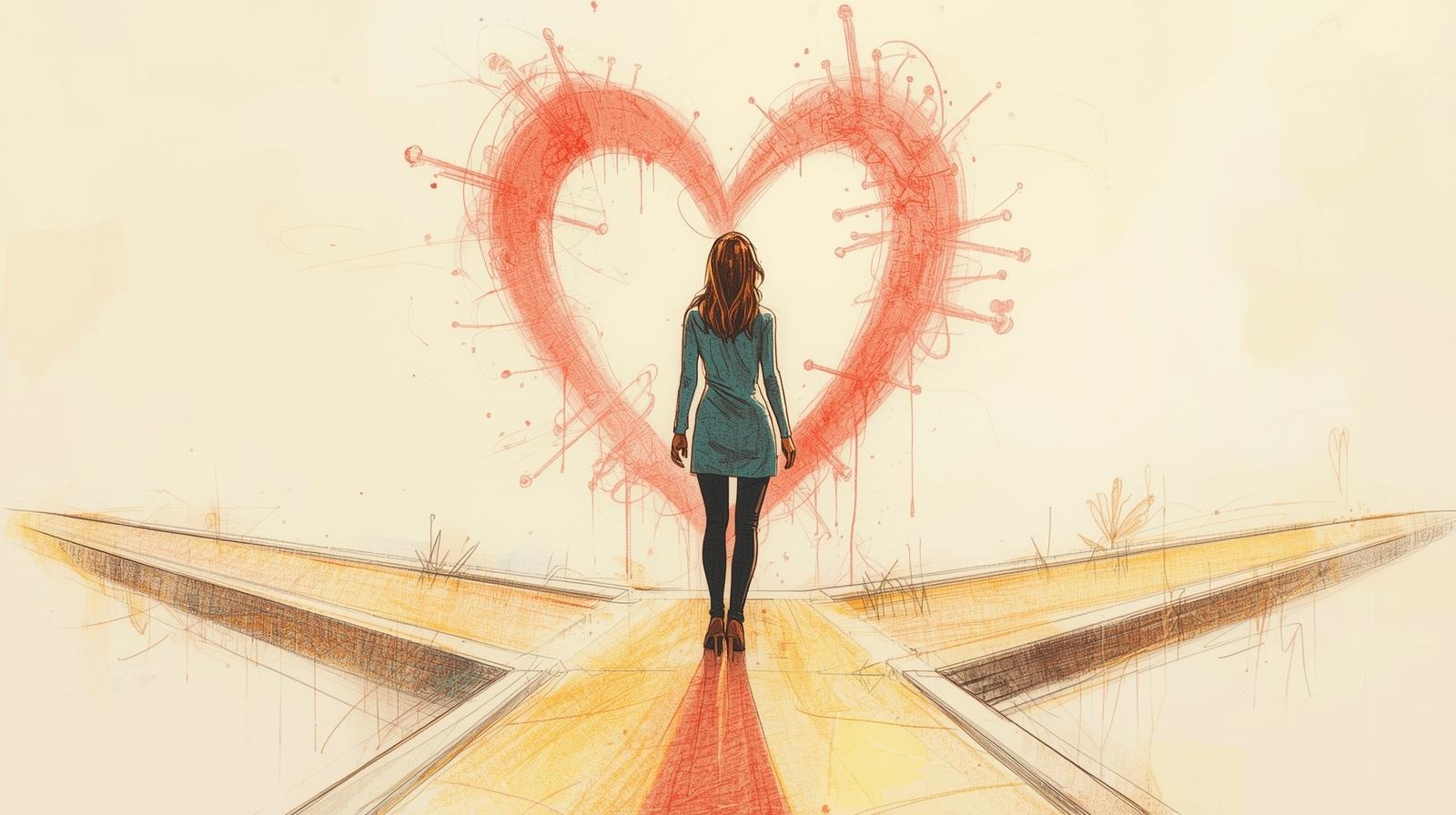
Have you ever caught yourself spiraling on a Sunday night, thinking, “I just want a boyfriend”—and then noticing that the fantasy isn’t really about a specific person at all?
It’s about someone picking you. Texting you first. Posting you. Choosing you publicly and privately so that the quiet part of you that feels like “too much” or “not enough” can finally exhale.
This article is about that ache.
We’re going to treat it not as something shallow or embarrassing, but as a completely understandable response of a nervous system that has learned: “I only matter when someone else chooses me.” We’ll walk through the psychology, attachment patterns, modern dating, and—most importantly—how to start feeling chosen without outsourcing your worth to someone’s “good morning” text.
This is written for Mindful Reads on careandselflove.com: warm, evidence-informed, and honest. Take what resonates. Leave what doesn’t. But let’s really talk about it.
“I want a boyfriend” is often emotional code for “I want to feel safe and special”
When most people say “I want a boyfriend” (or partner), they don’t usually mean:
“I have deeply reflected on my values, compatibility needs, conflict styles, and I am ready for a mutual, secure bond with another human.”
They usually mean something more like:
“I’m tired of feeling like the extra in my own life. I want to feel chosen for once.”
Psychological research suggests that the desire for a romantic partner is not only about sex or companionship. It is often tied to deeper needs for belonging, security and self-worth. A 2022 review of attachment research, for example, found that higher attachment anxiety is linked to a stronger desire to have a romantic partner, especially when people feel uncertain about their own lovability.
At the same time, newer work on singlehood shows something very important: people who experience being single as a chosen state, and who are not driven by fear or shame, do not show the same dips in well-being as those who feel “left behind” or “unwanted.”
So it’s not just whether you are single or partnered. It’s how you hold that status inside your own body. For some, single = free. For others, single = unchosen and unworthy.
When you say “I want a boyfriend,” you might be saying:
- I want a witness to my life so it doesn’t feel like it disappears when I close my front door.
- I want to stop feeling like I am always the one waiting to be invited in.
In other words, you may not be craving a title. You may be craving a regulated nervous system, consistent emotional responsiveness, and proof that you matter.
The hidden need under “I want a relationship”: To feel chosen, seen and safe
Psychologists talk about our fundamental psychological needs—autonomy, competence and relatedness. When those needs are met, we feel grounded and alive; when they’re not, we feel empty or desperate.
Feeling “chosen” sits right at the intersection of those needs:
- Relatedness: “Someone genuinely wants to be close to me.”
- Competence: “I’m not failing at love; I’m capable of being loved.”
- Autonomy: “I am not being forced or pressured; someone chooses me freely.”
Modern relationship science adds another key concept: perceived partner responsiveness. This means feeling that a partner really understands you, cares about you and respects your needs. When people feel their partner is responsive, they report higher satisfaction, better well-being and greater resilience during stressful times.
Being “chosen” isn’t just about being picked once on a dating app. It’s about feeling emotionally responded to again and again.
To make this more concrete, look at the difference between the surface want and the deeper need.
Table 1. “Boyfriend” vs “being chosen”
| When you say… | Your nervous system may actually be asking for… |
|---|---|
| “I want a boyfriend.” | Consistent emotional responsiveness → someone who texts back, follows through and stays when things get real. |
| “I want someone to show me off.” | Felt visibility → knowing you are not a secret, and feeling proud to be seen as you are. |
| “I want couple photos and holidays together.” | Secure belonging → predictable presence, rituals and shared memories that signal “I’m not temporary.” |
| “I want good morning / good night texts.” | Everyday anchoring → a felt sense that you exist in someone’s mind even when you’re not physically there. |
| “I want to stop being the only single friend.” | Social safety → relief from shame stories like “I’m behind” or “nobody ever chooses me.” |
When the deeper needs go unaddressed, the brain looks for a shortcut symbol that seems to guarantee them. “Boyfriend” becomes that symbol, even though many relationships don’t actually deliver what you’re really hungry for.
Attachment styles, rejection sensitivity and the ache to be chosen
Your history of connection—especially early caregiving and previous relationships—shapes your attachment style, which is basically your nervous system’s relationship template: “What do I expect from love, and what do I think I deserve?”
Research consistently shows that attachment anxiety is linked to a stronger desire for a romantic partner and more distress when that desire feels blocked.
People with anxious attachment tend to fear abandonment. They often think, “If you don’t actively choose me, I disappear.” Studies have found that anxiously attached individuals:
- Are more likely to use dating apps and to use them to seek romantic relationships and reassurance.
- Report higher rejection sensitivity and more negative emotional experiences in both online and offline encounters.
In other words, if you’re anxiously attached, your system may be wired to scan for signs that you’ve been “unchosen”, and you may use dating and relationships to calm that alarm.
People with avoidant attachment often keep emotional distance to protect themselves. On the surface, they may say they don’t care about being chosen. Yet avoidance can mask a deep fear of depending on anyone. Some avoidant people engage in low-investment dating—keeping options open without letting anyone close enough to truly “choose” them.
Securely attached people can still long for love and partnership, but the longing feels less like emergency sirens and more like a desire. Their sense of worth is less dependent on whether someone chooses them in this exact moment.
You are not your attachment style. But understanding it helps you see why “I just want a boyfriend” may feel like survival, not preference.
Table 2. How “feeling chosen” shows up across attachment styles
| Attachment pattern | Core fear | How “being chosen” is sought | How it can backfire |
|---|---|---|---|
| Anxious | “I’ll be abandoned or replaced.” | Constant checking: messages, social media, dating apps; intense relief when someone shows interest → then panic when it fades. | You may ignore red flags, overfunction, or stay in painful situations just to avoid feeling unchosen. |
| Avoidant | “If I depend on you, I’ll be trapped or hurt.” | Downplaying needs, appearing indifferent, keeping several “maybes”; secretly wanting someone to insist “I choose you anyway” but also fearing it. | Partners may feel pushed away, so you rarely experience being steadily chosen in a way that feels safe. |
| Disorganized / fearful | “Connection and danger feel intertwined.” | Oscillating between extreme closeness and extreme distance; craving dramatic signs of being chosen. | Relationships feel like emotional whiplash, reinforcing the belief that love is unstable. |
| Secure | “I’m worthy of love, and others are generally trustworthy.” | Openly stating desires and boundaries; looking for mutual choosing rather than chasing. | Less likely to stay in situations where you’re merely “option number three.” |
If you recognize yourself here, nothing is “wrong” with you. Your system is acting on old data. The task now is not to shame that part of you, but to give it updated information: you are allowed to feel chosen without sacrificing yourself.

How dating apps turn “being chosen” into a slot machine
Now layer modern dating culture on top of all this.
Dating apps and social media have turned being chosen into a visible, countable metric: matches, likes, comments, views, messages. For an attachment-anxious nervous system, that’s like putting a flashing casino inside your phone.
Studies show that:
- People higher in attachment anxiety are more likely to use dating apps and to swipe more, seeking reassurance and potential partners.
- Anxiously attached users report more negative emotions and feeling “used” after sexual encounters, particularly with partners met via apps.
- Psychosocial vulnerabilities like social anxiety and rejection sensitivity can fuel problematic dating app use, where people keep swiping despite feeling worse, not better.
The platform design itself reinforces the idea that your worth is measured by how many strangers choose you in a curated two-second window.
On a lonely night, the logic quickly becomes:
“If I get more matches → I’m more lovable.
If no one matches today → something is wrong with me.”
This is brutal math for a human heart.
Let’s map what actually happens.
Table 3. Dating-app behaviors and the emotional need underneath
| What you might do | What it looks like on the outside | What your nervous system may be trying to achieve |
|---|---|---|
| Late-night swiping marathons | “Just checking what’s out there” | Trying to regulate loneliness and anxiety by gathering micro-moments of “being wanted.” |
| Obsessing over why someone stopped replying | “I just want closure” | Desperately seeking proof that you weren’t “wrong” to hope, and that you’re still chooseable. |
| Saying yes to dates you’re not excited about | “Keeping my options open” | Hoping that any external choosing will soothe the sense of being behind or invisible. |
| Ruminating when a situationship doesn’t “upgrade” | “Why won’t they commit?” | Equating commitment with proof that you’re finally chosen and safe. |
None of this means dating apps are evil or that you shouldn’t use them. It simply means that, without awareness, the apps can amplify the pain of feeling unchosen and keep you chasing pixel-level validation.
The emotional cost of living like You’re “waiting to be picked”
Living from the belief “I only matter when someone chooses me” doesn’t just hurt in your love life. It quietly shapes your mental health, your boundaries, and even your sense of identity.
Research on loneliness and relationships shows that loneliness is associated with lower relationship satisfaction, more conflict, and higher psychological distress. Insecure attachment and online connection-seeking can intensify this loop: people who feel lonelier and more insecure spend more time on social media and digital platforms, often without feeling more connected in a meaningful way.
Emotionally, this can lead to:
You override your body’s “no” in order to protect your identity as “the chosen one.” You may say yes to dates, conversations or situations that drain you, because the pain of feeling unwanted feels worse than the pain of self-betrayal.
You mistake urgency for intensity. When someone finally gives you attention, the rush of relief can feel like chemistry. In reality, your nervous system is just experiencing the temporary quieting of the “I am unchosen” alarm.
You organize your life around potential partners. Your plans, your free time, even your creative energy quietly orbit around the hope that today might be the day I get picked.
You feel ashamed of wanting love. Ironically, the more desperate you feel to be chosen, the more you may judge yourself as “needy,” “pathetic,” or “behind,” which deepens isolation.
This is not you being dramatic. For many people, especially those with histories of emotional neglect, inconsistent caregiving or relational trauma, being chosen is not a luxury—it feels like proof of existence.
So how do you step out of that script without shaming the parts of you that are just trying to keep you safe?
Self-compassion: Choosing Yourself before You ask anyone else to
A lot of advice about “not needing a boyfriend” sounds like spiritual bypassing:
“Just love yourself more.”
“You have to be happy alone first.”
“When you stop wanting it, it will come.”
Helpful? Not really. It tends to shame the need instead of understanding it.
Self-compassion offers a different path. Instead of telling yourself you shouldn’t feel this way, self-compassion invites you to respond to your longing with the same kindness you would offer a close friend.
Research over the past decade shows that self-compassion:
- Is linked to better psychological well-being and resilience.
- Is associated with higher relationship quality and healthier romantic behavior.
- Predicts not only a person’s own relationship satisfaction but sometimes even their partner’s satisfaction, especially when self-compassion is practiced in a balanced, non-avoidant way.
In other words, learning to choose yourself isn’t a consolation prize. It’s a relational skill that changes how you show up with others.
What does “choosing yourself” actually look like in this context?
It can sound like:
“Of course I want to feel chosen. That makes sense, given what I’ve lived through. I don’t have to hate myself for that.”
“My longing for connection is not a flaw. It is a sign that I am deeply human.”
“I can care about finding a partner and stop treating my worth as something that rises and falls with someone else’s attention.”
When you respond to your own longing this way, you begin to:
- Reduce the shame that drives desperate choices.
- Create a safe inner base so that rejection hurts but doesn’t annihilate you.
- Shift from “Please pick me so I know I am okay” → “I already know I am worthy. I am looking for someone who can meet me there.”
Rewriting the script: From “I want a boyfriend” to “I want to feel…”
Here’s a small but powerful experiment you can play with in your journal or Notes app. It looks simple on the surface, but it’s a direct way to walk back from “boyfriend as symbol” to “core emotional need.”
Pick a quiet moment and complete these sentences, slowly:
“When I say I want a boyfriend, what I really want to feel is…”
Write everything that comes up, uncensored. It might be: safe, chosen, admired, less alone, proud, desirable, important, prioritized.
Then, take each of those words and ask:
“What would it look like to offer myself a 1% version of this feeling, today, without waiting for anyone else?”
For example:
If you write “I want to feel chosen,” you might ask:
What would it look like to choose my own needs in one small way today? Maybe it is saying no to a draining conversation, cooking something that genuinely nourishes you, or closing the dating app when it’s making you feel worse.
If you write “I want to feel seen,” you might ask:
How can I let myself be seen in a low-stakes, safe way? Maybe you share honestly with a friend, show your creative work to someone you trust, or allow yourself to be visible in a community that isn’t based on romantic desirability.
If you write “I want to feel safe,” you might ask:
Can I notice one moment today when I already feel a bit safer—on your couch, in your bed, on a walk—and actually let your body register that safety instead of racing past it?
The goal is not to replace relationships with self-help rituals. It is to stop treating a romantic partner as the only legal channel for certain feelings.
You are allowed to feel chosen by your own choices.
You are allowed to feel wanted by your friendships, communities, and by life itself—not just by whoever has your heart right now.
Think of it as changing the direction of the arrow:
Before: external choosing → internal okayness
After: internal choosing → clearer, healthier external choosing

When You no longer need to be chosen to feel worthy, love changes shape
So what does healthy choosing look like when you’re no longer using it as a bandage for worthiness wounds?
Relationship research offers a helpful clue: mutual responsiveness. People report happier, more stable relationships when both partners consistently try to understand each other’s needs, validate each other’s feelings and show up in ways that matter to the other person.
When you’re not desperate to be chosen, you can start to ask very different questions on a date or in a situationship:
Not just: “Do they want me?”
But also: “Do I like how my nervous system feels around them?”
Not just: “Will they pick me?”
But: “Do they show up in a way that feels emotionally responsive?”
Not just: “Can I finally call someone my boyfriend?”
But: “Is this a relationship where we are actively, repeatedly choosing each other in ways that honor our needs and humanity?”
The shape of the relationship starts to change:
You feel less pressure to perform or mold yourself into “girlfriend material,” because you are not auditioning for your worth.
You can tolerate slower pacing, ambiguity and even disappointment, because you aren’t treating every interaction as a verdict on your lovability.
You can leave situations that are technically relationships but emotionally unchosen—those dynamics where you’re present in name but invisible in practice.
And when someone does choose you, it lands differently. It feels like a beautiful addition to a life you already recognize as yours, not like a rescue mission from your own existence.
Bringing it all together: You want the experience of being chosen, not just the status
If you take anything from this, let it be this:
There is nothing silly, shallow or shameful about wanting to feel chosen.
That longing is wired into our biology and shaped by our histories. It shows up more intensely when attachment is insecure, when loneliness is high, or when digital life keeps dangling tiny proofs of worth in front of us without ever fully satisfying the need.
But you also deserve more than a life organized around waiting to be picked.
You deserve to feel:
- That your existence matters even when nobody is texting you.
- That your needs are allowed to take up space even if it risks losing someone.
- That your value is not up for negotiation each time a match doesn’t reply.
The work is not to convince yourself you “don’t want a boyfriend.” You might genuinely want partnership, intimacy, shared life, co-created memories. That’s beautiful.
The work is to separate the desire for real, mutual love from the desperate scramble to feel chosen at any cost.
When you start choosing yourself—in small, imperfect, compassionate ways—something subtle shifts. You stop asking, “How do I get someone to pick me?” and begin asking, “From the place where I already know I am worthy, who feels genuinely good to choose?”
That’s where love stops being a verdict on your worth and becomes what it was always meant to be:
Two already-whole humans, continuously choosing each other—freely, consciously, and with care.
Related posts You’ll love
- Practice corner: The 30-day green flag lab — Train Your nervous system to recognize real safety in dating
- Dating green flags: A science-backed guide to choosing well without losing Your calm
- From anxious to anchored: A 7-day texting tolerance reset for modern dating
- Attachment styles in Women: How they show up in modern dating (and how to build secure love in the age of apps)
- Why “nice girl syndrome” keeps Women trapped in unhealthy dynamics
- Situationship fatigue: When You’re too tired for games but still want love. (Psychology, warning signs, and how to heal)
- The boysober reset workbook: 30 days to break the validation loop (without shaming Yourself), FREE PDF
- The “He doesn’t get it” Stress: How to stay calm while being misunderstood

FAQ: Wanting a boyfriend vs wanting to feel chosen
-
What does it mean if I want a boyfriend mainly to feel chosen?
When you notice that you mostly want a boyfriend to feel chosen, it usually means you are longing for emotional safety, validation and a sense of being special rather than a specific person. Instead of truly desiring a particular relationship, your nervous system may be craving proof that you are lovable and not “behind.” This is very common and often connected to attachment wounds, past rejection or emotional neglect. Becoming aware of this pattern is the first step toward building healthier, more secure connections.
-
How do I know if I want a real relationship or just validation?
A helpful sign is how you feel when you imagine the relationship in detail. If you focus mostly on the status, the label “boyfriend,” or the way the relationship would look to others, you may be chasing validation more than genuine connection. If you can picture shared values, mutual emotional safety and how you both navigate conflict, you are more likely wanting a real, emotionally responsive relationship. Honest journaling and slowing down your dating pace can help you tell the difference.
-
Is it normal to feel ashamed about wanting a relationship so badly?
Yes. Many people feel ashamed of how much they want a relationship, especially in a culture that praises independence while glorifying romantic love. The shame usually comes from an inner story that needing connection makes you “weak” or “too much.” In reality, wanting to love and be loved is deeply human, and the goal is not to get rid of the desire but to hold it with more self-compassion and less self-judgment.
-
What does my attachment style have to do with wanting to feel chosen?
Your attachment style shapes how safe you feel in close relationships and how you interpret being chosen or rejected. If you tend toward anxious attachment, you may experience intense fear of abandonment and read every silence as proof that you are not enough. If you lean avoidant, you may downplay your need to feel chosen while secretly longing for someone to stay. Understanding your attachment style can help you see your dating patterns more clearly and choose relationships that feel more secure and balanced.
-
Can dating apps make my need to feel chosen worse?
For many people, yes. Dating apps turn attention and interest into visible numbers—matches, likes, swipes—which can easily become a scorecard for your worth. If you already feel insecure or lonely, you may start using apps to regulate your self-esteem, checking them constantly to see if anyone wants you. This cycle can leave you feeling more anxious and unchosen, even when you get matches, because the underlying need for deep, consistent connection isn’t being met.
-
How do I stop basing my self-worth on whether someone wants me?
Start by noticing when your mood rises or crashes based on texts, matches or dates, and gently name it: “My brain is trying to use this person as a mirror for my worth.” Then, practice small acts of choosing yourself each day—honoring your boundaries, investing in friendships, nurturing your interests and talking to yourself with more kindness. Over time, this builds an internal sense of worth that doesn’t collapse when someone pulls away. Therapy or coaching can be a powerful support if this pattern feels deeply rooted.
-
Can I work on feeling chosen while I am still actively dating?
Absolutely. You do not have to pause your love life to do inner work. Instead, you can treat dating as a live “laboratory” where you practice new choices: noticing red flags sooner, honoring your no, and asking whether a connection feels emotionally safe instead of just exciting. When you actively choose yourself while dating, you are much more likely to attract and sustain relationships that are mutual, stable and genuinely nourishing.
-
Does learning to be happy single mean giving up on love?
No. Learning to feel more grounded and self-accepting while single is not the same as giving up on love—it simply means love is no longer your only source of validation. When you feel more at home in yourself, you can approach relationships from a place of curiosity instead of desperation. This tends to lead to better boundaries, clearer choices and partners who are capable of truly choosing you back. Being okay on your own actually creates a healthier foundation for future love.
-
When should I consider therapy for my patterns around feeling chosen?
It may be time to consider therapy when your need to feel chosen is causing intense anxiety, keeping you in painful relationships, or making it hard to function in other parts of your life. If you notice repeating patterns—such as chasing emotionally unavailable people, staying in situationships that hurt, or collapsing after every rejection—a therapist can help you explore the roots of these cycles. Working with a trauma-informed or attachment-focused therapist can be especially helpful for healing the deeper belief that you are only lovable when someone else says so.
Sources and inspirations
- Chin, K., Edelstein, R. S., & Vernon, P. A. (2019). Attached to dating apps: Attachment orientations and preferences for dating apps. Mobile Media & Communication.
- Girme, Y. U., Overall, N. C., & Faingataa, S. (2018). Toward a psychology of singlehood: An attachment-theory perspective on long-term singlehood. Current Directions in Psychological Science.
- Girme, Y. U., Sibley, C. G., Hadden, B. W., Schmitt, M. T., & Hunger, J. M. (2022). Unsupported and stigmatized? The association between relationship status and wellbeing is mediated by social support and social discrimination. Social Psychological and Personality Science.
- Jacobson, E. H. K., Wilson, K. G., Kurz, A. S., & Kellum, K. K. (2018). Examining self-compassion in romantic relationships. Journal of Contextual Behavioral Science.
- Lathren, C. R., Rao, S. S., Park, J., & Bluth, K. (2021). Self-compassion and current close interpersonal relationships: A scoping literature review. Mindfulness.
- MacDonald, G., & Park, Y. (2021). Associations of attachment avoidance and anxiety with life satisfaction, satisfaction with singlehood, and desire for a romantic partner. Personal Relationships.
- Mao, J., Fu, G.-x., & Huang, J.-j. (2023). The double-edged sword effects of active social media use on loneliness: The roles of interpersonal satisfaction and fear of missing out. Frontiers in Psychology.
- Neff, K. D. (2023). Self-compassion: Theory, method, research, and intervention. Annual Review of Psychology.
- Shorter, P., Turner, K., & Mueller-Coyne, J. (2022). Attachment style’s impact on loneliness and the motivations to use social media. Computers in Human Behavior Reports.
- Timmermans, E., & Alexopoulos, C. (2020). Swiping more, committing less: Unraveling the links among dating app use, dating app success, and intention to commit infidelity. Computers in Human Behavior.
- Visserman, M. L., Muise, A., Righetti, F., Horne, R. M., Le, B. M., Côté, S., & Impett, E. A. (2023). Lightening the load: Perceived partner responsiveness fosters more positive appraisals of relational sacrifices. Journal of Personality and Social Psychology. Advance online publication.

Leave a Reply