Table of Contents
There are seasons of life when excitement feels overrated.
Not because you have become dull. Not because you have “given up.” Not because your imagination has dried up or your passion has disappeared. Sometimes what looks like boredom from the outside is actually relief. Sometimes the same breakfast, the same walk, the same candle at 9 p.m., the same playlist, the same route home, the same weekend ritual—none of it feels lifeless. It feels gentle. It feels breathable. It feels like someone finally stopped shaking the room.
That is the strange tenderness of monotony: under the right conditions, it does not feel like deprivation. It feels like care.
This is the part many people miss. We live in a culture that glamorizes stimulation. Novelty is marketed as growth. Spontaneity is framed as freedom. Reinvention is treated as proof of aliveness. And yet the human nervous system does not feed on novelty alone. It also longs for predictability, rhythm, and forms of repetition that reduce threat and restore internal order.
Research across psychology, behavioral science, and mental health suggests that predictability, controllability, and stable routines can support well-being, especially under stress. Habits are deeply tied to mental and physical health, routines can promote well-being, and disruptions to important daily rhythms are linked with higher anxiety and depressive symptoms.
So when monotony feels soothing, the question is not, “Why am I becoming boring?” A more useful question is, “What is this sameness doing for me?”
Very often, the answer is this: it is reducing uncertainty. It is lowering cognitive demand. It is returning your body to familiar ground. It is giving your mind fewer moving parts to track. It is creating tiny islands of control in a world that may have felt too fast, too loud, too inconsistent, too emotionally expensive.
In that sense, monotony can become a form of informal self-protection—sometimes wise, sometimes limiting, often both at once. Research on anxiety increasingly frames uncertainty as central to anxious suffering, while studies on controllability show that stressors feel less aversive when they are manageable or controllable.
And that is where this conversation becomes more interesting than the usual “routine is good” advice.
Because monotony is not always wellness. But it is not always numbness either.
Sometimes it is the first language safety speaks.
The real reason sameness can feel soft
Most people think comfort comes from pleasure. But comfort also comes from predictability.
Your body does not only ask, “Do I like this?” It also asks, “Can I anticipate this?” “Can I handle this?” “Do I know what happens next?” These questions matter more than many people realize. A growing body of research suggests that uncertainty plays a central role in anxiety, and that predictability and control can alter how stress is experienced. In one human neuroimaging study, controllability reduced stress-related responses in key threat-related brain regions. In another line of work, anxiety is described not simply as fear of danger, but as difficulty learning, tolerating, and navigating uncertainty.
This helps explain why a repetitive life period can feel unexpectedly nurturing. The repetition is not necessarily exciting, but it is legible. It gives the mind a map. It lowers the cost of scanning for surprise. It does not force the nervous system to stay on high alert. That matters, especially if life has recently felt chaotic, emotionally unstable, or full of transitions.
You can think of it like this:
unpredictability → vigilance → decision fatigue → emotional depletion
predictability → familiarity → lower internal friction → temporary relief
That relief is not imaginary. It can be profoundly regulating.
In fact, research on routines suggests that healthy routines are not just empty repetition. They are often repeated, controllable, goal-oriented behaviors integrated into daily life, with consequences that can support well-being. Habit research also shows that frequency and contextual stability help behaviors become more automatic, which means daily living can require less deliberate effort over time.
This is one reason monotony can feel like care: it reduces how much of yourself you have to mobilize just to get through the day.
That is not laziness. That is energy economics.
When your nervous system starts preferring the known over the exciting
One of the most misunderstood emotional shifts in adulthood is this: after enough stress, many people stop craving intensity and start craving repeatability.
They want the café that always tastes the same. The friend who texts back the same way. The evening that unfolds in the same sequence. The home corner that looks unchanged. The weekend ritual that asks nothing dramatic from them. And often, they feel guilty about it. They worry that they are shrinking. They worry that they should want more.
But in many cases, what they are really sensing is a nervous system preference for the known.
This does not mean the known is always best. It means the known is often cheaper.
When life has required too much adaptation, too much emotional interpretation, too many sudden changes, too many ambiguous conversations, too many decisions, too much vigilance, sameness stops feeling dull and starts feeling merciful. Research on predictable behavioral patterns suggests that repetitive, rigid sequences may reduce anxiety by returning the cognitive-behavioral system to more familiar, predictable states. That does not mean every ritual is healthy or that rigidity is inherently healing. It means the pull toward repetition can have a psychological logic.
For some people, that pull is especially strong because predictability has deep developmental value. A 2024 review on early life predictability argues that predictability in early environments has long-lasting implications for stress regulation, attachment, cognition, and emotion regulation. While we should not reduce adult behavior to childhood, this research supports a broader idea: stable patterns matter to how human beings learn safety.
So yes, monotony can feel like care because sameness can communicate a quiet message:
Nothing urgent is about to happen here.
You do not have to perform readiness every second.
You are allowed to settle.
For a tired body, that is not a small gift.
Monotony is not always emptiness; sometimes it is scaffolding
There is a big difference between a life that is repetitive because it is undernourished and a life that is repetitive because it is holding you up.
That distinction matters.
A lot of healing, stabilization, and self-trust are built through forms of repetition that look unremarkable from the outside. Drinking water first thing in the morning. Making the bed. Taking the same walk. Lighting a candle before journaling. Stretching before sleep. Cooking three familiar meals. Texting one safe friend every Friday. Going offline at a certain hour. Reading ten pages before bed. None of these things are glamorous. But many of them become what I would call micro-architecture for calm.
The beauty of that architecture is that it does not depend on motivation staying high. It depends on rhythm.
This aligns with habit research in important ways. Habits influence physical and mental health broadly, and the development of desired habits is central to many forms of behavior change. Research also suggests that habit formation can begin within a couple of months, although timelines vary significantly depending on the person and behavior. Frequency, rewards, and contextual stability all help support automaticity.
In other words, monotony can feel caring because repetition can hold you when willpower cannot.
And that is especially important in seasons when you are depleted, grieving, overstimulated, emotionally raw, or quietly rebuilding yourself.
Table 1. When monotony is care vs. when monotony is a warning

The challenge is not to reject monotony. The challenge is to learn whether your monotony is restorative or restrictive.
The hidden bond between routine and emotional safety
Safety is often misunderstood as something passive, but psychologically it does active work.
A 2023 integrative paper on safety in psychotherapy argues that safety supports survival, restoration, exploration, risk-taking, and integration. That is a fascinating point, because it means safety is not the opposite of growth. In healthy conditions, safety is what makes growth possible.
This matters deeply for understanding monotony.
Sometimes a repetitive season is not your final destination. It is the emotional environment your system needs in order to recover enough to become curious again. Safety first. Exploration second. Stability first. Expansion later.
That sequence is not weakness. It is wisdom.
Many people try to force novelty when what they actually need is restoration. They book the trip, start the new routine, reinvent the wardrobe, sign up for the challenge, say yes to the social invitations—and still feel strangely brittle. Why? Because novelty lands differently in an unregulated system. What looks like “fun” to one nervous system can feel like exposure to another.
So when monotony feels like care, it may be because your body is choosing restoration over stimulation.
There is nothing inherently wrong with that.
In fact, there may be something deeply intelligent about it.
Why boredom and comfort can coexist
This is where the topic gets beautifully complicated.
Monotony can be soothing and boring at the same time.
Those two truths can live together.
Boredom is not a trivial emotion. Research describes it as something that can disrupt motivation, interfere with goal-directed behavior, and overlap with anxiety, depression, and maladaptive coping. Other work links boredom susceptibility with problematic internet use and highlights the importance of meaningful alternatives to boredom-driven coping.
So if monotony feels comforting but also slightly deadening, that does not mean you are imagining it. It means you are experiencing the double edge of repetition.
Sameness can protect you from chaos.
Sameness can also reduce stimulation.
Sameness can calm the system.
Sameness can also narrow the self.
This is why the goal is not endless novelty, but alive stability.
Alive stability is different from stagnation. It gives you rhythm without erasing vitality. It protects your peace without flattening your personality. It reduces overwhelm without making your world emotionally colorless.
That is the version of care worth building.
The three kinds of monotony most people confuse
To make this more practical, it helps to separate monotony into three very different experiences.
1. Restorative monotony
This is the kind that feels warm, intentional, and regulating. It often appears after stress, burnout, heartbreak, transition, or overstimulation. It gives you structure, lowers internal noise, and helps you reconnect with your body and basic life rhythms.
You usually know it is restorative because even though it is simple, it does not feel punishing. It feels like exhaling.
2. Defensive monotony
This kind feels safer than change, but also narrower than it needs to be. It is often driven by avoidance. The routine is not just supportive; it becomes a shield against uncertainty, emotional risk, or anything unfamiliar.
This does not make it “bad.” It just means the sameness is doing protection work. Defensive monotony is often the midpoint between overwhelm and openness.
3. Depleting monotony
This is the kind that no longer protects. It just drains. It feels flat, emotionally distant, disconnected from meaning, and quietly lifeless. You move through the same days, but the repetition no longer restores you. It merely repeats you.
This version deserves attention, because it can overlap with depression, hopelessness, isolation, or chronic disengagement. Disrupted and impoverished routines are linked with higher depressive and anxiety symptoms, and boredom itself is associated with motivational and emotional costs.
The same surface pattern—“my life feels repetitive”—can mean entirely different things depending on what it is doing internally.
That is why self-observation matters more than aesthetics.
Why simple routines can feel more loving than dramatic self-care
There is another reason monotony can feel like care, and it has to do with how self-care is often sold.
A lot of self-care content is aspirational, performative, and strangely exhausting. It tells you to optimize, glow up, transform, elevate, and become the most radiant version of yourself—all while you may simply need lunch, sleep, one honest conversation, and a week without emotional turbulence.
Simple routines are often more loving than dramatic gestures because they are repeatable. And repeatability is what lets care become real.
A face mask once a month may feel nice.
Going to sleep at roughly the same time every night may change your life.
A weekend retreat may feel profound.
A familiar ten-minute evening ritual may carry you through the ordinary days that actually make up your life.
This is why routines deserve more respect than they often receive. Research defines health-supportive routines as repeated, controllable, goal-oriented activities integrated into life, and suggests they can enhance well-being at both individual and environmental levels.
Care that repeats is often more powerful than care that impresses.
That is one of the quiet truths monotony teaches.
The overlooked role of social monotony
Not all monotony is solitary.
There is also such a thing as social monotony, and it can be profoundly comforting. The same friend every Wednesday. The same phone call with your sister. The same bookstore café. The same dinner tradition. The same person asking how you are in a tone your body trusts.
Research in older adults found that routineness in social interactions was associated with higher affective well-being. The study focused on older populations, so it should not be overgeneralized to everyone. Still, it supports an intuitively important point: emotional well-being is not built only through how many relationships we have, but sometimes through how predictable and dependable certain connections become.
There is a kind of care in being expected gently.
There is a kind of healing in repeated, low-drama connection.
Not every life-enhancing relationship arrives as fireworks. Some arrive as familiarity. Some arrive as rhythm. Some arrive as the person who always sends the check-in text when the week gets heavy.
That too is monotony.
And that too can feel like care.
When monotony becomes a nervous system shelter
Let’s name something many people feel but rarely articulate:
Sometimes monotony is a shelter you build after your system has had enough.
Not enough joy. Enough unpredictability.
Not enough ambition. Enough activation.
Not enough options. Enough emotional noise.
In that season, your body may not want adventure. It may want containment.
Here is one useful way to understand it:
Monotony as shelter
→ fewer surprises
→ fewer decisions
→ fewer interpretations
→ less internal vigilance
→ more available energy for baseline functioning
This is not a complete life philosophy. It is a stabilization strategy.
The mistake is not in using it. The mistake is in never revisiting it.
Because what protects you in one season may eventually confine you in another.
The calm space framework: How to know whether Your sameness is helping You
Here is a simple framework you can use inside the article or later as a standalone box-out.
Ask yourself whether your current monotony gives you these five things:
1. Regulation
Does your routine help your body feel calmer, steadier, and less scattered?
2. Function
Does it help you eat, sleep, think, work, and recover more consistently?
3. Meaning
Even if life is quiet, does some part of it still feel emotionally alive?
4. Choice
Do you feel you are choosing this rhythm, or hiding inside it?
5. Capacity
Is the routine helping you regain energy for life, or draining what is left?
If monotony supports regulation, function, and renewed capacity, it may indeed be functioning as care.
If it erodes meaning, shrinks choice, and leaves you increasingly numb, it may be time to gently open the windows.
You do not need chaos to avoid stagnation
This may be the most important practical insight of all:
The alternative to monotony is not chaos.
The alternative is gentle variability.
A lot of people only know two modes:
rigid sameness
or
overstimulating change
But there is a middle path. A very healing middle path.
It looks like this:
stable structure + light novelty
That could mean keeping your morning routine but taking a new walking route once a week. It could mean cooking familiar meals but trying one new ingredient every Sunday. It could mean protecting your quiet evenings while introducing a new book, playlist, or conversation. It could mean honoring your safe rituals while letting one small corner of life stay open.
This matters because psychological safety does not have to mean emotional sameness forever. In fact, safety can support exploration when it is genuine safety rather than fear-based constriction. The psychotherapy literature explicitly frames safety as something that can promote exploration and sustain risk-taking in the right context.
So the goal is not to destroy monotony.
The goal is to soften it into a life that still breathes.
Table 2. A softer alternative to all-or-nothing living

This is not reinvention. It is recalibration.
The 3% novelty rule: A non-dramatic way to stay alive inside a stable life
If you want something unconventional yet practical, here is a principle worth using in your Calm Space content:
The 3% novelty rule
If your life has become repetitive because you need stability, do not try to change 50% of it. Change 3%.
Keep 97% of what is holding you.
Open 3% for curiosity.
That 3% might be:
- a different route home,
- one new recipe each month,
- one honest conversation you have been avoiding,
- one creative ritual added to your evening,
- one class, one walk, one book genre, one weekend hour that is not pre-scripted.
Why such a small number?
Because big novelty can feel like threat when your system is still relying on routine for regulation. Tiny novelty respects what your monotony has been doing for you, while preventing your life from becoming emotionally airless.
It says, “Thank you for protecting me. Now let’s let a little life back in.”
What to do if monotony currently feels like the only thing keeping You together
Then do not shame it.
That is the first step.
Do not mock your need for repetition. Do not force yourself into stimulation because someone else’s life looks more exciting. Do not confuse gentleness with failure.
Instead, ask better questions.
What has this monotony been protecting me from?
What decisions has it saved me from making?
What uncertainty has it reduced?
What part of me relaxes inside it?
And what part of me may now be ready for a little more color?
These questions are more compassionate than “What is wrong with me?”
Because often, nothing is wrong with you.
You may simply be in a season where your body is choosing the most efficient available route to safety.
And once you understand that, you can stop fighting your own nervous system long enough to work with it.
A more honest definition of care
Care is not always warm, poetic, or visibly nurturing.
Sometimes care is repetitive.
Sometimes care is plain.
Sometimes care looks like making your world smaller for a while so your body can stop bracing.
Sometimes care looks like sameness.
Sometimes care looks like lowering the number of variables.
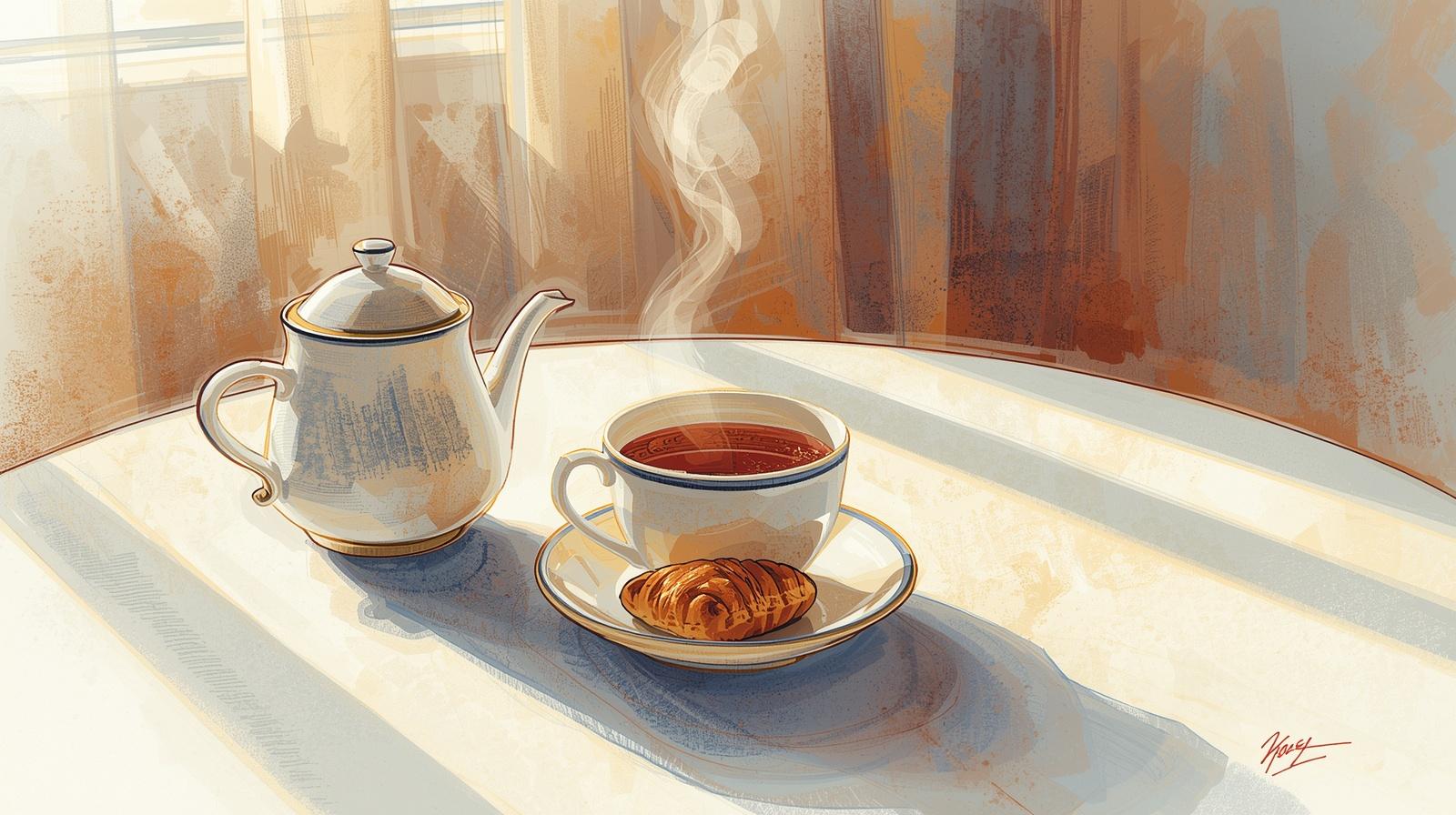
Sometimes care looks like the same tea, same blanket, same song, same route, same morning light.
That does not mean you are meant to live inside emotional beige forever.
It means the ordinary can be medicinal.
And maybe that is one of the most important things to remember in a world obsessed with intensity: not all healing arrives as breakthrough. Some healing arrives as rhythm. Some healing arrives as reduction. Some healing arrives as a life that is finally predictable enough for you to hear yourself think.
Monotony can feel like care because care does not always excite us.
Sometimes it steadies us.
Sometimes it repeats until the body believes it.
Sometimes it says, very quietly, “You are safe enough to unclench here.”
And when that happens, monotony is no longer just monotony.
It becomes a form of tenderness.
One last thought
If your life has felt repetitive lately, resist the urge to judge it too quickly.
Ask what that repetition is doing.
If it is helping you regulate, recover, breathe, sleep, function, and trust your days again, it may not be a sign that you are losing yourself. It may be a sign that some deeper part of you is trying to care for you in the most accessible language it knows: predictability.
At the same time, remain awake to the difference between peace and disappearance. A quiet life should still feel inhabited. A calm life should still contain meaning. A stable life should still let some part of you remain curious.
The healthiest rhythm is not a life with no monotony. It is a life where monotony becomes a soft container, not a locked room.
Let sameness soothe you.
Let routine hold you.
Let predictability restore you.
But when the time comes, let a little beauty, variation, and aliveness back in.
That is not abandoning safety.
That is safety doing what it was always meant to do: helping you live.
Related posts You’ll love
- Outgrown heroine? Update Your personal myth today
- How to make solo evenings feel private, feminine, and full: A soft night routine for calm, beauty, and emotional rest
- Gentle skincare routines as a form of self-love: Nurturing Your skin and Your soul
- Better atmosphere for Women: Why They don’t always need a reset
- The ugly art practice: Make something bad on purpose to calm down
- Stop performing Your healing: The revolutionary, liberating 14 day practice to reclaim real change

FAQ
-
Is it normal to find routine comforting?
Yes. Many people feel calmer when daily life becomes more predictable. Research suggests that routines can support well-being, while controllability and predictability can reduce the aversiveness of stress. That helps explain why repeated patterns often feel regulating rather than boring, especially during stressful periods.
-
Why does monotony feel safe after a hard season?
Because hard seasons often increase uncertainty, decision load, and vigilance. Predictable routines can lower those demands. Studies on anxiety and uncertainty, as well as work on routine disruptions and mental health, suggest that stable rhythms may help people feel less psychologically scattered under stress.
-
Can monotony be a form of self-care?
Yes—when it is intentional and restorative. Repeated, controllable, goal-oriented routines can support well-being and make healthy behavior easier to sustain over time. The key is whether the sameness is helping you function and recover, rather than merely helping you avoid life.
-
What is the difference between healthy routine and unhealthy stagnation?
Healthy routine gives you steadiness, energy, and support. Unhealthy stagnation makes you feel increasingly numb, stuck, disconnected, or afraid of any change. The outside may look similar, but the internal experience is very different.
-
Does boredom mean something is wrong?
Not necessarily. Boredom is a meaningful emotional signal, not proof of failure. Research shows it can affect motivation and overlap with distress or maladaptive coping, but boredom can also simply tell you that your life needs more meaning, challenge, or engagement—not more chaos.
-
Why do I want the same foods, same places, and same rituals when I am stressed?
Familiar choices reduce uncertainty and decision-making. They are easier to anticipate, often emotionally associated with comfort, and may help your system conserve energy. That does not mean you are regressing. It may mean you are self-regulating through familiarity.
-
Can routine actually improve mental health?
Routine is not a cure-all, but evidence suggests it can support mental health. Large-scale findings during the pandemic linked disrupted routines with higher depressive and anxiety symptoms, while regularizing routines appeared beneficial across different stress levels.
-
Is it possible to become too attached to sameness?
Yes. If predictability becomes the only way you feel safe, monotony can turn into avoidance. That is usually not a moral failure; it is a sign your system may still be relying heavily on control to manage uncertainty.
-
How can I keep routine without feeling emotionally flat?
Try pairing structure with gentle novelty. Keep your core rituals, but introduce small, low-pressure variation. The goal is not disruption. The goal is aliveness inside stability.
-
Why do repetitive relationships sometimes feel more healing than exciting ones?
Because consistency can communicate safety. Research on routineness in social interactions suggests that stable, repeated social contact can support affective well-being, at least in some populations. Emotional reliability often calms the body more deeply than intensity does.
-
When should I worry that monotony is masking depression or burnout?
Pay attention if your repetitive life feels joyless, heavy, hopeless, isolating, or increasingly difficult to function inside. If sameness no longer restores you and instead leaves you feeling empty or shut down, it may be worth seeking support from a mental health professional.
Sources and inspirations
- Brown, V. M., Price, R., & Dombrovski, A. Y. (2023). Anxiety as a disorder of uncertainty: Implications for understanding maladaptive anxiety, anxious avoidance, and exposure therapy. Cognitive, Affective, & Behavioral Neuroscience.
- Cannito, L., Ceccato, I., Annunzi, E., Bortolotti, A., D’Intino, E., Palumbo, R., D’Addario, C., Di Domenico, A., & Palumbo, R. (2023). Bored with boredom? Trait boredom predicts internet addiction through the mediating role of attentional bias toward social networks. Frontiers in Human Neuroscience.
- Glynn, L. M., Liu, S. R., Lucas, C. T., & Davis, E. P. (2024). Leveraging the science of early life predictability to inform policies promoting child health. Developmental Cognitive Neuroscience.
- Harvey, A. G., Callaway, C. A., Zieve, G. G., Gumport, N. B., & Armstrong, C. C. (2022). Applying the science of habit formation to evidence-based psychological treatments for mental illness. Perspectives on Psychological Science.
- Lang, M., Krátký, J., & Xygalatas, D. (2022). Effects of predictable behavioral patterns on anxiety dynamics. Scientific Reports.
- Limbachia, C., Morrow, K., Khibovska, A., Meyer, C., Padmala, S., & Pessoa, L. (2021). Controllability over stressor decreases responses in key threat-related brain areas. Communications Biology.
- Liu, H., Tao, T. J., Chan, S. K. Y., Ma, J. C. H., Lau, A. Y. T., Yeung, E. T. F., Hobfoll, S. E., & Hou, W. K. (2024). Daily routine disruptions and psychiatric symptoms amid COVID-19: A systematic review and meta-analysis of data from 0.9 million individuals in 32 countries. BMC Medicine.
- Luo, M., Yordanova, K., Macdonald, B., & Hülür, G. (2024). Routineness of social interactions is associated with higher affective well-being in older adults. The Journals of Gerontology: Series B.
- Ndetei, D. M., Nyamai, P., & Mutiso, V. (2023). Boredom—understanding the emotion and its impact on our lives: An African perspective. Frontiers in Sociology.
- Podolan, M., & Gelo, O. C. G. (2023). The functions of safety in psychotherapy: An integrative theoretical perspective across therapeutic schools. Clinical Neuropsychiatry.
- Ruggeri, S. Y., Emerson, A., & Russell, C. L. (2023). A concept analysis of routines for improving health behaviors. International Journal of Nursing Sciences.




Leave a Reply