
Table of Contents
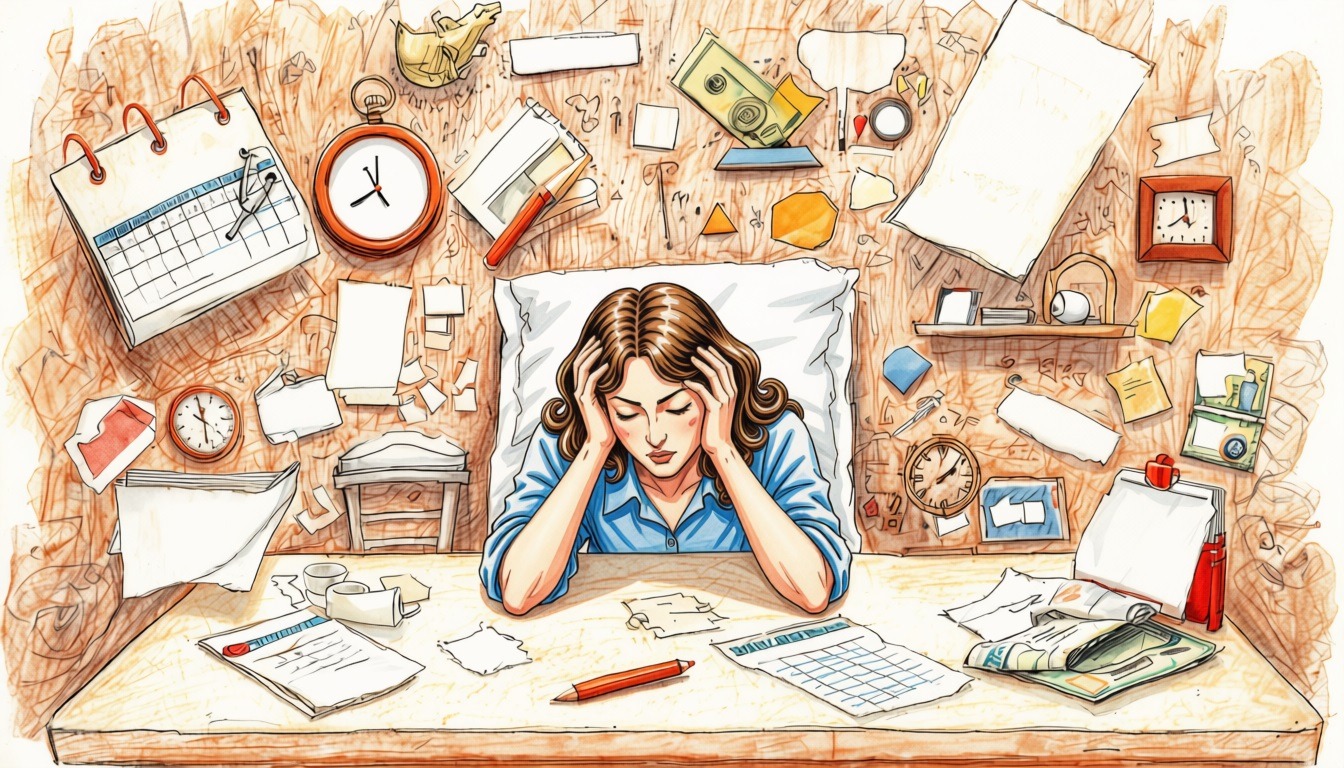
Beauty panic doesn’t always look like panic.
Sometimes it looks like a casual scroll that leaves you strangely tight in the chest. Sometimes it sounds like a tiny, practical voice saying, “I should really fix this.” Sometimes it arrives as a mood shift you can’t explain after seeing a photo of yourself, or after a friend casually mentions a new “treatment,” a “preventative” procedure, a “life-changing” supplement, a “quick reset.”
Beauty panic is the feeling that your body is a problem to solve and your appearance is a risk to manage. It’s not the same thing as enjoying beauty, style, skincare, makeup, fashion, or self-expression. It’s the urgency. The inner alarm that says your body is wrong and time is running out.
That’s why beauty panic can be so confusing. It often pretends to be self-improvement. It dresses as “discipline,” “professionalism,” “high standards,” “being put together.” It can even hide inside self-care language. But the emotional signature is different: beauty panic doesn’t make you feel more alive in your body. It makes you feel monitored inside your body.
And here’s the part many women sense but rarely say out loud: this isn’t just personal. It’s political.
Because if millions of women feel “wrong,” entire industries feel “right.” If women are trained to monitor their faces, bodies, weight, skin, hair, age, and “flaws,” power structures don’t need to monitor women as aggressively. If women are taught to equate visibility with risk, they become easier to shrink, to silence, to sell to.
This article is not a lecture telling you to stop caring how you look. It’s an invitation to take your experience seriously enough to place it in context. If you’ve felt beauty panic, your nervous system is responding to an environment designed to trigger it.
You are not broken. You are not shallow. You are not “too sensitive.”
You are living inside a system that has become extremely skilled at converting insecurity into profit, and profit into control.
Beauty panic has a structure, and structure always leaves fingerprints
If beauty panic were only an individual issue, it would show up randomly and resolve privately. Instead, it shows up predictably, spreads socially, and repeats through patterns that look a lot like a business model.
Beauty panic usually contains three ingredients.
The first ingredient is the trigger. A mirror moment. A photo tag. A harsh changing-room light. A comment that sounded harmless but landed like a tiny verdict. A new trend that makes yesterday’s normal suddenly “not enough.” A life transition like a breakup, pregnancy, postpartum, illness, grief, aging, moving countries, starting a new job, returning to dating.
The second ingredient is the story. A narrative that frames your body as an ongoing “before” image. Not neutral, not lived-in, not human, but improvable. The story doesn’t just describe your appearance; it assigns meaning to it. It whispers that thinness equals control, youth equals worth, flawlessness equals safety, beauty equals belonging.
The third ingredient is the solution, and the solution is usually purchasable. Sometimes it’s a product. Sometimes it’s a subscription. Sometimes it’s a service. Sometimes it’s a procedure. Sometimes it’s a “lifestyle” you can buy your way into. The punchline is always the same: buy this or do this, and the feeling of wrongness will stop.
But if the market depends on wrongness, wrongness cannot truly stop. It can only pause, briefly, long enough for the next trigger to land.
You can see this pattern across research on image-driven social platforms, photo editing, and appearance anxiety. For example, a systematic review in Body Image examined associations between photo-editing behavior and body concerns among females, emphasizing the complexity of the relationship and the measurement challenges, while still reflecting the wider concern that editing practices can interact with body dissatisfaction and modification motives.
Beauty panic isn’t random. It’s engineered by repetition.
From mirrors to metrics: Beauty panic in the attention economy
A mirror shows you a reflection. A feed shows you a ranking.
That difference matters.
In the current attention economy, your appearance isn’t just something you notice; it’s something you can publish, edit, optimize, compare, and measure through feedback. The modern beauty ideal doesn’t simply exist “out there.” It follows you. It learns what you pause on. It predicts what will hook you emotionally.
In an algorithmic environment, beauty panic becomes sticky because it increases engagement. The more you compare, the more you scroll. The more you scroll, the more you encounter content that sharpens the comparison. The more comparison sharpens, the more “solutions” look necessary.
This isn’t speculation in the abstract. A Reuters report on an internal study described how vulnerable teens who reported frequent body dissatisfaction were exposed to substantially more “eating disorder adjacent” and other potentially harmful content, while noting the research could not establish causal direction. Even so, it highlights how platforms can end up feeding sensitive users more of what activates their vulnerabilities.
Adults are not immune to that dynamic. The content may be more polished and framed as “wellness,” “glow-up,” “routine,” “anti-aging,” “soft life,” or “high-value femininity,” but the nervous system effect can be similar: self-surveillance rises.
When self-surveillance rises, two things happen at once.
Your body becomes a project.
Your attention becomes a product.
The beauty panic loop
Exposure → Comparison → Self-surveillance → Anxiety → Fixing behavior → Temporary relief → New standard → Exposure
If you want an even more honest version, it often looks like this:
Exposure → Comparison → “What’s wrong with me?” → Fixing behavior → Relief → Fear of losing the relief → More exposure
Beauty panic isn’t only the feeling of not being enough. It’s the fear that you might finally become enough and then lose it.
That fear is profitable.
Who benefits when Women feel “wrong”?
When we ask who benefits, we are not claiming there is one villain in a dark room planning your insecurities. Systems don’t usually operate like conspiracy. They operate like incentives.
If a behavior produces profit, status, or control, it gets repeated and normalized. If women’s self-doubt reliably produces consumption, compliance, and self-policing, beauty panic will keep being fed.
Here is a clear, “follow-the-incentives” map.
| Beneficiary | What they gain | How beauty panic helps them | What women often pay |
|---|---|---|---|
| Beauty and personal care brands | Repeat purchasing and “must-have” churn | A moving standard turns maintenance into urgency | Money, time, chronic self-judgment |
| Diet, fitness, and “wellness” markets | Subscriptions, programs, supplements | Normal body changes are framed as personal failure | Food anxiety, shame cycles, body distrust |
| Aesthetic medicine and cosmetic procedure markets | High-margin services | “Preventative” correction becomes normalized | Financial strain, medical risks, identity pressure |
| Social platforms built on attention | Screen time and ad revenue | Comparison and insecurity increase engagement | Attention drain, mood volatility |
| Employers and professional cultures with “lookism” | Compliance and “image labor” | Appearance becomes a workplace performance metric | Stress, self-silencing, pay and promotion penalties |
| Patriarchal social norms | Reduced disruption | Self-policing reduces collective challenge | Less voice, less risk-taking, less public presence |
That last line can sound dramatic until you observe it in everyday life: women spending money they don’t have to look “professional,” avoiding leadership visibility when they don’t feel “presentable,” delaying joy until they “fix” themselves, staying quiet in meetings while thinking about their face, clothing, weight, hair.
Beauty panic is a form of social control because it recruits women into self-control.

The “panic tax”: The cost isn’t only money
Beauty panic is expensive, but not only in euros.
It costs time. It costs attention. It costs mental bandwidth. It costs willingness to be seen. It costs energy you could spend on relationships, learning, play, rest, activism, creativity, sexuality, leadership, and the kind of healing that doesn’t come in packaging.
Sometimes the cost is subtle. You spend fifteen minutes “just checking” and lose an hour. You try on five outfits and arrive depleted. You get ready for an event and feel like your body is a problem you’re dragging along.
Sometimes the cost is heavier. Beauty panic can amplify anxiety and depressive feelings, especially when it’s entangled with shame and perfectionism. It can also intersect with disordered eating patterns, compulsive exercise, and avoidance behaviors.
The system doesn’t require you to fully hate yourself. It only requires you to doubt yourself often enough.
A simple way to measure the panic tax
Not because your life needs more metrics, but because sometimes naming the cost makes it harder to dismiss.
| “Panic tax” category | What it often looks like | What it quietly replaces |
|---|---|---|
| Time | Getting ready as a multi-hour ritual fueled by fear | Sleep, hobbies, intimacy, creative work |
| Attention | Scanning your reflection, editing photos, comparing | Presence, focus, learning, connection |
| Money | Products, treatments, new wardrobes, “fixes” | Savings, experiences, therapy, education |
| Confidence | “I’ll do it when I look better” | Visibility, leadership, opportunity |
| Joy | Pleasure postponed until you feel “acceptable” | Spontaneity, play, embodied safety |
Beauty panic becomes political here because time and attention are power. When a population’s attention is consistently redirected inward toward self-correction, it becomes easier to manage outwardly.
Lookism: When appearance becomes a workplace climate
Beauty panic is often framed as vanity, but workplaces quietly tell a different story. Appearance can shape evaluations, credibility, and perceived competence. This is not only about individual bias; it can become a climate.
Research has described “lookism climate” as an organizational environment that implicitly or explicitly values employees’ appearance and treats appearance as a basis for advantage or disadvantage. A study available through the U.S. National Library of Medicine’s PMC archive examined how lookism climate and workplace incivility relate to stress and career perceptions, including the idea that such climates can contribute to “leaks” in the career pipeline by undermining confidence and perceived employability.
This matters because it reveals something women often internalize as personal failure: “I’m not confident enough,” “I don’t have executive presence,” “I’m not polished.”
Sometimes “polished” is a coded demand for gendered aesthetic labor.
And aesthetic labor is labor. It takes time, money, and cognitive energy. When the expected labor falls disproportionately on women, the system benefits from women doing extra work just to be treated as baseline competent.
Beauty panic is political because it turns equality into a performance with an entry fee.
Filters, editing, and the new “normal”: When the baseline stops being human
There is a modern psychological whiplash many women experience: you know images are edited, filtered, curated, or surgically enhanced, yet your body still feels like it’s failing.
That’s not irrational. That’s conditioning.
When edited faces and bodies become the visual baseline, the nervous system compares you to a standard that isn’t real, but is treated as real. Then you are sold “realistic” ways to catch up.
A systematic review in Body Image on photo-editing behaviors highlights how prevalent these behaviors are and how they relate, in complex ways, to body concerns among females. Even when findings are mixed, the cultural context remains important: editing practices make certain alterations feel routine, which can shift expectations of what a “normal” face or body looks like.
Research also explores how beauty technologies and platforms can shape interest in cosmetic procedures. For example, a review and prospective study in the journal Cosmetics discussed how AI, social media platforms, and photo-editing applications can influence cosmetic surgery choices, including associations between filter use and greater acceptance or inclination toward aesthetic surgery in some contexts.
We don’t need to moralize this. People make choices for many reasons. The political question is not “Is it wrong to get a procedure?” The political question is “Who profits when women feel they must?”
Even “unfiltered” content can keep the pressure alive
Sometimes we imagine the problem is only filters. If we could just get rid of filters, we’d feel fine.
But beauty panic is more clever than that. It can attach to “unfiltered” content too, because the underlying mechanism is comparison to an ideal, not just comparison to an edited image.
A study in Body Image (March 2026) tested the effects of filtered idealized videos versus unfiltered idealized videos versus travel videos in adult women. Exposure to travel videos reduced negative affect compared to idealized content, and some differences emerged in facial satisfaction, but overall the study suggests that idealized content can influence mood even without obvious filtering.
In other words, “authentic” can still be curated into a new standard.
Beauty panic doesn’t require obvious deception. It only requires a felt hierarchy.
Beauty panic is a form of self-objectification, and self-objectification has consequences
One of the most quietly brutal aspects of beauty panic is that it pulls you out of being a subject of your life and turns you into an object in your own gaze.
Instead of “I am here,” the inner posture becomes “I am being seen.” Instead of “What do I want?” it becomes “How do I look wanting it?” Instead of “How do I feel?” it becomes “How do I appear feeling it?”
That shift is not just philosophical. It’s psychological, and it has measurable relationships with stress, shame, and reduced well-being.
A meta-analysis in Body Image found that self-objectification remains gendered, with women reporting higher self-objectification than men across many studies and contexts.
This matters because self-objectification is essentially internalized surveillance. You become both the observed and the observer. In a system that benefits from women monitoring themselves, self-objectification is not merely a personal mindset. It is a social product.
Beauty panic thrives when women are trained to believe that being watched is normal.
The political genius of beauty panic: It makes control feel like choice
Here is where the conversation becomes tender and complicated.
Many women will say, sincerely, “But I choose it.” And that can be true. You can choose lipstick. You can choose Botox. You can choose hair color. You can choose gym routines. You can choose fashion. You can choose all of it.
The political question is not whether you have agency. The political question is whether your agency is being targeted.
A system can influence your choices without removing your choices. That’s what makes it effective. You feel free, yet you feel anxious. You feel empowered, yet you feel wrong. You feel like you’re “doing something for yourself,” yet you also feel like you’re paying an invisible fine just to exist in public.
That fine is what we’ve been calling the panic tax.
The wrongness economy
If this article has one unconventional idea, it’s this: beauty panic is not a side-effect of the beauty industry. Beauty panic is a core resource.
Wrongness is an input.
You are not the customer only. You are also the raw material.
Your insecurity generates searches, clicks, purchases, procedures, and engagement. Your engagement generates data. Your data improves targeting. Better targeting increases insecurity triggers. The loop tightens.
Data → Targeting → Comparison → Anxiety → Consumption → Data
This is the Wrongness Economy, and once you see it, you start noticing how often the world tries to sell you relief from a pain it helped create.
Why Women are trained to feel “wrong”: Social order loves predictability
Beauty panic does more than sell products. It enforces norms.
When women feel wrong, they often become more predictable. More apologetic. More careful. More compliant. More likely to shrink their needs. More likely to perform politeness and palatability. More likely to ask, “Am I allowed?”
Beauty panic can keep women busy. Busy people are easier to manage.
- It can keep women competitive with one another. Competitive groups are easier to divide.
- It can keep women focused on individual fixes instead of collective change. Individual fixes are easier to monetize.
- It can keep women in a perpetual state of self-improvement that never reaches completion. Completion would be freedom, and freedom is not as profitable as chasing.

The intersectional reality: Not all “wrongness” is assigned equally
Beauty standards do not hit everyone the same way.
Race, skin tone, hair texture, body size, disability, age, gender expression, and class all shape which bodies are treated as “acceptable,” “professional,” “desirable,” or “safe.” The point here isn’t to create an oppression scoreboard. The point is to tell the truth: the “ideal” is often a narrow template, and the farther you are from that template, the higher the panic tax can rise.
Class matters because many beauty demands require money and time. Race matters because “neutral” beauty often means whiteness coded as default. Age matters because women are punished for time in ways men often are not. Disability matters because beauty culture frequently treats disability as invisibility or as something to be “overcome” visually.
Beauty panic is political because it sorts bodies into hierarchies, and hierarchies are power.
“But isn’t body positivity the solution?” Sometimes. Not always.
Body positivity has offered many people language to resist shame, and it has created space for more representation. That matters.
But body positivity can also be absorbed into the market. When body positivity becomes a brand aesthetic, it can still keep your focus on appearance. You may move from “I must be thin” to “I must love my body,” and then shame yourself for not loving it correctly.
A review in the Journal of Eating Disorders examined body-positive social media content and body image perception, reflecting both the potential benefits and the complexity of how such content functions in image-driven environments.
Sometimes the most radical move isn’t to force yourself into positivity. Sometimes it’s to shift the center of gravity away from appearance as the main storyline of your life.
That shift is what I’ll call body sovereignty.
Body sovereignty doesn’t mean you never care about looks. It means your body is not a public project. It belongs to you.
A new lens: From beauty “standards” to beauty “rules”
Standards sound like preferences. Rules sound like enforcement.
Beauty panic becomes easier to understand when you treat beauty culture as a rule system.
Rules are taught through rewards and punishments. Compliments are rewards. Exclusion is punishment. Algorithms are rewards. Silence is punishment. Desire is reward. Disgust is punishment. Career advancement is reward. Being underestimated is punishment.
If you’ve ever felt your mood lift when someone said you looked “thin,” “fresh,” “young,” “glowing,” you’ve felt a reward. If you’ve ever felt your confidence drop when you were ignored, you’ve felt a punishment.
The political part is not that rewards and punishments exist. The political part is who controls them, and what outcomes they produce.
Reclaiming Your attention without shaming Your aesthetics
You don’t have to renounce beauty to resist beauty panic.
You don’t have to become “above it.”
You only need to become conscious of what’s happening when the panic starts.
Here is an evidence-informed reframe that many women find surprisingly powerful: move from appearance management to nervous system care.
Appearance management says: “Fix the body so the feeling goes away.”
Nervous system care says: “Regulate the feeling so the body isn’t treated like an emergency.”
That doesn’t mean you never change your hair or buy skincare again. It means you stop letting panic drive the car.
The “Is this beauty… or fear?” checkpoint
You can ask yourself one question, softly, with zero judgment:
- If nobody saw this, would I still want it?
- If the answer is yes, it may be beauty as pleasure, expression, ritual, or art.
- If the answer is no, it may be beauty as protection, belonging, or survival.
Protection and survival are not shameful. They’re human. But they deserve honesty, because honesty creates options.
A practical map: The beauty panic decision tree
When beauty panic hits, you can use a simple map. Not as a rigid method, but as a way to stay with yourself.
Trigger → “I feel wrong” → Pause → Name the fear → Choose the response
Here are common fears hiding inside the panic:
- “I will be rejected.”
- “I will be laughed at.”
- “I will be dismissed.”
- “I will be left.”
- “I will be unsafe.”
- “I will be invisible.”
- “I will lose my value.”
When you name the fear, the panic often loses intensity. It becomes specific, and specificity is workable.
Then you can choose a response that matches the real need.
- If the real need is safety, you might choose grounding, support, boundaries, or community.
- If the real need is belonging, you might choose connection instead of correction.
- If the real need is agency, you might choose expression on your terms, not optimization on someone else’s terms.
Beauty panic thrives in vagueness. Agency thrives in naming.
The “soft resistance” practices that actually change Your relationship with Your body
This section is intentionally not a checklist. Checklists can become another form of performance. Instead, think of these as attitudes you practice until they become yours.
Practice 1: Mirror literacy instead of mirror worship
Mirror literacy means you understand what mirrors do to perception. They flatten depth, exaggerate asymmetry, and invite evaluation. A mirror is not a truth machine. It is a reflective surface that can become a courtroom if you treat it like one.
The experiment is simple: you stop asking the mirror “Am I acceptable?” and start asking, “What am I noticing, and why?”
Notice the tone. You are moving from judgment to curiosity. That is political because curiosity breaks conditioning.
Practice 2: Replace “fixing” with “contact”
Beauty panic pushes you into fixing mode. Contact pulls you back into relationship with yourself.
Contact can be physical, like feeling your feet, breathing lower, softening your jaw, loosening your shoulders. Contact can be emotional, like saying, “This is a tender moment,” the way you would speak to a friend. Contact can be social, like texting someone who makes you feel human instead of performative.
Beauty panic isolates. Contact reconnects.
Practice 3: Make a private definition of beauty that doesn’t beg for permission
This is where the unconventional part begins.
If your definition of beauty is something you can lose overnight, it will always feel unstable. Many mainstream beauty ideals are designed to be unstable. They keep the market alive.
A private definition of beauty is one you can carry even on your worst day. It includes qualities like warmth, presence, curiosity, generosity, humor, sensuality, softness, strength, style, creativity, integrity.
That doesn’t erase aesthetics. It relocates beauty into lived experience, not constant evaluation.
A reframe table You can return to when the panic tries to bargain with You
| When beauty panic says… | It’s usually trying to protect you from… | A body-sovereignty response can sound like… |
|---|---|---|
| “Don’t go until you look better.” | Rejection or humiliation | “I’m allowed to show up as I am. My life is not a photoshoot.” |
| “You can relax after you fix this.” | Loss of control | “Rest isn’t a reward. Rest is a right.” |
| “Everyone will notice.” | Being watched or judged | “Some people will notice. Most people are thinking about themselves.” |
| “You’re falling behind.” | Aging or change | “Time is not a moral failure. My body is allowed to evolve.” |
| “Buy it, you’ll feel better.” | Emotional discomfort | “A purchase can’t replace self-trust. I can soothe myself first.” |
This table isn’t meant to be memorized. It’s meant to interrupt the automatic script.
Interruptions are where freedom starts.
What meaningful resistance looks like in real life
Resistance is not only protests and policy, although those matter. Resistance is also the daily refusal to treat your body like a problem.
- It looks like being in photos without punishing yourself afterward.
- It looks like eating without negotiating worthiness.
- It looks like going to the event even if you don’t feel perfect.
- It looks like resting without waiting to “earn” it.
- It looks like wearing something because you like it, not because it hides you.
- It looks like noticing when your feed makes you feel smaller and choosing different inputs.
- It looks like refusing the false choice between “obsessed with beauty” and “above beauty.” There is a third option: beauty without panic.
That third option is not only personal healing. It is political, because it reduces the system’s ability to harvest your self-doubt.
The quiet truth: You were never wrong
Let’s say the sentence out loud, because your nervous system may need to hear it more than once.
- Your body is not wrong.
- Your face is not a problem.
- Your age is not a defect.
- Your worth is not an aesthetic score.
Beauty panic will try to argue with that. It will bring “evidence.” It will point at images and trends and comments. It will promise relief if you comply.
But you can respond with something stronger than argument.
You can respond with choice.
Choice is not a one-time decision. It’s a practice. A returning. A reorientation.
Every time you turn toward your life instead of toward your flaw-finding mind, you weaken the system that profits from your wrongness.
And over time, something quietly revolutionary happens.
You start to feel like a person again.
Not a project.
Not a product.
A person.
Related posts You’ll love
- The “wrongness” detox: 7 considerate, research guided practices to unlearn beauty shame without forcing body positivity
- Body comments survival guide: Powerful lines to shut down weight, skin, and aging remarks
- Analog rooms: The quiet rebellion Women are building at home
- Job hugging: The new anxiety trend nobody admits, and the nervous system friendly way to get unstuck
- Your therapist would hate this TikTok: The pop psych myth that keeps You stuck (and the science based way out)
- Self-love became a marketplace: Why You feel worse after buying “healing” (and what that says about the system, not You)
- Micro cheating isn’t “nothing”: Why tiny betrayals hurt so much
- The anti-glow-up week: A rebellion practice for Women tired of performing beauty. FREE PDF!

FAQ: Beauty panic
-
What does “beauty panic” mean?
Beauty panic is the urgent feeling that your body or face is “wrong” and needs fixing before you can relax, be seen, or feel safe. It is different from enjoying beauty as self expression. The key difference is the emotional tone. Beauty panic is fueled by fear, comparison, and pressure, and it often leads to compulsive checking, overthinking, or “quick fix” spending.
-
Why do people say “beauty panic is political”?
Because beauty panic does not only affect feelings, it affects power. When large numbers of women feel wrong about their appearance, they spend more time self monitoring, more money on “corrections,” and often shrink their visibility. That benefits systems that profit from insecurity and social structures that prefer women distracted, compliant, and less likely to take up space.
-
Who benefits when women feel “wrong” about their bodies?
Several players can benefit at once. Beauty and personal care brands benefit from repeat purchasing and constant “upgrades.” Diet and wellness markets benefit when normal body changes are framed as failure. Aesthetic medicine benefits when “preventative” intervention becomes normalized. Attention platforms benefit when comparison increases scrolling and ad exposure. Workplace cultures can also benefit when women perform extra appearance labor to be treated as competent.
-
Is beauty panic the same as low self esteem?
Not exactly. Low self esteem is broader and can involve many life areas. Beauty panic is often more specific and state based. It spikes around mirrors, photos, social media, dating, work events, and life transitions. Many women who are confident in their skills and relationships still experience beauty panic because it is culturally reinforced, socially rewarded, and frequently monetized.
-
How do social media and algorithms intensify beauty panic?
Visual platforms amplify comparison by constantly showing idealized bodies, faces, and lifestyle aesthetics. Even “authentic” content can be curated to look effortlessly perfect. Algorithms tend to feed you more of what you engage with, including content that triggers insecurity. Over time, your attention can become trained to scan for flaws and “solutions,” which keeps the panic loop running.
-
What is lookism, and how does it relate to beauty panic?
Lookism is appearance based bias. It can show up in hiring, promotions, credibility judgments, and everyday workplace treatment. When a workplace rewards “polish” in gendered ways, women often feel pressure to invest time and money into meeting an aesthetic standard just to be seen as baseline professional. That pressure can create or worsen beauty panic, especially in high visibility roles.
-
Can I enjoy makeup, skincare, or fashion and still resist beauty panic?
Yes. Resistance is not about rejecting beauty. It is about changing the driver. When beauty is motivated by pleasure, creativity, cultural expression, or identity, it tends to feel expanding. When it is motivated by fear of judgment, rejection, or “being wrong,” it tends to feel constricting. A useful question is: if nobody saw this, would I still want it?
-
What are practical ways to reduce beauty panic in daily life?
Start by interrupting the urgency. When the panic hits, name the underlying fear (rejection, dismissal, loss of control, invisibility). Then support your nervous system first, before making appearance decisions. Curate your inputs by reducing exposure to accounts that trigger comparison and increasing exposure to content that reconnects you to life beyond appearance, such as learning, humor, nature, art, and community.
-
Is body positivity enough to solve beauty panic?
Body positivity can help, but it is not always sufficient. Sometimes it becomes another performance, where you feel pressured to “love your body” on demand. Many people find it more sustainable to aim for body neutrality or body sovereignty. That means your body is not a public project, and your worth is not dependent on how you look or how consistently positive you feel about your appearance.
-
When should I seek professional help for beauty panic?
If beauty panic is linked to persistent anxiety, compulsive checking, avoidance of social or work situations, or disordered eating and exercise patterns, it can be helpful to talk with a licensed mental health professional. You do not need to be in crisis to ask for support. Therapy can help you reduce shame, challenge internalized standards, and build emotional safety that is not dependent on appearance.
Sources and inspirations
- Benamor, M., (2024). How do artificial intelligence, social media platforms and photo editing applications influence cosmetic surgery choices—Literature systematic review and prospective study. Cosmetics.
- Chenevert, M., (2024). Lookism, a leak in the career pipeline? Career perspective consequences of lookism climate and workplace incivility. International Journal of Environmental Research and Public Health.
- Guo, Y., Xiao, L., Dang, J., & Li, B. (2025). Self-objectification is (still) gendered: A meta-analysis across measures and societal contexts. Body Image.
- Harriger, J. A., Brown, S. A., Chung, H. G., & Trammell, J. P. (2026). Effects of filtered vs. unfiltered TikTok videos on mood, body and facial satisfaction, and cosmetic surgery interest. Body Image.
- Jiménez-García, A. M., (2025). Impact of body-positive social media content on body image perception. Journal of Eating Disorders.
- McGovern, O., Collins, R., & Dunne, S. (2022). The associations between photo-editing and body concerns among females: A systematic review. Body Image.
- Reuters. (2025, October 20). Instagram shows more ‘eating disorder adjacent’ content to vulnerable teens, internal Meta research shows.

Leave a Reply