
Table of Contents
The moment after the purchase, when the room gets quiet again
It often happens in an ordinary place. You are standing in your kitchen. Or sitting on the edge of your bed, phone in hand, the confirmation email still warm in your inbox. For a few minutes you felt lighter, not because your life changed, but because a promise landed inside your nervous system.
- A program that finally “releases trauma.”
- A course that “activates feminine energy.”
- A journal that “rewires your subconscious.”
- A supplement stack that “balances hormones.”
- An app that “fixes anxiety” in ten minutes a day.
You can almost feel the version of you who has already arrived.
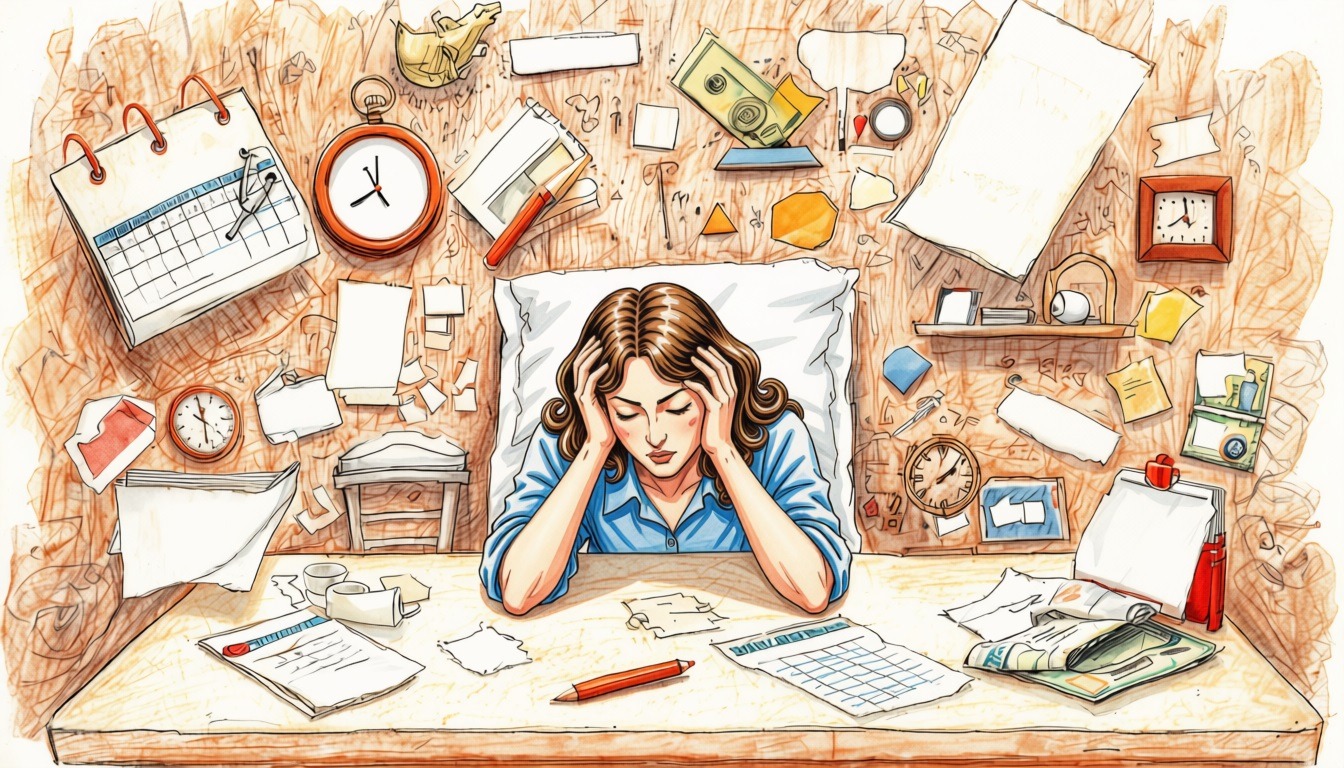
Then the moment passes. Your body returns to its baseline, the same baseline that made you reach for the purchase in the first place. And instead of feeling cared for, you feel strangely exposed. Sometimes you feel worse than before, as if hope itself somehow betrayed you.
That emotional crash is not random, and it is not proof that you are beyond help. It is often the psychological side effect of living in a culture where self-love has been turned into a consumer journey.
Not a human journey. A consumer journey.
Self-love did not “go mainstream.” It got packaged
Self-love began as language for dignity and survival. In many communities, it has been used as a response to shame, oppression, trauma, abandonment, and the quiet everyday violence of being treated as “less than.” It was never just bubble baths and soft lighting. It was a refusal to disappear.
But the modern wellness economy has an extraordinary ability: it can absorb a radical idea, remove the context that made it radical, and sell it back in a prettier container.
When you look at the scale of the wellness market, it makes sense that this happened. McKinsey describes a global wellness market measured in the trillions and notes how strongly consumers are pulled toward personalization, optimization, and “science backed” positioning.
A market that big does not simply sell products. It sells frameworks for how you should interpret your body, your feelings, and your life.
So self-love becomes less like a relationship you build with yourself and more like a category of things you buy to prove you are trying.
And that changes how pain feels.
Because once self-love is a marketplace, suffering becomes a sales signal.
The self-love funnel: How a feeling becomes a product
Most people imagine marketing as persuasion. But in the self-love industry, marketing often functions like emotional choreography. It moves you through a sequence that feels personal, even intimate, while quietly guiding you toward a transaction.
Here is a simple map of that choreography using arrows, not as advice, but as anatomy:
discomfort → self diagnosis → curated explanation → aspirational identity → limited time offer → purchase → temporary relief → return of discomfort → deeper self diagnosis
If this pattern feels familiar, it is because platforms reward it. Algorithm-driven environments amplify content that triggers emotion, increases watch time, and creates a sense of urgency. A public health commentary in the American Journal of Preventive Medicine explicitly calls for research on how the wellness industry intersects with social media and health decision making, including algorithmic exposure shaping what people believe and buy.
The funnel is not your imagination. It is an ecosystem.
Why buying “healing” can feel good at first, even when it does not help later
There is a reason the purchase itself can feel like relief. It is not only psychological. It is also behavioral.
When you buy something that promises transformation, you do not just buy the thing. You buy a story your brain can hold. Stories reduce uncertainty, and uncertainty is one of the most uncomfortable states for a nervous system.
So the purchase can act like a fast, private form of emotional regulation.
Not because the program changed your patterns. Not because the journal rewired your childhood. But because, for a moment, your mind is no longer floating in the unbearable question of “What do I do with this pain?”
It now has an answer shaped like a receipt.
That is why the crash afterward can be so intense. When the story fades, uncertainty returns, sometimes louder than before, and now it is joined by a second feeling: pressure.
- Pressure to prove the purchase worked.
- Pressure to “do it right.”
- Pressure to justify the money.
- Pressure to become the version of you the ad described.
That pressure is fertile soil for shame.

The emotional ROI trap: When you expect your life to pay You back immediately
In ordinary shopping, we accept a simple rule: you buy shoes, you get shoes.
In “healing shopping,” the brain often expects something harder to measure: relief, clarity, identity, belonging, safety. And because those are not guaranteed by any product, the mind starts to treat normal human fluctuation as personal failure.
This is the emotional logic that quietly forms:
If I invested, I should feel better. If I do not feel better, I must be doing something wrong.
The industry rarely says this out loud. It does not need to. It is implied in the promise of certainty, speed, and transformation.
And it becomes even more seductive when you are exhausted, lonely, overwhelmed, or grieving.
Hedonic adaptation: Why the “new thing” stops feeling like salvation
Even when a purchase is genuinely helpful, the initial emotional lift often fades. Humans adapt. The extraordinary becomes normal. The “finally” becomes routine.
Research on spending and well-being has explored why happiness boosts from consumption can be limited, in part because people acclimate to what they buy. A 2024 study examining hedonic spending discusses how novelty and variety influence the adaptation process and why the same kind of purchase tends to lose its emotional power over time.
This matters because the marketplace does not want you to adapt. It wants you to feel the lift fading, interpret that fading as a problem, and go looking for a new lift.
So the consumer becomes trapped in what looks like self-improvement but often behaves like emotional chasing.
Self-love as identity performance: When the product becomes a mirror You cannot escape
There is another reason you can feel worse after buying healing: the purchase turns into a performance.
Not necessarily in public. Sometimes the performance happens inside your own mind.
- You bought the course, so now you must be a person who finishes it.
- You bought the journal, so now you must be a person who journals daily.
- You bought the “high vibe” routine, so now you must be a person who wakes up healed.
And if you are not, then what?
In a culture saturated with “before and after” narratives, the self becomes a project, and the product becomes a measuring tool. Instead of being supported, you are monitored.
That is not self-love. That is self-surveillance dressed in soft language.
The quiet cruelty of “empowerment” marketing
A lot of wellness marketing uses empowerment language, and some of it is sincere. But there is a specific kind of empowerment language that is structurally cruel, because it privatizes responsibility for pain that is not fully private.
It tells you:
- Your burnout is a mindset issue.
- Your anxiety is an energetic blockage.
- Your exhaustion is a personal failure of discipline.
- Your loneliness is a “self concept problem.”
When you are told your suffering is primarily an internal error, the solution is always personal, and personal solutions are easy to monetize.
This is one reason feminist scholars and critics have examined how “self-care” can be commodified and individualized, especially within neoliberal contexts where structural support shrinks while the language of choice grows louder. A 2024 article tracing feminist perspectives from collective demands to individualized self-care argues that privatization and “choice” narratives can mask how difficult it becomes to make truly supportive choices.
If you have ever felt strangely blamed by content that claimed to empower you, you were noticing something real.
When “science backed” becomes a costume: Ehe credibility problem in the healing marketplace
One of the most confusing features of the modern self-love industry is how often it borrows scientific language while selling ideas that are not meaningfully evidence based.
Words like “nervous system,” “dopamine,” “attachment,” “trauma,” “somatic,” “cortisol,” “neuroplasticity,” and “polyvagal” can be used responsibly. They can also be used as aesthetic.
A thin layer of scientific vocabulary can make a promise feel safe.
But safety is not the same as truth.
The American Psychological Association has warned about mental health misinformation online, including how inaccurate ideas spread on social media and can lead to misguided self-diagnosis or treatment choices.
So when you feel worse after buying “healing,” part of what you might be feeling is not just disappointment. You might be feeling the subtle harm of realizing you trusted something that was optimized for persuasion more than for care.
The influencer incentive problem: Why benefits are loud and harms go missing
A major reason wellness content can distort reality is simple: it is often advertising.
And advertising has a bias. It highlights benefits. It minimizes limits. It turns uncertainty into certainty. It makes edge cases sound universal.
A 2025 study in JAMA Network Open analyzed social media posts about popular medical tests and found benefits were mentioned far more often than harms, and many posts had a promotional tone, with financial interests frequently present.
That research focused on medical tests, but the pattern is recognizable across the broader wellness ecosystem: the economic incentive pushes content toward optimism, urgency, and conversion.
This is not about blaming creators. It is about acknowledging the system shaping what you see, what you fear, and what you buy.
Even mental health apps sit inside the marketplace logic
It can be comforting to believe the “self-love marketplace” is mostly about candles and crystals. But it reaches into more mainstream, tech-based mental health products too.
A 2022 systematic review in JMIR Mental Health evaluated randomized controlled trials related to two major mental health apps, Headspace and Calm, and examined efficacy, risk of bias, and conflicts of interest in the evidence base.
The point is not that apps are useless. Many people benefit from guided practices. The point is that once mental health becomes a product category, research, marketing, and monetization can become tangled. That tangle can blur the boundary between what is helpful, what is promising, and what is profitable.
So if you felt worse after paying for an app subscription that promised calm, you were not failing at calm. You were bumping into the reality that emotional well-being is not a guaranteed deliverable.
What self-care means in public health, and why the marketplace version feels so different
Here is a contrast that can quietly change everything.
In public health, “self-care” is not primarily an aesthetic. It is not a consumer identity. It is a set of capacities and practices that people use to maintain health, prevent illness, and cope, ideally supported by accurate information and accessible systems.
The World Health Organization’s guidance on self-care interventions frames self-care as part of broader health and well-being strategies, connected to universal health coverage and supportive structures, not just individual consumption.
The marketplace version often does the opposite. It isolates the individual, intensifies self-monitoring, and implies you should be able to purchase your way into stability.
So if you feel worse, it may be because you are trying to solve a life problem with a consumer tool that was never designed to hold the full weight of your life.
The loneliness premium: Why “healing shopping” rises when support systems fall
There is a painful economic truth hidden under many self-love purchases: people shop for what they cannot access elsewhere.
- When therapy is expensive or unavailable, people buy courses.
- When community is fragmented, people buy memberships.
- When rest is impossible, people buy sleep supplements.
- When healthcare feels dismissive, people buy hormone protocols from strangers online.
This is not stupidity. It is adaptation.
And it is exactly why scholars and public health voices are asking for deeper research into how the wellness industry shapes health decisions, especially online.
A marketplace can sense unmet needs, and it will build products to meet them, but it will also build dependency where dependency is profitable.

The materialism paradox: Buying more “self” can make You feel less like Yourself
There is also a deeper psychological layer: consumerism and well-being do not have a simple relationship.
A growing body of research suggests that stronger materialistic values are often associated with poorer well-being across different domains, though the relationship is complex and influenced by culture and context. A 2024 meta-analysis discusses bidirectional links between materialism and well-being, emphasizing that materialism can both shape and be shaped by psychological states.
This matters in the self-love marketplace because “healing” products often behave like a socially approved form of materialism. You are not buying luxury for vanity, you are buying it for growth. You are not consuming, you are “investing.”
But the nervous system does not always distinguish between consumption that supports you and consumption that replaces your sense of inner stability.
Sometimes the more you buy, the more your mind learns a dangerous lesson:
I can only feel okay when I acquire something.
That is not self-love. That is conditional soothing.
The “good girl” contract hidden inside self-improvement culture
Many readers, especially women, recognize a particular emotional script that runs under the surface of modern self-love branding.
It goes like this:
- Be soft, but productive.
- Be healed, but attractive.
- Be spiritual, but efficient.
- Be ambitious, but never angry.
- Be self-compassionate, but never messy in public.
When you buy “healing,” you sometimes buy entry into a social ideal, not just a personal tool. And if you cannot live up to the ideal, the purchase becomes a reminder of what you are not.
This is one reason wellness culture has been criticized as both empowering and misinforming, especially in how it shapes digital influence and who benefits from credibility online.
If you felt worse after buying a product that promised you would become “that kind of woman,” you might have been reacting to the impossible contract beneath the promise.
A reality check table: What You were trying to buy, and what the product could actually deliver
| What your nervous system was reaching for | What a product can sometimes offer | What a product cannot guarantee |
|---|---|---|
| Safety | A soothing ritual, structure, language | A stable sense of safety across life contexts |
| Belonging | Community access, shared vocabulary | Deep attachment repair by transaction |
| Meaning | Inspiration, narrative direction | A lived sense of purpose without lived change |
| Relief | Temporary regulation through certainty | Permanent relief from human vulnerability |
| Worth | A feeling of being “invested in” | Unconditional self-worth that survives failure |
The gap between the left and the right side is where the emotional crash happens.
Not because you are naive. Because the human needs are huge, and the product is small.
The marketplace loves urgency; healing rarely works on urgency
One of the most destabilizing features of the self-love industry is how often it pressures you to act now.
- Limited spots.
- One day sale.
- Enrollment closing.
- This is the missing piece.
- Do not stay stuck.
Urgency creates motion. Motion creates conversion.
But psychological healing often requires the opposite of urgency: pacing, repetition, relational safety, time, and the slow rebuilding of trust.
So when a product is sold with urgency, you can end up feeling as if your healing must be urgent too. That urgency can create internal violence: pushing yourself harder, judging yourself faster, collapsing when you cannot maintain the pace.
The crash after purchase can be your nervous system rejecting the tempo.
What evidence tends to support, and why it is harder to monetize
It is not enough to critique the marketplace. You deserve something solid to hold onto conceptually.
One of the most robust, research-supported constructs in the self-love conversation is self-compassion, not as a slogan, but as a measurable psychological capacity.
A 2022 meta-analysis on self-compassion-related interventions found meaningful reductions in self-criticism compared with controls, suggesting that strengthening compassionate self-relating can shift the internal climate where anxiety and shame thrive.
A 2023 meta-analytic review similarly discusses evidence that self-compassion interventions can reduce symptoms such as depression, anxiety, and stress across multiple studies.
Why does this matter in the context of the marketplace?
Because self-compassion is not primarily a product. It is a relationship skill. Skills are less glamorous to sell than identities, because skills require practice and time, and they do not always produce aesthetic “before and after” visuals.
The market prefers what can be displayed. Healing often happens in what cannot be displayed.
The “healing aesthetic” problem: When the look of care replaces the experience of care
Wellness culture increasingly teaches people to recognize care by its appearance.
- A clean morning routine.
- A curated shelf of self-help books.
- A minimalistic supplement drawer.
- A perfectly organized digital planner.
- A neutral-toned “calm corner” in the apartment.
There is nothing wrong with beauty. Beauty can genuinely soothe. The issue is substitution.
When the look of care becomes the proof of care, people start to feel guilty for suffering in an environment that looks “healed.” And guilt is not a healing environment.
Wellness culture critics have examined how digital platforms shape these norms and how wellness moves from counterculture to industry, including how online influence affects what gets treated as credible.
So when you buy something beautiful and still feel awful, you can feel like you broke the spell.
You did not break it. You simply discovered it was never a spell. It was branding.
The role of AI: Why the self-love marketplace is getting smarter than Your defenses
Search engines, recommendation systems, ad targeting, and generative content have changed the wellness world. Not because AI created human vulnerability, but because it can now detect and mirror vulnerability at scale.
If a platform learns that you pause on videos about anxious attachment, it can feed you more anxious attachment. If you watch content about nervous system dysregulation, you can be flooded with “regulation tools,” many of them products.
This is not conspiracy. It is the logic of personalization.
McKinsey’s framing of wellness trends emphasizes personalization and consumer expectations for “science-backed” solutions, which fits perfectly with AI-driven segmentation and targeting.
And as misinformation risks evolve, mental health authorities have increased warnings about misleading mental health content online.
In other words, the marketplace is not only selling to you. It is learning you.
That learning can intensify the feeling that you are always one step away from the next solution, because the next solution keeps appearing in your feed like fate.
Why You can feel grief after “healing” purchases, even when You do not call it grief
Sometimes what you feel after buying healing is not anxiety. It is grief.
- Grief that you needed to spend money to feel hopeful.
- Grief that support is not easier to access.
- Grief that you have been carrying your pain alone for so long that a checkout page felt like care.
- Grief that you keep trying, and you are still tired.
The marketplace rarely makes room for grief because grief does not convert. Grief slows you down. It makes you ask different questions. It makes you suspicious of shiny promises.
But grief can be profoundly sane. It can be the moment you stop treating pain as a personal defect and start seeing it as information about your life.
A final reframing: You are not failing at self-love, You are resisting commodification
If self-love has become a marketplace, then it makes sense that buying “healing” can leave you emptier.
A marketplace is designed to keep desire alive.
Healing is designed to make desire less desperate.
A marketplace benefits when you feel one purchase away.
Healing often involves accepting that there is no final purchase.
A marketplace encourages self-optimization.
Healing often requires self-acceptance, even when you are unfinished.
So the discomfort you feel after buying healing is not proof you are doing it wrong.
It may be proof that something in you knows the truth:
You cannot buy your way out of being human.
And you should not have to.
Related posts You’ll love
- Your inner authority workbook: How to trust Yourself again after too much advice (without getting lost in the self-help noise)
- Female gaze self-love: Rewire Your inner camera starting today
- How to stop treating self-love like a luxury
- They said self-love is selfish — Here’s why they’re completely WRONG
- Micro cheating isn’t “nothing”: Why tiny betrayals hurt so much
- AI is changing self-worth: When You compare Yourself to machines
- Self-help hustle: The shocking truth about when healing turns into performance
- Self love feels cringe? 10 practice corner exercises that rewire shame into safety (so kindness finally feels real)
- Love without self abandonment: Calm practices for Women who give too much

FAQ: Self-love became a marketplace
-
Why do I feel worse after buying “healing” products or self-love programs?
Because the purchase often delivers a quick hit of hope and certainty, then your real life returns unchanged. That contrast can trigger disappointment, self-criticism, or anxiety, especially if the marketing implied fast transformation. Feeling worse doesn’t mean you’re “bad at healing.” It often means the offer promised more emotional certainty than any product can deliver.
-
Is it normal to feel anxious, ashamed, or guilty after investing in self-care?
Yes. When “healing” is sold as an investment, your brain expects emotional ROI: “I paid, so I should feel better.” If relief isn’t immediate, it can flip into shame or fear that you did something wrong. Many people confuse this post-purchase drop with personal failure, when it’s actually a common response to pressure, expectation, and overstimulation.
-
What does it mean when self-love becomes a marketplace?
It means self-love shifts from a human process (time, relationships, boundaries, repair) into a consumer identity (tools, aesthetics, upgrades, subscriptions). In a marketplace, your pain becomes a “problem to solve,” and solutions are positioned as purchasable. This can make self-love feel performative and endless, instead of steady and supportive.
-
How can I tell if a “healing” offer is real support or just marketing?
A helpful offer usually describes limits, who it’s for (and not for), and what outcomes are realistic. A sales-driven offer tends to rely on urgency, certainty, and identity pressure—suggesting you’ll finally become “that version” of yourself. If the message makes you feel defective, behind, or panicked, it’s often using emotion as a conversion tool rather than care.
-
Are self-love products ever worth it?
They can be—when they function as tools that support your existing process instead of claiming to replace it. The question is not “Is this product good?” but “Does this strengthen my agency, or make me dependent on buying the next thing to feel okay?” A good tool leaves you more self-trusting over time, not more anxious without it.
-
Why does wellness content on social media make me feel worse about myself?
Because most wellness content is curated, simplified, and optimized for attention. Platforms amplify emotionally charged narratives, quick fixes, and “before/after” transformations. If you compare your inner life to someone else’s highlight reel, you’ll feel like you’re failing—even when you’re actually healing in a normal, messy, human way.
-
Can buying “healing” become addictive?
It can become compulsive. Not because you love shopping, but because the purchase temporarily regulates discomfort—loneliness, uncertainty, fear, shame—by giving you a story of control. If you repeatedly buy in moments of activation and crash afterward, that pattern can resemble a loop: relief → expectation → disappointment → more buying.
-
Why do I keep searching for the “missing piece” in self-help and self-love?
Because many offers are designed to frame your pain as incomplete progress: you’re always one insight away, one program away, one method away. This keeps the desire alive and the consumer journey moving. In real healing, there is rarely a single missing piece—there is usually repetition, support, time, and integration.
-
Does real self-love require spending money?
No. Money can buy access to tools, time, or professional support, but it cannot purchase self-worth. Real self-love is fundamentally relational: how you speak to yourself, how you protect your energy, how you choose safe people, how you repair after setbacks. Those are practices and decisions, not products.
-
What if I feel worse after buying healing and I’m scared nothing will help?
Feeling worse can be a sign you’re overloaded, not broken. If your distress is intense, persistent, or affects sleep, appetite, work, or safety, consider speaking with a licensed mental health professional. And if you feel in immediate danger or at risk of harming yourself, seek urgent local help right away (emergency services or a crisis hotline in your country).
Sources and inspirations
- McKinsey & Company. “The trends defining the $1.8 trillion global wellness market in 2024.” (2024).
- McKinsey & Company. “The $2 trillion global wellness market gets a millennial and Gen Z glow-up.” (2025).
- McKinsey & Company. “What is the future of wellness?” (2024).
- World Health Organization. “WHO guideline on self-care interventions for health and well-being, 2022 revision.” (2022).
- Allem, J. P. “The Need for Research on the Wellness Industry’s Impact on Health Decisions.” American Journal of Preventive Medicine. (2024).
- O’Daffer, A., “Efficacy and Conflicts of Interest in Randomized Controlled Trials Evaluating Headspace and Calm Apps.” JMIR Mental Health. (2022).
- Nickel, B., “Social Media Posts About Medical Tests With Potential for Overdiagnosis or Overuse.” JAMA Network Open. (2025).
- American Psychological Association. “Addressing misinformation about mental health with patients.” (2024).
- American Psychological Association. “Is it safe to get health advice from influencers? The answer isn’t simple.” (2024).
- Baker, S. A. Wellness Culture: How the Wellness Movement Has Been Used to Empower, Profit and Misinform. (2022).
- Moser, A. “From wages for housework to self-care: feminist perspectives on privatized health care and the paradox of choice.” (2024).
- Wakelin, K. E., “Effectiveness of self-compassion-related interventions for reducing self-criticism.” (2022).
- Han, A., “Effects of Self-Compassion Interventions on Reducing Psychological Distress: Meta-analysis.” (2023).
- Moldes, O., “Breaking the Loop: Meta-analysis on the bidirectional effects of materialism on well-being.” (2025).


Leave a Reply