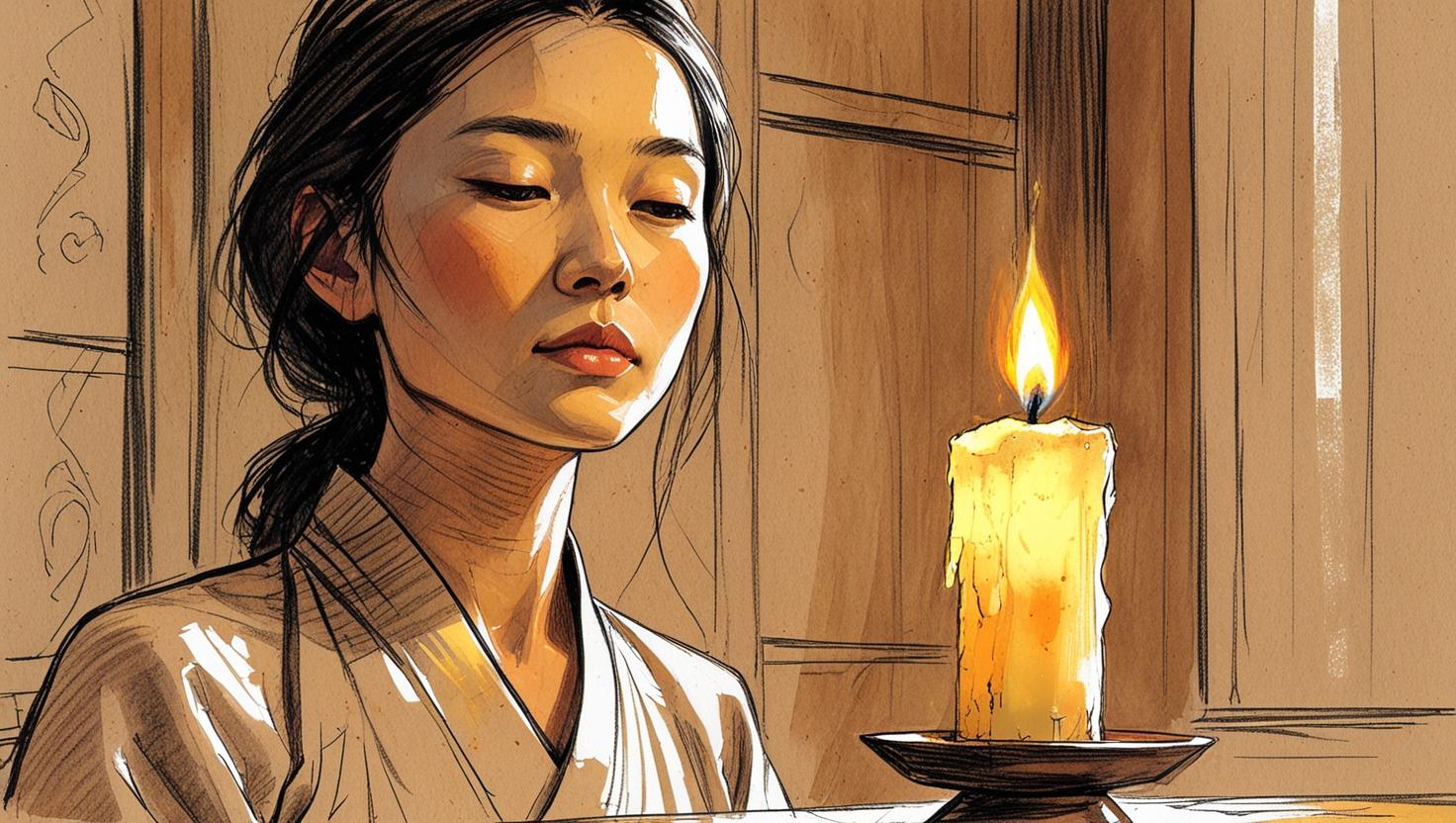
If you’ve ever longed for a moment of stillness—a true pause in the noise—then candle meditation might be the invitation your soul has been waiting for. In a world that constantly demands your attention, your energy, and your emotional labor, finding simple practices that return you to yourself is not just healing—it’s vital.
Candle meditation is one of those practices. It doesn’t require any advanced skills, spiritual training, or even much time. All it asks is your presence. And in return, it offers grounding, clarity, and a kind of inner warmth that feels almost sacred.
What exactly is candle meditation?
Candle meditation, traditionally known in yogic philosophy as Trataka, is a meditative practice in which your gaze gently rests on the flame of a candle. It’s a form of dharana—the yogic concept of focused concentration—that serves as a doorway into deeper meditative states.
Unlike breath-based or mantra-driven meditations, candle gazing invites you into a visual relationship. The flame becomes an anchor point for your awareness, pulling your mind away from the chaos of thoughts and into a place of gentle presence.
This technique has been used for centuries in spiritual traditions to stimulate inner insight, cleanse the mind, and open the third eye. But you don’t need to be spiritual to benefit from it. In fact, modern research confirms that simple visual meditations like this can help reduce anxiety, improve mental focus, and soothe overactive nervous systems. Just 10 minutes a day can create noticeable shifts in how you feel, think, and respond to your environment.
Why candle meditation might be exactly what You need
There’s something inherently calming about a flickering flame. It moves slowly. It doesn’t rush. It doesn’t demand anything from you. And when you watch it long enough, something inside you begins to mirror that same softness.
Candle meditation can be especially helpful if you struggle with an overactive mind or racing thoughts. The steady flame gently trains your brain to remain present without force or frustration. For those who find traditional meditation difficult or intimidating, candle meditation offers a gentle on-ramp. It doesn’t ask you to empty your mind—it simply asks you to focus on light.
More than anything, the practice brings ritual back into your life. Lighting a candle for yourself becomes a symbolic act—an offering of time, presence, and care.
Creating the space: How to prepare for candle meditation
Before you begin, it’s important to prepare your environment in a way that supports stillness. The space you choose can greatly influence the quality of your meditation.
Start by choosing a candle that resonates with you. A simple, unscented candle is perfect for those easily distracted by smell. But if scent grounds you, you might choose a lavender or sandalwood candle to enhance relaxation. Natural wax candles, like beeswax or soy, tend to burn more cleanly and feel more intentional.
Find a quiet room where you can sit without interruption. Turn off notifications. Dim the lights. Place the candle on a stable surface at eye level—this could be a table, altar, or windowsill. You want to sit about two to three feet away from the flame. Make sure the flame is at a height where you can gaze without straining your neck.
Settle into a comfortable seated position. You can sit cross-legged on a cushion or upright in a chair with your feet flat on the floor. The important thing is that your body feels stable and supported.
Take a few deep breaths before you begin. Allow yourself to arrive—not just physically, but emotionally and energetically. This is your time.
The practice: A step-by-step candle meditation guide
Now that your space is set, let’s walk through the practice itself—not as a checklist, but as a flow. Each moment is an opportunity to soften into presence.
Step one: Lighting the candle with intention
As you strike the match or click the lighter, take a moment to do it consciously. Don’t rush. You might silently speak an intention, like “I give myself permission to slow down,” or “I open to inner peace.” Watch the flame ignite and recognize it as more than fire—it’s a symbol of your own awareness, your own light. This tiny moment of ritual sets the tone for the rest of your practice.
Step two: Gazing into the flame
Open your eyes and gently direct your gaze toward the candle. Let your focus rest softly on the tip or center of the flame. Try not to stare forcefully or blink too much. You’re not trying to “hold” your attention in place. Instead, you’re simply watching, observing, being with the flame.
At first, your eyes might water or feel tired. That’s okay. If needed, you can close them briefly and return when you’re ready. This isn’t about perfection—it’s about presence.

Step three: Meeting Your mind with compassion
It won’t take long before thoughts arise. You might start thinking about your to-do list, a recent conversation, or what you’re going to eat later. This is normal. The goal isn’t to eliminate thoughts. Instead, every time your mind wanders, notice it with gentleness, then bring your focus back to the flame. This act of returning—again and again—is the heart of meditation.
You might even begin to feel a sense of dialogue with the flame. As if it’s not just something you’re watching, but something you’re in relationship with. Allow that connection to unfold.
Step four: Allowing the breath to guide You
Rather than controlling your breath, just let it happen. Notice its natural rhythm. You may find that it begins to deepen on its own. As you continue to gaze, the breath and the flame often begin to move in harmony, gently weaving your attention back to the present each time it drifts.
Over time, you may feel your body softening, your shoulders lowering, your nervous system settling. Let it happen. There’s nothing to do. Just be.
Step five: Closing the practice with presence
After about five to ten minutes—or longer, if it feels nourishing—begin to close your practice. Slowly shift your gaze away from the flame and gently close your eyes. You might notice the after-image of the flame behind your eyelids. Let it linger. Let it stay with you.
Take a few deep, grounding breaths. Place a hand on your heart or belly if that feels supportive. When you’re ready, open your eyes. You might extinguish the candle slowly and silently, like you’re sealing the ritual. Take a final moment to thank yourself for showing up.
Integrating candle meditation into daily life
Consistency matters more than intensity. Practicing for five minutes each evening can have more lasting impact than a long session once a week. Try to choose a regular time—perhaps early morning before the world wakes up, or in the evening as part of your wind-down ritual.
You may wish to keep a small journal nearby and jot down any reflections or feelings that arise. Candle meditation can often bring subtle emotional insights or creative ideas. Honor them.
And don’t be discouraged if some days feel chaotic or distracted. Meditation isn’t about achieving peace—it’s about returning to yourself, over and over, no matter what.
A sacred note on safety
While candle meditation is gentle, it still involves open flame. Never leave the candle unattended. Always use a stable, fire-safe surface and keep it out of reach of pets or children. When you’re finished, blow it out slowly, mindfully—like you’re completing a sacred act.
Returning to the flame within
The flame you watch during candle meditation isn’t just a candle. It becomes a mirror. It reflects the steadiness that exists beneath your thoughts, beneath your emotions, beneath your outer identity.
In every flicker and stillness, you’re reminded that your own inner light has always been there. No matter how busy your day, how anxious your mind, or how heavy your heart, this practice invites you back to that light again and again.
So the next time the world feels overwhelming, light a candle. Sit. Watch. Breathe. And remember: you already carry the calm you’re looking for.
If you found this article helpful, don’t forget to share it — it might be just what someone else needs too!
Related posts You’ll love:
- The power of aromatherapy: Scents that soothe stress and promote love
- 5-minute breathing techniques for anxiety and emotional reset: science-backed ways to calm Your mind fast
- The ultimate evening routine for peaceful sleep and inner calm: science-backed habits to end Your day right
- 7 Powerful guided meditation scripts to transform Your mindset and calm Your soul
- 7 Days to Self-Love: The ultimate meditation challenge to heal, recharge & glow
- Jaw release meditation: Why relaxing one muscle can calm Your whole nervous system (and change everything)
- You don’t need a Zen life to have a Zen moment: Realistic meditation for messy days
FAQ: Candle meditation – Your questions answered
-
What is candle meditation and how does it work?
Candle meditation, also known as Trataka, is a practice where you focus your gaze on the flame of a candle to calm the mind and improve concentration. The gentle movement of the flame acts as a visual anchor, helping you return to the present moment and reduce mental chatter. It’s especially helpful for beginners or those who struggle with traditional silent meditation.
-
Is candle meditation good for anxiety and stress?
Yes, candle meditation can significantly reduce symptoms of anxiety and stress. By visually focusing on the flame, your nervous system begins to slow down, shifting into a parasympathetic state. This calms the mind, regulates breath, and promotes emotional balance—even after just a few minutes of practice.
-
How long should I practice candle meditation?
Most people begin with 5 to 10 minutes per session. As your eyes and mind adjust, you can gradually increase the time to 15–20 minutes. What matters most is consistency—practicing regularly helps you build focus and deepen your experience over time.
-
Do I need a special candle for meditation?
No, any candle can be used, but natural candles made from beeswax or soy are often preferred for their clean burn and calming presence. Choose unscented candles if you’re easily distracted, or lightly scented ones like lavender or sandalwood to enhance relaxation.
-
Can I do candle meditation with my eyes closed?
Candle meditation is traditionally done with eyes open, gazing at the flame. However, after a few minutes of gazing, many practitioners close their eyes to observe the after-image of the flame in their mind’s eye. This deepens the meditation and enhances inner awareness.
-
What are the spiritual benefits of candle meditation?
Spiritually, candle meditation is believed to activate the third eye chakra and increase intuition, clarity, and inner peace. In many traditions, the flame symbolizes divine light, presence, and transformation. Even outside of spiritual contexts, the practice offers a sense of sacred connection and inner stillness.
-
Is candle meditation safe?
Yes, when done with care. Always place your candle on a stable, fire-safe surface and keep it away from flammable items, pets, or children. Never leave a burning candle unattended, and always extinguish it after your session.
-
Can beginners do candle meditation easily?
Absolutely. Candle meditation is one of the most beginner-friendly forms of meditation because it provides a visual point of focus, which can feel more accessible than breath awareness or mantra repetition. No prior experience is needed—just your presence and a quiet space.
-
When is the best time of day to practice candle meditation?
Evening is ideal for many people, as the soft glow of the candle complements the natural transition to rest and sleep. However, practicing in the morning can also help set a calm, centered tone for the day. Choose a time that feels most supportive to your daily rhythm.
Sources and inspirations
- Schoenberg, P. L. A., & David, A. S. (2014). Biofeedback for psychiatric disorders: A systematic review. Applied Psychophysiology and Biofeedback.
- Telles, S., et al. (1995). Improvement in visual perception following Trataka (yogic visual concentration) practice. Indian Journal of Physiology and Pharmacology.
- Harvard Health Publishing. (2021). Relaxation techniques: Breath control helps quell errant stress response. Retrieved from here
- Brach, T. (2016). Radical Acceptance: Embracing Your Life With the Heart of a Buddha. Bantam.
- Nagarathna, R., & Nagendra, H. R. (2008). Integrated Yoga for mental health: A holistic approach. Indian Journal of Psychiatry.



Leave a Reply