Table of Contents
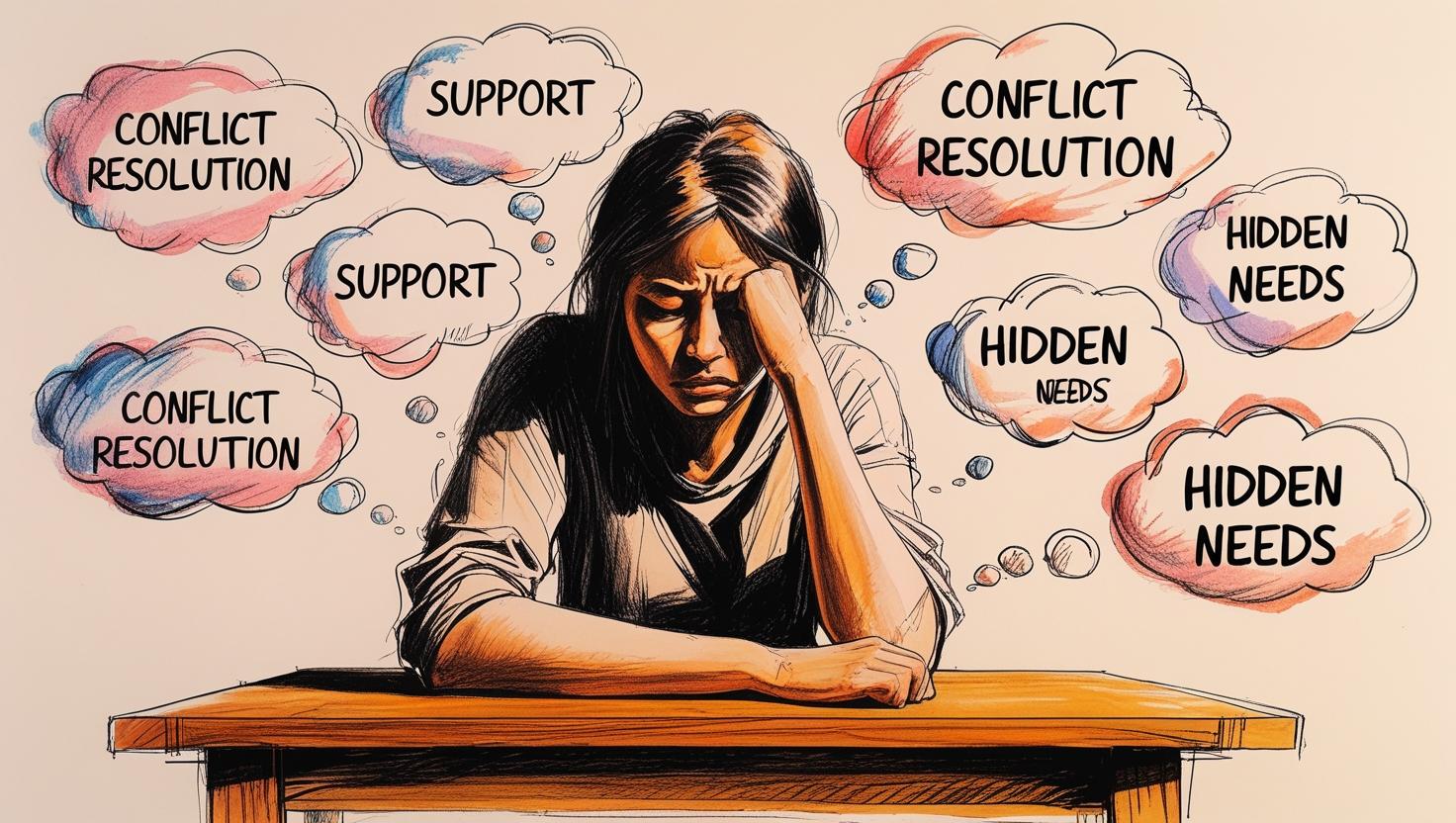
Emotional labor is one of those invisible forces that quietly shapes the dynamics of our closest connections, yet rarely gets the attention it deserves. While most people are quick to acknowledge physical tasks, financial contributions, or acts of service in relationships, the energy spent managing emotions, smoothing conflicts, and carrying the hidden burden of others’ needs often goes unnoticed. This invisible responsibility—emotional labor—can make or break the balance of intimacy, trust, and satisfaction between partners. And because it is largely unseen, its effects tend to linger silently in the background until they weigh heavily on one person’s sense of worth and well-being.
The truth is, emotional labor is everywhere. It exists in our romantic lives, in our friendships, in our families, and even in professional settings. It lives in the moments we swallow our irritation to avoid conflict, in the times we soothe someone else while pushing aside our own exhaustion, and in the invisible mental load we carry when we remember birthdays, appointments, and relationship upkeep that others forget. It is the silent current running beneath so many connections, powerful yet rarely acknowledged.
We will explore emotional labor in depth: what it means, how it manifests in different types of relationships, why it often falls disproportionately on women, and what can be done to create healthier and more balanced dynamics. As you read, notice whether you recognize these patterns in your own life. Awareness is the first step toward change, and naming the invisible is the beginning of making it visible.
What is emotional labor, really?
The concept of emotional labor was first introduced by sociologist Arlie Hochschild in her groundbreaking 1983 book The Managed Heart. Hochschild described emotional labor as the work people—especially those in service industries—do to manage their emotions in order to present a specific emotional expression to others. For example, a flight attendant who maintains a calm, pleasant smile even during turbulence is performing emotional labor. Their feelings may not match their outward expression, but their job requires emotional regulation to reassure passengers.
Over time, the meaning of emotional labor has expanded beyond professional contexts. Today, the term is widely used to describe the hidden work of managing emotions and relationships in daily life. In intimate partnerships, emotional labor can look like initiating difficult conversations, keeping track of household logistics, remembering birthdays, or offering consistent emotional support. In friendships, it may involve always being the one who listens, checks in, and holds space for others’ feelings. Unlike physical chores or financial contributions, emotional labor is intangible. It cannot easily be counted, weighed, or tracked. And because it is often unspoken, it tends to go unacknowledged.
Caring for others emotionally is not inherently a burden. In fact, offering love, empathy, and comfort can be beautiful acts of connection. What becomes problematic is when this responsibility is distributed unevenly and when one person continually manages the emotional well-being of everyone else while their own needs are neglected. The imbalance, more than the act itself, is what transforms emotional labor from an act of love into a source of exhaustion.
Emotional labor across different types of relationships
It is important to recognize that emotional labor is not confined to romantic partnerships. In friendships, it often takes the form of being the “listener,” the one who absorbs stories of heartbreak, frustration, or stress. You may notice that you are the one who always initiates plans, checks in when someone is struggling, or remembers small details that others forget. When this care is not reciprocated, the friendship can begin to feel one-sided.
In families, emotional labor frequently falls on mothers or daughters, who are expected to act as the emotional center of the household. They remember birthdays, organize gatherings, soothe tensions, and maintain connection across generations. While this work keeps families connected, it also places immense pressure on those who carry it.
In workplaces, emotional labor is often tied to roles that require positivity, empathy, or diplomacy. Employees may be expected to manage clients’ emotions, smooth over team conflicts, or provide a positive atmosphere. This is especially true for women, who are often assumed to be “naturally” better at managing emotions. Yet this labor is rarely recognized in performance evaluations or compensated fairly.
The common thread across all these contexts is invisibility. Emotional labor does not appear on to-do lists or job descriptions, yet without it, relationships falter, workplaces struggle, and families drift apart. Its absence is felt only when it is missing, and by then the consequences can be significant.
The link between gender and emotional labor
When we talk about emotional labor, it is impossible to ignore the ways in which gender expectations have shaped who carries this invisible weight in relationships. Historically, women have been socialized to be the emotional caretakers of families, communities, and even workplaces. From a young age, girls are often praised for being “nurturing,” “good listeners,” or “empathetic,” while boys may be encouraged to be “independent,” “tough,” or “stoic.” These subtle cultural messages don’t just shape personality — they set the stage for who is expected to carry the emotional load later in life.
Research has shown that women, across different cultures, consistently report doing more emotional work in both romantic and professional contexts. This might look like remembering birthdays, soothing conflicts before they escalate, or being the one to check in when a partner is upset. These responsibilities are often invisible, but they accumulate over time, creating a quiet imbalance that can feel suffocating.
Men, on the other hand, may not have been taught the same emotional skills, which can lead to a reliance on their partners for emotional regulation and support. This isn’t about blaming men individually — it’s about recognizing the societal structures that make emotional labor appear “natural” for women and optional for men. The result is that many relationships fall into a silent pattern: one partner gives, manages, and remembers, while the other benefits without even realizing the extent of that work.
Of course, this is not a universal truth. More men are learning to step into emotional responsibility, and more women are refusing to carry the burden alone. Still, the link between gender and emotional labor remains deeply ingrained, and acknowledging it is an important step toward reshaping more balanced, equitable partnerships.

Signs You’re carrying too much emotional labor
Emotional labor doesn’t announce itself with flashing warning signs. Instead, it builds quietly, showing up in subtle ways that can be easy to dismiss until the exhaustion becomes overwhelming. Many people don’t even realize they’re over-functioning emotionally for their partners until they feel depleted or resentful.
One of the most common signs is a persistent sense of being the “manager” in your relationship. You might feel like you are always the one who has to remind your partner of tasks, keep track of appointments, or notice when someone is upset. Instead of sharing responsibility, you find yourself acting like the invisible coordinator, and this can leave you feeling unappreciated.
Another sign is emotional exhaustion. If you feel drained after every conversation with your partner — not because of conflict, but because you are always the one offering comfort, perspective, and solutions — this is a red flag. Emotional support should flow in both directions, and when it doesn’t, the imbalance can chip away at your sense of connection.
Resentment is also a key indicator. You may notice yourself snapping at small things, feeling irritated when your partner doesn’t notice your efforts, or carrying a quiet bitterness about always being the one to hold things together. Resentment doesn’t appear out of nowhere — it is the natural byproduct of giving more than you receive without acknowledgment.
Lastly, you may find yourself losing touch with your own needs. When so much of your energy goes into anticipating the needs of others, there’s little left for your own rest, growth, or joy. You might even struggle to answer simple questions like, “What do you want right now?” because you are so attuned to everyone else.
The cost of unseen emotional labor
The truth about emotional labor is that, when left unacknowledged, it doesn’t simply disappear. It accumulates, slowly reshaping the dynamics of a relationship and the inner world of the person who carries it. The cost often starts quietly, showing up as mild frustration or a lingering sense that something feels “off.” Over time, however, it can grow into exhaustion, resentment, and even emotional withdrawal.
One of the most immediate costs is burnout. Just as someone can burn out at work when expected to juggle too many tasks without recognition, emotional labor leads to a similar fatigue in personal relationships. You may find yourself feeling tired even after rest, not because your body is exhausted, but because your emotional reserves have been stretched too thin.
Another cost is the erosion of intimacy. Relationships thrive on reciprocity — the give and take of support, care, and understanding. When one partner carries the bulk of the emotional work, intimacy becomes unbalanced. The giver may begin to feel like more of a caretaker than an equal partner, while the receiver may grow dependent, unintentionally reinforcing the imbalance. This dynamic can hollow out the joy and spontaneity that healthy intimacy requires.
Unseen emotional labor also impacts self-worth. Many people who chronically take on the emotional weight for others begin to internalize the idea that their value lies in what they give, rather than who they are. This can create a cycle where setting boundaries feels selfish, and saying no feels like a failure. Over time, this pattern leaves little space for self-discovery or personal fulfillment.
And then there is the unspoken loneliness. Carrying emotions for two people — or for an entire household — can feel isolating. You may be surrounded by people you care for, yet feel profoundly unseen in your own struggles. This loneliness is especially painful because it contradicts the very purpose of relationships: to feel connected, supported, and understood.
The cost of unseen emotional labor is not only personal but also relational. Without addressing the imbalance, trust and connection may weaken, and the relationship risks becoming defined more by obligation than love. Naming and redistributing this labor is therefore not just a matter of fairness — it is essential for the health and sustainability of any meaningful partnership.
How emotional labor affects mental health
The invisible weight of emotional labor does not stop at relationship dynamics; it seeps directly into mental health. Constantly prioritizing someone else’s emotional world while neglecting your own can lead to a range of psychological challenges.
One of the most common outcomes is chronic anxiety. When you are always scanning the environment to anticipate others’ needs or moods, your nervous system remains in a state of hypervigilance. You may find yourself unable to relax, even in peaceful moments, because part of your brain is always “on duty.”
Another outcome is depression, particularly when emotional efforts feel invisible or unreciprocated. Over time, the message your mind receives is: “My feelings don’t matter as much as others’.” This belief erodes self-esteem and contributes to hopelessness, making it difficult to experience joy even in areas of life outside the relationship.
For many, emotional labor is also tied to difficulty setting boundaries. Because saying no feels tied to rejection or guilt, individuals may overextend themselves until they hit a breaking point. This cycle often leads to emotional dysregulation, where small triggers feel overwhelming because the person has no reserves left.
Finally, unbalanced emotional labor can contribute to relationship-related trauma. When your role in a partnership is defined by giving without receiving, you may begin to doubt your own worthiness of care. This can leave long-term imprints, making it harder to trust in future relationships or to believe that love can be reciprocal and nourishing.
Recognizing the connection between emotional labor and mental health is not about pathologizing care or empathy. It is about acknowledging that giving endlessly without acknowledgment has real psychological consequences. Self-care, boundaries, and shared responsibility are not luxuries — they are protective measures for mental and emotional well-being.
Strategies for balance and healing
Recognizing emotional labor is only the first step. The real transformation begins when couples find ways to redistribute the invisible work of care and create space for mutual support. Healing from the imbalance doesn’t mean one partner stops caring; rather, it means learning to share the responsibility of nurturing the relationship so that both people feel seen, valued, and sustained.
The foundation of this shift is open communication. Emotional labor thrives in silence, in the unspoken expectation that one partner will always “just know” what to do. Bringing the topic into the light is therefore an act of courage. This might sound like: “I feel like I’m carrying a lot of the emotional responsibility in our relationship, and I’d love for us to share it more equally.” Framing the conversation in terms of partnership rather than blame can prevent defensiveness and invite collaboration.
Equally important is learning to articulate needs clearly. Many people who carry emotional labor have internalized the belief that asking directly for support makes them “too much” or “needy.” Yet healthy relationships depend on the ability to say: “I need you to listen without problem-solving right now” or “I could use your help in planning this family event.” These requests, far from being selfish, create opportunities for the other partner to show up meaningfully.
A powerful strategy for balance is shared accountability. Rather than one partner acting as the perpetual reminder or manager, couples can establish systems that distribute responsibility fairly. For example, both partners can take turns initiating check-ins about how each person is feeling, or they can agree on who will handle specific family or household tasks without needing to be prompted. Over time, these small adjustments reduce the emotional weight on one person and foster a sense of teamwork.
Boundary-setting is another crucial part of healing. For the partner who has carried too much, this might involve resisting the impulse to “fix” every emotional problem or to anticipate every unspoken need. It can feel uncomfortable at first — even guilt-inducing — but setting boundaries is what allows space for reciprocity. For the partner learning to step into more responsibility, boundaries can also provide clarity: knowing where their care is most needed and how to meet it without guesswork.
It is also worth remembering that healing is not only relational but also personal. For many individuals, therapy or self-reflection practices such as journaling and mindfulness can help unearth the deeper beliefs driving over-functioning. Exploring questions like “What makes it hard for me to ask for help?” or “Why do I feel guilty when I prioritize myself?” can reveal the unconscious scripts that keep emotional labor unbalanced.
Finally, couples must learn to celebrate progress rather than perfection. Sharing emotional labor is not about achieving a flawless 50/50 split; life is too fluid for such neat equations. Instead, balance looks like both partners being willing to notice when one person is carrying more, to step in with care, and to talk about it without shame. Even small moments of reciprocity — like a partner saying, “You’ve been holding so much lately, let me take this one” — can profoundly shift the emotional climate of a relationship.
The healing journey is not easy, especially if years of imbalance have shaped the partnership. But when both people commit to growth, the reward is immense: a relationship that feels lighter, more equal, and deeply nourishing for both.
Reframing care as shared responsibility
One of the most transformative shifts couples can make is learning to see care not as a “natural” trait of one partner, but as a shared responsibility that both partners actively choose. Love is not meant to be lopsided. True intimacy is built when both people recognize that tending to the emotional climate of the relationship is just as important as any practical task like paying bills or cleaning the house.
This reframing requires dismantling old cultural narratives. If you grew up in a family where one parent — often the mother — carried the majority of emotional labor, you might unconsciously expect that dynamic to repeat in your own relationships. Naming and questioning those patterns allows you to consciously choose a different path.
Shared care also involves expanding the definition of emotional contribution. Some partners may not be as verbally expressive, but they can still show emotional care through consistent presence, attentiveness, and reliability. Others may naturally lean toward verbal empathy, offering comfort through words and reassurance. The key is not for both partners to provide care in identical ways, but for both to recognize that emotional labor belongs to both of them, and to honor each other’s contributions openly.
When care becomes shared, relationships take on a new sense of freedom. No longer does one person feel weighed down by unspoken responsibility; instead, both feel empowered to contribute in ways that are meaningful. This balance not only strengthens intimacy but also models a healthier form of partnership for children, friends, and communities.
The role of self-compassion in healing
At the heart of rebalancing emotional labor lies a quiet but powerful tool: self-compassion. Many people who shoulder disproportionate emotional responsibilities are deeply empathetic, attuned to the needs of others, and quick to offer comfort. Yet when it comes to themselves, they often practice very little of the same kindness. Instead, they may berate themselves for “not doing enough” or feel guilty for even wanting reciprocity. This self-criticism becomes the invisible glue that keeps the imbalance in place.
Self-compassion interrupts this cycle by reminding us that care begins within. According to psychologist Kristin Neff, who pioneered much of the research on self-compassion, the practice involves three elements: mindfulness, self-kindness, and common humanity. Applied to emotional labor, this means noticing when you are overburdened without judgment, offering yourself the same patience you would a loved one, and remembering that the need for support is not a personal weakness but a universal human truth.
Practically, cultivating self-compassion may look like pausing before automatically saying yes to someone’s request, checking in with yourself about your capacity, and allowing yourself permission to decline without guilt. It may involve journaling through feelings of resentment or exhaustion, reframing them not as personal failings but as signals that boundaries need attention. It can also mean reaching out for help — from a partner, a therapist, or a trusted friend — without seeing it as an admission of inadequacy.
Importantly, self-compassion benefits both partners. For the one carrying the bulk of emotional labor, it becomes a shield against burnout and a pathway to healthier boundaries. For the partner learning to step up, it fosters patience and curiosity, allowing them to embrace growth without shame. When both people practice self-compassion, the relationship itself becomes a softer, more forgiving space — one where mistakes are seen as opportunities for learning rather than proof of failure.
Toward more equitable love
Reimagining emotional labor is, ultimately, an invitation to rethink what love itself means. Too often, relationships have been framed around sacrifice: one person giving endlessly, the other leaning heavily, and both silently accepting this imbalance as the cost of togetherness. But true love does not ask us to disappear into another person’s needs. Instead, it asks us to meet one another as equals, to co-create a space where care flows freely in both directions.
Moving toward equitable love means embracing the idea that emotional labor is not invisible, feminine, or secondary — it is vital work that deserves recognition and respect. It requires ongoing conversations where both partners check in not only about logistics but also about feelings, well-being, and the invisible tasks of holding the relationship together. It means honoring emotional contributions as much as financial or practical ones, recognizing that all forms of labor sustain the partnership in different ways.
This journey is not only personal but also cultural. As society evolves, more people are challenging the gendered scripts that once confined emotional care to women. We see couples experimenting with new models of partnership, workplaces beginning to acknowledge emotional labor in professional settings, and communities slowly widening their understanding of care as a collective responsibility. Each small shift contributes to a broader reimagining of love — one where balance, fairness, and mutual respect are not luxuries, but the very foundation of connection.
When couples commit to this path, the transformation is profound. Arguments that once simmered with resentment soften into collaborative problem-solving. Exhaustion gives way to shared energy. And perhaps most beautifully, the relationship becomes not just a place of giving but also a place of replenishment, where both partners know that their needs matter and that love does not rest on silent sacrifice.

Lifting the silent weight
Emotional labor is often unseen, unspoken, and undervalued — yet it shapes the texture of every relationship. Left unacknowledged, it can create deep exhaustion and quiet resentment. But when it is recognized, named, and shared, it becomes a powerful force for intimacy and resilience.
To lift the silent weight of emotional labor, we must learn to speak openly, set boundaries with compassion, and embrace care as a shared responsibility. We must practice self-compassion, so that the very people who give so much to others do not forget themselves. And we must reimagine love as something rooted not in sacrifice, but in reciprocity.
By doing so, we free relationships from the hidden hierarchies that hold them back, creating partnerships that are lighter, stronger, and more deeply connected. In the end, love flourishes not when one person carries the invisible weight alone, but when two people walk side by side, carrying it together.
Related posts You’ll love:
- How to shift from survival mode to a thriving mindset
- How to transform loneliness into self-discovery
- Understanding emotional hunger vs. physical hunger: Mindful eating and self-awareness
- Shadow work for beginners: How to face, heal, and embrace the parts of Yourself You’ve been hiding
- When Your 30s feel emotionally heavy: 10 soothing practices that truly help
- Distributed intimacy: How decentering one “emotional hub” can calm You (and why it can also feel scary)
Frequently Asked Questions (FAQ)
-
What exactly is emotional labor in relationships?
Emotional labor refers to the often-invisible work of managing emotions — both your own and your partner’s — to keep harmony in the relationship. It includes listening, offering reassurance, remembering important details, and anticipating needs. Unlike chores you can see, emotional labor is carried quietly, which is why it’s so easy to overlook.
-
Why does emotional labor feel so exhausting?
Because it requires constant attention and energy. When one person carries the majority of emotional responsibilities, they are always “on,” anticipating conflicts, soothing emotions, and making sure things run smoothly. Over time, this unbalanced dynamic leads to burnout and resentment.
-
Is emotional labor always gendered?
Not always, but research shows that women are disproportionately expected to manage emotional needs at home and in social settings. That said, anyone — regardless of gender — can end up carrying the bulk of emotional labor in a relationship if roles are not discussed openly.
-
How can I talk to my partner about emotional labor without starting a fight?
Choose a calm, neutral time to bring it up. Use “I” statements (like “I feel drained when I’m the only one keeping track of things”) instead of accusations. Focus on how shared emotional labor benefits both of you, rather than framing it as blame.
-
What are signs that I’m carrying too much emotional labor?
If you constantly feel like the “parent” in the relationship, if you’re the one always remembering dates, soothing conflicts, or checking in while your partner rarely does the same, chances are you’re carrying the silent weight. Persistent exhaustion, resentment, or guilt when asking for support are also red flags.
-
How do boundaries help with emotional labor?
Boundaries protect your energy. By clearly stating what you can and cannot take on emotionally, you prevent yourself from becoming overextended. Boundaries also help your partner step up, since they can no longer rely on you to silently carry everything.
-
Can emotional labor ever be positive?
Yes — when it is shared fairly, emotional labor strengthens intimacy, builds trust, and creates a sense of partnership. The problem isn’t emotional labor itself, but the imbalance when one person carries it all.
-
How do I practice self-compassion when I feel guilty for asking for help?
Remind yourself that relationships are meant to be reciprocal. Asking for support does not make you weak; it honors your needs and creates space for your partner to show up. Try journaling, mindfulness exercises, or repeating affirmations like “My needs are valid and deserve to be met.”
-
What if my partner refuses to share emotional labor?
If your partner consistently dismisses your concerns and refuses to take responsibility, it may point to deeper relational issues. Couples therapy can help, but in some cases, you may need to reevaluate whether the relationship is sustainable.
-
How can couples create a fairer balance of emotional labor?
Start by naming it. Then, make invisible work visible: write down everything you both do, from planning family events to offering emotional reassurance. Share responsibilities consciously, check in regularly, and commit to ongoing dialogue — because balance isn’t a one-time fix, but a practice of mutual care.
Sources and inspirations
- Babcock, Linda, Maria P. Recalde, Lise Vesterlund, and Laurie Weingart. Gender Differences in Accepting and Receiving Requests for Tasks with Low Promotability. American Economic Review, 2017.
- Blair-Loy, Mary. Competing Devotions: Career and Family among Women Executives. Harvard University Press, 2003.
- Erickson, Rebecca J. “Why Emotion Work Matters: Sex, Gender, and the Division of Household Labor.” Journal of Marriage and Family, vol. 67, no. 2, 2005.
- Hochschild, Arlie Russell, and Anne Machung. The Second Shift: Working Families and the Revolution at Home. Penguin Books, 2012.
- Mikolajczak, Moïra, and James J. Gross. “Emotion Regulation and Emotional Labor: A Conceptual Integration.” Journal of Applied Psychology, vol. 105, no. 6, 2020.
- Neff, Kristin. Self-Compassion: The Proven Power of Being Kind to Yourself. William Morrow, 2015.
- Offer, Shira. “The Costs of Thinking about Work and Family: Mental Labor, Work–Family Spillover, and Gender Inequality among Parents.” Social Forces, vol. 93, no. 1, 2014.
- Ridgeway, Cecilia L. Framed by Gender: How Gender Inequality Persists in the Modern World. Oxford University Press, 2011.
- Robertson, Jennifer. “Emotional Labor in the Workplace: A Review and Synthesis.” Journal of Management, vol. 39, no. 1, 2013.
- Williams, Joan C. Unbending Gender: Why Family and Work Conflict and What to Do About It. Oxford University Press, 2000.




Leave a Reply