
Table of Contents
There is a moment most people underestimate every single day. It happens quietly. No one applauds it. No productivity app tracks it. No one puts it on a to-do list. And yet it may influence your mood, your energy, your relationships, your sleep, and even the emotional climate of your whole evening.
It is the first 20 minutes after you come home.
Not the hour after. Not your bedtime routine. Not your weekend self-care ritual. The first 20 minutes.
That short window matters because your mind and body do not switch states instantly. You may have physically left work, the supermarket, the commute, the traffic, the school run, the hospital floor, the office, the laptop, or the emotional labor of the day — but internally, you may still be carrying all of it. In recovery research, this is closely related to psychological detachment, meaning the ability to mentally disconnect from work or from the day’s demands during off-job time. A 2021 meta-analysis found that interventions designed to improve detachment from work had a meaningful positive effect overall, which matters because detachment is one of the key mechanisms that supports recovery and wellbeing.
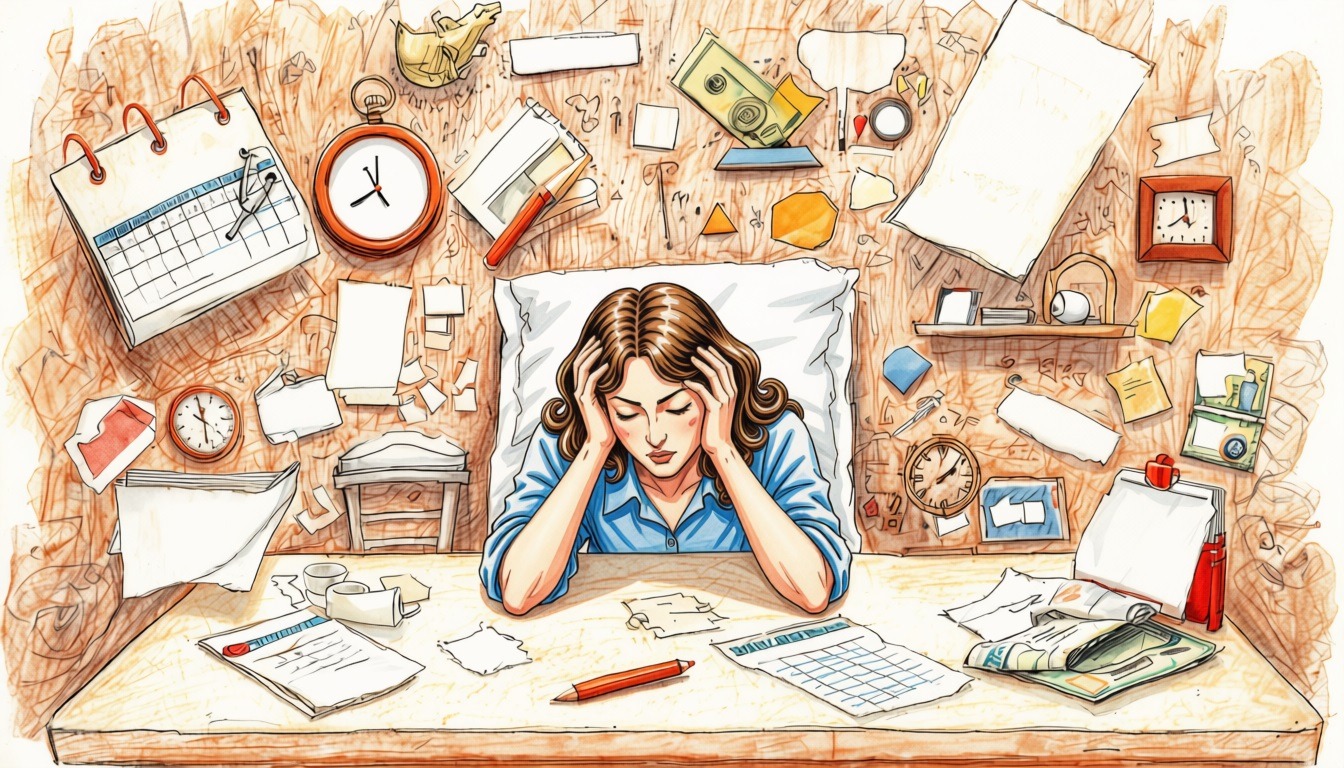
This is why so many people arrive home but do not actually feel home. Their body is in the hallway, but their nervous system is still in the meeting. Their shoes are off, but their thoughts are still replying to an email. Their family sees them on the couch, but their attention is still somewhere between unfinished tasks, overstimulation, and emotional residue. Research on after-hours work email and technology-based work extension shows that when work continues to leak into nonwork time, it can interfere with detachment, increase work-family conflict, and worsen exhaustion and sleep-related outcomes.
That is the real reason the first 20 minutes matter so much. They are not just a transition. They are a decision point. They tell your brain whether the day is ending or whether it is simply changing rooms.
And the beautiful part is this: you do not need a perfect life, a bigger house, a silent home, a spa bathroom, or an expensive wellness routine to use that moment well. You only need awareness, a small structure, and a new respect for what that threshold actually does.
A direct answer for readers
The first 20 minutes after coming home matter because they shape how quickly you recover from stress, whether you mentally detach from the day, how you relate to the people around you, and how easily your body begins shifting toward rest. If you spend those first minutes checking work messages, doomscrolling, rushing into chores, or staying overstimulated, stress tends to spill deeper into the evening.
If you use them to downshift your body, reduce stimulation, and create a clear transition, you improve the odds of a calmer night, better sleep, and less emotional carryover. Studies on detachment, after-hours work email, work-extension behaviors, breathing-based stress regulation, light at night, and smartphone use all point in the same general direction: recovery does not happen automatically; it is helped or hindered by what you do right after the demand ends.
Why “20 minutes” is not magic — but still extremely useful
To be honest, there is no universal law of human biology declaring that exactly 20 minutes after you walk through the door determines your destiny. That would be a catchy myth, not good science.
But 20 minutes is a highly useful window for two reasons.
First, it is long enough to interrupt momentum. Brief recovery periods can matter. Experimental work on short breaks shows that even relatively small pauses can help people recover psychological resources like energy and attention.
Second, it is short enough to be realistic. Most people can imagine protecting 20 minutes more easily than protecting an hour. In behavior change, realistic beats ideal almost every time. The best ritual is not the one that looks beautiful on social media. It is the one that survives real life.
There is also something quietly elegant about this duration. A 20-minute window is long enough for your breathing to slow, for the “I have to keep going” urgency to soften, for bright, task-focused attention to start diffusing, and for your body to receive a new signal: we are not in performance mode anymore. Reviews of diaphragmatic breathing suggest that breathing-based practices can reduce physiological and psychological stress, and some included studies used very short sessions, including a single 20-minute intervention. Nature-based interventions for mental health also show benefit, with some of the most useful exposure windows beginning at 20 minutes.
So no, 20 minutes is not sacred. But it is practical, memorable, and behaviorally powerful.
You do not need rest more than You need a landing
One of the most common misunderstandings in modern self-care is the idea that recovery begins when you finally sit down.
It often does not.
Many people sit down while staying emotionally braced. They scroll while remaining cognitively activated. They eat dinner while half-answering imaginary emails in their head. They lie in bed with a body that is technically horizontal but not remotely calm.
The problem is not always a lack of rest. Sometimes it is a lack of landing.
A plane does not go from full speed to stillness by accident. It lands, decelerates, reorients, and then taxis. Human beings need something similar. If your day has required alertness, performance, emotional labor, masking, multitasking, caregiving, or vigilance, your system often needs a deliberate bridge between the outer world and your inner one.
That bridge is what the first 20 minutes can become.
And when it does, the whole evening changes. Not because life suddenly becomes easy, but because you stop dragging the full speed of the day into the most intimate hours of the night.
What those first 20 minutes actually influence
The first 20 minutes after coming home are not only about how you feel in that moment. They shape what follows.
1. They influence psychological detachment
Detachment does not mean you stop caring about your job, responsibilities, children, inbox, or unfinished tasks. It means your mind gets a genuine chance to stop rehearsing them for a while. That matters because recovery during nonwork time depends in part on this mental separation. When after-hours email or frequent work extension continues, it becomes harder to detach, and work-family conflict and emotional exhaustion can worsen.
2. They influence Your stress carryover
Work-related strain does not always end when the shift ends. A 2024 study on daily workaholism found that on higher-workaholism days, people showed higher blood pressure, greater emotional exhaustion, and more sleep disturbances — and evening psychological detachment buffered the link with sleep problems.
3. They influence Your evening stimulation level
If you come home and immediately add more stimulation — bright screens, notifications, rapid task switching, background noise, intense conversations, or more work — you may keep your system activated when it is supposed to be transitioning toward rest. Evidence on nighttime smartphone use and light at night suggests these habits can affect sleep quality and mental health, sometimes creating a self-reinforcing loop.
4. They influence Your relationships
The first version of you that walks through the door often sets the emotional tone for the evening. This does not mean you must perform cheerfulness. It means unprocessed activation easily becomes atmosphere. If you enter the home in a fragmented state, the whole environment can start feeling hurried, defensive, or thin. If you enter with even a small amount of regulation, presence becomes more available.
5. They influence Your sleep hours later
Sleep does not begin at bedtime. In many ways, it begins when the nervous system first receives the message that it is safe to downshift. Screen exposure, light at night, work rumination, and extended availability can all interfere with this process.
The evening is often won or lost at the door
That may sound dramatic, but most people know the feeling.
You come home and immediately do one of these things:
→ open your phone
→ respond to one “quick” message
→ start tidying aggressively
→ continue a stressful conversation in your head
→ snack while standing
→ leave your coat on because you are “not really done yet”
→ collapse into content that numbs you but does not restore you
None of this makes you weak. It makes you human. But it also reveals something important: when people are dysregulated, they often reach for speed, stimulation, and automaticity instead of transition.
Unfortunately, automaticity is not always recovery.
Sometimes it is just stress on autopilot.
A better way to think about coming home
Instead of asking, “How can I be productive after work?”
ask, “How can I become present after work?”
Instead of asking, “What should I get done tonight?”
ask, “What state am I bringing into tonight?”
Instead of asking, “Why am I still exhausted even after being home for hours?”
ask, “Did I ever truly transition?”
This reframing matters because the evening is not only a block of free time. It is a recovery environment. And recovery environments need design, not just good intentions.
The first 20 minutes table: What happens depending on how You arrive

This table synthesizes current findings on detachment, after-hours email, work extending, smartphone use, light exposure, breathing-based stress regulation, and nature-based recovery.
The five most common mistakes people make when They get home
Mistake one: Treating the front door like a continuation of the workday
Many people enter the house while remaining psychologically “on call.” Sometimes that is because the workplace expects constant responsiveness. Sometimes it is self-imposed. Sometimes it is an identity issue: if I stop, who am I when I am no longer useful?
Research on work-related email after hours suggests that continuing to engage with email during nonwork time is linked to poorer detachment, more work-family conflict, and greater emotional exhaustion. The effects may be even more pronounced when the boundary between home and work is already blurred.
Mistake two: Using stimulation as fake recovery
Scrolling can feel like decompression because it asks very little of you. But “not effortful” is not the same thing as “restorative.” Some digital behaviors reduce discomfort without creating recovery. You stop feeling the day, but you do not actually metabolize it.
Nighttime smartphone use has been linked with poorer sleep and worse mental health indicators in adult populations, while screen exposure near bedtime is also associated with worse sleep quality in prospective data.
Mistake three: Going straight into usefulness
A lot of adults, especially women, caregivers, helpers, high achievers, and people with histories of emotional over-functioning, do not arrive home and ask what they need. They ask what is needed from them.
So they enter the house and immediately become manager, cleaner, parent, fixer, cook, responder, organizer, emotional container, or human logistics department.
This can look responsible. Sometimes it even is. But when it happens before any decompression, it trains the nervous system to believe that one performance state must always be followed by another.
Mistake four: Keeping the house too bright, loud, or “on”
Light matters more than many people realize. A systematic review and meta-analysis found evidence supporting the detrimental effects of light at night on sleep problems. That does not mean you need to live like a candlelit monk. It does mean that if your first hour at home is bright, digital, noisy, and activating, you may be making sleep harder long before bedtime arrives.
Mistake five: Thinking rest should happen automatically
Perhaps the deepest mistake is assuming recovery will simply appear because the workday ended.
Research does not support that fantasy. Recovery is helped by detachment, boundary clarity, and intentional downshifting. When work extends into private time frequently, strain and loss of private time increase. When people deliberately create recovery-supporting conditions, things improve.
A new calm space framework: The “landing strip” method
Here is a more unconventional way to think about those first 20 minutes:
Do not create an evening routine.
Create a landing strip.
A landing strip is shorter, gentler, and more realistic than a full wellness ritual. It is not about optimization. It is about safe arrival. It says: before I ask my evening to hold me, I need to show up inside it.
Here is a 20-minute version.
Minute 0–2: Mark the threshold
Do one small action that tells your brain the context has changed. Change clothes. Wash your hands slowly. Put your keys in the same place. Take off your shoes with attention. Open a window. Drink a glass of water without looking at a screen.
This seems simple because it is simple. The point is not complexity. The point is state change.
Minute 2–5: Unhook from incoming demands
Do not open the group chat. Do not check the email “just in case.” Do not negotiate with your phone. Put it in another room, on charge, face down, or on a shelf. Even a partial delay helps create separation from the day’s demands. Research on after-hours work email and work-extending behavior suggests that repeated contact with work outside working hours undermines private time and recovery.
Minute 5–10: Downshift the body first, not the mind
A stressed mind rarely responds well to being argued with. A stressed body, however, often responds to slower breathing, reduced sensory load, and stillness.
Try one of these:
- a slower exhale than inhale
- a brief diaphragmatic breathing set
- a sit-down without input
- a shower face rinse
- a quiet stretch
- a few minutes on the balcony, porch, doorstep, or by an open window
Reviews of diaphragmatic breathing and broader breathwork interventions suggest that structured breathing can reduce stress and support mental health, although researchers also note that evidence quality varies and nuance matters.
Minute 10–15: Let the environment help You
Lower the lights. Reduce background noise. Avoid stacking stimulation on stimulation. If possible, get a little natural air, greenery, or outdoor contact. Nature-based interventions show measurable benefits for mood and anxiety, and even brief exposure can support a state shift.
Minute 15–20: Choose the tone of the evening
This is the moment most people skip. They assume the evening will define itself. But evenings improve when they are named.
Ask:
What does tonight need to feel like?
Calm? Soft? Efficient? Quiet? Connected? Spacious? Early? Simple?
Then make one move consistent with that answer.
- If the evening needs calm, dim the room and make tea.
- If it needs connection, greet your partner or child after regulating yourself, not before.
- If it needs simplicity, decide what will not happen tonight.
- If it needs restoration, stop performing usefulness for 20 more minutes.
This is not laziness. This is leadership.
The most powerful arrival ritual is the one that fits You
One of the most important newer insights in boundary research is that what helps one person may irritate another. Boundary fit matters. A 2025 study on work-family boundary fit found that alignment between a person’s boundary preferences and actual enactment was associated with better wellbeing, and work-family conflict helped explain the link. In other words, it is not that one universal style is best. It is that people do better when the way they structure the boundary matches how they naturally function.
That matters deeply for evenings.
Some people need stronger separation. They need silence, no messages, a clothing change, and a very clear break.
Other people prefer softer integration. They like to transition by cooking, tidying lightly, or talking while they settle.
The goal is not to copy someone else’s “ideal evening routine.”
The goal is to ask: What helps me genuinely arrive?
That question is more intelligent, more sustainable, and far more compassionate.
What this looks like in real life
For the overwhelmed parent
Your first 20 minutes may never be quiet. That does not mean they cannot still be intentional. Your landing strip might be shorter and more embodied: shoes off, water, one full breath at the door, no phone in hand, one slow cuddle before one practical task. The ritual does not fail because it includes children. It succeeds if it reduces unnecessary activation.
For the remote worker
Coming home is trickier when you already are home. In that case, your “arrival” has to be symbolic. Shut the laptop. Cover the desk. Change rooms. Change clothes. Step outside for five minutes and re-enter. Remote and hybrid work often blur boundaries, which makes these symbolic transitions more important, not less.
For the high-achieving professional
Your danger is not that you do not know how to work hard. Your danger is that you may treat home like a second office for unfinished ambition. You may need the strongest boundary of all: no email, no Slack, no “one more thing” in the arrival window.
For the highly sensitive or easily overstimulated person
Your first 20 minutes should probably be less verbal, less bright, and less digital than average. The world has already asked a lot of your nervous system. Give it fewer inputs, not better content.
For the helper, therapist, nurse, teacher, caregiver, or emotional laborer
Your work may remain in your body even when your shift ends. Emotionally disturbing work can fuel rumination, exhaustion, and worse sleep, and the risk can be amplified in people who feel especially identified with their work.
That means your homecoming ritual should not begin with more emotional availability for everyone else. It should begin with reclaiming your own internal space.
The counterintuitive truth: A good evening often starts with less
- Less brightness.
- Less input.
- Less urgency.
- Less contact with work.
- Less performance.
- Less fragmentation.
- Less pretending you are fine when what you really need is to land.
Modern life often teaches us to add solutions. Add a supplement. Add a planner. Add an app. Add a habit stack. Add a podcast. Add a better productivity system.
But for this specific problem, subtraction may be the real medicine.
The first 20 minutes after coming home are not asking for more complexity.
They are asking for more permission.
- Permission to be between roles.
- Permission to not answer immediately.
- Permission to not be useful for a moment.
- Permission to let your body catch up with where your life has already gone.
If You only remember one thing, remember this
When you come home, do not ask first, “What’s next?”
Ask, “Have I arrived?”
That single question can change the whole evening.
Because the evening is not built only from hours.
It is built from the state you bring into those hours.
And state, more often than most people realize, is shaped in the first 20 minutes.
A gentle 20-minute template readers can actually use tonight
Here is a simple version that does not require buying anything, changing your whole personality, or pretending your life is quieter than it is:

That is it.
- No perfection.
- No aesthetic pressure.
- No spiritual performance.
- Just a real transition.
And that may be more healing than most people expect.
What to remember tonight
The first 20 minutes after coming home are easy to waste because they look ordinary.
But ordinary moments are often the ones that run our lives.
Not every healing change is dramatic. Not every meaningful shift comes from a retreat, a breakdown, a new year, or a perfectly color-coded routine. Sometimes healing begins in the doorway. In the pause before the scroll. In the choice not to reopen the day. In the quiet decision to let home become home.
So tonight, when you come back from whatever the world has asked of you, do not rush to become functional again.
Arrive.
Your body has probably been waiting longer than you think.
Related posts You’ll love
- If Your mind never shuts up at night, try this 10-minute evening ritual for deep mental calm. FREE PDF!
- Evening gratitude meditation: How to end Your day with peace, presence, and inner calm
- Compassion fatigue: The emotional cost of never saying NO
- Better atmosphere for Women: Why They don’t always need a reset
- This is what happens when a Woman finally stops pushing so hard: The psychology of burnout, overfunctioning, and returning to herself
- Self-worth unlocked: 10 deep practices to break free from productivity
- Color therapy for inner peace: How paint and decor can calm You and make home feel safe again
- If You only feel relaxed on vacation, this article is for You!

FAQ
-
Why do I feel more exhausted after getting home than I did at work?
Because exhaustion often becomes more noticeable when performance pressure drops. Many people stay mobilized through the day and only feel the full weight of stress when they stop. Recovery is also harder if work continues mentally through rumination, email checking, or overstimulation.
-
Is it bad to check work emails right after coming home?
For many people, yes. Research suggests that checking work email during nonwork time is associated with poorer detachment, more work-family conflict, and greater emotional exhaustion, especially when boundaries are already blurred.
-
Can a short ritual really make a difference?
It can. Recovery research shows that even brief breaks or interventions can help restore depleted resources, and short, structured practices such as breathing exercises can reduce stress.
-
Why does my phone make it harder to relax at night?
Nighttime smartphone use is linked with poorer sleep quality and worse mental health indicators in adult samples, and some models suggest the effect may happen partly through poorer sleep and problematic use patterns.
-
Does light in the evening really matter that much?
It can. A systematic review and meta-analysis found evidence supporting the detrimental effects of light at night on sleep problems.
-
What if I work from home and do not have a commute?
Then you need a symbolic commute. Shut the laptop, leave the workspace, change clothes, or step outside and re-enter. Boundary transitions become more important when work and home occupy the same physical space.
-
Is doomscrolling a form of rest?
Usually not a very effective one. It may distract you from fatigue, but it often keeps your attention fragmented and stimulation high, which can interfere with deeper recovery and sleep.
-
What is psychological detachment from work?
It is the ability to mentally disconnect from work during nonwork time. It is considered a key part of recovery, and interventions can improve it.
-
Should everyone use the same after-work routine?
No. Evidence on boundary fit suggests people do better when the way they manage boundaries matches their preferences. Some need stronger separation; others prefer softer transitions. Fit matters.
-
Does breathing actually help with stress?
Yes, though it is not magic. Systematic reviews suggest diaphragmatic breathing and breathwork practices may reduce physiological and psychological stress, while researchers also note the importance of evidence quality and realistic expectations.
-
What is the best first thing to do when I get home?
The best first thing is usually something that signals safety and separation from the day: put your phone away, drink water, change clothes, breathe more slowly, dim the lights, or sit quietly for a minute before doing anything else. That helps the body begin the transition that the mind often delays.
Sources and inspirations
- Andersen, T. O., Sejling, C., Jensen, A. K., Drews, H. J., Ritz, B., Varga, T. V., & Rod, N. H. (2023). Nighttime smartphone use, sleep quality, and mental health: Investigating a complex relationship. Sleep.
- Arshad, D., Joyia, U. M., Fatima, S., Khalid, N., Rishi, A. I., Rahim, N. U. A., Bukhari, S. F., Shairwani, G. K., & Salmaan, A. (2021). The adverse impact of excessive smartphone screen-time on sleep quality among young adults: A prospective cohort. Sleep Science.
- Bennett, A. A., Gabriel, A. S., & Calderwood, C. (2020). Examining the interplay of micro-break durations and activities for employee recovery: A mixed-methods investigation. Journal of Occupational Health Psychology.
- Coventry, P. A., Brown, J. V. E., Pervin, J., Brabyn, S., Pateman, R., Breedvelt, J., Gilbody, S., Stancliffe, R., McEachan, R., & White, P. C. L. (2021). Nature-based outdoor activities for mental and physical health: Systematic review and meta-analysis. SSM – Population Health.
- Duchaine, C. S., Gilbert-Ouimet, M., Vézina, M., Trudel, X., Talbot, D., Milot, A., Laurin, D., & Brisson, C. (2020). Psychosocial stressors at work and the risk of sickness absence due to a diagnosed mental disorder: A systematic review and meta-analysis. JAMA Psychiatry.
- Fincham, G. W., Strauss, C., Montero-Marin, J., & Cavanagh, K. (2023). Effect of breathwork on stress and mental health: A meta-analysis of randomised-controlled trials. Scientific Reports.
- Hopper, S. I., Murray, S. L., Ferrara, L. R., & Singleton, J. K. (2019). Effectiveness of diaphragmatic breathing for reducing physiological and psychological stress in adults: A quantitative systematic review. JBI Database of Systematic Reviews and Implementation Reports.
- Karabinski, T., Haun, V. C., Nübold, A., Wendsche, J., & Wegge, J. (2021). Interventions for improving psychological detachment from work: A meta-analysis. Journal of Occupational Health Psychology.
- Meng, L., & Balducci, C. (2024). The daily costs of workaholism: A within-individual investigation on blood pressure, emotional exhaustion, and sleep disturbances. Journal of Occupational Health Psychology.
- Tedone, A. M. (2022). Keeping up with work email after hours and employee wellbeing: Examining relationships during and prior to the COVID-19 pandemic. Occupational Health Science.
- Xu, Y.-X., Zhang, J.-H., Tao, F.-B., & Sun, Y. (2023). Association between exposure to light at night (LAN) and sleep problems: A systematic review and meta-analysis of observational studies. Science of the Total Environment.


Leave a Reply