Table of Contents
When a room answers back
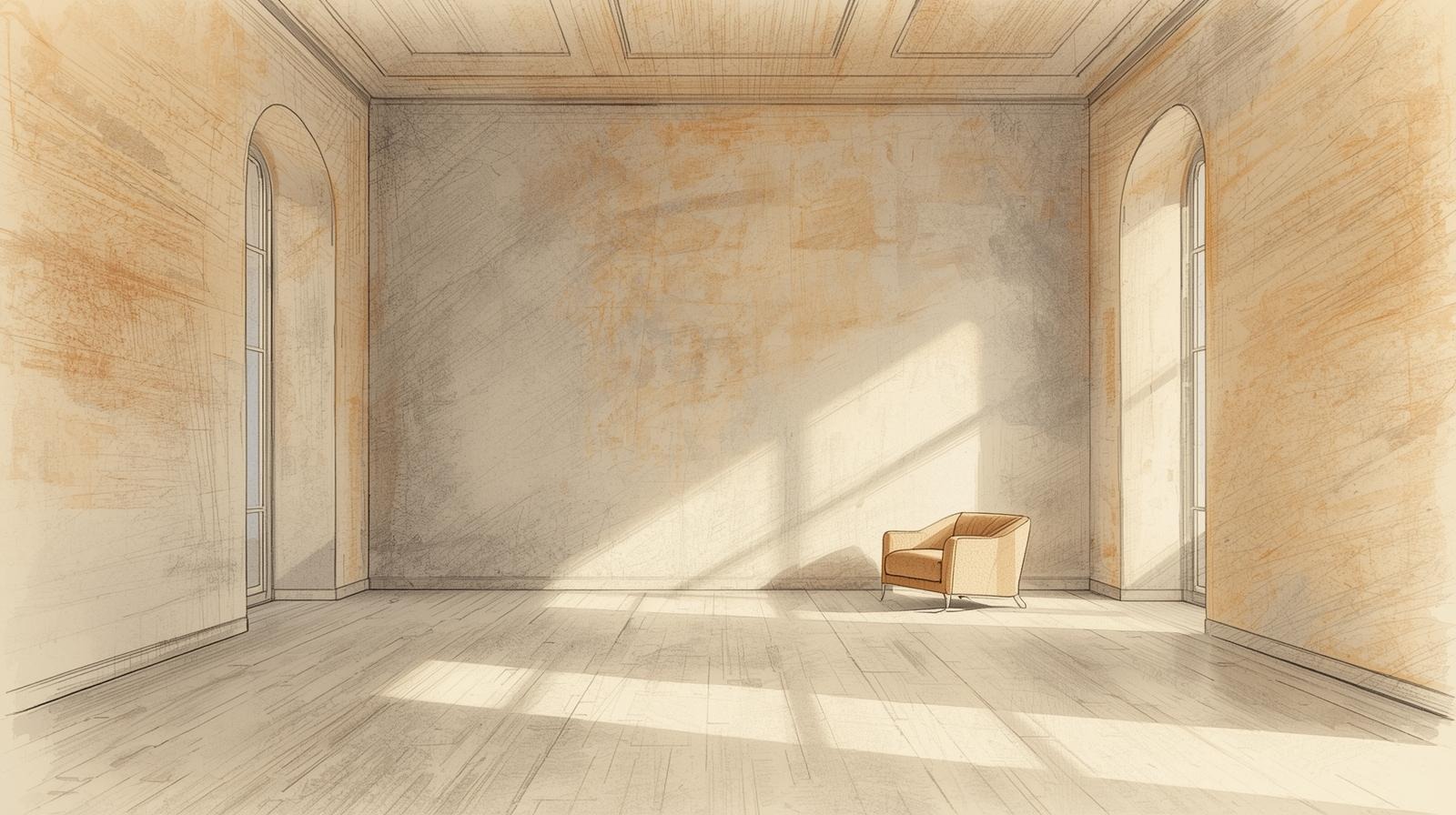
Stand in an unfurnished room and speak your name. The air repeats you. The walls return a softened version of your voice, then a thinner one, then almost nothing. Across cultures and centuries, people have interpreted that fading reply—the echo—as everything from a ghost to a God to a glitch. In psychology, an echo can be a subtle mirror.
It tells you how a space holds you, how your body holds tension, how your attention stretches or snaps back. In acoustics, an echo is physics—sound reflecting off surfaces and arriving late enough to be heard as repetition. In daily life, the line between the physics and the feelings blurs. You don’t merely hear a room; you feel it in your breath rate, your focus, your patience, your sense of safety. Silence has texture. Emptiness has a voice.
This article is a guided walk through that experience. We will explore how echoes emerge, why some emptiness feels soothing while other emptiness feels sharp, how your nervous system reads acoustic cues without your permission, and how to curate an everyday soundscape that restores instead of drains.
Along the way, we will anchor claims in contemporary research on soundscapes, mental health, and environmental acoustics, and translate those findings into gentle, practical steps for home, work, and community spaces. The aim is not monastic silence but intelligent quiet: sound environments that help you breathe easier, think deeper, and connect more fully with the present moment.
What an echo actually is—beyond the textbook
Echoes arise when sound waves bounce off surfaces and return to your ears with enough delay that the brain registers a second event. In a small room with hard walls, you might not hear a crisp copy of your voice; instead you notice a smearing of sound, a tail that lingers and makes words less clear. That smeary tail has a name: reverberation.
Reverberation time, often written as RT60, is how long it takes a burst of sound to decay by 60 decibels. Long reverberation times make spaces feel “hollow” or “boomy,” whereas shorter times feel “dry” or “intimate.” If an echo is a distinct reflection, reverberation is the cloud of many tiny echoes arriving too quickly to distinguish. The mind often frames both as vibes. But beneath vibe is math.
Why does this matter psychologically? Because your auditory system evolved not only to decode speech but to make rapid judgments about safety. Excessive reverberation and intermittent echoes increase listening effort. Listening effort is not a metaphor; it is a measurable load on attention and working memory.
When a room makes your brain work harder just to understand a sentence or interpret a soft footfall, less cognitive bandwidth remains for creativity, empathy, or staying calm during conflict. The result can be a subtle drift toward irritability or fatigue even in a “quiet” place, especially if that quiet place exaggerates sharp reflections or masks the cues you need to feel grounded.
Research and standards bodies have created shared language and methods to study these experiences in daily life. The WHO’s Environmental Noise Guidelines for the European Region synthesized evidence on how noise exposure affects health and well-being, linking environmental noise to outcomes ranging from sleep disturbance to mental health complaints. The guidance is not just for airports and highways; it is an invitation to think in terms of sound exposure and quality in all the spaces where life happens.
Meanwhile, the ISO 12913 soundscape series reframed the question from “How loud is it?” to “How is it perceived?” Part 2 set out protocols for collecting soundscape data in the field; Part 3 formalized how to analyze and report it, consolidating a research tradition that treats human response—not only decibels—as the main outcome. This shift matters for mental health because it validates what you already know in your bones: a 50 dB fountain can feel more restorative than a 45 dB printer. Sound quality is context, meaning, and intention, not a single number.
Empty doesn’t mean silent—how minimal spaces can amplify the mind
Minimal spaces are trending, and for good reason. Visual clutter taxes attention; clean lines breathe. Yet minimalism can backfire acoustically. Bare walls, exposed concrete, tall ceilings, and large glass panes produce reflective surfaces that feed reverberation. The paradox is that a room with fewer objects often has more sound energy sloshing around, reshaping how your inner state unfolds across minutes.
When you enter a stark lobby, your nervous system takes cues from your ears long before logic arrives. A long tail of reverberation suggests largeness and distance. It can feel dignified, even sacred. It can also feel depersonalizing if you need intimacy right now. In contrast, a warmly furnished reading nook shortens reverberation and increases the ratio of direct to reflected sound. Your breath often deepens, your shoulders drop. The acoustic body says, “Near.”
Studies of restorative soundscapes consistently find that features associated with nature—water, wind, birdsong—are rated as more pleasant and supportive of recovery from stress and mental fatigue than typical urban mechanical noise. These patterns appear both in field studies and controlled listening, and they hold even when the measured loudness is comparable. In short, content matters as much as level.
There is an additional twist. Silence itself isn’t a simple on/off switch. Recent research on the psychology of waiting and time perception indicates that curated silence can shift mood toward relaxation and tilt your awareness toward the present moment. However, the same silence can be experienced as tense if the context signals uncertainty or scrutiny. This is why the hush of a chapel feels different from the hush of a performance review. The brain listens to meaning. Frontiers
The nervous system’s quiet code
Your autonomic nervous system speaks a language of signals that are often below conscious awareness. Heart rate variability, skin conductance, micro-expressions, and breathing rhythms all respond to acoustic context. While many people associate stress responses with loudness alone, subtle features such as speech intelligibility and fluctuating, unpredictable sounds appear to be especially potent in altering arousal.
Environments with intelligible background speech can consistently degrade performance on attention-demanding tasks and drain subjective energy, not necessarily because they are “loud,” but because the brain cannot help decoding language. Unlike steady rain or a fan, someone else’s conversation carries meaning hooks that yank your attention repeatedly away from your work.
Experimental and field studies in modern office environments corroborate this. Multimodal stress detection shows that open-plan office noise can elevate physiological and psychological stress even when immediate test scores do not crash. That means you may “perform” but at a higher cost to mood and recovery later in the day. Longitudinally, such hidden costs matter.
In educational settings, acoustic quality intersects with development. Reviews and recent syntheses suggest that excessive reverberation and suboptimal signal-to-noise ratios can impair speech recognition, verbal memory, and working memory in children. The effect is not just academic; belonging and well-being can erode when daily effort to decode speech is chronically high.
Silence, when practiced intentionally, appears to support parasympathetic activation, the branch of the autonomic nervous system that governs rest, digestion, and social engagement. Preliminary evidence points to increases in vagal tone during inner silence practices, aligning with reports of a calmer baseline and improved emotion regulation. While the science of “silence dosing” is still emerging, your own body may already know the truth: after even a few minutes of sound rest, your next conversation lands softer.

The echo inside—memory, meaning, and the way spaces hold us
There is a reason an empty gallery can make you cry. With fewer sonic distractions, the mind increases the gain on inner life. Thoughts you’ve deferred become audible. In psychotherapy, the use of silence is a careful art. Pauses can create space for clients to feel into a truth that words were crowding out, and the surrounding acoustic envelope—soft or brittle, patient or pressurizing—modulates that encounter.
This makes sound design in therapeutic settings more than a nice-to-have; it becomes part of the intervention. Recent qualitative work with psychotherapists emphasizes that silence is multivalent and context-dependent, supporting depth when paired with safety and attunement.
In spiritual traditions, echoes and reverberation have long been used intentionally. Chant in a stone nave is not only beautiful; it is biofeedback. Prolonged reverberation encourages slower phrasing and steadier breath. Your own voice returns to you as a kind of gentle companion, reminding you that you are both the source and the recipient of sound. This loop can become a powerful tool for self-soothing, especially when combined with mindful attention to the decay of each tone.
Modern cities complicate this picture. Chronic transportation noise, even at levels that fade into the background, has been linked with sleep disturbance, mood changes, and cardiovascular risk. When stressors stack—air pollution, crowding, light pollution—the nervous system has less recovery time between hits.
Policy-level reports in Europe have underscored the scale of the challenge, with millions exposed to unhealthy noise levels and substantial associated social costs. This is not a reason to despair; it is a call to bring sound into the center of public health, urban design, and personal well-being. Le Monde.fr+1
Designing emptiness that calms—principles for curating quiet
If emptiness can amplify either tension or calm, the work is not to fill every corner but to tune the silence. Think of tuning as creating a relationship between direct and reflected sound, between meaningful sound and supportive hush. The most helpful mindset is experimental. Instead of asking, “What’s the decibel level?” ask, “How does this room help me listen?” Then test, listen again, and adjust.
Start with edges. Where are the hardest, most reflective surfaces, and where does your voice sound brittle? Gentle softening at strategic points changes the story. A rug underfoot reduces early reflections from the floor. Curtains or textured wall hangings behind your primary listening position can shorten the reverberation tail enough to make conversation less effortful.
Books, plants, and woven textures introduce micro-diffusion, breaking up slap echoes without deadening the room. None of this requires an engineer; it requires noticing which parts of the decay you dislike, and giving that part somewhere kind to land.
Now think about signal and meaning. If your home office resides near a noisy street, a small source of meaningful, low-complexity sound—a tabletop fountain, a soft broadband noise generator, a loop of wind through leaves—can mask intrusive peaks and stabilize attention. The key is to choose a sound that your brain doesn’t compulsively parse for information.
Many people discover that consistent, natural textures improve writing fluency and reduce the sense of “trying to concentrate.” These impressions align with findings from soundscape research that nature-aligned sound often supports restoration relative to mechanical noise types.
For large, sparsely furnished rooms, work with zones rather than global fixes. Create a “near field” of intimacy where you actually read, talk, or meditate. Bring the ceiling psychologically closer with a pendant lamp that creates a pool of light and a fabric shade that doubles as a gentle absorber.
Place a tactile throw on the surface behind your seat so early reflections are tamed at the point where you listen most. If you love minimalist visuals, choose absorptive elements that read as art—wool tapestries, timber slats with felt behind, sculptural acoustic panels. In such spaces, the most pleasing quiet feels designed rather than accidental.
If you share space, especially in open-plan offices, advocate for a mixed acoustic ecology. Every team needs zones for energetic talk and zones for deep work. Pods and focus rooms help only when properly treated and ventilated; otherwise they become loud boxes. The most intentful workplaces pair policies (quiet hours, chat norms) with architectural measures (absorptive ceilings, soft dividers, carpet tiles, bookable quiet rooms).
Research on open-plan acoustics has been unambiguous about the stress load imposed by speech-rich, highly unpredictable soundscapes; the humane response is not to ask people to “toughen up,” but to give the nervous system a fair chance.
Practices to hear your space differently
Transformation starts with attention. Here are practices to cultivate a more loving relationship with silence and echo—not as a checklist but as a lived sequence you can revisit. Read each practice fully, try it as written, and notice your body’s response.
Begin at the door. Stand at the threshold of a room you wish to soften. Without moving, take one slow breath in, one slow breath out. Whisper a single syllable, such as “oh,” and listen all the way through the decay. Notice where the sound seems to fall: down into the floor, forward into the room, or back toward you. The direction of that felt fall is your starting map. If it falls back at you sharply, you have strong early reflections in front. If it floats forward and lingers, you have a long overall reverberation tail. Neither is wrong. Both are information.
Now cross the room and sit in your favorite chair. Say a complete sentence at the volume you normally speak. Pay attention to what happens after the last word. If the air still holds your voice, imagine laying a blanket over that echo. When you look around, where would you place it? That imagined blanket is your body’s acoustic intuition. Trust it and try a real-world analogue: a textile where your eye placed the blanket, a plant where you imagined a softening, a curtain where you sensed glare.
Invite a friendly sound. Pick a natural texture that you won’t over-analyze: a soft fan, gentle rain audio, a distant stream recorded without sudden birds. Set it at the lowest level you can barely notice and then decrease it one notch further. Sit for five minutes with eyes closed. When you open them, read a paragraph of something you care about. If comprehension feels easier, your nervous system just voted for an enriched soundscape.
Practice micro-silence. Between two tasks, close your eyes and track the farthest sound you can hear. Keep your attention there until you can name a nearer sound without losing the far one. This trains your auditory attention to widen and steady, making future intrusions less jarring. The aim is not to suppress sound but to cultivate agency over what you follow.
End with gratitude. Sometime before sleep, sit in the quietest corner of your home. Place one hand on your chest and one on your belly. Exhale slowly and imagine that the room is exhaling with you, the last wisps of the day’s noise leaving both of you softer. The nervous system remembers pairings. Teach yours to pair quiet with safety.
Echoes as teachers—turning emptiness into a friend
Echoes in empty spaces can be spooky only when you expect silence to be absence. In reality, silence is presence of a special kind. It is the presence of room to notice, to recover, to listen. When you gently tune the acoustic field around your life, you also tune the substratum of your relationships. You refill attention more easily and spend it more generously. You become kinder not by trying harder, but by asking less of a taxed nervous system.
The psychology of echoes is, in the end, the psychology of how you let yourself be held—by rooms, by pauses, by the soft end of a sentence, by the way sound leaves and returns. Empty spaces are not blank; they are spacious. And spaciousness is what your mind and heart have been asking for all along.
Research corner—why the science points toward intentional quiet
A robust body of contemporary work now orbits the simple intuition that the quality of soundscapes matters for mental well-being. The WHO guidelines cemented the health frame, articulating how environmental noise relates to sleep, mood, and quality of life. The ISO 12913 series brought coherence to a field that needed shared definitions and methods, emphasizing human perception and context. Reviews of restorative soundscapes spotlighted nature as a supportive auditory resource, not merely as visual scenery.
Investigations in classrooms and offices showed that cognitive effort, mood, and recovery trajectories change with reverberation and speech-rich noise, sometimes without dramatic headline shifts in test scores. This disconnect—performing “fine” while paying a hidden physiological price—explains the paradox of the modern knowledge worker: good output, frayed edges.
The social layer matters, too. Public-health analyses across Europe have quantified the mass scale of the problem, with tens of millions exposed to harmful noise levels. Urban policy cannot be separated from self-care; the commute whispers into the home. The solution set is equally layered: better building acoustics, flexible work policies, accessible quiet zones, and micro-rituals of personal silence. The future of calm is not the fear of sound but the craft of it.

A gentle roadmap for your space
Let the next seven days be a listening retreat woven into ordinary life. On day one, choose a single room and perform the threshold whisper. On day two, soften one reflection with textiles you already own. On day three, try a low-level nature texture while journaling for ten minutes. On day four, ask a friend to sit across from you and share how the room feels during conversation; move one object and repeat the test.
On day five, gift yourself five minutes of micro-silence between meetings. On day six, sit in a communal space—a library, a park niche—and notice what sound qualities help people lower their voices spontaneously. On day seven, write down three adjectives that describe your ideal home sound: clear, warm, close; or spacious, soft, steady. Use those words as your compass for small changes over the next month.
In the end, the calibration you are after is not acoustic perfection. It is the feeling that when you speak, the room answers in kindness; when you pause, the pause gives something back; and when you finally stop for the night, the last echo is simply your breath, arriving home.
Calm space roadmap FREE PDF
Related posts You’ll love
- The power of keeping fresh flowers at home: A science-backed ritual for mood, calm, and everyday joy
- The calm power of self-validation: A science-backed way to soothe Your nervous system and build inner safety
- How to stop mental overstimulation before it starts: A clinically-grounded, human guide to calm focus
- The emotional freedom of not having an opinion about everything
- Morning rituals that make peace feel possible again
- Due diligence report on weaponized humor: Red flags that hide behind “just joking” and how to respond with quiet power
- The chilling effect: Why Women go quiet online. The hidden safety math behind silence, and the calm way back to being seen without getting hurt

FAQ: The psychology of echoes in empty spaces
-
What exactly is an “echo” and how is it different from “reverberation”?
An echo is a distinct repetition of sound after it bounces off a surface and returns to your ear with enough delay to be heard as a second event. Reverberation is the dense cloud of many reflections arriving so quickly that they blur together into a lingering tail. In small rooms you mostly experience reverberation; in large or reflective spaces you may notice a true echo. Both shape listening effort and your sense of calm.
-
Why do minimalist rooms often sound harsher?
Minimalism removes visual clutter but also removes absorptive materials. Bare walls, exposed concrete, large glass panes, and hard floors reflect sound and lengthen the reverberation tail. The result can feel bright or “boomy,” which increases listening effort and subtle stress. Adding strategic soft materials preserves the minimalist look while softening reflections.
-
How do echoes and reverberation impact mental well-being?
When speech or everyday sounds smear, your brain works harder to decode meaning. That hidden effort drains attention and can raise irritability or fatigue over time. In calming spaces, shorter, warmer decays make voices feel closer and safer, which supports relaxation, focus, and social connection.
-
What is RT60 and why does it matter for a calm room?
RT60 is the time it takes for a sound to decay by 60 dB after the source stops. Shorter RT60 generally improves clarity and reduces cognitive load; overly long RT60 can make rooms feel hollow and conversations tiring. You don’t need a lab measurement—your voice test and how easy it feels to listen are practical guides.
-
Can “silence” feel stressful?
es. Silence is context-dependent. In safe, supportive settings it helps the parasympathetic nervous system engage, but in tense or uncertain contexts it can heighten vigilance. The goal isn’t absolute silence, but intelligent quiet: a soundscape that feels steady, meaningful, and kind.
-
What simple changes make the biggest difference at home?
Start by softening early reflections near where you sit or speak. A rug underfoot, curtains near windows, a textile or bookshelf behind your chair, and a fabric lampshade can noticeably shorten decay. Then introduce a very low-level natural texture like gentle rain or a fan to stabilize attention.
-
Do nature sounds or white noise actually help?
Consistent, low-information sounds can mask intrusions and reduce distraction. Many people prefer natural textures (rain, wind, distant water) over synthetic white noise because they feel more pleasant over time. Keep the level just above the threshold of perception and avoid sudden peaks or prominent birdsong that pulls attention.
-
How can I apply this in an open-plan office?
Advocate for mixed acoustic zones. Pair policies like quiet hours and soft-voice norms with materials such as acoustic ceilings, fabric dividers, and carpet tiles. Provide bookable focus rooms that are properly treated and ventilated. Personal strategies include soft in-ear plugs that reduce but don’t isolate and very low-level masking audio during deep work.
-
Is there a quick way to “measure” my room without pro gear?
Use your voice and attention as instruments. Whisper a single syllable and listen through the decay. If you want numbers, several smartphone apps estimate RT60 using claps or sweeps. Treat readings as relative, not absolute—compare “before” and “after” as you make changes.
-
Will thick curtains and rugs make my room too “dead”?
Over-absorbing can make a room feel dull. Aim for balance: soften the first reflection points and keep some diffusion from books, plants, or textured surfaces. You want clarity and closeness, not anechoic silence.
-
How can I improve bedroom calm for sleep?
Prioritize steady, predictable sound. Seal gaps around doors, use heavy curtains, and consider a low-level fan or gentle rain loop. Avoid audio with words or sudden changes. Keep phones outside the bed area to prevent late-night spikes in arousal from notifications.
-
What about renters who can’t renovate?
Use movable solutions: thick curtains, area rugs with felt underlay, freestanding bookcases with uneven spines, large canvases with acoustic backing, and fabric room dividers. A few well-placed textiles and plants can change the decay character without touching the walls.
-
Are headphones a good long-term fix?
They’re a tool, not a habitat. Noise-cancelling headphones reduce intrusions but can mask the need to tune the room. Use them for short bursts and still aim to improve the baseline soundscape so calm is available even when you’re not wearing them.
-
How do echoes influence conversation and relationships?
Long, bright decays push voices apart and make subtle emotions harder to read, which can fuel misunderstandings. Softer, shorter decays bring voices perceptually closer, supporting empathy and ease. Tuning a room is relational design.
-
What’s one seven-day plan to get started?
Day 1 map the echo with a whisper. Day 2 soften one reflection. Day 3 add a friendly cover sound. Day 4 do a conversation check. Day 5 practice micro-silence. Day 6 study a public calm space and import one idea. Day 7 choose three adjectives for your ideal sound and commit to one small install this week.
-
Is there any risk to using masking sounds?
Keep levels low and choose stable textures to protect hearing and avoid fatigue. If you share space, agree on sounds that everyone finds neutral. For infants or pets, maintain extra-low levels and avoid continuous masking overnight unless recommended by a clinician.
Sources and inspirations
- World Health Organization Regional Office for Europe. Environmental Noise Guidelines for the European Region.
- ISO. Acoustics—Soundscape (ISO 12913 series).
- Aletta, F., (2023). Adoption of ISO/TS 12913-2:2018 Protocols for Data Collection in Soundscape Studies. Springer.
- Ratcliffe, E., (2021). Sound and Soundscape in Restorative Natural Environments: A Narrative Literature Review. Frontiers in Psychology.
- Shu, S., (2023). Exploring the Role of Soundscape in Restorative Experience. Frontiers in Psychology.
- Clark, C. (2018). WHO Environmental Noise Guidelines… A Systematic Review on Environmental Noise and Quality of Life, Well-Being, and Mental Health. International Journal of Environmental Research and Public Health.
- Sander, E. L. J., (2021). Open-Plan Office Noise is Stressful: Multimodal Stress Detection in a Simulated Work Environment. Journal of Management & Organization.
- Mealings, K. (2022). Classroom Acoustics and Cognition: A Review. Building Acoustics. SAGE Journals.
- Gheller, F., (2023). The Effects of Noise on Children’s Cognitive Performance: A Systematic Review. Environment and Behavior.
- Donelli, D., (2023). Silence and its Effects on the Autonomic Nervous System. Progress in Brain Research.
- Montgomery, M. R., (2024). The Shifting Sound of Silence: A Constructivist Grounded Theory of Psychotherapists’ Use of Silence. Counselling and Psychotherapy Research.
- Tan, S., (2024). Moments of Silence at the Beginning Stage of Psychotherapy with Young Adults. Journal of Contextual Behavioral Science.
- European Environment Agency (EEA). (2025). Noise Pollution Harms Health of Millions Across Europe. The Guardian
- Airparif & Bruitparif (2024) via Le Monde. Cross-Mapping of Air and Noise Pollution in the Paris Region. Population-level exposure analysis illustrating cumulative burdens. Le Monde.fr
- Pellegatti, M., (2023). Indoor Soundscape, Speech Perception, and Cognition. Building and Environment.
- Axelsson, Ö., (2019). Editorial: Soundscape Assessment. Frontiers in Psychology.
- Candido, C., (2019). The Rise of Office Design in High-Performance, Open-Plan Workplaces. Buildings.
- Wired (2020). Pods Were Meant to Fix Open-Plan Offices. They Haven’t.




Leave a Reply