
Table of Contents
You open an app with something simple in mind.
Not a debate. Not a manifesto. Not a performance.
Just a sentence that feels true. A photo that feels like your life. A small opinion you would say out loud to a friend without thinking twice.
You start typing.
Then something in you pauses.
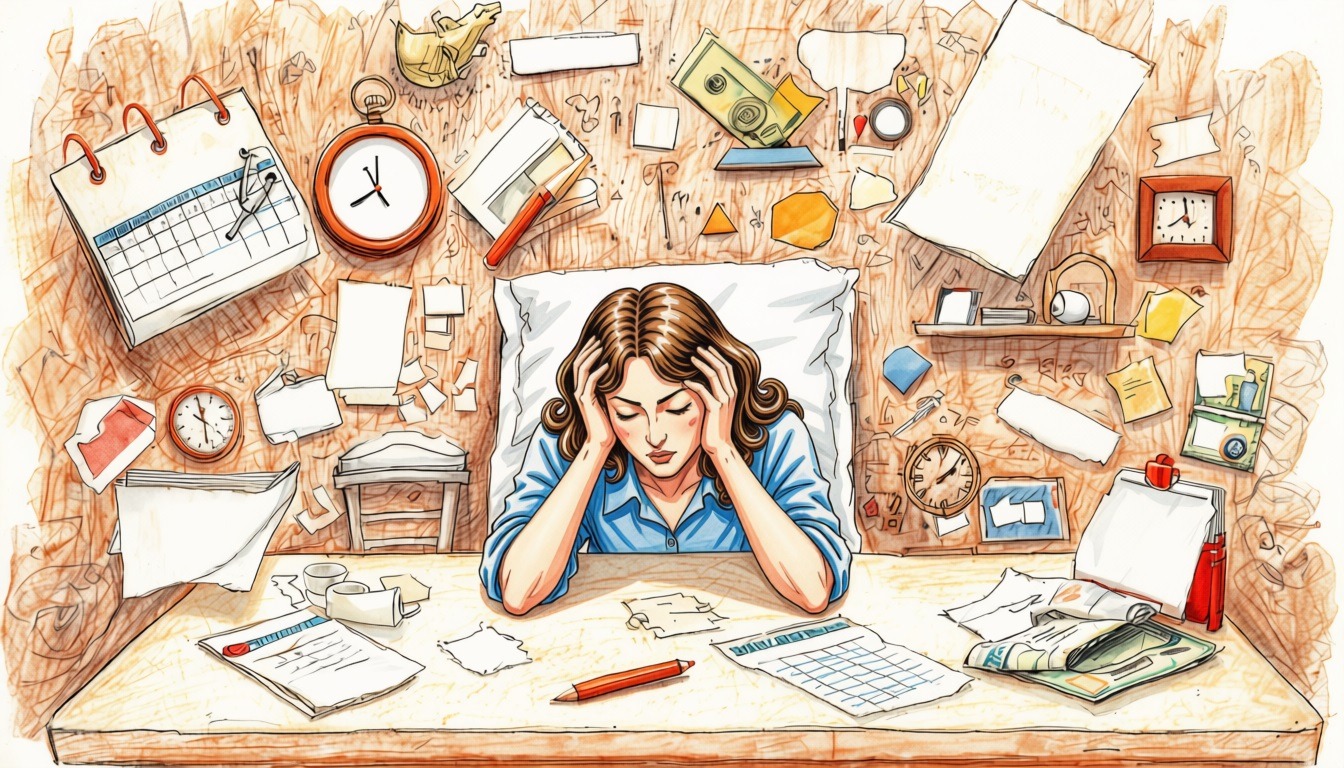
Your chest tightens. Your shoulders creep upward. Your mind shows you a fast montage you did not ask for: a stranger twisting your words, a flood of replies that feel like hands grabbing at you, a private message that turns sexual, a sudden fear that someone could connect your face to your workplace, your neighborhood, your child’s school, your real name.
And then, almost automatically, you do what so many women have learned to do online.
You delete the draft.
From the outside, it looks like nothing happened. From the inside, your nervous system just made a decision that helped you survive the moment.
This is the chilling effect. It is what happens when speaking begins to feel expensive, risky, and unpredictable, and silence starts to feel like the only warm place left.
The chilling effect is often framed as a free speech problem or a platform problem. It is both. But it is also a body problem. A safety problem. A daily life problem. It changes what you share, what you create, who you connect with, and how visible you allow yourself to be.
Large surveys consistently show that online harassment is common, that social media is a frequent place where it happens, and that women are particularly likely to encounter sexualized forms of harassment and to describe harassment as highly upsetting.
So if you have gone quiet online, this article is not here to shame you back into posting.
It is here to do something more useful.
It will name what is actually happening. It will explain why it impacts women so intensely. It will show the psychological and structural mechanisms that make silence feel safer. And it will give you a calm, practical way to rebuild choice, so your voice becomes something you can use intentionally again, not something you have to force.
Now let’s begin where your body begins, because that is the honest starting point.
A simple truth most advice ignores
If your body feels unsafe, your voice will negotiate.
It will become smaller, safer, softer, or silent.
Not because you lack strength, but because your nervous system is built to prevent harm, not to win arguments.
That is the part most “just ignore it” advice misses.
Ignoring is not a skill your nervous system is designed to master. Safety is.
What the chilling effect actually means in real life
In public policy, a chilling effect describes the way people avoid speaking when they anticipate punishment. Online, punishment is rarely just disagreement. It is often humiliation, sexual harassment, threats, coordinated dogpiles, reputation attacks, and the fear of being tracked from digital life into physical life.
And here is the key point: the chilling effect does not require constant violence to work. It needs uncertainty.
Uncertainty trains vigilance.
When you do not know what will trigger harassment, you begin to treat every post as a gamble. You start doing “safety math” before you even finish a sentence.
You begin to think, often silently:
- Will this be misunderstood on purpose
- Will someone quote me to their followers
- Will this attract the kind of attention that feels invasive
- Will I regret being visible when I try to sleep tonight
That internal checklist is a form of self censorship, but it is not a moral failing. It is a protective adaptation.
A major report by Amnesty International documented how abuse and violence against women online can restrict women’s expression and participation, and how the resulting fear can push women to change their behavior or withdraw.
So the chilling effect is not a mood. It is an environment.
And women are not going quiet “for no reason.” They are responding to conditions.
The silence spectrum: The many ways Women become quieter
Silence is not one thing.
A woman can be online every day and still be quiet in ways that matter. She can post, but avoid opinions. She can share, but only safe versions of herself. She can participate, but only through private messages. She can create, but never publish.
Here is a spectrum that helps you locate yourself without judgment.
| Silence pattern | What it can look like | What it often protects you from | What it can cost over time |
|---|---|---|---|
| Soft quiet | You scroll, react, maybe share privately, but rarely post your own words | Conflict spirals, misinterpretation | Feeling unseen, disconnected from your own voice |
| Selective voice | You post safe topics, avoid anything personal, political, or vulnerable | Sexualized attention, targeted harassment | Your identity shrinks, your creativity dries up |
| Strategic disappearance | You reduce posting, lock replies, switch to anonymous accounts, limit reach | Doxxing fear, pile ons | Lost opportunities, weaker community, loneliness |
| Defensive silence | You delete posts, stop commenting, stop engaging | Re triggering, repeated attacks | Grief, self doubt, social withdrawal |
| Full retreat | You leave platforms or stop public sharing entirely | Safety and relief | Your public world becomes shaped without you |
If you recognize yourself here, you do not need a lecture about confidence. You need a system for safety.
And to build that system, we have to acknowledge the gendered reality of online harm.
Why the internet feels colder for Women
There is a reason women describe certain online spaces as freezing.
It is not just that people are rude. It is that the hostility is often gendered, sexualized, and designed to control.
Global research and policy focused on online violence against women and girls consistently describes patterns such as cyber harassment, cyber stalking, non consensual sharing of intimate images, and gendered hate, and highlights how these harms can drive women out of digital spaces.
A recent publication by UN Women discusses a chilling escalation of violence against women in the public sphere and describes how technology, including AI enabled tactics, can intensify gendered attacks and push women away from public participation.
When the harm is gendered, it targets more than your opinion. It targets your right to exist publicly.
It commonly attacks:
- Your credibility, framing you as irrational or unqualified
- Your body, reframing your presence as available for consumption
- Your safety, implying you can be found
- Your identity, using sexist, racist, homophobic, or transphobic slurs
- Your relationships, pressuring you to disappear to protect your family
You can feel how different that is from disagreement.
Disagreement says: I do not like your idea.
Gendered online abuse says: you do not deserve to be here.
That is why women go quiet online even when they still have plenty to say.

The four cold forces that silence Women fastest
Many forms of harm exist online, but four patterns tend to create the fastest chilling effect, because they attack the foundations of safety.
Sexualization used as control
Sexual comments, coercive private messages, threats, unsolicited explicit images, “jokes” about rape, or constant body evaluation all carry the same underlying message: your voice is secondary to your body.
This is not merely offensive. It is silencing. It turns the act of posting into a risk of being invaded.
Surveys by Pew Research Center show gender differences in online harassment experiences and reactions, including that women are more likely to describe harassment as highly upsetting.
Doxxing fear, even if it never happens
Doxxing is not only an act. It is a threat that reshapes behavior.
Once your brain believes you can be traced, you start posting as if you are already being watched.
You become cautious in ways that are hard to explain to someone who has never been targeted. You do not need proof. You need safety.
Coordinated pile ons
A pile on is not just “lots of people disagree.” It is an overwhelm event.
It often includes mass replies, mockery, hostile quote reposts, and sometimes mass reporting. The goal is not conversation. The goal is intimidation.
And intimidation works best when it is public.
Reputation attacks and gendered disinformation
When false narratives about a woman circulate, the purpose is often to undermine trust in her as a person, not just debate her point.
A report by the Wilson Center describes how gendered and sexualized disinformation can be weaponized against women, with direct and indirect impacts on women’s participation in public life.
The chilling effect here is especially cruel because it asks you to defend your humanity, not your argument.
And defending your humanity is exhausting.
The safety tax: The invisible labor behind “just being online”
Women who remain visible online often pay a safety tax that others do not notice.
It is the constant mental work of risk management:
- Monitoring comments
- Filtering words
- Blocking and muting
- Screenshotting evidence
- Adjusting privacy settings
- Wondering if reporting will help or backfire
- Explaining to friends why “it’s just online” is not true
A 2024 policy report by the European Women’s Lobby discusses cyber violence against women and highlights the systemic nature of these harms and the need for stronger responses, including platform accountability.
When you pay a safety tax long enough, silence starts to feel like rest.
Not always, but often.
So the most important question becomes: what is silence doing for you?
Because once you understand that, you can rebuild choice instead of forcing exposure.
The nervous system explanation that changes everything
A chilling effect is not only a social response. It is a stress response loop.
When something online has hurt you before, your brain learns to predict danger in similar situations. That prediction activates your body. Your body then pushes you toward protection.
You can see the loop like this:
Post or draft → threat prediction → body activation → protective behavior → relief → learning
In human terms:
- You think about posting.
- Your body braces.
- You choose silence.
- Your body relaxes.
- Your brain learns: silence keeps us safe.
That learning is logical.
A systematic review in 2024 found associations between cyberbullying victimization and adverse mental health outcomes including anxiety, depression, and stress, reinforcing that online harm can have real psychological weight.
This is why telling women to “just ignore it” can feel like telling someone to relax while the alarm is still ringing.
Your nervous system does not ignore alarms. It reacts.
Here is a practical table that links common online harms to body responses and protective behaviors, so you can recognize your own pattern with compassion.
| Online event | Common body response | Protective behavior that follows | What your system is trying to do |
|---|---|---|---|
| Sexualized comment or DM | Nausea, tight throat, shame heat | Delete post, stop sharing photos, lock account | Reduce perceived access to your body |
| Threat or stalking fear | Hypervigilance, scanning, insomnia | Remove personal details, stop posting real time | Prevent traceability |
| Pile on or dogpile | Racing heart, shaking, dissociation | Stop replying, stop posting, disappear | Stop overwhelm, stop social exposure |
| Reputation attack | Collapse, panic, rumination | Private accounts only, silent scrolling | Prevent further humiliation |
| Unpredictable moderation | Confusion, helplessness | Self censor to “safe” topics | Avoid punishment without clarity |
Once you see this as nervous system behavior, you can stop asking, “What is wrong with me?”
And start asking, “What would make me feel safe enough to choose?”
That is where calm strategies actually work.
A new framework: Your visibility budget
Most online advice assumes you have unlimited capacity.
You do not.
You have a visibility budget: a limited amount of emotional energy you can spend on being seen, being misunderstood, being interpreted, being responded to.
When harassment happens, it drains that budget faster.
This framework is simple but powerful: you can spend your visibility budget in ways that create warmth, not exposure.
Here is what it looks like in practice.
| Visibility budget category | What it includes | What drains it | What restores it |
|---|---|---|---|
| Emotional energy | Mood, motivation, confidence | Hostile replies, sexual comments, constant vigilance | Sleep, movement, supportive connection |
| Cognitive energy | Focus, creativity, clarity | Rumination, threat scanning, arguing | Boundaries, time limits, posting rituals |
| Social energy | Willingness to engage | Pile ons, dogpiles, distrust | Smaller circles, moderated spaces |
| Identity energy | Sense of self | Being reduced to stereotypes, reputation attacks | Values based writing, safe community feedback |
When your budget is low, your silence is not laziness. It is conservation.
So the goal is not to “post more.”
The goal is to manage your budget so you can speak when speaking actually serves you.
Digital climate control: How to warm the room without leaving the internet
Instead of asking, “How do I become fearless online,” try a calmer and more realistic question:
How do I control the climate around my voice?
Climate control has three dials:
- Exposure dial, how reachable you are
- Signal dial, how discoverable your content is
- Recovery dial, how fast you return to baseline after contact
When women go quiet, one or more of these dials is stuck too high for too long.
Here is a practical way to set them intentionally.
| Dial | If it’s too high, you feel | Calm adjustment | The goal |
|---|---|---|---|
| Exposure | Intruded on, overwhelmed | Limit who can reply, restrict DMs, tighter privacy | Less access to you |
| Signal | Too visible to strangers | Post at lower reach times, avoid searchable identifiers, smaller platforms | Less random traffic |
| Recovery | Stuck in stress for hours | Post and leave, schedule check ins, aftercare routine | Faster return to calm |
This is how you rebuild voice without sacrificing your nervous system.
You are not trying to become immune. You are trying to become regulated.

The calm re entry plan: Regulate → Reduce → Re enter
This is the part many women need most, because it offers a path that does not require pushing through panic.
You can use this plan even if you are not ready to post publicly yet.
Regulate → Reduce → Re enter
- Regulate means telling your body, right now, we are safe enough.
- Reduce means lowering exposure so you are not posting into an open door.
- Re enter means using small, repeatable steps that build confidence through safety.
Regulate: A two minute nervous system reset before You post
Try this before writing anything public.
- First, let your exhale be slightly longer than your inhale, for about six breaths.
- Second, release your jaw, then soften your tongue, then drop your shoulders.
- Third, look around the room and name three neutral objects. A mug. A wall. A window.
This tells your body something important: we are here, not there.
It turns a digital threat into a present moment.
Reduce: Make Your boundaries visible to the platform
A boundary is not a mood. It is a setting.
If you reduce exposure, your nervous system stops acting like you are stepping onto a stage with no exit.
The exact features vary by platform, but the principle is consistent: limit access before you increase visibility.
The Council of Europe has emphasized the seriousness of the digital dimension of violence against women and the need for systemic responses, recognizing that women face specific barriers and harms in digital spaces.
That matters because it validates the idea that boundaries are not personal weakness. They are aligned with public policy understanding of digital harm.
Re enter: Rebuild voice in layers, not in leaps
Re entry works best when it is gradual, because your nervous system learns through repetition.
Here is a gentle ladder that many women find doable.
| Layer | What you do | What you avoid at first | What it builds |
|---|---|---|---|
| Private voice | Drafts, notes app, voice memos | Real time posting | Trust in your own thoughts |
| Semi private voice | Small group chats, close friends stories | Public debates | Safety while being seen |
| Limited public voice | Public posts with tight reply limits | Topics that attract hostility | Confidence through boundaries |
| Expanding public voice | Wider topics, more presence | Overexposure, constant engagement | Choice and agency |
The key is that you do not have to “earn” your voice by suffering.
You can reclaim it by building safety.
When You get hit anyway: The aftercare protocol that prevents shutdown
Even with boundaries, you might still receive something cold.
When that happens, the goal is not to be unbothered. The goal is to prevent your nervous system from concluding, “Never again.”
Try this sequence when you feel the hit.
- Impact acknowledgment: name what happened without minimizing it.
- Body first: drink water, unclench jaw, place feet on the floor.
- Containment: screenshot if needed, then block or report, then exit the app.
- Warm contact: send one message to a safe person, even if it is short.
- Delayed processing: give yourself permission to feel later, not inside the threat zone.
This works because it separates harm from identity. It tells your brain: that was an event, not a verdict.
A core theme across major reports on online violence is that the harm is real and the impacts can drive self censorship and withdrawal.
So aftercare is not indulgent. It is prevention.
The grief underneath going quiet, and why it deserves respect
Many women do not only feel fear. They feel grief.
- Grief for the version of themselves who posted freely.
- Grief for the community that felt safe until it did not.
- Grief for the creativity that became risky.
- Grief for the sense of belonging that slowly turned into vigilance.
This grief matters because it shows you something important: your voice mattered to you.
You can hold that grief without rushing to fix it.
You can treat it like a season.
Silence can be a boundary. It can also be a bridge.
The difference is whether you feel trapped inside it.
The goal of this article is not to push you out of silence. It is to give you a door.
What changes the climate for everyone, not just individual Women
It is unfair when the burden of safety falls only on targets.
Real change also requires platform design, moderation, and policy that reduce unpredictability and reduce impunity.
Research on algorithmic content moderation describes technical and political challenges in automated governance, including issues of opacity and the complexity of enforcement at scale.
Opacity creates uncertainty, and uncertainty creates chilling.
Policy and measurement work from European institutions also shows growing attention to defining and tracking cyber violence against women and girls, including forms such as stalking, harassment, and non consensual sharing of intimate or manipulated material.
And recent global work by UN Women highlights the escalation of digital violence, including in the age of AI, and the way it intersects with offline risks for women in the public sphere.
So yes, you can do calm, practical things as an individual.
And also, the world needs systemic warmth: clearer reporting, faster responses to threats, accountability for coordinated harassment, and better default protections for users most likely to be targeted.
Both can be true.
A calm ending, with choice at the center
If you have gone quiet online, let yourself hear this clearly:
Your silence may have been a wise response to an unsafe environment.
It may have been rest. It may have been protection. It may have been a way to keep your nervous system intact when the internet was trying to make you pay for visibility.
The opposite of silence is not constant posting.
The opposite of silence is choice.
Choice sounds like:
- I speak here, not there
- I share this, not that
- I engage today, but I rest tomorrow
- I keep my voice, and I keep my safety
If you want to come back to your voice, you do not need to come back with fire.
You can come back with warmth.
You can come back one safe sentence at a time.
Visibility is not your duty.
It is your decision.
Related posts You’ll love
- Menopause panic confusion: When Your body feels like an alarm
- The shame of needing comfort: Why support feels risky
- Prevalence inflation in mental health: Are we pathologizing normal pain, or finally learning a better language for it?
- Safety is the new self care: What Women actually need in 2026 to feel calm, protected, and fully themselves
- The deepfake fear Women don’t say out loud: A calm space guide to synthetic sexual abuse, nervous system safety, and staying visible without shrinking
- Decision paralysis: A simple way to choose Your next step without fear (calm space guide)
- “Quiet hour” agreements at home (how to set them): An expert guide to building daily peace

FAQ: The chilling effect and why Women go quiet online
-
What is the chilling effect online?
The chilling effect online is when people stop speaking, posting, or sharing because they expect backlash, harassment, or punishment. For many women, it shows up as deleting drafts, avoiding “controversial” topics, turning off comments, or leaving platforms entirely. It is less about confidence and more about risk management and safety.
-
Why do women go quiet online more often than men?
Women are more likely to face gendered and sexualized harassment, credibility attacks, and threats that feel personally invasive. When visibility repeatedly leads to distress or fear, self-censorship becomes a protective response. Over time, the nervous system learns that staying quiet lowers exposure, even if the woman still has a lot to say.
-
Is self-censorship the same as the chilling effect?
Self-censorship is the behavior, while the chilling effect is the climate that produces it. Self-censorship can be a deliberate choice, but the chilling effect describes how an environment makes silence feel like the safest option. When the cost of speaking rises and the consequences feel unpredictable, people naturally speak less.
-
What are the most common reasons women stop posting on social media?
Common reasons include sexual harassment in comments or DMs, doxxing fear, coordinated pile-ons, stalking concerns, and reputation attacks. Many women also get tired of the “safety work” required to stay visible, such as blocking, filtering, documenting abuse, and constantly adjusting privacy settings. Silence can become a form of rest and self-protection.
-
How do I know if my silence is a healthy boundary or a fear response?
It can be both. Silence is a healthy boundary when it feels like choice and relief, not like shrinking or self-erasure. It may be more fear-driven when you feel trapped, avoid topics you genuinely care about, or experience anxiety even imagining posting. A helpful question is whether you feel more agency over time, or less.
-
Can online harassment affect mental health even if it happens “only online”?
Yes. Digital harm can lead to stress, anxiety, sleep disruption, and rumination because the brain processes social threat as real threat. Harassment can also create hypervigilance, especially when it feels unpredictable or personal. If your body reacts strongly to online experiences, that is not overreacting, it is a normal stress response.
-
What can I do if I want to post again but I feel anxious?
Start with safety, not bravery. Reduce exposure first by tightening privacy settings, limiting who can reply, and controlling DMs where possible. Then practice low-stakes posting with a clear recovery routine, such as posting and leaving the app instead of monitoring reactions. Small, repeatable steps retrain your nervous system more effectively than forcing big leaps.
-
What should I do if I’m being targeted or piled on right now?
Focus on containment. Save evidence if needed, then block, mute, and exit the platform rather than staying inside the threat zone. If you feel physically activated, do something body-based first, such as grounding through your feet, slow exhale breathing, hydration, and reaching out to one trusted person. Your goal is to return to safety before you decide what to do next.
-
Is it okay to leave social media completely?
Yes. Leaving can be a valid self-care decision, especially if the platform harms your mental health or your safety. Your voice is not owed to any platform. Many women find that stepping away restores calm, creativity, and self-trust, and they may later return with stronger boundaries or choose different, safer spaces to share.
-
How can friends support a woman who has gone quiet online?
Support starts with believing her experience without questioning what she did to “cause” it. Practical help can include assisting with privacy settings, reporting, documentation, and emotional grounding after an incident. The most healing message is often simple: you are not alone, and you do not have to handle this by yourself.
Sources and inspirations
- Amnesty International. (2018). #ToxicTwitter: Violence and abuse against women online.
- Arif, A., Qadir, T. F., Martins, R. S., & Khuwaja, H. M. A. (2024). The impact of cyberbullying on mental health outcomes amongst university students: A systematic review. PLOS Mental Health.
- Council of Europe, Group of Experts on Action against Violence against Women and Domestic Violence (GREVIO). (2021). General Recommendation No. 1 on the digital dimension of violence against women.
- European Institute for Gender Equality. (2025). Combating cyber violence against women and girls.
- European Women’s Lobby. (2024). Report on cyber violence against women: Policy overview and recommendations (September 2024).
- Gorwa, R., Binns, R., & Katzenbach, C. (2020). Algorithmic content moderation: Technical and political challenges in the automation of platform governance. Big Data & Society.
- International Center for Journalists, & UNESCO. (2022). The Chilling: A global study of online violence against women journalists.
- Jankowicz, N., Hunchak, J., Pavliuc, A., Davies, C., Pierson, S., & Kaufmann, Z. (2021). Malign creativity: How gender, sex, and lies are weaponized against women online. Wilson Center.
- Pew Research Center. (2021). The state of online harassment.
- The Economist Intelligence Unit. (2021). Measuring the prevalence of online violence against women (Methodology report).
- UN Women. (2025). Tipping point: The chilling escalation of violence against women in the public sphere in the age of AI.
- UNESCO. (2023). Online gendered disinformation: Beyond the urgency, focus on long term sustainable responses.


Leave a Reply