
Table of Contents
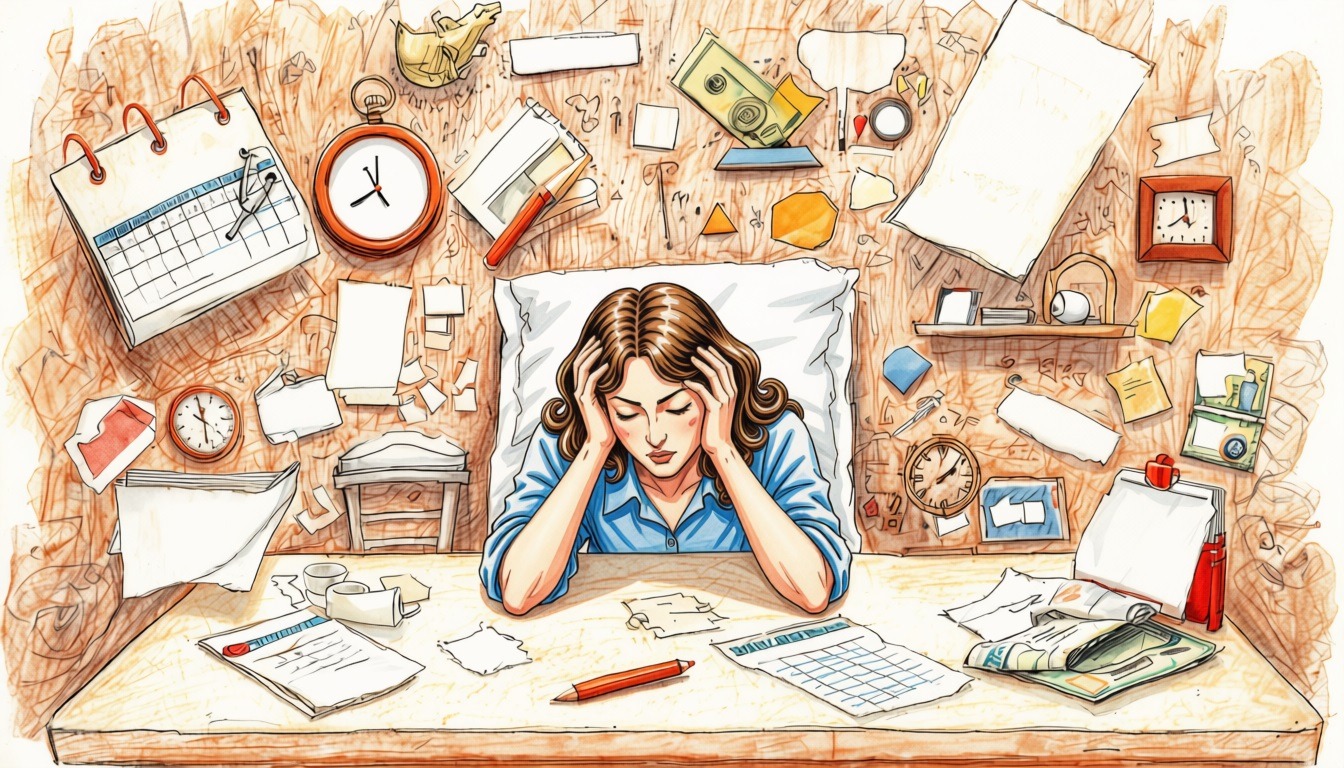
There is a fear many Women carry quietly now. It does not always feel like panic. It often feels like a pause.
A pause before you post a selfie. A pause before you accept a follow request. A pause when someone tags you in a group photo and you do not want to be difficult, but you also do not want to be searchable. A pause when you notice your face is everywhere online, and you remember how easy it has become to copy, remix, and weaponize a person’s image.
This is the fear women rarely say out loud: the fear of being turned into porn, nudified, sexualized, or impersonated by AI without consent, and then being forced to live inside the consequences of something you never did.
It is not simply fear of a fake image. It is fear of losing control of your identity in public.
Research is starting to put numbers to what women have already felt in their bodies. In a UK survey report from the Alan Turing Institute, fears and concerns about deepfakes were high overall, and women were significantly more likely than men to report deepfake related fears. That difference matters because it hints at something deeper than technology. It points to the social reality that women are more often punished when they are sexualized, even when it is forced on them.
This article is written for Calm Space. That means we are not going to sensationalize. We are also not going to minimize. We will talk about what deepfake sexual abuse is, why it can feel so destabilizing, what the data suggests about prevalence, what is changing in regulation, and how to build a practical protocol that helps you stay calm without disappearing.
A note before we begin: this is educational, not legal advice. If you are dealing with an active situation, local victim support services and legal counsel can be important.
What deepfake fear really is
Deepfake fear is often mislabeled as vanity, paranoia, or “online anxiety.” In reality, it is a very rational response to three overlapping threats.
The first threat is synthetic intimacy. Tools can generate sexual imagery that appears to be you, using ordinary photos. Investigations have documented how non consensual deepfake pornography has expanded, and how search engines can make it easier to find and spread.
The second threat is social believability. Even when something is fake, people may believe it long enough to harm you. That harm can be professional, relational, and psychological.
The third threat is the burden of proof. Deepfakes create a cruel psychological trap: you might be pushed to prove something is not real, while also managing the shame and fear that the content triggers.
If your nervous system reacts strongly to this topic, that reaction makes sense. You are not overreacting to a “digital issue.” You are reacting to a threat to dignity, safety, and control over identity.
A simple definition that keeps Your brain from spiraling
Deepfakes are AI generated or AI manipulated media designed to look real. In sexual abuse contexts, the most common harmful forms include nudification, pornographic face swaps, and synthetic intimate imagery created without consent.
Researchers increasingly use terms like non consensual synthetic intimate imagery to describe deepfake pornography and related harms. In a large multi country survey published through ACM venues, respondents reported both victimization and perpetration behaviors, showing this is not only about celebrities or public figures.
If your brain has been treating this as an unnamed cloud of dread, naming it properly can reduce anxiety. Vague threat feels infinite. Named threat becomes workable.
What the data suggests about who is affected
It is hard to measure true prevalence because many victims do not report, many platforms do not share data, and content can spread across sites quickly. Still, there are credible signals.
A survey study with more than 16,000 respondents across 10 countries reported that 2.2 percent of respondents indicated personal victimization by deepfake porn behaviors, and 1.8 percent indicated perpetration behaviors.
Those percentages may look small at first glance, until you translate them into real life scale. In a room of 200 people, that is several people with direct experience. In a city, that is thousands. And those numbers are only what people are willing to disclose.
At the same time, awareness and fear can be far higher than direct exposure. In the Alan Turing Institute report, most respondents were not confident in their ability to detect deepfakes, while concerns about the spread of deepfakes were very high. That combination creates fertile ground for anxiety: low confidence, high uncertainty, high stakes.
There is also a scientific reason you should not rely on “I would spot it.” A systematic review and meta analysis in Computers in Human Behavior Reports found overall deepfake detection rates were not reliably above chance, and accuracy varied by modality. If detection is hard for humans on average, then the social damage of a convincing fake becomes easier to imagine.

The hidden equation many Women run
Deepfake fear often follows a quiet mental sequence:
My face online → someone can sexualize it → someone can share it → someone can believe it → I lose control of my identity.
What hurts is not only the content. It is the possibility of social consequences that you cannot fully control.
Some women fear workplace fallout. Some fear family judgment. Some fear partner doubt. Some fear stalking or harassment. Some fear that their name will become searchable next to something humiliating.
Deepfakes do not invent misogyny. They scale it. They automate it. They make it easier for a person to turn a woman into a public object.
UN Women has warned that AI is amplifying technology facilitated violence against women and girls, including through deepfakes, and that stronger prevention and response ecosystems are needed.
A map of harm, so Your fear becomes specific
Let’s turn dread into clarity. Here is a table that shows common pathways and why they hit so hard.
Table 1. Common deepfake abuse pathways and the impacts they trigger
| Pathway | What it can look like | What it often triggers in the target | Why it is effective for abusers |
|---|---|---|---|
| Nudification | A clothed photo transformed into a “nude” | Shock, disgust, hypervigilance, body shame | Low effort, fast spread, easy to mock |
| Pornographic face swap | A face inserted into explicit video | Reputation fear, workplace panic, relationship distrust | Looks believable enough to seed doubt |
| Impersonation plus context | Fake content paired with your name, job, school, location | Safety fears, stalking anxiety, public exposure dread | Turns humiliation into control |
| Threat based coercion | “Pay or I post this” even when content is synthetic | Urgency, panic, shame spiral, isolation | Leverages shame to force compliance |
| Group targeting | Multiple girls or women targeted in a school or community | Social withdrawal, fear of visibility, fractured friendships | Normalizes abuse and silences victims |
When you see it laid out, you can feel the nervous system exhale a little. Not because it is “fine,” but because it is no longer shapeless.
Calm space principle: Safety is not the same as shrinking
A lot of online safety advice quietly teaches women to become smaller. Post less. Show less. Disappear more. Sometimes privacy choices are wise. But when the only strategy is disappearance, the deeper message becomes: “The world is unsafe unless I hide.”
That is not calm. That is long term contraction.
So we are going to build a different framework. One that protects your identity while protecting your sense of self.
The three anchors method
This is the Calm Space framework I want you to keep.
- Anchor 1: Evidence
- Anchor 2: Boundaries
- Anchor 3: Regulation
Think of it as a transformation:
Fear → becomes information → becomes a protocol → becomes calm.
This method does not promise you perfect safety. Nothing can. It offers something more realistic: a stable sense that you know what to do, and you do not have to do it alone.
Anchor 1: Evidence
The goal is preparedness, not obsession
There is a difference between a plan and a spiral.
A plan feels like: “If something happens, I know my first steps.”
A spiral feels like: “I must keep checking or I will never be safe.”
Evidence work should be light, periodic, and bounded.
One practical approach is a monthly identity check. Not daily. Not hourly. Monthly.
In a 15 minute window, you search your name and key identifiers. You reverse image search your most public profile photo. You check whether your handles are being impersonated.
This is not a hunt for horror. It is a quiet maintenance ritual, like checking a smoke detector.
Journalistic investigations have shown how deepfake porn ecosystems can be indexed and searchable, which is why occasional checks can be pragmatic for people who are publicly visible.
If you notice your anxiety spikes during evidence work, that is information too. It may mean your nervous system needs regulation support before you do any more “safety tasks.”
Anchor 2: Boundaries
You need an “if it happens” script
Deepfake fear grows when your brain does not have a sequence to follow.
Here is the sequence. Read it slowly:
Discover content → document → report → remove → support → protect.
This is not about doing everything perfectly. It is about not freezing.
To make it tangible, I want you to imagine a card you could hand your future self. That future you is shaken, sweaty, nauseous, and maybe dissociating. That future you does not need philosophy. She needs steps.
So let’s put the first 48 hours into a table.
Table 2. The first 48 hours protocol
| Time window | Primary goal | What to do | What to avoid |
|---|---|---|---|
| First hour | Stabilize | Drink water, breathe slowly, contact one safe person | Doom scrolling, arguing with strangers, trying to “prove” anything immediately |
| Hours 1 to 6 | Preserve evidence | Screenshot content, capture links, usernames, timestamps | Rewatching content to confirm, repeating exposure to your brain |
| Hours 6 to 24 | Start takedown | Report on platform, submit removal requests where available, keep a log of actions | Assuming one report is enough, carrying the admin alone |
| Day 2 | Build support | Consider victim support services, legal advice, workplace plan if needed | Silence fueled by shame, apologizing for being harmed |
Notice what is missing. There is no step that says “punish yourself for existing online.” There is no step that says “become smaller.” The protocol assumes you deserve help and structure.
This matters because many survivors describe the burden of documentation and takedown as a second trauma. In reporting on the new UK law criminalizing creation of non consensual deepfake intimate images, victims and campaigners emphasized how difficult it has been to seek justice and support, and how responsibility has often fallen on victims.
The two person rule
Here is a boundary that changes outcomes: the Two Person Rule.
Within 24 hours, tell one safe person and one practical person.
Safe person means someone who will not interrogate you or blame you.
Practical person means someone who can help you report, document, or contact support.
Deepfake abuse feeds on isolation. You break its power by making it witnessed.
Anchor 3: Regulation
Calm is capacity, not denial
When your nervous system is activated, your mind becomes a courtroom. You start gathering “evidence,” rehearsing defenses, anticipating judgment. You may feel urgency to fix, erase, explain.
Regulation does not mean pretending nothing is happening. It means bringing your body back to a place where choices are possible.
I want to offer two practices that are simple and specifically suited to identity violation.
Practice 1. Identity reclaim
Sit or stand in a way that feels steady. Place a hand on your chest if that feels supportive.
Say, quietly, in your own words:
- My body is mine.
- My image is not consent.
- A fake does not become truth because someone shared it.
- I do not need to earn dignity by proving innocence.
This practice matters because deepfake abuse targets the sense of “me.” Reclaiming “me” is a direct antidote.
Practice 2. Spiral interrupt
When your mind starts running catastrophic scenes, do one small action that returns you to the present. Look around and name five objects. Feel your feet. Put a glass of water in your hand. Text your practical person.
You are teaching your brain a new association:
Threat → steps → support.
Not threat → panic → isolation.

Why it hits Women differently
This is where we say the quiet part out loud.
Deepfake sexual abuse is not only a technology problem. It is a gendered power problem.
Women live in a culture where sexualization is often used as punishment, where credibility is fragile, and where “what will people think” can carry real consequences. That is why the fear is not only about the image. It is about social judgment and institutional response.
UN Women has described how AI can intensify existing patterns of harassment and violence, and why systemic responses are necessary.
And because deepfakes can be difficult to detect reliably by humans, the risk of disbelief and confusion becomes part of the threat.
If you have ever thought, “People might believe it,” your brain is not being dramatic. It is being socially realistic.
What is changing in law and policy
Regulation cannot heal everything, but it can shift the burden away from victims.
In the UK, the government announced fast tracked work to bring into force legislation making it illegal to create or request deepfake intimate images of adults without consent, and reporting has described this as a significant milestone, while campaigners still call for stronger protections and easier takedowns.
In the EU, transparency obligations in the AI Act are designed to reduce deception and impersonation. The European Commission has explained that Article 50 includes transparency obligations for providers and deployers of certain AI systems, including deepfakes, and that obligations become applicable on 2 August 2026, with guidance and code of practice work underway.
These frameworks do not erase harm automatically. But they signal something important: institutions are beginning to name deepfake sexual abuse as a serious, punishable violation, not an internet prank.
A table that turns policy into plain language
If you are not a policy person, you still deserve to understand what is changing.
Table 3. What transparency rules aim to do and why it matters
| Policy direction | What it generally requires | Why it matters for everyday women |
|---|---|---|
| Labeling AI generated content | Systems may need to disclose AI generation or manipulation in certain contexts | Makes deception harder to normalize, supports accountability |
| Transparency for deepfakes | Providers and deployers face obligations aimed at reducing impersonation and misinformation | Helps build social expectation that synthetic content must be disclosed |
| Guidance and codes of practice | Regulators prepare practical standards and compliance guidance | Increases pressure on platforms and services to implement safeguards |
This is not a personal safety plan. It is a cultural shift. Your personal plan still matters. But it helps to know the system is moving, even if slowly.
Prevention without victim blaming
You are not responsible for someone else’s abuse. Still, many women want options that reduce exposure, the same way you lock your door while knowing a lock does not make you responsible for crime.
So here are options framed as choices, not rules.
One choice is separating a public face and a private face. That can mean using professional photos for public platforms and keeping personal photos in smaller circles. This does not guarantee safety. It reduces scrapeability.
Another choice is making your accounts harder to harvest. Privacy settings, limiting who can tag you, reviewing mentions, reducing high resolution public face images. Not because your face is dangerous, but because data collection is easy.
Another choice is strengthening security. Account takeovers can amplify deepfake harm through impersonation and message manipulation.
The goal is not to become invisible. The goal is to stay visible on your terms.
The nonstandard calm space approach: A visibility budget
Here is a question that can calm your mind more than “Is it safe to post?”
How visible do I want to be this month.
Some months you will feel expansive. Some months you will feel private. Both are healthy.
A visibility budget might sound like this:
- This month I will post twice, not daily, and I will keep personal photos to close friends.
- This month I will keep my profile public for work, but I will not share location cues.
- This month I will prioritize writing, voice, and ideas, and share fewer identifiable images.
This reframes safety as choice, not fear.
The deeper psychological point is simple: you do not want your nervous system to learn that the only path to safety is disappearance.
What to say when someone dismisses Your fear
Many women try to talk about deepfake fear and get a quick fix response: “Just do not post.”
That response lands like blame. It implies you created your risk by existing online.
If you need words that stay calm and firm, here is a script you can adapt:
I am not asking you to be scared with me. I am asking you to understand that my image can be weaponized without my consent. This is not about attention. It is about safety and dignity. What I need from you is support, not solutions.
When you can name your need clearly, you protect yourself from secondary harm, the harm of being dismissed when you are already vulnerable.
The part that is hardest to say
Even if nothing ever happens to you personally, deepfake fear can still change how you live.
It can train you into bracing. It can make you hesitate before speaking publicly. It can reduce your willingness to be seen. It can create a background hum of hypervigilance.
That is why I want to end with the core Calm Space truth:
Your calm is not something you earn by hiding.
Your calm is something you build by creating capacity.
- Capacity looks like evidence you can gather without obsessing.
- Capacity looks like boundaries that make you supported, not isolated.
- Capacity looks like regulation that returns you to yourself.
And if you ever need the shortest version of this entire article, here it is:
Fear → information → protocol → support → calm.
Related posts You’ll love
- AI is changing self-worth: When You compare Yourself to machines
- AI companionship: Why talking to bots can feel safer than people (and how to keep it healthy)
- The ugly art practice: Make something bad on purpose to calm down
- Make boredom safe again: Why empty minutes are the new self care in a hyperstimulated world
- Calm without closure: How to feel better even if life is unresolved (a science based calm space guide)
- The calm placebo: Why viral rituals feel like relief and how to build calm that actually lasts
- When a personal obsession helps You heal: 8 reflective exercises for emotional healing and self-discovery, FREE PDF
- Misreading: The ultimate context check toolkit to stop viral confusion fast

FAQ: The deepfake fear Women
-
What is deepfake pornography?
Deepfake pornography is sexually explicit content created or altered with AI so it appears to show a real person, often without consent. It can involve face swapping, “nudification” from a normal photo, or generating a realistic synthetic image that resembles you. In practice, it’s a form of image-based sexual abuse because it uses your identity to sexualize or humiliate you.
-
Can someone make a deepfake nude from a regular selfie?
Yes. A single clear selfie can sometimes be enough for certain “nudify” or face-swap tools to generate a convincing fake. The risk increases when multiple photos are available publicly, especially high-resolution images from different angles. This is why deepfake fear can feel so personal: it doesn’t require intimate photos to begin with.
-
How can I tell if an explicit image or video of me is a deepfake?
Some deepfakes show visual glitches like odd lighting, strange edges around the face, unnatural blinking, or mismatched skin texture. But many are convincing, and humans are not consistently reliable at detecting them. If you suspect it’s synthetic, treat it as a serious identity harm either way and focus on steps that protect you: document → report → seek support → remove.
-
What should I do first if I find a deepfake of me online?
Start with a stabilizing first step, because panic makes everything harder. Take a breath, drink water, and message one trusted person so you are not alone. Then document evidence immediately with screenshots, links, usernames, and timestamps. After that, report the content on the platform where you found it and keep a simple log of what you submitted and when.
-
How do I get a deepfake removed from a website or social platform??
Most major platforms have reporting routes for non-consensual sexual content, impersonation, or harassment. Use clear language like “non-consensual intimate imagery,” “synthetic intimate imagery,” or “deepfake sexual content.” If the platform has a dedicated form, use it instead of only in-app reporting. If content is reposted, keep reporting and include your previous case numbers or references when possible.
-
Should I report deepfake porn to the police and what evidence do I need?
If you feel unsafe, are being threatened, are being stalked, or the content includes identifying details, a police report can be appropriate depending on your local laws. Evidence usually means URLs, screenshots, timestamps, usernames, and any messages or threats. Even if you are unsure, documenting early protects your options later. This is not legal advice, but it is a practical reality: evidence tends to disappear fastest when you most need it.
-
What if someone threatens to post a deepfake of me?
A threat is a form of coercion even if the content is fake. Do not negotiate alone, do not pay, and do not “try to be nice” to make it stop. Save the messages, take screenshots, and report the account on the platform where the threat occurred. Tell one safe person and one practical person within 24 hours so the pressure doesn’t isolate you into compliance.
-
Can deepfake porn affect my job or relationships?
It can, mainly because it creates confusion and shame, not because you did anything wrong. If you choose to disclose, you can frame it as identity abuse: “Someone used AI to fabricate explicit content of me without consent, and I’m taking formal steps to remove and report it.” In close relationships, focus on calm clarity rather than over-explaining. The goal is support and safety, not a courtroom-style defense.
-
How can I reduce my risk without deleting my accounts?
You do not have to disappear to be safer. Practical steps can include limiting who can download or share your photos, tightening tagging and mention settings, reducing the number of high-resolution front-facing images that are fully public, and using stronger account security to prevent impersonation and takeovers. Think of it as shaping your visibility on purpose, rather than shrinking from fear.
-
Are deepfakes illegal and do laws protect victims?
Laws vary widely by country and can change quickly, but many places are moving toward stronger protections for non-consensual sexual imagery, including synthetic or AI-generated content. Even where laws are evolving, platforms may still remove content under policies against non-consensual intimate imagery, harassment, or impersonation. If you’re affected, local victim support organizations or legal counsel can help you understand options in your jurisdiction.
Sources and inspirations
- Cripps, J., & Stermac, L. (2018). Cyber sexual violence and negative emotional states among women in a Canadian university population. International Journal of Cyber Criminology.
- Diel, A., Lalgi, T., Schröter, I. C., MacDorman, K. F., Teufel, M., & Bäuerle, A. (2024). Human performance in detecting deepfakes: A systematic review and meta analysis of 56 papers. Computers in Human Behavior Reports.
- European Commission. (2025, September 26). Guidelines and code of practice on transparent AI systems. Shaping Europe’s digital future.
- European Commission. (2026, January 28). Navigating the AI Act. Shaping Europe’s digital future.
- European Commission. (2026). Code of practice on marking and labelling of AI generated content. Shaping Europe’s digital future.
- McGlynn, C., & Woods, L. (2022). Image based sexual abuse, pornography platforms and the Digital Services Act (Expert opinion).
- Sippy, T., & colleagues. (2024). Behind the Deepfake: 8% create, 90% concerned. Surveying public exposure to and perceptions of deepfakes in the UK. The Alan Turing Institute.
- UK Government. (2026, February 6). Government leads global fight against deepfake threats. GOV.UK.
- Umbach, R., Henry, N., Beard, G., & Berryessa, C. (2024). Non consensual synthetic intimate imagery: Prevalence, attitudes, and knowledge in 10 countries. Proceedings of the ACM on Human Computer Interaction.
- UN Women. (2025, November 18). AI powered online abuse: How AI is amplifying violence against women and what can stop it.
- UN Women. (2025, December 9). How AI is exacerbating technology facilitated violence against women and girls.
- The Guardian. (2026, February 7). Victims urge tougher action on deepfake abuse as new law comes into force.
- WIRED. (2023, October 16). Deepfake porn is out of control.
- WIRED. (2024, September 5). The US needs deepfake porn laws. These states are leading the way.



Leave a Reply