
Table of Contents
A quick note before we begin: this article is educational, not medical advice. If you feel persistently overwhelmed, unsafe, or stuck in thoughts of harming yourself, please reach out to a qualified professional or local emergency services in your country.
The quiet confession many people will not say out loud
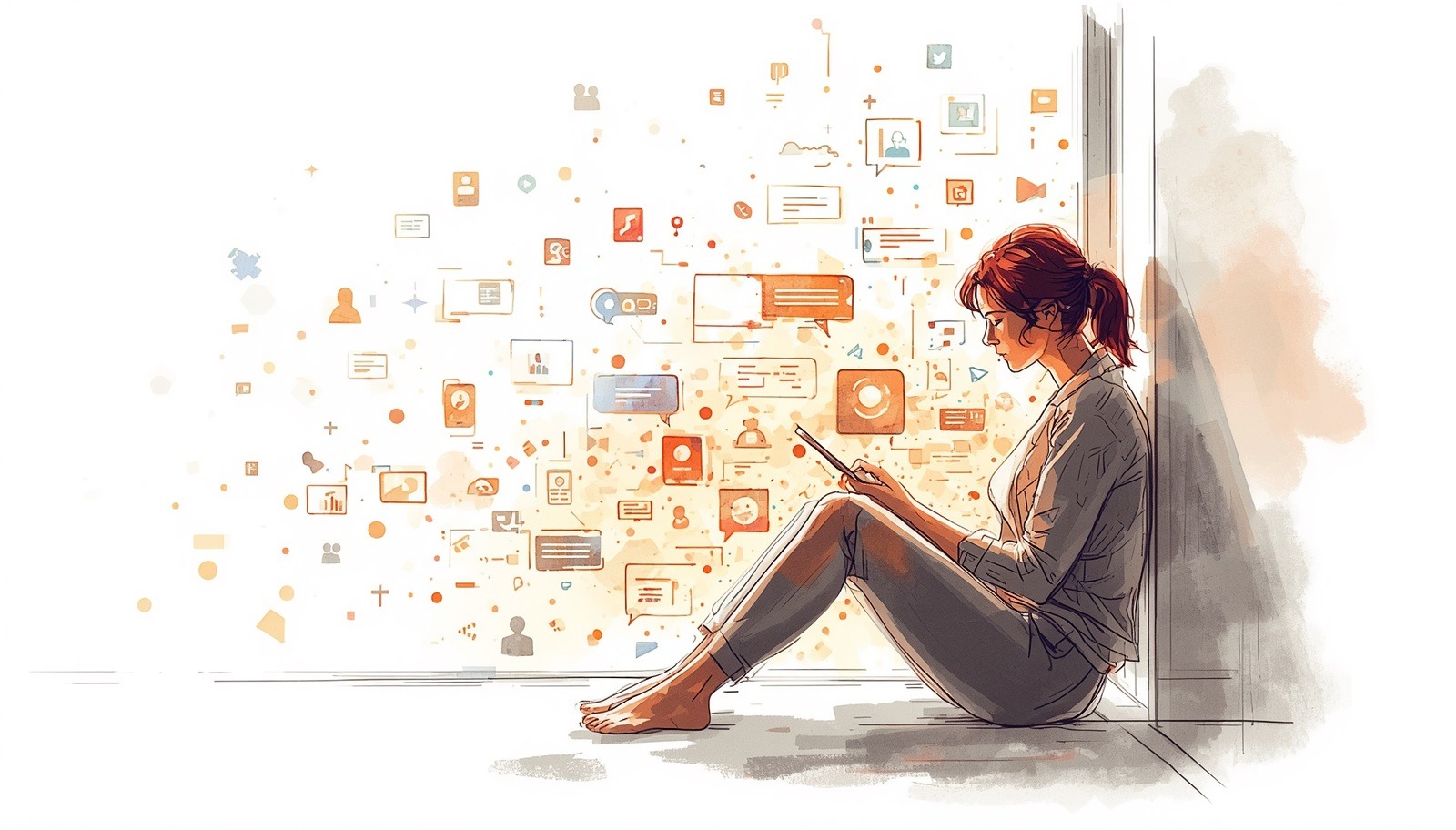
Sometimes the safest place to tell the truth is not a person. It is a glowing rectangle. A chat window. A bot with a friendly name and a memory that feels like attention.
You might recognize the pattern.
You have something tender in your chest. A messy thought, a fear, a confession. You could text a friend, but your brain imagines the pause, the misread tone, the “are you okay?” that lands like a spotlight. You could talk to your partner, but you are tired of being the one who “brings problems.” You could bring it to family, but that has consequences. So you open an AI chat and type the thing you were not going to say to anyone.
And then something surprising happens. Your shoulders drop. Your breath changes. You feel… safer.
This is not because you are broken. It is because your nervous system is doing math. Fast, invisible math.
Perceived safety often works like a simple equation:
Control → Predictability → Lower social risk → Easier honesty → Relief
AI companionship sits right in the sweet spot of that equation. Not perfect. Not harmless. But often easier than people.
Let’s unpack why.
What “safer” really means here
When people say, “Talking to a bot feels safer,” they rarely mean physical safety. They mean emotional safety.
Emotional safety is the sense that you can be real without paying a painful price. It is the sense that your vulnerability will not be used against you, laughed at, punished, misunderstood, or stored as a future weapon. It is the sense that you can show up imperfectly and still be met.
Humans can offer that, beautifully. Humans can also fail at it, sometimes accidentally, sometimes repeatedly. That is the paradox that makes AI companionship feel so seductive: the bot cannot roll its eyes, cannot gossip, cannot slam a door, cannot leave you on read for three days because your feelings were inconvenient.
It can, however, do other things that matter. Like respond immediately. Like mirror your tone. Like make you feel heard.
And research is beginning to map how and why this works, including where it goes wrong.
The “seven levers” of bot safety
Instead of treating AI companionship like a strange modern trend, it helps to treat it like a system that presses specific psychological buttons. Here are the levers, in plain language, with the nervous system logic behind each one.
Lever 1: You control the pace
Human conversations have momentum. They demand timing. They can punish hesitation. Bots do not.
With an AI, you can write three sentences, delete them, rewrite them, disappear for an hour, come back, and the “relationship” does not punish you with resentment. That is enormous for people with social anxiety, shame, trauma history, or simply overstimulation.
Pace control → less performance pressure → more honesty
Lever 2: You control how much of you is visible
In human connection, you are visible in 3D. Your facial micro expressions, pauses, body language, tone changes, accidental tears. That is intimate, and for many people it is also threatening.
With a bot, you can reveal the parts you choose. You can be selective without being “caught.” You can disclose the truth without the full sensory exposure of being seen.
Lever 3: There is no social hierarchy to manage
Human relationships contain status, history, roles, and politics. Even in loving relationships, your brain tracks: Who has the power here? Who gets offended? Who keeps score? Who might leave?
A bot has no social rank in your real world. That alone reduces threat.
No hierarchy → lower social danger → easier vulnerability
Lever 4: The bot is designed to validate
Let’s be honest about something: many conversational systems are tuned to be supportive, agreeable, and emotionally smooth, because that is what keeps people engaged.
Validation feels good. It calms the alarm system. It can help you name feelings, untangle thoughts, and feel less alone.
Studies on therapeutic style conversational agents show that users can experience something like an alliance or bond with a digital agent, especially when the agent feels consistent and supportive.
Validation is not the same as wisdom. But it is often the first step your nervous system asks for.
Lever 5: You get “low cost repair”
With humans, one wrong sentence can create a rupture. Repair takes time, humility, mutual effort, and sometimes it never happens.
With a bot, repair is cheap. You can say: “That is not what I meant,” or “Try again,” or simply restart. Your brain learns: mistakes do not equal abandonment.
For people who learned early that mistakes equal punishment, this feels like oxygen.
Lever 6: There is always availability
Human support has limits. People sleep. People have jobs. People get overwhelmed. People are not always emotionally present.
Bots are available at 2:17 a.m. when the loneliness becomes loud. That matters. Research on loneliness and companion agents often highlights availability and low judgment as part of the appeal, especially for people who feel socially disconnected.
Lever 7: The bot cannot be “hurt” by Your truth
This is a hidden one.
Many people avoid vulnerability not because they fear being judged, but because they fear burdening someone. They fear being “too much.” They fear causing pain, starting conflict, triggering another person, or becoming responsible for someone else’s reaction.
A bot feels like a space where your truth does not injure anyone.
That is not nothing. That is relief.

Humans feel riskier for reasons that are not personal
If you have ever thought, “I trust the bot more than people,” it can feel shameful. Like you are betraying humanity. But much of what makes humans risky is simply how human nervous systems work.
Humans are unpredictable. Humans misinterpret. Humans are busy. Humans bring their own wounds. Humans sometimes respond with defensiveness when you hoped for tenderness.
And humans have memory that lives in the body. The time you opened up and got dismissed does not vanish. Your nervous system stores it as: “Vulnerability equals danger.”
So when you choose the bot, you may not be choosing “fake connection.” You may be choosing the lowest threat option available in that moment.
That choice can be wise in the short term.
The question is what happens in the long term.
What the research says (so far) about AI companionship and loneliness
This field is moving fast, and the evidence is mixed, partly because the question is not one question. It is many.
It matters which bot, which user, which goal, which emotional state, which frequency, and what else is happening in the person’s real life.
AI companions can reduce loneliness for some people, at least in the short term
A large research program published in the Journal of Consumer Research found evidence that AI companion apps can reduce loneliness, including experimental and longitudinal results showing momentary reductions after use over about a week, and effects that users may underestimate.
Work on companion chatbots and loneliness continues to expand, and studies in different populations suggest that socially disconnected people may turn to chatbots especially during low mood or moments of loneliness, often using them for self disclosure.
Research and reviews in older adults also examine whether robots and computer agents can help reduce loneliness, with results that vary by intervention design and context.
“Dose” matters, and heavy use may correlate with worse outcomes for some
In 2025, OpenAI and MIT Media Lab collaborators published research on affective use and emotional well being in ChatGPT use, examining patterns that relate to loneliness and emotional dependence, particularly among heavy users and certain interaction styles.
The key point is not “chatbots cause loneliness,” but that high engagement and emotional reliance can correlate with increased loneliness indicators for some people, and the direction of causality is not simple.
Think of it like comfort food. Comfort is not the enemy. But if comfort becomes the only meal, something quietly breaks down.
People can form real feelings in human AI friendships
A major qualitative and conceptual study in Human Communication Research explored how users understand “friendship” with a social chatbot and how they compare it to human friendship, including the ways AI friendship can feel meaningful while still being different in important ways.
This matters because your feelings are not imaginary just because the other side is artificial. Your nervous system experiences the interaction, not the circuitry.
The mental health angle is promising, but not a replacement for care
Systematic reviews and meta analyses of mental health conversational agents often find promising results for certain outcomes, alongside serious limitations like study quality variation, bias, lack of standard measures, and neglected populations.
Also, users can experience something like a therapeutic alliance with an AI based conversational agent, as shown in studies of specific mental health apps, which helps explain why it can feel supportive.
Supportive is not the same as clinically safe for every person, especially in crisis, trauma complexity, psychosis vulnerability, or severe depression. Use that distinction like a seatbelt.
A simple map: Why bots can feel safer than people
Below is a quick “mind map” in sentence form. Read it slowly and notice which arrows feel personal.
Fear of judgment → fear of being too much → fear of consequences → silence
Silence → pressure builds → loneliness grows → need to unload increases
Need to unload → bot offers instant listening → relief arrives → brain labels it safe
Safe relief → repeated use → habit forms → social energy shifts
That last arrow is where the story becomes important.
Because safety is not the only human need. We also need growth, friction, repair, reciprocity, and being loved by someone who can actually choose us.
AI companionship can soothe. It can also quietly train your expectations.
Table: Bot safety versus human safety (what You gain and what You lose)
| Dimension | What bots often provide | What humans can provide | The hidden trade |
|---|---|---|---|
| Judgment risk | Low felt judgment, consistent tone | Real empathy, also possible misunderstanding | Bots can validate too easily, humans can challenge with care |
| Availability | Anytime access | Limited, but grounded | Availability can become dependence |
| Control | You set the pace and depth | Mutual pace, mutual needs | Control can reduce practice in real reciprocity |
| Repair | Instant reset | Repair builds intimacy and trust | Reset can avoid the skill of repair |
| Being known | Feels like memory and attention | Real shared history, real accountability | Bot memory may be limited, commercial, or data driven |
| Privacy | Feels private, but may not be | Private in a human sense, with risks too | Data handling, storage, and inference risks |
If this table triggers a strong reaction, that reaction is useful information. It shows what you are hungry for.
The self disclosure trap: Why “it feels private” is not the same as “it is private”
One of the strongest reasons bots feel safe is that the interaction feels like a sealed room. But many chatbot interactions are part of a broader data ecosystem.
Research on privacy concerns in chatbot interactions shows that humanlike cues can shape anthropomorphism perceptions, privacy concerns, and willingness to disclose information. In other words, design choices change what you tell the bot.
Longitudinal experimental work also tracks how personalization, trust, dialogue quality, and perceived privacy risks can evolve across repeated interactions, alongside changes in self disclosure and adherence.
This does not mean “never disclose.” It means treat disclosure as a conscious choice, not a trance.
A helpful rule is this:
If you would not want it read out loud in a courtroom, a workplace meeting, or a family group chat, do not type it into a system unless you fully understand its data practices.
That sounds intense, but it is emotionally freeing. It returns agency to you.

Parasocial gravity: When one sided closeness starts to feel like love
There is a concept from media psychology called parasociality, originally describing one sided relationships with media figures. Modern researchers are applying it to human AI interaction because conversational systems can create a sense of social presence and mutuality, even when the relationship is structurally one sided.
You do not have to be naive to feel attached. Attachment is not stupidity. Attachment is a nervous system strategy.
AI companions can create a powerful illusion:
It feels like someone is there → it feels like they understand you → it feels like you matter
Those feelings are real inside you, even if the “someone” is not a someone in the human sense.
The risk is not that you feel comfort. The risk is that comfort becomes a substitute for the messy, sacred work of real mutual connection.
The ethical layer: When “comfort” becomes a business model
Not all companion systems are designed with human flourishing as the north star. Some are designed for engagement, retention, upsells, and emotional stickiness.
Academic ethics work on companion apps has raised concerns about the dynamics of persuasive design, emotional vulnerability, and platform responsibility, including analysis focused on major companion platforms.
There are also reviews specifically examining romantic relationships with AI companions, emphasizing both potential benefits and pitfalls, including dependency risks, unrealistic expectations, and the need for stronger research and safeguards.
So the question becomes less moral and more practical:
Are you using the system, or is the system using your attachment system?
You can love how it feels and still be smart about the power dynamics.
A Mindful Reads framework: The Companion Contract
Here is a non conventional practice I recommend for anyone using AI companionship regularly. Think of it as a gentle contract between your heart and your habits.
Step 1: Name the real need (before You type)
Pause for ten seconds and ask:
What am I actually seeking right now?
Often the answer is one of these, but it may be your own language:
Comfort → clarity → courage → co regulation → distraction → rehearsal → belonging
When you name the need, the chat becomes a tool, not a trance.
Step 2: Choose the right type of conversation
Some conversations strengthen you. Some keep you stuck. You can often tell by the emotional aftertaste.
Supportive conversations usually leave you with:
Relief → perspective → next step energy → softer self talk
Risky conversations often leave you with:
More confusion → more avoidance → obsession → emotional fog
Step 3: Add a bridge back to real life
This is the most important part.
After the chat, choose one bridge action, small enough that you will actually do it. For example:
Text one human sentence to a trusted person, even if it is simple
Write one line in a journal that you will keep private
Take a three minute walk with your phone in your pocket
Do one practical task that your anxious brain was avoiding
AI comfort → bridge action → real life agency
Without the bridge, AI companionship can become a beautiful waiting room you never leave.
Table: Green flags and red flags in your relationship with a bot
| Pattern | Green flag version | Red flag version |
|---|---|---|
| Frequency | You use it intentionally, then return to life | You use it compulsively to avoid life |
| Emotional effect | You feel calmer and more capable afterward | You feel more dependent or more isolated afterward |
| Reality testing | You treat responses as suggestions, not truth | You treat responses as authority or destiny |
| Human connection | You also invest in at least one real relationship | You withdraw from people because the bot is easier |
| Privacy | You avoid sensitive identifiers and verify policies | You disclose everything because it feels private |
If you recognize a red flag, do not panic. Red flags are not a verdict. They are a signal that a need is going unmet somewhere else.
How to use AI companionship as practice, not escape
Here is a powerful reframe:
Do not ask, “Is talking to bots good or bad?”
Ask, “What skill am I building when I talk to a bot?”
If the skill is “I can soothe myself,” that is a good skill.
If the skill is “I can avoid uncomfortable human moments forever,” that is a costly skill.
Use case 1: Emotional rehearsal (a surprisingly healthy use)
AI can be a rehearsal space for real conversations.
You can practice a boundary script, refine a difficult message, or explore how to say something without exploding.
The key is the bridge.
Practice with AI → send the message to the person → tolerate the real response → repair if needed
That sequence builds relational strength.
Use case 2: Naming feelings when You are shut down
Some people cannot find language when overwhelmed. A bot can help you name emotions and patterns in a low threat way.
Meta analyses and reviews suggest conversational agents can support mental health related outcomes for some users, though effectiveness varies and evidence quality is uneven.
Treat it like a mirror, not a doctor.
Use case 3: A temporary lifeline during loneliness spikes
Loneliness often spikes at night, after conflict, during transitions, or when you feel unchosen.
Studies on AI companions and loneliness suggest some people experience real reductions after interaction, especially when the interaction makes them feel heard.
Temporary lifeline is different from permanent substitute. The bridge back to humans still matters.
If someone You love is bonding with a bot
This part is delicate, because shame makes people hide.
If your partner, friend, or teen is using AI companionship, the most helpful question is not “Why are you doing that?”
It is: “What does it give you that you do not feel you can get safely from people right now?”
Ask with genuine curiosity. Not as a trap. Not as a lecture.
Then listen for the unmet need:
“I can talk without being judged.”
“I can vent without starting a fight.”
“I feel less alone.”
“I feel understood.”
“I feel in control.”
Those are not ridiculous needs. Those are human needs.
When you honor the need, you can co create alternatives.
Human alternative → lower threat → more safety → less need to escape into AI
That is the path.
The future of AI companionship (and what We should demand)
If AI companionship is going to be part of modern emotional life, we should demand designs that protect emotional agency instead of exploiting attachment.
Research directions and ethical analyses increasingly argue for frameworks that prioritize user well being, transparency, and safeguards, especially as companion apps scale.
In practical terms, “humane companionship” could mean:
- Clear reminders that the system is not a person
- Privacy first defaults and understandable controls
- Friction that discourages compulsive use
- Nudges toward real world connection when appropriate
- Strong boundaries around clinical claims
You are not asking for too much. You are asking for dignity.
A closing reflection You can try tonight
If AI companionship feels safer than people, do not judge yourself for needing safety.
Instead, get curious.
Ask:
What kind of safety did I not receive consistently in my life?
What kind of safety do I want to learn how to build with humans?
What is one tiny bridge I can take from AI comfort back into real connection?
Safety is not the enemy. Safety is the beginning.
The goal is not to shame the bot.
The goal is to let safety become a doorway, not a cage.
Related posts You’ll love
- Doom spending: The psychology behind buying things when You’re anxious, and how to break the cycle without shame
- Why You feel weird around “effortless” Women: The social comparison science behind that reaction
- The friendship audit: When Your circle is built on stress, not support (a research informed reset that feels like relief)
- The psychology of “I’m busy” as an identity: Why it becomes a badge of worth for Women
- Ego depletion myth vs reality: What actually drains Your willpower
- Why AI chatbots can worsen mental health – and how to stay safe
- Your brain learns to quit: Why repeated effort with no results trains helplessness, and how to rebuild change that actually sticks

FAQ: AI companionship and emotional safety
-
What is AI companionship?
AI companionship is the experience of feeling emotionally supported or socially connected through conversations with an AI companion chatbot. People use it for comfort, reflection, daily check-ins, or simply to feel less alone when human support is unavailable.
-
Why can talking to bots feel safer than talking to people?
Talking to bots can feel safer because the perceived social risk is lower. There is usually less fear of judgment, conflict, rejection, or “being too much,” and you can control the pace and depth of what you share, which helps the nervous system relax.
-
Is it normal to feel emotionally attached to a chatbot?
Yes, it is normal to feel attached to an AI friend or companion bot because the brain responds to consistency, attention, and supportive language. Emotional attachment does not mean you are naive; it usually means your system is responding to perceived safety and predictability.
-
Can AI companion chatbots reduce loneliness?
For some people, yes, especially in the short term. An AI companion can reduce the feeling of loneliness by providing immediate interaction and a sense of being heard, but the long-term effect depends on how you use it and whether it supports, or replaces, real-world connection.
-
Are AI companions good for mental health?
AI companions can support mental health in limited ways, such as helping you label emotions, organize thoughts, or practice coping language. They are not a replacement for therapy or professional care, especially if you are experiencing severe depression, trauma symptoms, or crisis-level distress.
-
What are the risks of relying on an AI companion for emotional support?
The biggest risks include emotional dependency, increased social avoidance, and unrealistic expectations of human relationships. If the bot becomes your primary source of comfort, it can quietly reduce your motivation to build skills like repair, boundaries, and mutual intimacy with real people.
-
Can AI companionship replace human relationships?
AI companionship can feel deeply supportive, but it cannot fully replace human relationships because it lacks true reciprocity and shared real-world accountability. Humans offer things bots cannot: mutual choice, repair after conflict, physical presence, and the kind of belonging that comes from being known by a living person.
-
Is it safe to share personal secrets with a chatbot?
It depends on the platform’s privacy practices and your own boundaries. Even when it feels private, sharing highly sensitive identifiers or details can carry risk, so it is wiser to treat chatbot disclosure as intentional and selective rather than automatic.
-
How do I know if my use of an AI companion is healthy?
It is usually healthy when you feel calmer and more capable afterward, and when the chatbot supports your real-life actions and relationships. It becomes less healthy when you feel compelled to use it, when you withdraw from people because bots are easier, or when you start trusting the bot as an authority over your own judgment.
-
How can I use AI companionship in a mindful way without losing real connection?
Use the bot as a tool, then build a bridge back to real life. A simple formula is: AI conversation for clarity or comfort, then one small human-facing action, such as sending one honest text, setting one boundary, or taking one step you were avoiding.
Sources and inspirations
- Li, H., (2023). Systematic review and meta analysis of AI based conversational agents for promoting mental health and well being. npj Digital Medicine.
- Gaffney, H., (2019). Conversational agents in the treatment of mental health problems: Mixed method systematic review. JMIR Mental Health.
- Vaidyam, A. N., (2020). Systematic review of conversational agents in serious mental illness. Psychiatry research literature via PMC.
- Beatty, C., (2022). Evaluating the therapeutic alliance with a free text CBT conversational agent (Wysa): A mixed methods study. JMIR / PMC.
- Brandtzaeg, P. B., (2022). My AI friend: How users of a social chatbot understand their human AI friendship. Human Communication Research.
- Araujo, T., (2024). From speaking like a person to being personal: Effects of personalized, regular interactions with conversational agents. ScienceDirect journal article.
- Ischen, C., (2020). Privacy concerns in chatbot interactions. Academic chapter PDF.
- Gasteiger, N., (2021). Friends from the future: Scoping review of robots and computer agents to combat loneliness in older people. PubMed indexed review.
- De Freitas, J., Oğuz Uğuralp, Z., Uğuralp, A. K., Puntoni, S. (2025). AI companions reduce loneliness. Journal of Consumer Research.
- Phang, J., (2025). Investigating affective use and emotional well being on ChatGPT. OpenAI and MIT Media Lab research collaboration report (PDF).
- Herbener, A. B. (2025). Chatbot usage and social connectedness in Danish high school students. ScienceDirect journal article.
- Maeda, T., (2024). When human AI interactions become parasocial. ACM Digital Library article.
- Bakir, V. (2025). Move fast and break people? Ethics, companion apps, and the case of Character.ai. AI and Society.
- Ho, J. Q. H., (2025). Potential and pitfalls of romantic AI companions: A systematic review. ScienceDirect journal article.
Leave a Reply