Table of Contents
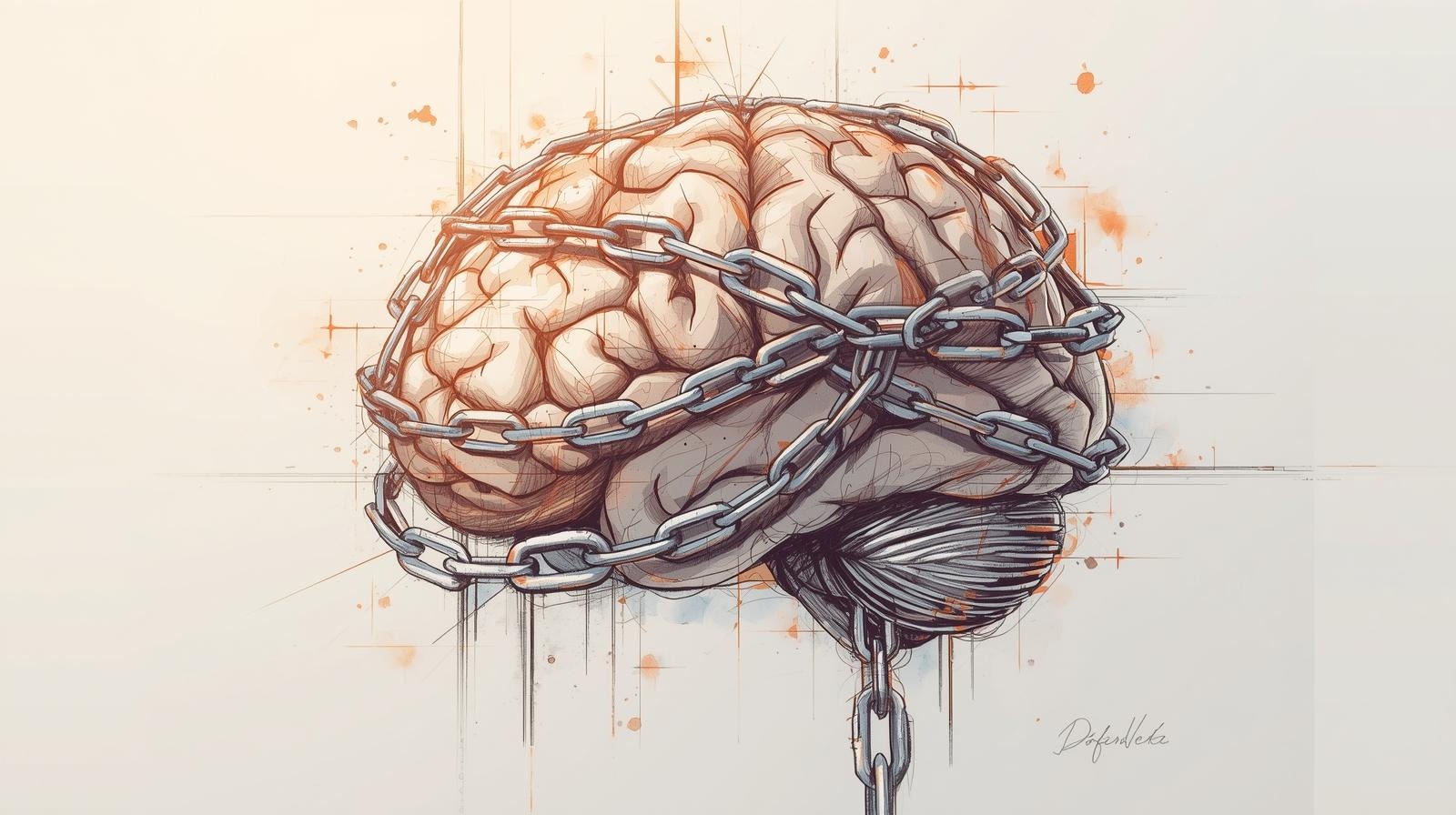
When You keep trying and nothing changes, Your brain is not being dramatic. It is learning.
Picture a version of you that has been persistent for months.
You applied again. You had the hard conversation again. You tried the routine again. You showed up with hope, even if it was a fragile kind of hope.
And then… nothing.
No reply. No shift. No meaningful progress. No feedback that helps you adjust. Just the same closed door, wearing a slightly different mask.
This is the moment people often moralize. They tell you to “try harder,” “stay positive,” “be disciplined,” “keep grinding.” It sounds brave on the outside, but inside it can start to feel like betrayal. Because you are trying. You have been trying.
So why does your motivation begin to rot from the inside, even when you genuinely care?
Because your brain is a prediction machine with a limited energy budget. If it repeatedly receives the data point “effort did not change the outcome,” it updates a belief that is brutally efficient:
“Trying is expensive, and it does not work.”
Once that belief takes root, quitting is no longer laziness. Quitting becomes a form of self protection. A nervous system budget cut. A survival strategy that says: Stop spending energy where there is no return.
This article is about that learning process. Not in a “fun fact” way, but in a finally I understand myself way.
We are going to name what is happening, map the brain logic behind it, and then do something both gentler and more powerful than forcing yourself to push through: we will rebuild controllability, the felt sense that your actions can influence outcomes.
That feeling is not a personality trait. It is trainable.
The quit learning loop: How discouragement becomes a trained response
Let’s build a simple model you can recognize in real life. I call it the Quit Learning Loop.
Effort → No change → Brain predicts “no control” → Motivation drops → Less experimentation → Fewer new results → “See, it never changes.”
That loop is not a character flaw. It is a learning loop.
And it tends to start when at least one of these conditions is present:
You do not get clear feedback. You do not know what worked or what failed, only that the outcome did not move.
The outcome is delayed, random, or controlled by other people. You cannot link your action to a visible effect.
Your effort is high cost. It takes time, emotional risk, money, identity, or energy you cannot easily replenish.
You are under stress, which narrows cognitive flexibility and pushes the brain toward conserving resources.
Now notice something important. Your brain does not need you to fail at everything to learn quitting. It only needs repeated failure in the places that matter most, especially when you feel exposed or powerless.
That is why someone can be successful at work and still feel helpless in dating. Or disciplined in fitness and still shut down in family conflict. The brain stores these beliefs in context.
This is also why people can look “fine” while quietly going numb.
Learned helplessness is not just a theory. It is a controllability story.
Psychology has a name for this pattern: learned helplessness, and the more modern expansion: learned controllability.
The key concept is not “failure.” It is uncontrollability.
When stressors feel uncontrollable, the brain’s threat and stress networks can become more reactive, while the networks involved in planning and regulation can lose influence. In human neuroscience research, having control over a stressor can reduce responses in threat related brain areas.
A large review of learned helplessness and controllability also emphasizes how repeated lack of control can shape behavior toward passivity, and how perceived control is linked to more active coping and goal directed actions.
This matters because many people are not failing due to lack of effort. They are failing because the environment they are trying in does not provide reliable “action → outcome” learning.
And the brain, being efficient, stops investing.
Not because you are weak. Because your brain is doing what brains do: predicting what will keep you safe and conserve energy.
The neuroscience of “I can’t make myself do it” is often stress physiology, not willpower
If you are reading this and thinking, “Okay, but why does it feel like I physically cannot try anymore,” you are not imagining it.
Chronic stress is not only emotional. It changes the functioning of systems that support motivation and cognitive control, including prefrontal networks involved in top down regulation of thought, action, and emotion. Research on chronic stress describes how stress can weaken prefrontal connectivity, affecting higher cognition and self regulation.
In plain language, stress makes it harder to do the very things people demand from you when life is not changing: plan, persist, reframe, problem solve, initiate, and keep your emotions from hijacking your next step.
So when someone says, “Just be consistent,” they might be talking to the version of you that existed before your nervous system learned the cost of trying.
If your body is stuck in threat mode, consistency is not a mindset. It is a biological negotiation.

Why controllability changes the brain’s response to stress
There is a difference between effort and control.
Effort is what you do.
Control is whether the system gives you evidence that your effort can change outcomes.
In human neuroimaging work on stressor controllability, brain responses differ depending on whether the person perceives the stressor as controllable, including involvement of regions like the ventromedial prefrontal cortex that are often implicated in regulation and meaning making.
Another study shows that controllability over a stressor can decrease responses in key threat related brain areas, suggesting that control is not just psychological comfort, it is neurobiological input that shifts the stress response.
This is one reason “keep trying” sometimes fails as advice. If you keep applying the same effort inside the same uncontrollable system, your brain does not learn persistence. It learns futility.
Your brain is not asking for more effort. It is asking for new evidence.
The quiet tragedy of “nothing changes”: Your brain stops experimenting
When motivation drops, people often interpret it as a moral issue. But motivation is heavily tied to prediction.
If your brain predicts low payoff, it reduces drive. It stops generating “what if” behaviors. It narrows your options. It says: conserve energy.
Here is the part most people miss:
Experimentation is how change is found.
When experimentation collapses, your results collapse. Then the belief “nothing changes” looks true, even if change was possible through a different strategy.
This is why the Quit Learning Loop is so sticky. It becomes self confirming.
A table that tells the truth Your inner critic refuses to tell
Before we move into solutions, I want to separate a few look alike experiences. Many people label everything as “I’m lazy,” when the mechanism is very different.
Table 1. Similar feelings, different mechanisms, different exits
| Experience in your body | What it can look like in daily life | Likely mechanism | What helps most |
|---|---|---|---|
| Numb, blank, “I don’t care” | You stop wanting things you used to want | Protective shutdown after repeated no return | Gentle re entry, tiny controllable wins, reduce threat cues |
| Agitated, restless, “I should be doing more” | You try and quit in the same day | Threat driven urgency, perfectionistic control attempts | Values based focus, self compassion, realistic feedback loops |
| Exhausted, heavy, “I can’t start” | Initiation feels physically hard | Stress load, depleted cognitive control, anhedonia patterns | Behavioral activation, sleep and recovery, micro actions that create reward |
| Hopeless, “It never works” | You avoid even small risks | Learned uncontrollability | Controllability training, graded exposure to solvable challenges |
No table can diagnose you, but it can help you stop punishing yourself with the wrong explanation.
The part nobody wants to hear: Sometimes the “nothing changes” is real
Sometimes nothing changes because the system you are trying in is genuinely stuck.
- A relationship where only one person is working.
- A workplace with opaque promotions and moving goalposts.
- A family system that punishes growth.
- A health condition that needs medical treatment, not motivation.
- A financial situation where effort is not the missing variable, access is.
In those contexts, the brain is not irrational for learning to quit. It may be trying to save you from repeated harm.
So the goal is not to force yourself to keep trying inside a dead system.
The goal is to reclaim agency by choosing where effort becomes meaningful again.
Strategic quitting vs helpless quitting: The difference is values
This is a crucial reframe for Mindful Reads.
Quitting is not always collapse. Sometimes quitting is wisdom.
Helpless quitting says: “Nothing will ever change, anywhere, so I will stop trying.”
Strategic quitting says: “This path does not provide learning, feedback, or dignity, so I will redirect effort to a place where my actions matter.”
Same outward behavior, completely different inner belief.
One shrinks your world.
The other protects your world.
How Your brain updates its beliefs: The “evidence ledger”
Here is a nonstandard tool I use conceptually: imagine your brain keeping an evidence ledger.
Every day, your nervous system records entries like:
- “I tried, no result.”
- “I spoke up, got punished.”
- “I did the routine, still felt awful.”
Then your brain draws a conclusion that feels like truth.
But the ledger has a weakness: it often tracks outcomes, not learning quality.
If your effort did not produce a visible outcome, your brain may record it as failure, even if the action was correct, meaningful, or building a delayed foundation.
Worse, if the feedback is inconsistent, your brain cannot learn the rule. So it stops.
This is why the reset is not about forcing positive thoughts. It is about changing the data your brain receives.
The small win reset: Retraining controllability without fake optimism
If your brain learned to quit through experience, it can learn to re engage through experience.
Not through grand plans. Through small, repeatable proof.
The Small Win Reset has three principles:
Principle one: shrink the task until the outcome is detectable.
Your brain cannot learn from what it cannot perceive.
Principle two: make the link between action and result obvious.
Your nervous system needs to feel: “When I do X, something shifts.”
Principle three: repeat until the belief updates.
Beliefs are not updated by one good day. They update by patterns.
This is not motivational fluff. It aligns with how evidence based therapies target behavior, attention, and meaning.
For example, behavioral activation focuses on re engaging with actions that reliably influence mood and functioning, and meta analytic work supports its effectiveness for depression treatment.
Internet based behavioral activation also shows effectiveness, which matters if access or energy is limited.
Acceptance and Commitment Therapy emphasizes building psychological flexibility so you can move with your values even in discomfort, and a review of meta analyses finds broad support for ACT across conditions.
We are going to borrow the spirit of these approaches without turning your life into a clinical worksheet.

A practical protocol: Rbuild agency in 14 days, without relying on motivation
This is where I want to be very concrete, but still human.
You will not “fix” your life in 14 days. You will rebuild one missing ingredient: the felt sense that your actions can create change.
Step A: Choose one “control pocket”
A control pocket is a small area where outcomes are not held hostage by other people’s moods, algorithms, or chaos.
Examples that work well are often unsexy: hydration, a five minute tidy, a short walk, sending one email, practicing one boundary sentence out loud, preparing tomorrow’s breakfast, tracking one expense, doing one stretch, opening the document.
Not because these are the point. Because they are controllable.
If you pick a goal that requires the world to cooperate, you will reinforce helplessness.
Choose a goal that requires only you.
Step B: Design it as a visible chain
Write it like this:
Action → immediate signal → meaning
Example:
- “Five minutes of walking → breath changes → my body responds to me.”
- “Two minutes of journaling → mind slows → I can influence my attention.”
- “Wash one dish → sink looks different → I can create a shift.”
Notice how the meaning is not “my life is solved.” The meaning is: I have influence.
That is the belief we are rebuilding.
Step C: Repeat, but keep it small enough that You do not negotiate
If your brain learned that trying is expensive, it will resist anything that feels like a cost.
So the action must be small enough that you do not need a pep talk.
You are not proving discipline. You are proving controllability.
Table 2. The agency ladder: What to do when You cannot do the thing
This ladder is designed for days when you feel frozen. You do not climb it by force. You climb it by choosing the rung that is possible.
| If you feel… | Choose this rung | Why it works |
|---|---|---|
| Shut down and numb | Make one micro change you can see | Visual proof updates the evidence ledger |
| Anxious and scattered | Reduce options, pick one tiny action | Lowers cognitive load and threat |
| Hopeless and tired | Do the smallest action that creates a “done” signal | Completion creates a reward cue |
| Angry and stuck | Use anger as energy for one boundary action | Converts threat energy into agency |
This is not about doing more. It is about doing one thing that restores influence.
The hidden reason “trying harder” fails: You are repeating the same input
If you keep trying and nothing changes, your brain may not be learning “try.” It may be learning “repeat.”
Sometimes the solution is not more effort, but new variables.
New variable can mean:
- A different environment.
- A different strategy.
- A different pacing.
- A different definition of success.
- A different support system.
- A different nervous system state before you act.
This is why people can work for years in the same pattern and then change quickly when one key variable shifts.
The brain does not respond to your intention. It responds to your data.
The nonconventional part: Build “controllability sandwiches”
This is a simple structure that can protect you when you must do something uncertain, like job searching, dating, pitching, creative work, or healing a relationship.
A controllability sandwich looks like this:
Control pocket → Uncertain effort → Control pocket
You start with something controllable to prime agency. Then you do the uncertain action. Then you close with another controllable action to prevent your brain from recording the whole session as “effort with no return.”
Example:
Five minute tidy → send the scary email → ten minute walk.
Two minutes breathing → apply to one job → cook a simple meal.
Short stretch → have the hard talk → write one paragraph of reflection.
This is not superstition. It is memory engineering.
You are shaping what your nervous system learns from the experience.
Self compassion is not softness. It is performance science for the nervous system.
If you punish yourself during the process, you add threat.
Threat narrows learning.
Self compassion reduces threat and helps you stay in the zone where experimentation is possible.
Meta analytic research on self compassion components shows meaningful links with psychological distress and well being, including the idea that reducing self coldness matters, not only increasing warmth.
A meta analysis also finds a positive association between self compassion and self efficacy, which is relevant because self efficacy is basically “I believe my actions matter.”
Here is a sentence that often changes everything:
“Of course I want to quit. My brain learned that trying hurts. I’m not broken. I’m adapting.”
That sentence does not excuse avoidance forever. It simply removes shame, so you can work with reality instead of fighting yourself.
The “nothing changes” trap in relationships: Controllability requires two nervous systems
This section is tender, because many readers will recognize themselves here.
In relationships, people often keep trying because love is involved. But love does not create controllability.
If you are the only one adjusting, apologizing, initiating repair, and educating yourself, you may be in a system where your effort does not create change.
In that case, your quitting response may be your integrity trying to wake you up.
A question to sit with:
When you try, does it create more connection over time, or more exhaustion?
If it is more exhaustion, the system is training helplessness.
Your Small Win Reset in relationships might look like boundaries, not more empathy.
The “nothing changes” trap in self improvement: Goals that are too large do not give the brain learning signals
A lot of personal growth advice is built for people who already have agency online.
If you set a goal like “heal my trauma,” “fix my life,” “become confident,” your brain cannot detect progress. So it cannot learn.
Instead, choose goals that produce a visible signal:
- “Practice one boundary sentence.”
- “Create one morning cue.”
- “Attend one session.”
- “Walk for five minutes.”
- “Write two honest paragraphs.”
You are not lowering your standards. You are improving the feedback loop.
Table 3. If You keep trying and nothing changes, here is what to change first
| What you are doing | Why it might not be changing anything | What to change first |
|---|---|---|
| Trying harder | Effort is not the missing variable | Change the feedback loop so action produces a signal |
| Repeating the same plan | Same input often equals same output | Change one variable, not the whole identity |
| Aiming for a huge outcome | Brain cannot detect progress | Shrink to a measurable, visible micro outcome |
| Working only in uncertain domains | No proof that you have influence | Add control pockets daily |
| Shaming yourself to move | Threat reduces learning and flexibility | Use self compassion to keep the brain online |
Let this table be an interruption. Not a lecture.
What if You are depressed, burned out, or truly stuck?
This article is educational, not medical advice. But I want to speak responsibly.
If you feel persistent hopelessness, loss of pleasure, sleep disruption, appetite changes, or thoughts of self harm, professional support matters. Therapy, medical evaluation, and community care are not “extra.” They can be the variable that finally makes change possible.
And even then, your brain still benefits from controllability training, because recovery often starts with very small actions that rebuild evidence.
A closing that You can actually carry into tomorrow
If you keep trying and nothing changes, your brain learns to quit. That is not an accusation. It is a description.
The antidote is not pretending you feel hopeful.
The antidote is building evidence of influence in small, visible, repeatable ways until your nervous system updates the prediction:
“Trying changes something.”
Even if that “something” is your breath, your room, your posture, your attention, your next email, your next boundary, your next five minutes.
Change begins when your brain stops expecting humiliation from effort.
You do not need to become a new person to start.
You need to give your brain new data.
Related posts You’ll love
- The small win reset: 12 micro exercises that retrains a brain that learned to quit
- Learned helplessness in Women: The quiet pattern behind giving up (even when You still care)
- The under 16 social media debate is about adults too: What age limits reveal about us and what actually protects teens
- Beauty panic is political: Who benefits when Women feel “wrong” about their bodies?
- Analog rooms: The quiet rebellion Women are building at home
- Job hugging: The new anxiety trend nobody admits, and the nervous system friendly way to get unstuck
- Future trust rehab: A 14 day practice for when plans don’t stick (and Your brain stops believing You). FREE PDF
- Memory bias detox: Words that stop Your brain from only saving failures and start storing proof of progress

FAQ: If You keep trying and nothing changes, Your brain learns to quit
-
What does “your brain learns to quit” actually mean?
It means your nervous system starts predicting that effort won’t change outcomes, so it reduces motivation to protect energy. When results feel random, delayed, or out of your control, the brain updates a quiet rule: “Trying is costly, and it doesn’t work.” That’s not laziness; it’s learning based on repeated feedback.
-
Is this the same thing as learned helplessness?
It can be. Learned helplessness is what happens when you experience stressors as uncontrollable often enough that you stop experimenting with solutions, even when solutions exist. The most important factor isn’t failure itself, but the felt sense of control, meaning whether your actions reliably influence results.
-
How do I know if I’m burned out or if I’ve learned helplessness?
Burnout often shows up as depletion, cynicism, and reduced capacity, especially after long periods of over-demand. Learned helplessness shows up as “I don’t think anything I do will matter,” even in areas where small changes are possible. In real life, they overlap, which is why recovery usually starts with restoring rest and controllability.
-
Why does “just try harder” make things worse sometimes?
Because if you keep repeating the same effort inside a system that doesn’t provide clear feedback, your brain doesn’t learn persistence. It learns futility. Motivation is strongly tied to prediction: if the predicted payoff is low, the brain pulls resources away from action.
-
What is controllability, and why does it matter for motivation?
Controllability is the experience that your actions can influence what happens next. It matters because control changes how the brain and body respond to stress. When you can link action → result, the nervous system calms, and goal-directed behavior becomes more available.
-
What’s the fastest way to rebuild motivation when I feel like quitting?
Don’t start by demanding big change. Start by rebuilding evidence. Choose one tiny action with a visible outcome, then repeat it until your brain updates the prediction “effort changes something.” Motivation often follows proof, not pep talks.
-
What if nothing changes because the environment truly won’t cooperate?
Then quitting may be wisdom, not weakness. If a workplace, relationship, or system consistently punishes effort or offers no meaningful feedback, your nervous system may be protecting you. The goal becomes strategic quitting: redirecting energy to places where agency is possible, rather than collapsing everywhere.
-
Can this happen in relationships even if I love the person?
Yes. Love doesn’t guarantee change. If only one person is doing repair work, initiating conversations, or making adjustments, the system can teach your brain that effort leads to exhaustion. In those cases, rebuilding agency may look like boundaries, not more empathy.
-
How long does it take to “retrain” the brain to try again?
There’s no single timeline, because it depends on stress load, support, sleep, and how often you collect new evidence of control. Many people notice a shift when they practice small, repeatable wins daily for a few weeks, especially if the actions are truly measurable and low-cost.
-
When should I consider professional help?
If hopelessness, numbness, or shutdown is persistent, or if daily functioning is sliding, professional support can be the missing variable. Therapy and medical evaluation aren’t “extra” in these cases; they can restore capacity so that effort becomes effective again.
Sources and inspirations
- Alber, C. S., Krämer, L. V., Rosar, S. M., & Mueller Weinitschke, C. (2023). Internet based behavioral activation for depression: Systematic review and meta analysis. Journal of Medical Internet Research.
- Chio, F. H. N., Mak, W. W. S., & colleagues. (2021). Meta analytic review on the differential effects of self compassion components on well being and psychological distress: The moderating role of dialecticism on self compassion. Clinical Psychology Review.
- Cohodes, E. M., and colleagues. (2022). Neural effects of controllability as a key dimension of stress exposure. Development and Psychopathology.
- Cuijpers, P., Karyotaki, E., Harrer, M., & Stikkelbroek, Y. (2023). Individual behavioral activation in the treatment of depression: A meta analysis. Psychotherapy Research.
- Gloster, A. T., Walder, N., Levin, M. E., Twohig, M. P., & Karekla, M. (2020). The empirical status of acceptance and commitment therapy: A review of meta analyses. Journal of Contextual Behavioral Science.
- Liao, K. Y. H., and colleagues. (2021). A meta analysis of the relation between self compassion and self efficacy. Mindfulness.
- Limbachia, C., Morrow, K., Khibovska, A., Meyer, C., Padmala, S., & Pessoa, L. (2021). Controllability over stressor decreases responses in key threat related brain areas. Communications Biology.
- Meine, L. E., Meier, J., Meyer, B., & Wessa, M. (2021). Don’t stress, it’s under control: Neural correlates of stressor controllability in humans. NeuroImage.
- Tafet, G. E., & Ortiz Alonso, T. (2025). Learned helplessness and learned controllability: From neurobiology to cognitive, emotional and behavioral neurosciences. Frontiers in Psychiatry.
- Woo, E., Sansing, L. H., Arnsten, A. F. T., & Datta, D. (2021). Chronic stress weakens connectivity in the prefrontal cortex: Architectural and molecular changes. Chronic Stress.




Leave a Reply