Table of Contents
There is a quiet, almost invisible habit that lives in the bodies of countless women. It’s not a posture we consciously adopt, but one we inherit — the soft hunch of the shoulders, the careful tone of voice, the impulse to take up just a little less space. It’s the physical residue of centuries of conditioning that taught women, directly or through nuance, to shrink their presence in order to stay safe, loved, and acceptable.
If you’ve ever felt yourself hesitating before speaking an opinion, apologizing before expressing joy, or physically contracting when you felt seen — that is the body of “smallness” doing its job. It’s protection masquerading as politeness. But protection that once ensured survival can, over time, become the cage that prevents selfhood.
Playing small isn’t simply a mindset. It is a neuromuscular pattern — a full-body choreography of caution. You can’t think your way out of it, because it doesn’t live in the intellect. It lives in fascia, in reflexes, in tone of voice and tension in the throat. It’s in the way your body learned, decades ago, that it was safer to be pleasing than to be powerful.
The journey to stop playing small, then, isn’t about forcing confidence or repeating affirmations until they feel true. It’s about reclaiming the language of the body — teaching your muscles, nervous system, and energy field that expansion is safe again. When you work from the body up, you don’t perform power — you remember it.
The following practices are not common “self-help” rituals. They don’t ask you to journal, meditate, breathe, or mirror yourself. Instead, they take you directly into the landscape of your body — into the somatic intelligence that has been waiting to show you what unshrinking really feels like. They are subtle, sensory, sometimes unsettling. But each one rewires the way you inhabit space, authority, and belonging.
Let this be your embodied revolution.
1. The ground claim — Returning to weight
When a woman has spent years walking lightly through life, her nervous system associates safety with absence. She glides through conversations, rooms, decisions — careful not to leave a mark. But grounding begins when you remember that the earth was built to hold you.
Find a floor that feels solid beneath your feet — wood, stone, even concrete. Remove your shoes.
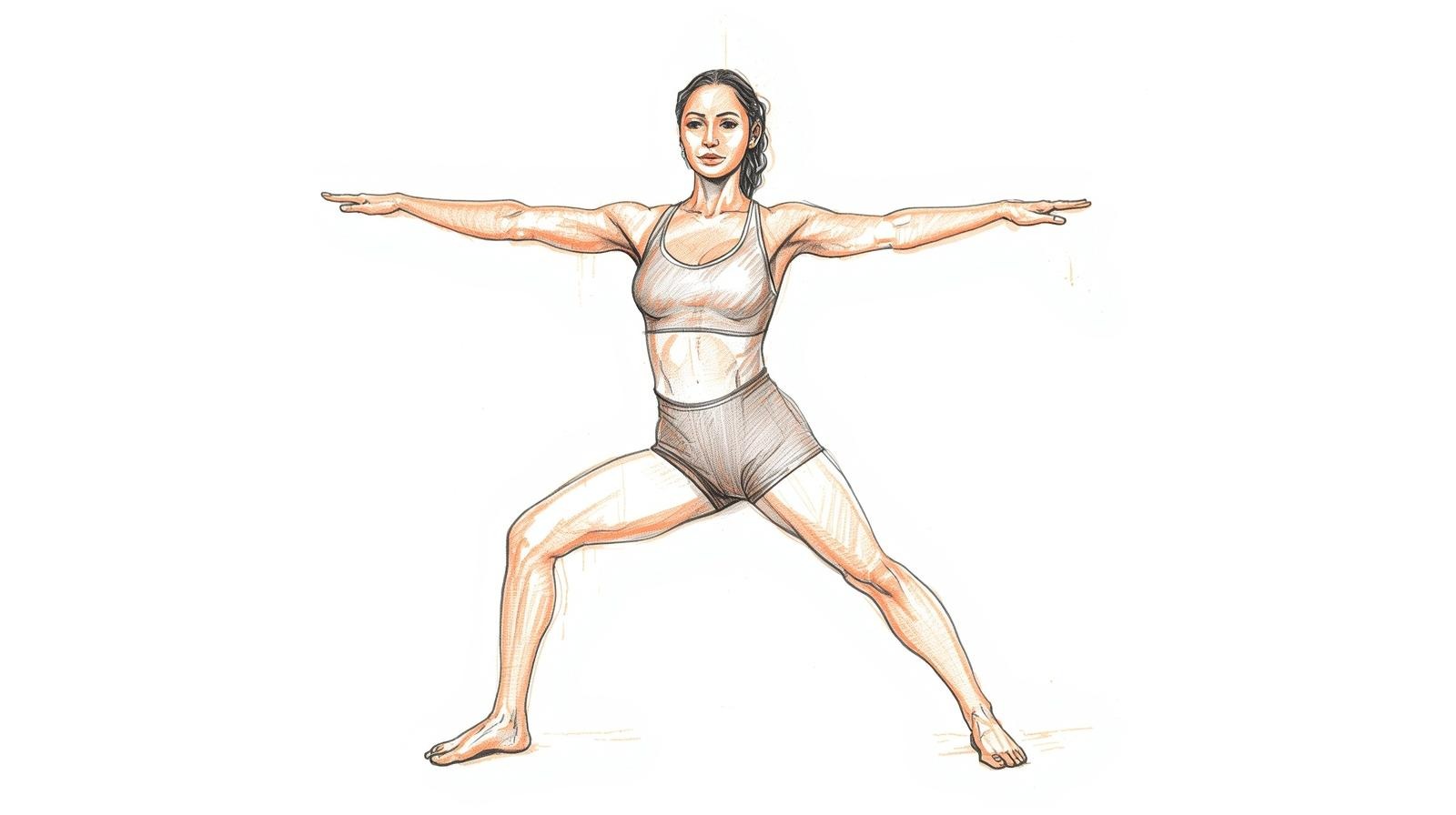
Stand, hip-width apart, and let your toes stretch like the roots of a tree meeting soil. Now, instead of straightening to stand tall, let your knees soften. Drop your weight downward. Feel the pull of gravity not as heaviness, but as belonging.
Shift slightly side to side. Let the pressure of the floor push back up into your soles. The earth is responding. Every small sway sends information to your nervous system: I exist. I am supported.
Many women are chronically ungrounded — living slightly above their center of gravity, disconnected from their base. Trauma, chronic caretaking, and socialization all train us to “float” instead of “land.” This practice teaches your body that grounding doesn’t mean being stuck; it means being anchored.
Now whisper quietly, “I belong to this ground.”
Stay until your breath naturally slows. You’ve reconnected the ancient contract between body and earth: presence for support.
2. The shoulder rebellion — Unfolding the posture of hiding
You can always tell how much someone trusts the world by their shoulders. The body’s instinctive response to fear or scrutiny is to curve inward, to protect the heart and vital organs. But for women, this reflex has been refined into social performance — the “modesty hunch,” the physical language of submission.
To undo this, begin standing or sitting comfortably. Bring awareness to your shoulders as they are. Feel their story — the slope, the tightness, the rounding. Without judgment, exaggerate the posture. Hunch forward deliberately, let your collarbones close, your chin drop. Feel how small that makes you.
Now, slowly roll the shoulders back and down, one at a time, as if reclaiming lost territory.
Your chest opens. The air deepens. Your lungs stretch into the ribs that have been compressed. You are expanding the architecture of self-worth.
Notice the vulnerability. For many women, opening the chest feels unsafe — like exposure. If trembling arises, let it. That trembling isn’t weakness; it’s discharge. The body is releasing the residue of all the times you had to close yourself to survive.
As you continue to open, lift your sternum just enough for your collarbones to widen, creating a subtle sense of radiance without rigidity. You are not posturing; you are unfolding.
This is not confidence as performance — it’s your anatomy remembering freedom.
Practice this several times a day: when typing, waiting in line, speaking.
Every time you open your shoulders, your nervous system rewrites a sentence that has been etched in feminine posture for generations: “Stay small, stay hidden.”
Now, your body replies, “I’m allowed to be seen.”
3. The boundary arc — Redrawing Your invisible perimeter
The brain doesn’t end at the skin. Neuroscience tells us that each of us has a “peripersonal space” — an invisible bubble of awareness that defines our sense of personal boundaries. Women conditioned to appease often unconsciously shrink that bubble, signaling submission and compliance long before they speak a word.
It’s not metaphor — it’s neurobiology.
To begin reclaiming your spatial authority, stand comfortably with eyes closed. Start to move your arms in slow, sweeping motions around you, as if painting an invisible dome of air that belongs entirely to you. Move front to back, side to side, even above your head. Feel the resistance of air against your palms.
Now, imagine this boundary not as defense, but as definition. You are telling your body: This is where I begin and where the world meets me.
As you trace these arcs, tune in to subtle sensations — warmth, tingling, emotion.
If discomfort arises, it’s because you’re expanding into forgotten territory. Keep going, slowly, until your nervous system starts to feel curiosity instead of tension.
Then, stop moving and simply stand inside the space you’ve created.
Let the silence thicken. This bubble is your energetic architecture — your sovereign atmosphere. Every cell of your skin learns that space can belong to you without apology.
With practice, this expansion affects how you enter a room, hold a conversation, or walk down a street. People sense the difference before you say a word.
You haven’t become louder — you’ve become spatially coherent.
4. The voice surge — Sound without story
If the body is the instrument of power, the voice is its resonance. Yet most women’s voices have learned to behave — softening their volume, raising their pitch, adjusting their tone to sound more “pleasant.” This happens unconsciously. The throat, in trauma physiology, is one of the first muscles to constrict when safety feels uncertain.
To stop playing small, your voice has to become wild again — not performative, but raw.
Find a private space where no one can hear you. Stand, feet grounded, one hand on your chest, the other resting on your abdomen. Forget about words entirely. You are not here to “speak” — you are here to vibrate.
Begin with a low, unstructured hum. Let it come from your belly, not your throat. Then, change the tone — a murmur, a sigh, a growl, even a cry. Let it move without meaning, just as a storm moves through the sky.
You may feel strange. You may want to laugh or stop. Don’t. This awkwardness is your nervous system brushing against an old wall of inhibition.
Now move your body as you vocalize. Let your arms sway, your spine curve, your hips shift. Let the sound find new shapes.
Notice how the vibrations travel through your ribs, your spine, your skull — places where words usually hide.
You are reclaiming primal vibration — the part of you that existed before language, before performance. When you finish, stay silent for a moment. Feel how the air in the room has changed, how your body hums slightly.
This is what it feels like when you stop filtering your frequency.
This is power without performance — the original sound of permission.

5. The stance of enough — Power through stillness
Playing small often hides behind movement. We fill silence with gestures, smiles, nods, to appear agreeable. Stillness, for a woman, can feel confrontational — too confident, too visible, too unapologetic. But stillness is the spine of presence.
To practice this, stand in an open space, feet evenly rooted. Let your arms hang naturally at your sides. Don’t pose. Don’t fix your face. Just be.
Almost immediately, the mind will protest. You’ll feel an urge to adjust — to shift your weight, smile, cross your arms, justify your stillness somehow. Resist the urge to perform. Simply stand, breathing naturally.
You’re teaching your body that safety does not require submission, that movement is not a requirement for acceptance.
After about two minutes, you’ll begin to notice subtle shifts. Your heartbeat slows. Your gaze steadies. The edges of your body feel more defined. The world hasn’t fallen apart — and you’re still here.
This is the physiology of dignity.
Over time, this exercise rewires a hidden reflex: the need to manage other people’s comfort.
Stillness becomes your quiet declaration — I am enough without performance.
6. The gesture of defiance — Rewriting reflexes
The instinct to shrink is not a decision; it’s a reflex. When faced with criticism, disapproval, or perceived threat, the body folds: shoulders cave, chin drops, gaze lowers. It’s the body’s ancestral code for safety. To reclaim your power, you must rewrite that code in motion.
Stand facing a wall or open space. Imagine an invisible wave of judgment approaching you — a voice, a comment, an expectation. Instead of folding, extend your arms forward, palms out. Push the air gently, not aggressively, as if you were saying, “Stop. This space is mine.”
Notice what happens inside: your muscles engage, your breath deepens, your spine lengthens. You’ve replaced contraction with agency.
Repeat this sequence three times. Each time, visualize pushing not a person, but a pattern: the inherited reflex of shrinking.
As you practice, try bringing this into life. The next time someone interrupts you, when you feel overlooked in a meeting or conversation, subtly ground your feet and press your palms together or outward — a micro gesture of boundary. The message to your body is clear: I can hold my ground without collapse.
Over time, your nervous system begins to replace the fawn response with embodied confidence.
This is defiance not as aggression, but as integrity — a physical “no” that allows your “yes” to mean something again.
7. The expansion walk — Reclaiming motion as majesty
Movement reveals how you feel about existing. Many women who “play small” walk as if apologizing for their presence — quick steps, eyes down, shoulders in. This walk is learned, not chosen. It’s the choreography of caution.
Reclaiming your stride is reclaiming sovereignty.
Go outside if possible. Choose a path with space to move. Begin to walk slowly, as if you had all the time in the world. Let your feet meet the ground deliberately — heel, arch, toe — allowing your weight to sink slightly into each step.
Then, lift your gaze to the horizon. Not high (that’s defense), not low (that’s submission) — simply level. Walk as if the air were making way for you.
Let your hips sway. Let your arms find their natural rhythm.
Now, whisper inwardly with each step: I take up space. I belong here.
After a few minutes, you’ll feel something subtle shift. The rhythm of your walk begins to synchronize with your heartbeat. Your spine straightens from within. You’re not performing confidence — you’re metabolizing it.
Researchers have found that posture and gait directly affect the brain’s chemistry of confidence (Carne, 2021).
But beyond hormones, there’s something older at play here — the memory of walking not as escape, but as arrival.
You are no longer hurrying through the world. You are inhabiting it.
8. The hand claim — Restoring the language of doing
Your hands tell the story of everything you’ve done for others — the caretaking, the quiet fixing, the invisible labor.
But they also carry the memory of hesitation: how often they’ve been folded in your lap instead of raised, hidden under the table instead of offered in assertion.
To stop playing small, your hands must learn to speak again.
Sit somewhere comfortable. Rest your hands, palms up, on your thighs.
Look at them as if seeing them for the first time — the lines, the tiny scars, the strength.
These are not delicate ornaments. They are instruments of creation and protection.
Now, slowly turn your palms down and press them gently against your thighs, feeling the solidity of your legs beneath you. Notice how power feels when contained. Then, lift your hands a few centimeters, open your fingers wide, and let energy radiate from your palms — not imagination, but sensation. You may feel warmth, tingling, or resistance. Stay with it.
You are reclaiming the doing nature of the feminine — not the overgiving, but the choosing.
Now speak softly: “These are my hands. They belong to my will.”
Let that sentence sink into your muscles.
When you cook, type, write, drive — pause occasionally to remember this feeling.
These are not hands of service alone; they are hands of authorship.
Every motion becomes a micro-ritual of reclaiming your capacity to shape your world, instead of only supporting someone else’s.
9. The spine memory — Rebuilding the axis of dignity
Power has a vertical geometry. It lives in the spine — not the rigid posture of control, but the fluid lift of inner alignment.
When we shrink, the spine subtly collapses. The chest caves. The head dips forward. Over time, this becomes the physical shape of self-doubt.
Lie down on a firm surface, knees bent, feet flat on the floor. Let your arms rest by your sides.
Take a moment to feel the back of your head, shoulders, and pelvis against the ground — the natural curve of your spine connecting each point like a living bridge.
Now, begin a slow wave. Press your lower back gently into the floor, then let it arch slightly away.
Move vertebra by vertebra, rolling up and down the spine like a tide.
Don’t force the motion — let it flow as if your body were remembering a forgotten dance.
As you move, imagine a golden thread running from your tailbone through your spine to the crown of your head.
Each repetition lengthens the thread a little more, straightening the inner architecture of worth.
You are reeducating the spine to associate uprightness not with danger or scrutiny, but with calm authority.
When you stand afterward, do so slowly.
Notice the vertical lift from within — the subtle dignity that doesn’t need performance.
This isn’t posture correction. It’s postural reclamation.
You are teaching your central nervous system: I am allowed to rise.
10. The circle of witness — Healing the fear of visibility
At the root of smallness lies the terror of being seen.
For centuries, women have been taught that visibility invites judgment, and judgment invites danger.
The antidote is collective witnessing — the sacred act of being seen and staying safe.
Gather one or two trusted women. Choose a quiet room. Stand together in a circle.
One at a time, each woman steps into the center. The others simply watch — silent, grounded, soft-eyed.
The woman in the center doesn’t perform. She doesn’t pose or speak. She stands. Maybe she shifts, maybe she breathes. Maybe tears come. Everything is welcome.
After a few minutes, she steps back and another enters.
No one offers feedback. No one analyzes. The witnessing is the healing.
This practice retrains the social nervous system — the part of the brain that links safety to connection. When your body experiences being watched without harm, it updates its entire map of safety and visibility.
Repeat this ritual monthly if possible.
Each time, something changes — the tremor softens, the breath deepens, the gaze steadies.
What you are reclaiming is not just comfort with attention, but trust in belonging.
Because visibility, when shared among women, becomes medicine.

Living beyond the reflex of smallness
As you move through these practices, you might notice subtle changes that seem insignificant but are profound:
Your step lands heavier.
Your voice vibrates deeper.
You stop apologizing mid-sentence.
You catch yourself taking a full breath before making a decision.
These are not confidence tricks. They are physiological updates.
Your body is remembering that expansion does not equal danger.
You are replacing inherited caution with embodied sovereignty.
The more you practice, the more this state becomes natural. You don’t need to fight for your power. You only need to stop abandoning it.
Power is not what you reach for — it’s what you return to.
Somatic science notes: Why this works
Modern psychology has begun to validate what ancient wisdom and embodied traditions have always known: that the way we inhabit our bodies shapes the way we perceive our worth.
Shrinking is not symbolic — it’s neurophysiological.
When the body contracts, it activates the dorsal vagal pathway of the nervous system — the state associated with freeze, submission, and shutdown (Porges, 2021).
This reflex evolved to protect us from harm, but for women socialized into chronic appeasement, it becomes the default.
Over time, the muscles, fascia, and breath patterns adapt to that contracted baseline.
You don’t just feel small — you become small in your nervous system’s language.
Each of the practices above works by reintroducing the body to expansion-based safety — teaching the vagus nerve and the limbic brain that visibility, volume, and verticality can coexist with calm.
For example:
- The ground claim activates proprioception, reducing dissociation and reinforcing a sense of support (Hlavack, 2022).
- The voice surge stimulates the vagus nerve through vocal vibration, improving regulation and confidence (Grossman, 2020).
- The boundary arc expands peripersonal awareness — the brain’s spatial ownership — restoring agency and boundary clarity (Serino, 2019).
- The circle of witness engages the social engagement system, creating corrective emotional experiences that rewrite isolation into connection (Dana, 2021).
These are not symbolic gestures. They are somatic recalibrations that shift the nervous system from appease to authenticity.
When you practice them consistently, you begin to experience yourself not as an idea, but as an ecosystem — a body, a voice, a presence that belongs here.
And that is the quiet revolution:
When a woman stops shrinking, she doesn’t dominate the room — she rebalances it.
Her presence becomes permission for others to rise.
Related posty You’ll love
- Temporal healing: Making peace with unfinished things
- Practice corner: Aging authentically — Letting go of the performance of grace
- Breaking cycles practice: A deep guide to parenting differently
- Practice corner: From last place to self-priority — A healing guide
- 8 exercises to overcome the fear of being labeled ‘too ambitious’ as a Woman
- One small comment ruined Your day? A neuroscience informed mood recovery protocol that brings You back to calm
- How to push back gently when someone talks to You like You’re small

FAQ
-
What does it mean to “play small”?
Playing small means unconsciously limiting your presence, voice, and potential to stay safe or likable. It often shows up as self-censorship, hesitation, or physical shrinking — learned survival patterns that prioritize approval over authenticity. It’s not weakness; it’s conditioning.
-
How does “playing small” show up in the body?
Your body mirrors your beliefs. Many women internalize fear through posture — rounded shoulders, lowered gaze, tightened throat, shallow breath. These patterns create a neurophysiological loop where contraction signals safety and expansion feels dangerous. Embodied practice helps reverse that loop.
-
Why can’t we just think our way out of self-doubt?
Because self-doubt isn’t purely cognitive — it’s somatic. When your nervous system equates visibility with danger, your body overrides logic. Reclaiming power requires bottom-up healing: movement, grounding, voice, and sensory awareness that teach the brain new safety patterns.
-
How do somatic exercises help women stop shrinking?
Somatic practices rewire the nervous system by pairing expansion (movement, voice, space) with regulation (calm). This teaches the body that power and safety can coexist. Over time, your posture, tone, and presence naturally shift from protection to embodiment — without forcing confidence.
-
What makes these exercises different from typical self-help techniques?
They bypass the intellect entirely. Instead of journaling, affirmations, or breathwork, these practices use body mechanics — grounding, movement, vibration, and relational witnessing — to reach where words can’t. It’s not about analyzing your fear; it’s about retraining your reflexes.
-
How often should I practice these exercises?
Consistency is more important than duration. Practicing one or two exercises daily — even for a few minutes — gradually teaches your nervous system a new baseline of confidence. With time, “not shrinking” becomes second nature, not effort.
-
Why does visibility feel unsafe for many women?
Visibility has been historically linked to scrutiny, danger, or shame. Culturally, women have learned that safety comes from invisibility. This belief lives not just in memory but in muscle tension. The goal isn’t to force visibility — it’s to make visibility feel safe again.
-
What role does the nervous system play in empowerment?
The nervous system determines how we interpret safety. When in a “freeze” or “fawn” state, we shrink. Empowerment begins when the vagus nerve learns to stay regulated even during expansion. That’s why embodied power feels calm, not aggressive — it’s physiology, not personality.
-
Can somatic practice replace therapy?
No — it complements it. Somatic work supports psychological healing by addressing the body’s contribution to fear and suppression. When combined with therapy, it accelerates integration and embodiment. Always move at your own pace and seek guidance if trauma responses surface.
-
How do I know if the exercises are working?
Progress is subtle. You’ll notice small changes — your voice steadies, your shoulders stay open, you speak without rehearsing. You’ll feel less urgency to please. True empowerment is quiet at first, then undeniable: your body no longer negotiates for permission to exist.
-
hat’s the science behind somatic empowerment?
Research in embodied cognition and Polyvagal Theory shows that posture, tone, and spatial awareness directly influence confidence and safety (Porges, 2021; Carney, 2021; Serino, 2019).
By engaging these systems consciously, women can transform self-doubt into embodied confidence — from the inside out. -
Is power always loud or dominant?
Not at all. Real power is grounded, not performative. It’s the quiet steadiness that comes from safety in one’s own body. When women stop playing small, they don’t overpower others — they create balance, showing what authority can look like without aggression.
-
What’s the fastest way to reconnect with my embodied power?
Start with your feet. Grounding immediately re-establishes safety and presence. The Ground Claim exercise — feeling your weight and ownership of space — begins the process of expansion from the ground up. Power starts where your body meets the earth.
-
Why does “taking up space” feel so emotional?
Because space is symbolic of permission. When you allow yourself to occupy physical, emotional, or relational space, you challenge deep-rooted beliefs about worthiness and belonging. Tears or trembling during practice are normal — that’s the body releasing stored constraint.
-
What is the ultimate goal of this practice?
Not dominance, not perfection — integration.
To live in a body that no longer confuses smallness with safety.
When you stop shrinking, you don’t just rise — you invite the world to meet you at your full size.
Sources and inspirations
- Carney, D. R., Cuddy, A. J., & Yap, A. J. (2021). Embodied posture and hormonal correlates of confidence. Journal of Experimental Psychology.
- Dana, D. (2021). Polyvagal Exercises for Safety and Connection. Norton.
- Grossman, P., et al. (2020). Vagal tone, self-expression, and emotional regulation in trauma recovery. Frontiers in Psychology.
- Hlavacka, F., et al. (2022). Proprioceptive grounding and nervous system coherence in somatic therapies. Neuroscience Letters.
- Porges, S. W. (2021). Polyvagal Theory: The Transformative Science of Safety. Norton.
- Serino, A., et al. (2019). Peripersonal space and embodiment: The neuroscience of personal boundaries. Trends in Cognitive Sciences.




Leave a Reply