Table of Contents
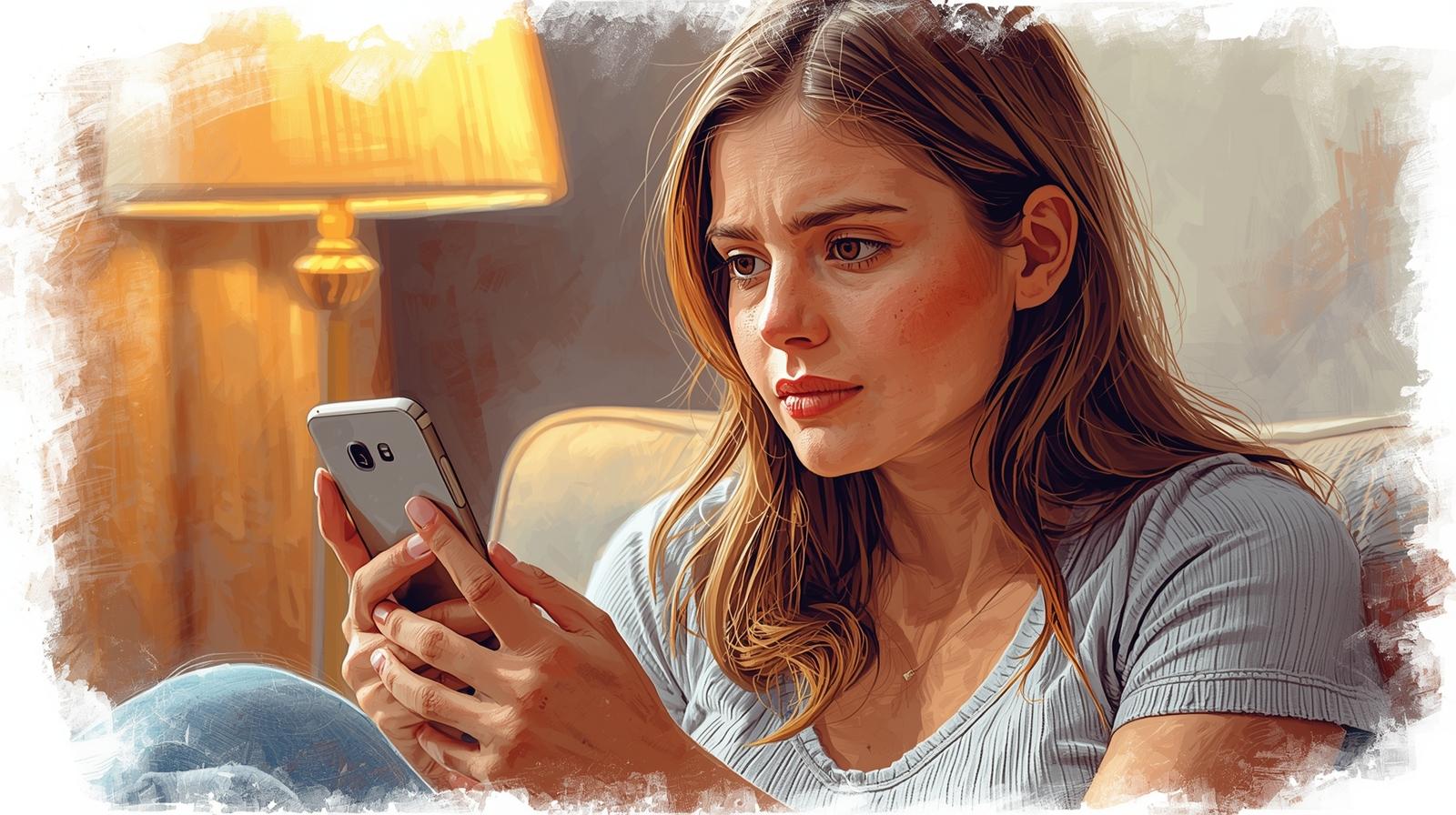
You open TikTok “just to check something” and, before you know it, the app is feeding you videos that feel a little too accurate. Clips about burnout on the exact day you can barely get out of bed. Stories about complicated mothers that sound like someone was hiding in your childhood kitchen. Relationship skits that replay your last argument almost line for line.
It can feel like the app sees you more clearly than some of the people in your life. And when that happens, it is very easy to slide from “this is interesting” into “this is a little scary” and finally into “I am not sure where I end and the algorithm begins.”
This Practice Corner article is here for that moment. You will not find shame or “just delete your phone” advice. Instead, you will find guided, nervous-system-aware exercises that help you set boundaries with TikTok and other social media in a way that feels realistic, self-honouring and grounded in current research on digital well-being.
We will treat TikTok as a powerful mirror that sometimes reflects too much, too fast. Your job is not to smash the mirror, but to learn how to step back, adjust what is being reflected, and remember that you are bigger than any feed.
Why TikTok can feel like it knows “too much” about You
TikTok is built on a recommendation engine that learns what keeps you watching and adjusts your For You Page second by second. Recommender systems like this are designed to maximize engagement, not to protect your mental health.
Research on algorithmic mechanisms in digital media shows that platforms create feedback loops: your behaviour shapes what you see, and what you see shapes your future behaviour, often in ways that are hard to notice from the inside. On TikTok, this loop is particularly intense because the videos are short, emotionally charged, and delivered in an endless scroll.
Recent systematic reviews of problematic TikTok use have linked heavy, compulsive engagement with higher levels of depression, anxiety, stress, poor sleep and body image concerns. These studies do not say that everyone who uses TikTok will struggle, or that TikTok is purely harmful. In fact, broader work on social media suggests that platforms can both support and undermine mental health, depending on how they are used and what kind of content dominates a person’s feed.
Digital well-being researchers describe this as a question of “fit” between your psychological needs and your online environment. When your use supports autonomy, competence and connection, it can enhance well-being. When it starts to undermine those needs, it becomes draining or even dangerous.
So when TikTok “knows too much,” what you are feeling is that misalignment: the algorithm is optimised for your attention, not your wholeness. The exercises below are designed to gently re-centre you, so that you can keep the parts of TikTok that genuinely help and build boundaries around the parts that do not.
Before You start: A gentle check-in with Your nervous system
Before you even open the app or think about changing your habits, pause for a very human question: how is my body right now?
Digital well-being frameworks emphasise that the impact of social media is deeply shaped by your internal state. The same video might feel grounding on a good day and overwhelming on a fragile one. So just notice, without fixing anything yet:
Are your shoulders up near your ears or relaxed? Is your breathing shallow or steady? Do you feel mostly present in the room around you, or more in your head?
Let your attention rest on the sensation of your feet on the floor or the weight of your body on the chair. Feel the support underneath you. You do not have to be perfectly calm to work with your TikTok boundaries, but you deserve to begin from a place of at least partial groundedness.
If at any point during the exercises you feel flooded, dizzy, numb or panicky, that is not a failure. It is information. It may be a sign that you need shorter sessions, more offline support, or the help of a therapist while you renegotiate your relationship with social media.
Exercise 1: The “For You Page” mirror scan
In this first exercise, you will use TikTok itself as a diagnostic tool. Instead of letting the feed pull you around, you will observe it the way a curious psychologist might observe a dream.
Choose a time of day when you are reasonably rested. Open TikTok with the sole intention of watching your For You Page for five minutes. You are not there to reply to messages, post content or chase trends. You are there to notice patterns.
As you scroll, pay attention to three layers at once: what you see on the screen, what you feel in your body, and what story the algorithm might be telling you about yourself. When your five minutes are up, close the app completely. Then, while the impressions are still fresh, translate them into a small “mirror table” like the one below.
| What my For You Page shows me most → | How my body feels as I watch → | What this might say about my current needs → |
|---|---|---|
| Repeated clips about burnout, quitting jobs, or being “so tired all the time” | A heavy chest, urge to sigh, fantasising about disappearing for a week | I may be more exhausted than I admit and craving rest or validation that I am not lazy |
| Videos about toxic relationships, cheating or being the “therapist friend” | Tight jaw, mixed pull of disgust and fascination, replaying past fights | My nervous system may be stuck in old relational patterns and seeking both warning and comfort |
| Wellness routines, “that girl” aesthetics, perfect bodies and productivity hacks | Brief motivation followed by shame or comparison, stomach fluttering | I may be looking for control or belonging, but the standards I am shown feel impossible |
| Soft, slow content: art, animals, gentle humour, healing accounts | Shoulders drop, deeper breaths, sense of being soothed | My system responds well to calm, non-adrenalised content and needs more of this |
There is no right conclusion to draw. The goal is simply to see, in black and white, what kind of emotional world your algorithm is surfacing for you.
If you notice that your main categories are heavy, chaotic or self-critical, that is not a reason to judge yourself. Remember that platforms are designed to amplify what hooks your attention, and humans are hard-wired to pay more attention to threat and drama. This exercise is about awareness, not blame.

Exercise 2: Mapping Your hooks and triggers
Once you have a sense of what your FYP is mirroring, the next step is to notice which specific moments grab you the hardest. Researchers studying problematic TikTok use emphasise that it is not just total screen time that predicts distress; it is the compulsive, “I cannot stop” style of engagement that tends to be most strongly linked to anxiety and depression.
To map your hooks, think back to your last few intense scrolling sessions. Bring to mind one moment where you realised, “I have been here way too long,” or where you closed the app feeling strangely worse.
Without bullet points, simply write in full sentences about three things:
Describe the exact kind of video that made you lose track of time. Was it a rapid stream of drama updates, trauma confessions, aesthetic perfection, or something else?
Describe what was happening in your life that day. Were you lonely, stressed about work, avoiding a task, or trying to distract yourself from an uncomfortable emotion?
Describe how your body felt just before you opened TikTok and right after you closed it. Were there changes in your mood, posture or energy?
You might notice patterns like, “When I am anxious about work, I get hooked by videos of people quitting their jobs and moving to a cabin in the woods,” or “When I feel rejected, I binge-watch breakup stories and cheating exposés.”
The point of this exercise is not to force yourself to stop cold turkey. It is to understand that your “overuse” is often a coping strategy. Digital well-being research shows that boundaries work best when they respect the needs you are trying to meet, rather than simply cutting off the behaviour.
When you see your hooks clearly, you can design boundaries that say, “I see why you reach for this. Let’s find a kinder way.”
Exercise 3: Designing Your personal boundary blueprint
Boundaries with social media are not one-size-fits-all. For some people, deleting the app for a month is healing. For others, that level of restriction feels punishing and unsustainable. Large reviews of social media interventions show that the most effective strategies tend to be personalised, supporting a sense of autonomy rather than imposing rigid rules.
Instead of copying someone else’s “perfect” digital detox, you will create a boundary blueprint based on three questions:
When during the day am I most vulnerable to being pulled into unhealthy scrolling? Where am I physically when this happens? What am I actually hoping to feel after using TikTok?
Now, translate your answers into a small table. Let it be imperfect and adjustable.
| Situation that pulls me in → | My compassionate boundary → | What I will try instead in that window → |
|---|---|---|
| Late at night in bed, telling myself “just a few videos” | TikTok stays off after 10:30 p.m., phone charges outside the bedroom | Listening to a short podcast, reading two pages of a book, or a simple body scan before sleep |
| Opening the app automatically during work breaks | I only open TikTok once during the workday, during a planned 15-minute break | Going outside for three minutes, stretching, or sending a voice note to a friend |
| Using TikTok to soothe loneliness | I check in with myself before opening and ask, “Is there a human I could reach out to first?” | Messaging a friend, journaling for five minutes, or sitting with the feeling and naming it |
Notice that each boundary is paired with an alternative, not just a restriction. That is critical. If you simply take TikTok away without offering your nervous system something else, you are likely to rebound harder later.
You might choose to implement just one boundary from your blueprint this week. Boundaries that are lived gently and consistently are more transformative than ten rules you abandon in three days.
Exercise 4: The one-week TikTok reset experiment
Rather than committing to “being better forever,” give yourself a structured experiment. Recent research on short social media detoxes in young adults found that even a single week with reduced use led to significant reductions in symptoms of depression, anxiety and insomnia.
Think of the next seven days as a lab where you are both the scientist and the participant. You are not trying to prove that TikTok is evil. You are testing how your mind and body respond when the volume is turned down.
Choose a clear reset rule that feels challenging but realistic. For example, you might remove TikTok from your home screen and only allow yourself to use it between 5 and 5:30 p.m., or you might delete the app entirely for five days and then reinstall it on the weekend with a time limit.
Before Day 1, rate on a scale from 0 to 10 how you feel in three areas: overall mood, sleep quality, and sense of presence in your daily life. Do this quickly, without overthinking.
During the week, keep a small note where you jot tiny observations: “Reached for my phone four times while making coffee,” or “Noticed more silence, felt restless then calmer,” or “Missed funny videos, but had a real conversation with my partner instead.”
At the end of Day 7, rate mood, sleep and presence again with the same 0 to 10 scale. Compare. Maybe the numbers barely shift, or maybe you see a small but real difference. Either way, you now have data about what boundaries your system might actually benefit from.
Digital-wellbeing scholars emphasise that experiments like this can strengthen your sense of autonomy: instead of following generic advice, you are generating personalised evidence about what supports you.
If you notice that the detox triggered a lot of discomfort, that is also valuable information. It might mean your relationship with TikTok has more in common with an addictive pattern, which is a sign that you deserve extra care and possibly professional support while changing it.
Exercise 5: Reprogramming Your algorithm with intentional engagement
Even if you do not want to leave TikTok, you can reshape what it reflects back to you. The same personalised algorithms that pull you into spirals can also be nudged to surface more nourishing content, if you interact with them deliberately.
For this exercise, you will treat your For You Page as clay, not concrete. For one week after your reset, engage with TikTok as if you are training a very eager, slightly clueless assistant.
When a video leaves you feeling grounded, inspired, gently seen or genuinely educated, stay with it. Watch it all the way through. Like it. Save it. Maybe even comment something kind.
When a video leaves you buzzing, hollow, ashamed or stuck in comparison, interrupt the loop as soon as you notice. Swipe away quickly. Do not rewatch, do not linger in the comments, do not send it to three friends with a nervous laugh.
You can reinforce your intentions by writing a small “algorithm agreement” with yourself:
For the next seven days, I am teaching my TikTok algorithm that my attention is precious. I will feed it with signals that say, “show me content that is kind, nuanced, and good for my nervous system,” and I will starve it of signals that say, “keep me addicted to fear, drama and perfection.”
To visualise how this works, imagine another table.
| If I consistently give my attention to → | The algorithm infers → | My future For You Page shifts toward → |
|---|---|---|
| Gentle mental health education, diverse bodies, slow living, creativity | This user loves soothing, reflective, inclusive content | More calm videos, more nuance, more creators who value healing over hype |
| High-drama relationships, extreme political outrage, appearance-obsessed clips | This user is highly engaged by intensity and comparison | More sensational, polarising and image-focused content that keeps me on edge |
| Balanced mix of fun, learning, and rest | This user prefers variety and depth | A feed that feels less like a single emotional tunnel and more like a wide, breathable landscape |
Personalisation research suggests that such shifts in engagement can meaningfully change what a platform shows you over time, because algorithms are constantly updating their models of your preferences. You may not notice huge changes overnight, but within a couple of weeks you might find your feed feeling slightly more like a supportive environment and less like a psychic avalanche.

Exercise 6: Rebuilding offline mirrors and support
One of the reasons TikTok can feel like it knows you “too well” is that, for many people, it becomes the loudest mirror in their life. If you are not regularly having deep, validating conversations offline, or if your community does not understand your inner world, the algorithm’s reflections can start to feel like the only ones that matter.
Yet research on social connection and mental health is clear: human relationships are one of the strongest buffers against anxiety and depression. Digital interventions can help, but they work best when they support, rather than replace, real-world bonds.
This exercise invites you to ask: whose eyes, besides the algorithm’s, do I want to see myself through?
Choose one person in your life who feels relatively safe. This might be a friend, partner, sibling, therapist, or even an online community that is slower and more intentional than TikTok. During your next interaction with them, experiment with sharing a small slice of what TikTok has been reflecting to you. For example:
“I have noticed my For You Page is full of videos about burnout and people quitting their jobs. I think it means I am more exhausted than I admit. Can I tell you about it?”
“I realised I watch so many clips about attachment styles and trauma. I think I am trying to understand why I react the way I do in relationships. Could we talk about that sometime?”
You are not asking them to fix you or to understand every aspect of the research. You are simply letting another human being into a space that the algorithm has occupied alone.
Digital well-being theory frames this as reclaiming relatedness: using technology in ways that support genuine connection instead of leaving you isolated.
If you do not have someone in your immediate circle who feels safe enough, this might be the moment to consider professional support. Mental health professionals are increasingly aware of social media’s impact and can help you unpack both the content of your feed and the patterns underneath your use.
When boundaries are not enough: Recognising problematic use
As you move through these exercises, you might discover that your relationship with TikTok feels more like an addiction than a habit. Perhaps every attempt at a time limit collapses. Maybe you experience intense distress when you cannot check the app, or your use repeatedly interferes with sleep, school, work or relationships.
Systematic reviews and meta-analyses of TikTok use have begun to identify patterns of problematic engagement that correlate with higher levels of depression, anxiety, stress, poor sleep, anger, and distress intolerance. These findings do not mean you are “broken,” but they do suggest that, for some people, TikTok functions in a similar way to addictive behaviours.
If you recognise yourself here, boundaries are still helpful, but you may need more layers of support. That could mean involving a therapist, joining a support group for digital overuse, or creating a family or house agreement around phone-free times and spaces.
Most importantly, if TikTok or any social media platform is amplifying thoughts of self-harm, suicide, or deep hopelessness, this is not just a “screen time” issue. Please reach out for help immediately: contact a local crisis line, emergency services, or a trusted professional. You deserve support that goes far beyond what any article—or algorithm—can offer.
Final reflection: You are more than what the algorithm sees
When TikTok knows too much, it is tempting to see yourself as a bundle of data points to be optimised or corrected. But behind every swipe and watch time metric is a full nervous system, a personal history, and a set of longing needs: for rest, for validation, for answers, for company in the dark hours of the night.
The exercises in this Practice Corner are not about perfection. They are about slowly shifting the power dynamic between you and your feeds. Each time you pause before opening the app, each time you notice a hook with curiosity instead of shame, each time you design a boundary that honours both your limits and your needs, you are gently telling your system: I am in charge here. Not the algorithm.
TikTok will continue to evolve. Recommendation systems will probably become even more sophisticated. But you can evolve too. You can keep learning how your mind and body respond to digital mirrors, how to step back when they are too bright, and how to surround yourself with reflections—online and offline—that remind you of your worth, your complexity and your capacity to choose.
The next time your For You Page feels scarily accurate, you might still say, “Wow, TikTok knows me.” But then, hopefully, you will add, “And I know myself even better.”
Related posts You’ll love
- When TikTok knows You better than Your friends: Algorithm as mirror for Your inner world
- Practice corner: A practical toolkit for surviving Your 20s and 30s existential crisis
- Practice corner: How to stop idealizing people who hurt You – A 7-day clarity challenge. FREE PDF!
- Practice corner: 7 days to live as more than just the “good one”. How to gently rewire a lifetime of over-giving in one intentional week. FREE PDF!
- Practice corner: 7 unconventional daily exercises to move through the motivation dip without beating Yourself up. FREE PDF!
- Practice corner: 14 days to unlearn Chameleon Syndrome and reclaim Your true self. FREE PDF!
- Your therapist would hate this TikTok: The pop psych myth that keeps You stuck (and the science based way out)
- Why incel slang became everyday talk: The hidden path from fringe forums to mainstream culture, and a calm guide for Women to keep inner dignity when the world gets coarser

FAQ: Setting healthy boundaries with TikTok and social media
-
How do I set healthy boundaries with TikTok without deleting the app?
Healthy TikTok boundaries start with awareness rather than punishment. Instead of forcing yourself to quit overnight, begin by noticing when, where and why you usually open the app. Once you know your vulnerable times—like late at night or when you are avoiding a task—you can create simple, compassionate rules around those windows. For example, you might decide TikTok stays off in bed, or that you only use it during one planned break in the afternoon. Pair every limit with an alternative that still meets the need, such as texting a friend, going for a quick walk or doing a short grounding exercise instead of scrolling. Boundaries work best when they feel like care, not like a cage.
-
How much TikTok is “too much” for my mental health?
There is no perfect number of minutes that fits everyone, but TikTok use becomes “too much” when it consistently leaves you feeling worse, not better. If you often close the app feeling anxious, numb, wired, ashamed or behind in your life, that is already a sign that the current amount is not working for your nervous system. Other red flags include losing sleep because you cannot stop scrolling, missing deadlines, or choosing the app over real-world relationships again and again. A simple way to test your personal threshold is to try a one-week experiment where you cut your usual time in half and then honestly track changes in your mood, energy and focus.
-
What are the signs that I might be addicted to TikTok or social media?
TikTok starts to look more like an addiction than a habit when you feel out of control around it. You might promise yourself you will only check “for five minutes” and then repeatedly lose hours. You may feel irritable or panicky when you cannot access the app, or find that you reach for it automatically anytime you feel bored, lonely or stressed. If your use is regularly disrupting sleep, work, school or relationships and you still cannot cut back, that is an important signal. It does not mean you are broken, but it does mean you may need extra support, such as therapy or a structured digital detox, to reset the pattern.
-
Can TikTok really affect my anxiety, depression or sleep?
Yes, it can. Short, fast, emotionally intense videos can keep your nervous system in a state of constant alert. Late-night scrolling exposes your brain to bright light and rapid stimulation at exactly the time it should be winding down, which can make it harder to fall and stay asleep. Constant comparison with idealized bodies, relationships and lifestyles can quietly increase anxiety and low mood. At the same time, TikTok can also offer comfort, humour and a sense of not being alone. The key is to notice which side of the scale your personal feed is tipping you towards and use boundaries to protect your emotional balance.
-
Do TikTok detoxes and social media breaks really work?
Short social media breaks often help more than people expect. A detox does not have to be dramatic to be effective. Even a week of reduced or paused use can give your brain a chance to reset, show you how often you reach for your phone without thinking, and remind you what else feels good when you are not scrolling. The goal is not to prove that TikTok is evil, but to collect your own data about how your mind, sleep and mood feel with less stimulation. After the break, you can reintroduce the app with clearer limits, rather than sliding back into the old autopilot pattern.
-
How can I reset or “retrain” my TikTok algorithm to feel healthier?
Your For You Page is constantly learning from every second you spend on a video. That means you can retrain it over time by changing what you feed it. When a video leaves you feeling calm, inspired, informed or gently seen, watch it fully, like it, save it or comment. When a video leaves you anxious, triggered or stuck in comparison, swipe away quickly and avoid rewatching or diving into the comments. Being intentional for even a couple of weeks can shift what the algorithm thinks you want, so your feed gradually fills with more nourishing content and less of what keeps you stuck.
-
What should I do when TikTok keeps showing me triggering or toxic content?
If you are repeatedly seeing content that feels triggering, sensational or toxic, your nervous system is giving you useful feedback. First, use the in-app tools where possible: long-press to mark videos as “not interested,” block or mute creators who consistently upset you, and explore keyword filters for topics you are not ready to see. Second, step back and look at the bigger pattern; often the most healing move is to reduce your overall time on the app while you feel raw. Supporting yourself offline with grounding practices, journaling or therapy can make it easier to resist the pull of content that reopens old wounds.
-
How can I use TikTok in a mindful, self-loving way instead of self-sabotaging?
Mindful TikTok use starts with an intention: deciding what you want from the app before you open it. Maybe you want a quick laugh, a creative idea, or a dose of gentle education. When you notice that you are no longer getting what you came for—and instead feel tense, numb or overwhelmed—that is your cue to close the app, even if the next video might be “better.” You can also create a small ritual around opening and closing TikTok, such as taking three slow breaths, checking in with your body, or asking yourself, “Is this helping me right now?” These tiny pauses turn scrolling from a reflex into a choice, which is the heart of self-love.
-
How can I support my teen or partner in setting TikTok boundaries without shaming them?
If someone you love is struggling with TikTok, start with empathy, not control. Instead of lecturing about screen time, ask curious, non-judgmental questions about what they like on the app and what leaves them feeling drained. Share your own struggles with social media so they do not feel targeted or singled out. Together, you can co-create simple house agreements—like phone-free meals or no TikTok in bed—that apply to everyone, not just them. Offer to experiment with a short family or couple’s detox and check in afterwards about how it felt. The more the conversation is about well-being and connection, the less it will feel like punishment.
-
When should I talk to a therapist about my TikTok or social media use?
It may be time to speak with a therapist if social media is regularly making you feel hopeless, if you notice thoughts of self-harm or suicide, or if you cannot reduce your use even though it is clearly hurting your life. Therapy can also be helpful if TikTok is bringing up intense trauma memories, body image distress or relationship patterns that feel too heavy to manage alone. A supportive professional will not just tell you to “get off your phone”; they will help you understand what needs you are trying to meet through the app and work with you to build healthier ways to meet those needs in both online and offline spaces.
-
Is it possible to enjoy TikTok and still protect my mental health?
Yes, it is absolutely possible to keep TikTok in your life without letting it run your life. Think of it like a strong spice: a little can add flavour, but too much can overpower the whole dish. By combining practical limits (such as time windows and phone-free zones), intentional engagement (liking content that truly nourishes you), and regular check-ins with your body and mood, you can turn TikTok into just one small part of a rich, grounded day rather than the main event. Protecting your mental health does not mean never having fun online again; it means being the one who decides how, when and why you show up there.
Sources and inspirations
- Büchi, M. (2024). Digital well-being theory and research. New Media & Society.
- Calvert, E., (2025). Social media detox and youth mental health: Outcomes of a 1-week intervention. JAMA Network Open.
- Chao, M., (2023). TikTok use and psychosocial factors among adolescents. Psychiatry Research.
- Galanis, P., (2025). Association between problematic TikTok use and mental health: A systematic review and meta-analysis. AIMS Public Health.
- Jain, L., (2025). Exploring problematic TikTok use and mental health issues: A systematic review of empirical studies. Journal of Primary Care & Community Health.
- Nagata, J. M. (2025). Health benefits of social media use in adolescents and young adults. Current Opinion in Pediatrics.
- Naslund, J. A., (2020). Social media and mental health: Benefits, risks, and opportunities for research and practice. Journal of Technology in Behavioral Science.
- Metzler, H., (2023). Social drivers and algorithmic mechanisms on digital media. Social Science Computer Review.
- Skeggs, A., & Orben, A. (2025). Social media interventions to improve well-being: A self-determination theory approach. Current Opinion in Psychology.
- Uslu, O. (2025). Understanding digital well-being: Impacts, strategies, and policy implications. Journal of Digital Society.


Leave a Reply