Table of Contents
There is something indescribable about stepping into the mountains and filling your lungs with that first deep breath. It is not simply air—it is an experience, one that touches the senses and resonates deep within the body. The coolness sweeps away fatigue, the crispness feels as if it sharpens mental clarity, and the purity carries an almost spiritual message of renewal. People often describe the experience as invigorating, refreshing, or cleansing, yet these words only scratch the surface of what mountain air truly offers.
Mountain environments hold a kind of magic, a natural alchemy that transforms simple oxygen into a multisensory encounter with calm, vitality, and connection. For centuries, poets, philosophers, and healers have celebrated the mountains as places of refuge, clarity, and transcendence. Modern science is now catching up to this wisdom, showing us that there are concrete, measurable reasons why mountain air feels different from city air—or even from the countryside. From changes in atmospheric chemistry to psychological release, from forest compounds to cultural symbolism, mountain air is both science and poetry, both matter and metaphor.
The science of thin, crisp air
When we talk about mountain air, it is easy to imagine it as simply “pure oxygen.” Yet the truth is more intricate. The proportion of oxygen in the atmosphere remains consistent at about 21 percent, whether you are at sea level or on a mountain ridge. What shifts with altitude is the air pressure. At higher elevations, the thinner atmosphere exerts less pressure, which means fewer oxygen molecules enter your lungs with each breath. This reduced availability of oxygen, known as hypoxia, initially challenges the body, leading to symptoms like quicker breathing, a racing heart, or even fatigue.
However, the human body is remarkably adaptable. With time, it begins to recalibrate by producing more red blood cells, which enhances oxygen transport to tissues and the brain. Blood circulation becomes more efficient, and the lungs adjust their function to capture oxygen more effectively. The result of this physiological adaptation is a surprising sense of clarity and vitality. People often describe feeling sharper, lighter, and more alert in mountain environments, as if their inner systems are attuned to a more optimal rhythm.
But there is another factor: cleanliness. The air in urban or industrialized areas often contains invisible burdens—fine particles, carbon emissions, smoke, heavy metals, and allergens. These pollutants do not just irritate the lungs; they slowly affect the entire body by increasing inflammation, lowering energy, and even clouding cognition.
Mountain air, especially in regions far from human development, has dramatically fewer of these contaminants. Each inhalation feels smoother, cleaner, and more efficient. It is no wonder the mind interprets this difference as lightness and clarity. Breathing becomes not just a biological act but a sensory reminder of freedom.
Psychological relief in elevated spaces
Mountains are not only landscapes of stone and snow; they are havens for the human psyche. Psychologists studying the impact of natural environments on mental health have consistently found that time in nature lowers stress, enhances mood, and supports overall well-being. Mountain air, in this sense, is not just an environmental factor but a psychological symbol.
When you inhale alpine air, you are also inhaling the feeling of escape—from traffic noise, crowded streets, buzzing notifications, and relentless demands. Each breath acts as a reset button, signaling to the nervous system that it can relax. The parasympathetic branch of the nervous system, often described as the “rest and digest” mode, becomes more active, lowering heart rate and calming the body.
What makes mountains particularly powerful is their ability to induce mindfulness. Inhaling the cool air, noticing the aroma of pine, feeling lungs expand with freshness—all of these sensory experiences ground you in the present moment. They act as anchors, pulling you away from anxious thoughts about the past or future. The mountain air becomes a natural meditation guide, encouraging presence without effort.
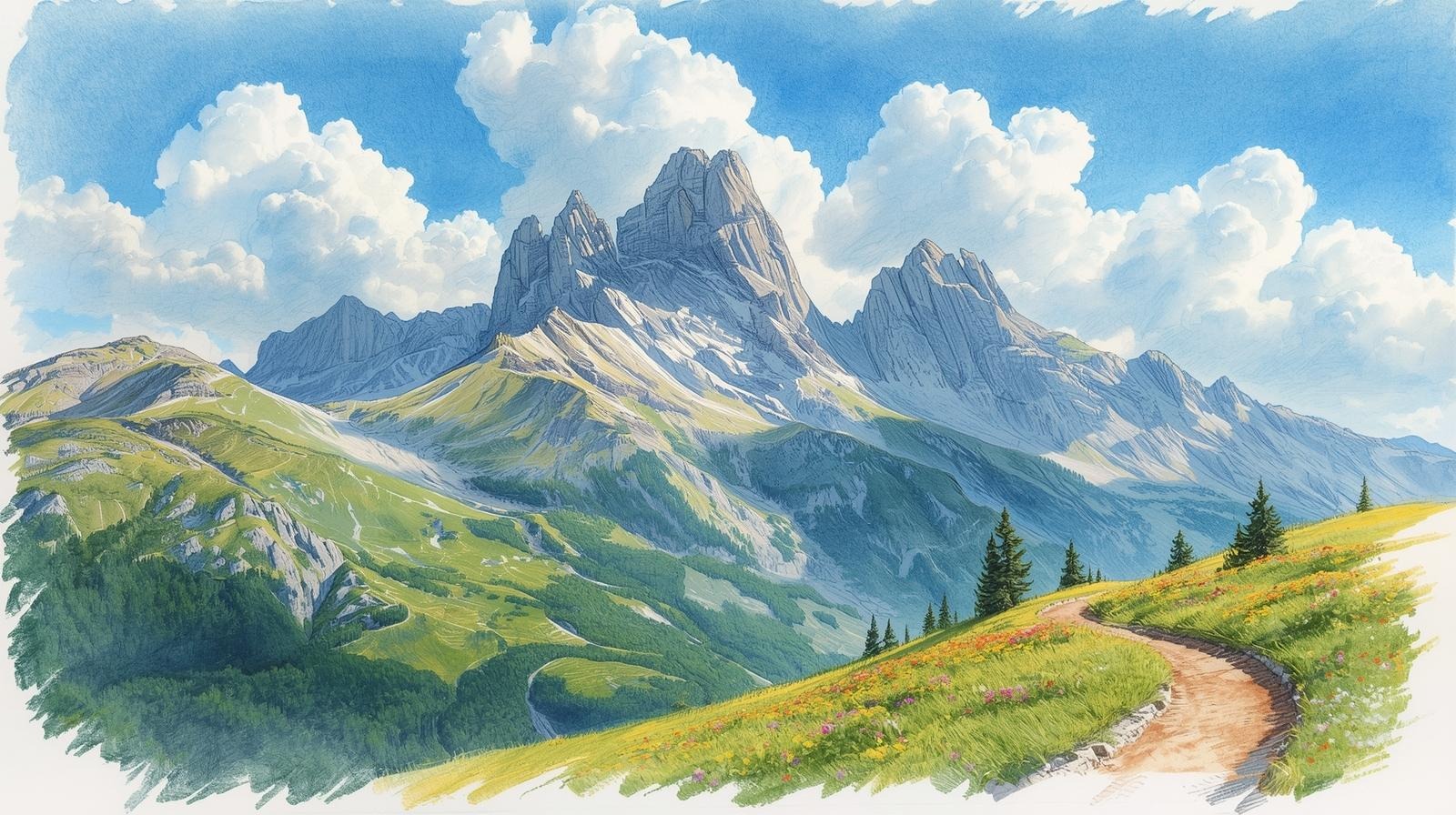
The views themselves add to this relief. Looking out from a high ridge across valleys and peaks triggers a sense of awe. Research shows that awe is not just an emotion but a state that reduces ego-centered thinking, increases feelings of connectedness, and enhances overall life satisfaction. Breathing deeply while surrounded by these vistas transforms air into an elixir for the spirit.

Aromatic compounds: Nature’s airborne medicine
If oxygen content were the only reason mountain air feels refreshing, we could reproduce the effect anywhere with purified air tanks. But mountain air is more than oxygen. Forest ecosystems at higher elevations contribute a unique chemical richness that plays directly on human biology.
Trees, especially conifers such as pines, cedars, and firs, emit natural chemicals known as phytoncides. These compounds serve as the trees’ defense mechanism against bacteria and pests. For humans, however, phytoncides act like invisible medicine. Research shows that inhaling them lowers cortisol levels, strengthens immune responses, and even increases the activity of natural killer cells, which help fight infections and cancers.
This is why the scent of mountain forests feels deeply healing. It is not only pleasant to the nose but profoundly beneficial to the body. Our olfactory system has direct pathways to the brain’s limbic system—the area responsible for emotion and memory. When we inhale these airborne compounds, we are influencing mood and memory at a subconscious level. The smell of pine or fresh cedar becomes intertwined with feelings of safety, calm, and joy.
Even the “fresh” or “electric” smell often associated with alpine air has a scientific explanation. In mountain environments, especially near waterfalls or after thunderstorms, the air is rich in negatively charged ions and trace ozone. These molecules improve air quality, reduce airborne allergens, and may even elevate mood. Together, these aromatic and chemical factors transform mountain air into a healing atmosphere, one that restores balance without us consciously realizing it.
Light, sky, and the chemistry of mood
Breathing in mountain air is inseparable from bathing in mountain light. At higher altitudes, the thinner atmosphere filters sunlight less, allowing it to arrive brighter, crisper, and more energizing. This increased exposure to natural light has measurable benefits for mental health. It stimulates serotonin, the neurotransmitter associated with happiness and focus, and regulates melatonin, which governs sleep. Spending even a few days in mountain sunlight can recalibrate circadian rhythms, improving sleep quality and overall vitality.
Vitamin D synthesis is another critical factor. Many people living in urban environments struggle with deficiencies due to limited sun exposure, especially during colder months. Higher elevations provide more direct sunlight, which encourages the body to produce this essential vitamin. Adequate vitamin D is linked to stronger immunity, more stable moods, and reduced risk of depression.
The sky itself also plays a role. When people gaze at expansive horizons or vast skies, they experience psychological effects akin to deep relaxation. These views trigger feelings of openness and possibility, contrasting sharply with the confinement of enclosed urban architecture. The act of inhaling crisp air while gazing across an endless vista becomes a multisensory practice in openness—of lungs, of mind, of spirit. Mountain air, then, refreshes not only through chemistry but also through perspective.
Altitude as a metaphor for mental clarity
Language reflects how deeply mountains are embedded in our imagination. We speak of “rising above problems,” of “climbing to new heights,” of “gaining perspective.” These metaphors are not accidental. They emerge from lived experience in elevated landscapes, where the act of climbing higher literally offers broader views and cleaner air.
Standing at altitude, everyday worries take on new proportions. A challenge that felt insurmountable in the lowlands shrinks in the face of towering peaks and vast valleys. The physical lightness of breathing fresh mountain air mirrors the mental lightness of seeing the bigger picture. It is as though the mountains teach us how to strip away the unnecessary, how to find clarity in the thinning of atmosphere.
This symbolic resonance explains why seekers, sages, and poets across cultures have retreated to mountains for insight. The higher you climb, the more expansive your inner world becomes. Mountain air clears not just lungs but also thoughts, helping you breathe into clarity.
The spiritual dimension of mountain air
For millennia, mountains have been revered as sacred spaces. Ancient Greeks imagined Mount Olympus as the dwelling of gods. In Hindu and Buddhist traditions, the Himalayas symbolize transcendence and enlightenment. Native American tribes often considered high peaks as bridges to the spirit world. In each case, air is a vital element—an invisible thread between the earthly and the divine.
When you breathe in mountain air in such contexts, you are not only inhaling oxygen but participating in a ritual of connection. The sensation of freshness is imbued with symbolic meaning: a breath of renewal, wisdom, or divine energy. Many people describe feeling closer to the sacred or infinite when standing in alpine environments. The crispness of the air becomes a reminder that life itself is breath, and breath is spirit.
Science can measure oxygen saturation and phytoncides, but it cannot fully capture the transcendence of standing on a ridge with wind rushing against your face. The spiritual refreshment of mountain air is just as real as its physiological benefits. It reminds us of our place in a larger whole, humbling and elevating us at the same time.
Modern science meets ancient wisdom
What is remarkable is how ancient intuitions about mountains are now being validated by science. Practices like Japanese shinrin-yoku, or “forest bathing,” once rooted in spiritual traditions, are now recognized by medicine for reducing stress and boosting immunity. Modern studies confirm what indigenous wisdom has long known: mountain environments heal.
Research in environmental psychology, neuroscience, and immunology demonstrates that mountain air improves cognitive performance, reduces markers of stress, and enhances emotional well-being. In many ways, science is catching up to the stories and myths that have always surrounded high places. Mountains were seen as healing because they are healing—physically, emotionally, and spiritually.
The convergence of data and tradition reveals a truth larger than either perspective alone: mountain air refreshes us because we are designed to thrive in connection with natural, elevated spaces. In the embrace of mountains, science and spirituality meet, reminding us of our origins and our needs as human beings.

Practical ways to bring mountain air benefits into everyday life
Of course, not everyone can live near the mountains. But the essence of mountain air can be brought into everyday routines in creative and intentional ways. Indoor plants like pines, ferns, or lavender can purify and enrich the air in your home. Air purifiers reduce particulate matter, creating an environment closer to the clarity of alpine air. Essential oils derived from conifers or cedarwood can be diffused to replicate the calming aromas of high-altitude forests.
Mindful breathing is another accessible practice. Opening a window and practicing slow, intentional breaths can mimic the grounding effect of mountain inhalations. Visiting local parks, botanical gardens, or riversides can also offer a refreshing reset for the nervous system. Even short, regular breaks in green spaces allow the lungs and mind to recover from the dense air and fast pace of urban life.
By cultivating small practices—bringing nature indoors, using scents of pine, or engaging in mindful breathing—you can carry a touch of mountain clarity wherever you go. The spirit of mountain air lies not only in altitude but also in awareness.
Emotional reset: Why the mountains feel like a safe haven
Urban living keeps the nervous system in a constant state of low-level stress. Sirens, traffic, notifications, and deadlines subtly keep the body in fight-or-flight mode. Mountain air, paired with silence and vast landscapes, signals safety. The parasympathetic nervous system activates, slowing the heartbeat, easing muscle tension, and lowering blood pressure.
This is why people describe the mountains as sanctuaries. Inhaling crisp alpine air becomes synonymous with exhaling fear and fatigue. Studies consistently show reductions in cortisol after time in mountain settings. The coolness of the air soothes inflammation and encourages rest, while the stillness of the environment creates a container for emotional release. Simply put, mountains invite the body and mind to let go.
Creativity and cognitive renewal in higher elevations
The refreshing quality of mountain air also extends to the creative mind. Clean air improves oxygen delivery to the brain, supporting memory, concentration, and cognitive flexibility. At the same time, the sensory richness of alpine environments—aromas, sounds, and vistas—stimulates different neural pathways, encouraging creativity and problem-solving.
Writers, artists, and thinkers throughout history have retreated to the mountains not only for solitude but for inspiration. The expansive spaces mirror the expansiveness of thought. Breathing deeply in these environments creates room for new associations and insights, unlocking creative processes that often feel stuck in daily routines. Cognitive science supports these accounts, showing that exposure to natural, restorative environments improves divergent thinking and innovation.
The timeless human bond with mountains
Taken together, the science, psychology, spirituality, and creativity all point to one truth: human beings are deeply bonded with mountains. We are drawn to them because they represent freedom, resilience, and renewal. Mountain air embodies this bond in every breath. It refreshes our lungs, clears our thoughts, and lifts our spirits.
This timeless connection explains why mountains appear in myths, religions, and literature worldwide. They are symbols of challenge and transcendence, of strength and serenity. Their air teaches us how to live lightly, how to breathe deeply, and how to remember that clarity is not rare but natural when we reconnect with the world as it is.
Breathing with awareness, living with clarity
So why does mountain air feel so refreshing for the mind? Because it is more than air. It is a multisensory experience that engages the body, brain, and spirit. It offers cleaner oxygen, calming scents, brighter light, and psychological spaciousness. It resonates with ancient traditions while aligning with modern science.
The mountains remind us that renewal is always possible. Even if we cannot always be at altitude, we can learn from the practice of breathing with awareness, seeking clean spaces, surrounding ourselves with natural scents, and cultivating perspective. Each breath is a chance to refresh the mind, just as mountain air refreshes the soul.
The lesson is simple yet profound: clarity is always just a breath away.
Related posty You’ll love:
- The ritual of rocking back and forth: A forgotten calming practice
- How decluttering Your purse brings emotional relief: The hidden psychology of carrying less
- Designing a sunday reset that feels like a spa day: Restoring Your mind, body, and spirit
- Mindfulness tricks for Women who overthink everything: How to find inner calm in a busy mind
- How to meditate when You can’t sit still
- How to stop proving Your worth and feel calm again: A calm, science grounded guide to unlearning worth proving
- After-work & after-school decompress: 7 unconventional rituals to land softly and reset

Frequently Asked Questions (FAQ) about mountain air and mental refreshment
-
Why does mountain air feel fresher than city air?
Mountain air feels fresher because it usually contains far fewer pollutants, allergens, and fine particles compared to urban air. Combined with cooler temperatures, aromatic compounds from forests, and lower humidity, each breath feels lighter and more refreshing.
-
Does mountain air really improve mental clarity?
Yes. Scientific research shows that cleaner air improves oxygen delivery to the brain, which enhances focus, memory, and mental sharpness. Many people also feel mentally clearer in mountains due to reduced stress and the expansive views that encourage perspective.
-
Are there health benefits to breathing mountain air?
Absolutely. Mountain air has been linked to lower stress hormone levels, improved cardiovascular efficiency, boosted immune function, and better sleep quality. Aromatic compounds from trees, such as phytoncides, also support immune health and relaxation.
-
Can mountain air reduce stress and anxiety?
Yes. Time spent in mountain environments activates the parasympathetic nervous system, which calms the body and reduces anxiety. Breathing fresh alpine air often brings an immediate sense of relief, while extended exposure supports long-term emotional balance.
-
Why does the scent of pine trees feel so calming?
Pine trees release natural compounds called phytoncides, which not only protect the trees but also influence human biology. Inhaling these compounds can lower blood pressure, decrease cortisol, and promote feelings of relaxation and safety.
-
Is mountain air better for sleep?
Many people report deeper and more restful sleep in the mountains. Cleaner air, cooler temperatures, and brighter natural light help regulate circadian rhythms, improving melatonin production and overall sleep quality.
-
How can I get the benefits of mountain air without living near the mountains?
You can bring aspects of mountain air into daily life by using air purifiers, keeping indoor plants, diffusing essential oils like pine or cedarwood, and practicing mindful breathing near open windows or in green spaces. Regular visits to parks or forests can also mimic the calming effects of alpine environments.
-
Do mountains really inspire creativity?
Yes. Clean air, reduced distractions, and expansive landscapes stimulate the brain in ways that support divergent thinking and creativity. Writers, artists, and philosophers have long turned to mountains for inspiration, and modern research supports these effects.
Sources and inspirations
- Antonelli, M., Donelli, D., Barbieri, G., & Valussi, M. (2020). Forest volatile organic compounds and their effects on human health: A state-of-the-art review. International Journal of Environmental Research and Public Health.
- Berman, M. G., Jonides, J., & Kaplan, S. (2008). The cognitive benefits of interacting with nature. Psychological Science.
- Bratman, G. N., Hamilton, J. P., & Daily, G. C. (2012). The impacts of nature experience on human cognitive function and mental health. Annals of the New York Academy of Sciences.
- Li, Q. (2010). Effect of forest bathing trips on human immune function. Environmental Health and Preventive Medicine.
- Mayer, F. S., Frantz, C. M., Bruehlman-Senecal, E., & Dolliver, K. (2009). Why is nature beneficial? The role of connectedness to nature. Environment and Behavior.
- Ulrich, R. S. (1984). View through a window may influence recovery from surgery. Science.
- Williams, F. (2017). The Nature Fix: Why Nature Makes Us Happier, Healthier, and More Creative. W. W. Norton & Company.
- Wilson, E. O. (1984). Biophilia. Harvard University Press.




Leave a Reply