Table of Contents
Why a sunday reset matters more than You think
We often let Sunday be the day we “catch up.” Catch up on chores, errands, work prep — or just rest, if we’re lucky. But too often, Sunday becomes a micro-weekend of stress, an anxious limbo anticipating Monday. Without intentional pause, we carry tension forward: leftover stress, unconscious worry, muscular tightness, emotional residue. That cumulative load seeps into Monday, making it harder to start fresh.
A spa-style Sunday reset changes that. It offers what’s called a pattern interrupt — a deliberate break in habitual stress cycles. This isn’t just physically resting; it’s sending a signal to your nervous system that “this time is for restoration.” Over time, your body begins to anticipate this rest, creating a rhythm.
The benefits are not just anecdotal. Research in psychology and stress biology shows that rituals and rest buffers reduce cortisol over time, improve emotional regulation, and even bolster immune resilience. Integrating a weekly restoration ritual can help prevent burnout and improve long-term well-being.
More than that, designing your Sundays as sanctuary cultivates psychological safety. Your inner system learns: rest is allowed. You are safe enough to slow down. That trust is precious in a world that rewards constant doing.
Setting the stage: Turning Your home into a mini-spa
The environment in which you rest matters. Spas are immersive, not just functional—every detail is orchestrated to support calm. In your home, you can replicate that immersion with intention.
Decluttering & emotional space
Begin by letting go of visual noise. A messy room, scattered items, half-finished tasks in view—they all whisper, “don’t rest yet.” Studies show clutter raises cortisol and impairs concentration. Start by simply clearing surfaces, putting away distractions, and letting your chosen reset zone feel “empty enough” to breathe into.
But physical space and emotional space are linked. Before you light a candle, invite permission in your mind to rest. Say (silently or aloud), “Today is for me.” That framing shift makes all the difference.
Lighting & ambiance
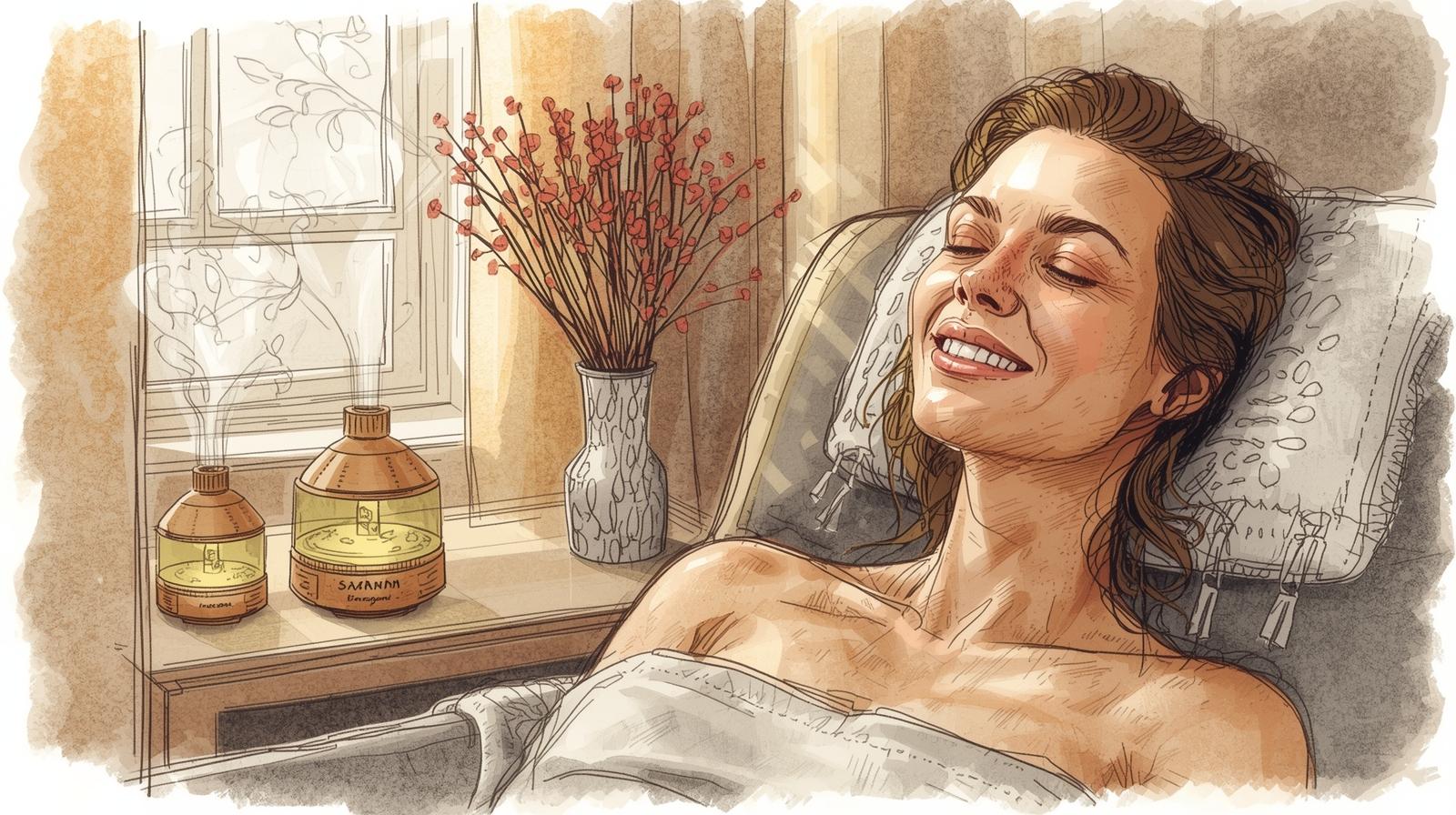
Harsh overhead lighting is the enemy of calm. Use warm, dimmable light. Candles, salt lamps, string lights, or shaded lamps create softness. The gentler the contrast, the more your parasympathetic nervous system can take hold.
Scent & aromatherapy
Scent is a powerful gateway to mood change. Research continues to affirm that aroma, especially lavender, can reduce anxiety and improve sleep. For example, a 2025 meta-analysis described how aromatherapy alleviates anxiety and enhances sleep quality by improving circulation and promoting relaxation.
Another clinical trial found that inhaling lavender essential oil significantly reduced anxiety compared to a control group.
In older adults too, aromatherapy (lavender-based) was shown to improve sleep quality in controlled settings.
You don’t need overcomplicated blends. A few drops of high-quality lavender (or chamomile, bergamot, or rose) in a diffuser, or on a cotton ball near your pillow, can help shift your system toward rest. Always ensure safety: avoid near flames, keep essential oils diluted if applying to skin, and ventilate well.
Soundscapes & music
Quiet is relative. Complete silence sometimes amplifies inner stress. Gentle ambient sound, soft instrumentals, or nature recordings (rain, forest, water) help cradle your attention without demanding it. Sound therapy research indicates that curated soundscapes enhance restorative states and reduce stress markers.
Consider creating a “Sunday reset playlist” that you only use on your reset days. Over time, your brain will begin to recognize those tracks as triggers for calm.
The ritual of slow cleansing
Cleansing is more than hygiene. In spa culture, cleansing is symbolic—washing away the old so new calm can arrive. In a Sunday reset, that symbolism matters as much as the physical effect.
Baths, steam, or ritual showers
If you have a bathtub, lean into it. Use Epsom salts (magnesium sulfate) to ease muscle tension; add a few drops of calming essential oils like lavender or rosemary in a dispersal medium (e.g. unscented bath oil). Let your body sink, breathe, and release. Use the time to imagine the water absorbing tension, washing away worry.
If baths aren’t possible, transform your shower into ritual: hang a bundle of eucalyptus or mint in the steam; let droplets slowly fall, not as a rinse but as a gentle cascade of care. When the water hits your skin, silently breathe with it: “With this water, tension flows away.”
Exfoliation & sensory connection
Skin contact grounds us in sensation. Use a gentle sugar or salt scrub (with a bit of oil) and move slowly, from toes to scalp. Engage tactile attention. Let your fingers feel texture, warmth, pressure. This is not another chore; it’s communion with your body.
On the face, use a mild mask or clay scrub, perhaps leaving it on while you soak or journal. Notice how your skin responds—tightness, warmth, softness.

Rinsing & sealing
End with a final rinse in slightly cooler water to close pores gently. Pat dry mindfully. Then apply a rich, nurturing oil or balm—this sealing act is your body’s “thank you” ritual.
Throughout, avoid rushing or multitasking. Let a timer remind you you have “reset time”—you don’t need to be anywhere else until later.
Nourishment as ritual: Eating for calm and pleasure
We often treat food in reset time as “prep for Monday,” or we skip it entirely. But in a spa-style reset, your meals become part of the ritual: nourishment, pleasure, immersion.
Mindful breakfast & grounding fuel
Begin with a breakfast that feels soothing. Think porridge with warm milk (or plant milk), cinnamon, berries, nuts—foods that provide slow energy, gentle sweetness, and sensory comfort. Or a smoothie bowl you can savor slowly rather than gulp.
Rather than eat while doing something else, sit down (maybe with a candle) and eat without screens. Notice texture, temperature, smell, and the movement of energy through your body. Studies in mindful eating show that bringing nonjudgmental awareness to food enhances digestion, lowers stress, and deepens satisfaction.
Lunch with color & texture
At midday, aim for something light but vibrant: roasted vegetables, quinoa or millet, leafy greens, seeds, and a homemade dressing (olive oil + lemon + herbs). The more texture and contrast, the more your senses stay awake in pleasure rather than fatigue. Resist overloading with heavy starches that dull the system.
Again, slow your pace. Chew thoroughly. Pause mid-meal and sense how your body is reacting.
Dinner as comfort & integration
In the evening, lean into comfort. A slow-cooked stew, creamy soup, risotto, roasted root vegetables—all well-tempered, not over-spiced or over-salted. Balance warmth with nutrients.
After dinner, avoid heavy digestion activity; allow a window before your closing rituals. Sip herbal tea (chamomile, lemon balm, tulsi) while reflecting on your day.
Passing through these meals as part of your reset reinforces that nourishment is not a side note—it is central to restoration.
The Spa within: Practices for nervous system reset
If atmosphere, scent, and food shape the stage, the heart of a spa reset lies in practices that regulate your nervous system—those techniques that shift you from fight-or-flight (sympathetic) into rest-and-digest (parasympathetic).
Breathwork as anchor
Breath is the most accessible lever you have over your physiology. One classic technique is the 4-7-8 breath: inhale four seconds, hold seven, exhale eight. That elongation of exhale anchors your system toward calm.
Another variation: slow “box breath” (equal durations inhale/hold/exhale/hold) or alternate nostril breathing. Even five minutes of focused breath can downregulate heart rate and quiet mental churn.
A meta-analysis in 2023 found that structured breathwork interventions across randomized trials significantly reduced perceived stress and improved mental health outcomes.
Gentle movement / restorative yoga
Movement and stillness go hand in hand. After breathwork, add very gentle movement: restorative yoga (supported legs-up, child’s pose, legs on wall), yin stretches, or slow mindful walking indoors. The goal is not burn, but fluidity, circulation, and internal signaling of safety.
Yoga and meditation interventions (especially Mindfulness-Based Stress Reduction) have a solid research base for reducing stress, anxiety, and improving mood. Wikipedia+1
Self-massage & body connection
Touch is grounding. You don’t need a professional—use warm oil and your hands, a roller, or a soft ball for self-massage. Focus on tension points: neck, shoulders, calves, feet. Move gently, mindfully. Imagine your hands as carriers of kindness and release.
Ayurvedic traditions (abhyanga) recommend daily warm oil massage to support lymphatic flow and calm. Even a few minutes of this act can help transition your body from stress mode into rest mode.
Meditation, visualization, or deep rest
End your movement phase with meditation or deep rest. That could be a 10–20 minute guided meditation, silent reflection, or a visualization: e.g., imagine lying in a quiet meadow, breezes stirring leaves, water nearby. Let each inhale soften, each exhale release.
Studies of mindfulness interventions show improvements in emotional balance, stress tolerance, and reductions in rumination.
If sitting is uncomfortable, lie down in a supported Savasana or place bolsters under knees. This is less about forcing silence than offering space for what wants to emerge.
The nonconventional reset: Beyond baths and skincare
When most people imagine a spa day, they picture steam rooms, clay masks, and cucumber water. Those rituals have their place, but a true reset involves more than what’s happening on your skin. It requires tending to the inner and outer ecosystems you inhabit—your digital world, your home environment, and your creative energy.
A digital cleanse for mental clarity
We underestimate how much our screens drain us. Notifications, endless scrolling, and constant micro-distractions scatter our focus and fuel anxiety. A digital detox, even just for a few hours on Sunday, can be as rejuvenating as a facial mask. Research from 2021 found that individuals who took structured breaks from social media reported reduced stress, improved mood, and even better sleep quality. When you step away from the pull of constant updates, you reclaim presence.
Use your Sunday reset to set boundaries with technology. You might silence notifications, place your phone in another room, or log out of social media entirely for the afternoon. Instead of consuming, give yourself space to create or simply be. The relief of not having to check, respond, or react becomes its own form of spa therapy.
Housekeeping as healing
Another overlooked but transformative practice is tending to your home with love, not obligation. Many people dread cleaning because it feels like endless labor. But if you shift perspective, housekeeping becomes meditative. Instead of rushing through laundry or dishes, turn it into ritual: play soothing music, light a candle, and approach each task as though you’re curating the energy of your sanctuary.
Research in environmental psychology highlights that orderly spaces support cognitive clarity and emotional calm. When your surroundings align with your desire for peace, your nervous system follows suit. Folding clothes slowly, arranging fresh sheets, or wiping counters can become grounding acts. The key is to do them mindfully, without resentment, as though you’re preparing your space to welcome the week ahead.
Creativity as a form of rest
Many assume that rest equals doing nothing. But rest can also mean engaging in activities that nourish rather than deplete. Creativity is one of the most powerful ways to regulate emotions and reconnect with yourself. Studies in art therapy show that creative expression lowers cortisol and fosters resilience, even in individuals experiencing high stress.
On your reset day, invite creativity without pressure. You might paint, sketch, write poetry, journal, or even arrange flowers. The act itself matters more than the outcome. Creativity doesn’t just soothe; it integrates. It helps you process emotions and make meaning out of your week. Like a spa treatment for your psyche, creative flow rejuvenates from the inside out.

Sealing the reset
Spas always end with a ritual—a cup of tea, a quiet lounge, or a gentle transition. This matters because your body and mind crave closure. Without a clear ending, you risk snapping back into stress mode too quickly. Closing rituals help seal in the calm you’ve cultivated, preparing you to carry it forward into the week.
One way to close your Sunday reset is through reflective journaling. Write down three things you are leaving behind from the previous week, and three intentions you want to carry forward. This symbolic act of release and renewal creates a psychological shift.
Pair journaling with a calming beverage like chamomile tea or warm golden milk. As you sip, imagine the warmth sealing your calm into your body. Slip into freshly laundered sheets and allow scent—lavender mist or cedarwood essential oil on your pillow—to deepen the sense of transition.
Finally, choose an activity that signals softness, not stimulation. Instead of watching fast-paced television or scrolling online, read a few pages of a book that soothes you. Research consistently shows that reading reduces stress and slows heart rate, making it an ideal closing ritual. Let this be your invitation to drift gently into sleep.
A Spa-inspired sunday reset as self-resistance
In a society that idolizes hustle, reclaiming time for rest can feel rebellious. And in many ways, it is. Designing a Sunday reset that feels like a spa day is not only about relaxation—it is a quiet act of self-resistance against a culture that glorifies exhaustion.
Rest is often treated as indulgence, but the truth is that it is medicine. A 2020 review on rest and recovery emphasized that intentional downtime improves cognitive function, boosts emotional regulation, and prevents long-term burnout. By carving out Sundays as sacred, you are not withdrawing from life but fortifying yourself for it.
Think of your Sunday reset as a radical declaration: I am not a machine. My worth is not measured in output. My body deserves care, my mind deserves stillness, my spirit deserves renewal.
This practice does more than soothe—it transforms. Over time, Mondays no longer arrive as threats but as extensions of your sanctuary. You step into the week rooted, nourished, and more resilient. A spa-inspired reset doesn’t just change your Sunday; it alters the rhythm of your life!
Related posts You’ll love:
- Mindfulness tricks for Women who overthink everything: How to find inner calm in a busy mind
- How to meditate when You can’t sit still
- Mini-rituals for Women balancing work and family: Restoring calm, connection and inner power
- Healing from breadcrumbing: 6 unconventional exercises to rebuild self-worth and emotional strength
- 10-minute rituals that reset emotional overwhelm
- The Tuesday proof practice: 9 repair rituals to break the Monday reset addiction without forcing motivation
- The “Monday reset” addiction: Why You restart Your life every week (and how to build change that survives tuesday)

Frequently Asked Questions (FAQ)
-
What is a Sunday reset?
A Sunday reset is an intentional routine designed to help you recharge mentally, emotionally, and physically before the start of a new week. Instead of rushing through chores or feeling anxious about Monday, a reset allows you to create space for relaxation, reflection, and preparation. When designed to feel like a spa day, it goes beyond productivity—it becomes a ritual of self-care that nourishes your entire well-being.
-
How can I make my Sunday reset feel like a spa day at home?
You can recreate the spa experience at home by focusing on sensory details and rituals. Start by decluttering your space and setting calming lighting. Add soothing scents like lavender or eucalyptus through essential oils or candles. Include a cleansing ritual such as a bath with Epsom salts, enjoy nourishing meals, and incorporate nervous system resets like breathwork, gentle yoga, or meditation. Ending the day with reflective journaling and calming tea helps seal the experience.
-
Why is a Sunday reset important for mental health?
A Sunday reset reduces stress, improves emotional balance, and prevents burnout. Studies show that rituals of rest lower cortisol levels, enhance sleep quality, and improve overall resilience. By giving yourself one day of intentional care, you create a buffer that allows you to enter the week feeling grounded and energized rather than depleted.
-
What foods should I include in my Sunday reset routine?
The best foods for a Sunday reset are those that feel nourishing, soothing, and easy to digest. Warm breakfasts like oatmeal with berries, light lunches with colorful vegetables and grains, and cozy dinners such as soups or roasted root vegetables all support relaxation. Herbal teas like chamomile or lemon balm are excellent for winding down in the evening. Eating mindfully—without distractions—enhances the restorative effect.
-
Do I need the whole day for a Sunday reset?
Not necessarily. While a full-day reset is ideal, even a few hours of intentional rest can make a difference. You can design a “mini spa reset” by focusing on three elements: cleansing (a mindful bath or shower), nourishment (a calming meal or tea), and nervous system care (breathwork, meditation, or journaling). The key is consistency—creating a rhythm that signals your body and mind it’s time to slow down.
-
How does a digital detox fit into a Sunday reset?
A digital detox is one of the most powerful tools for creating mental spaciousness during a reset. Constant screen use fuels overstimulation and anxiety, making it harder to relax. By setting your phone aside, turning off notifications, or logging out of social media for a few hours, you reduce mental clutter and give yourself the chance to reconnect with yourself. Research shows that digital breaks improve mood, focus, and sleep quality.
-
Can a Sunday reset help with the “Sunday Scaries”?
Yes. The “Sunday Scaries” are feelings of anxiety or dread that often appear before the workweek begins. A Sunday reset acts as an antidote by shifting your focus from worry to intentional care. When you create rituals of calm, your body learns to associate Sunday with safety and renewal instead of stress. Over time, this reduces anticipatory anxiety and helps you approach Monday with more confidence and clarity.
-
Is a spa-inspired Sunday reset only for women?
Not at all. While spa rituals are often marketed to women, rest and restoration are universal human needs. A spa-inspired reset is not about gender—it’s about nervous system regulation, stress relief, and emotional balance. Anyone can benefit from dedicating Sundays to rest, whether through baths, breathwork, journaling, or simply enjoying nourishing meals in a peaceful environment.
Sources and inspirations
- Alqutub, S. T., et al. (2025). The effectiveness of aromatherapy on anxiety and sleep quality: A systematic review and meta-analysis. PLOS ONE.
- Liu, X., et al. (2025). The anxiolytic effects of inhaled lavender essential oil: Evidence from a randomized controlled trial. Frontiers in Pharmacology.
- Yousefi, H., et al. (2024). Effect of aromatherapy with lavender essential oil on sleep quality in older adults: A randomized clinical trial. BMC Complementary Medicine and Therapies.
- Sharma, M., & Rush, S. E. (2023). Mindfulness-Based Stress Reduction as a stress management intervention: A systematic review. Journal of Evidence-Based Complementary & Alternative Medicine.
- Frederick, D. A., et al. (2021). The effects of digital detox interventions on well-being and stress: A systematic review. Journal of Behavioral Addictions.
- Richardson, C. M. E., et al. (2020). Self-care and well-being in mental health professionals: The mediating effects of self-awareness and mindfulness. Journal of Mental Health.
- Pilcher, J. J., & Morris, D. M. (2020). Sleep and recovery in occupational settings: A review of research and recommendations for practice. International Journal of Environmental Research and Public Health.
- Fancourt, D., & Finn, S. (2019). What is the evidence on the role of the arts in improving health and well-being? WHO Regional Office for Europe.
- Porges, S. W. (2018). Polyvagal theory: A biobehavioral journey to social connectedness. Current Directions in Psychological Science.




Leave a Reply