
Table of Contents
If you have ever sat down to “finally relax” and felt your body tighten instead, you are not imagining things. You are not failing at self care. You are listening to a nervous system that learned a specific lesson: speed feels safer than slowness.
Many women become experts at moving quickly. Quick thinking, quick doing, quick replying, quick fixing. It can look like competence, ambition, even confidence. But underneath, speed can also be a shield. When you slow down, you might feel exposed. Unprepared. Too visible. Too available. Too alone with your thoughts. Too close to feelings you usually keep at arm’s length.
This article is for the woman who wants calm, yet feels uneasy when life becomes quiet. We are going to treat that unease as meaningful information, not as a flaw. We will build a kind of calm that feels believable to your body, not performative for your life.
When “slow” feels like danger in disguise
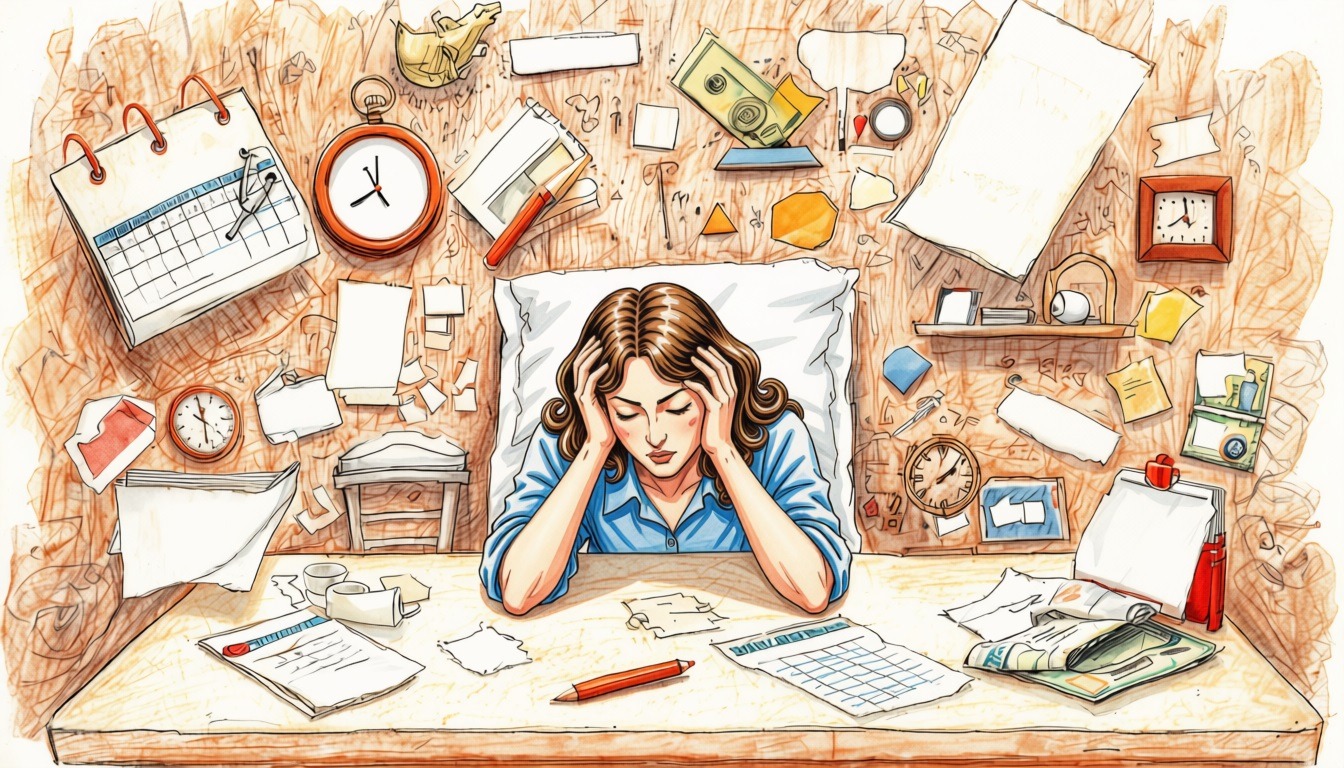
Picture a simple moment. It is evening. You have done what you can. You sit down, and instead of softening, your body becomes alert. Your thoughts start generating urgent tasks, almost like a siren you cannot turn off. Your shoulders float up. Your jaw tightens. You scroll, clean, plan, research, rearrange. You tell yourself you are “just being productive,” but the truth is more tender.
Your nervous system is trying to prevent something.
For many women, slowness has been paired with risk at some point in life. Risk can be obvious, like past trauma, unsafe relationships, harassment, or violence. Risk can also be subtle, like being criticized when you rested, being punished for taking up space, or learning that being “easy to manage” kept you safer. When the body has repeatedly linked calm with consequences, it makes perfect sense that stillness feels suspicious.
The world also gives women real reasons to stay alert. Global public health reporting shows how widespread violence against women is, including intimate partner violence and sexual violence, and those realities shape how many women move through spaces and relationships.
So if slowness spikes your anxiety, your body may be responding to lived evidence, not irrational fear.
Why Women are especially likely to fear being slow
There are two forces that often overlap.
The first force is responsibility pressure. Many women carry a constant mental load: remembering, anticipating, coordinating, smoothing, monitoring. When life is full, your nervous system learns that slowing down means something might drop. Not because you are dramatic, but because you have experience.
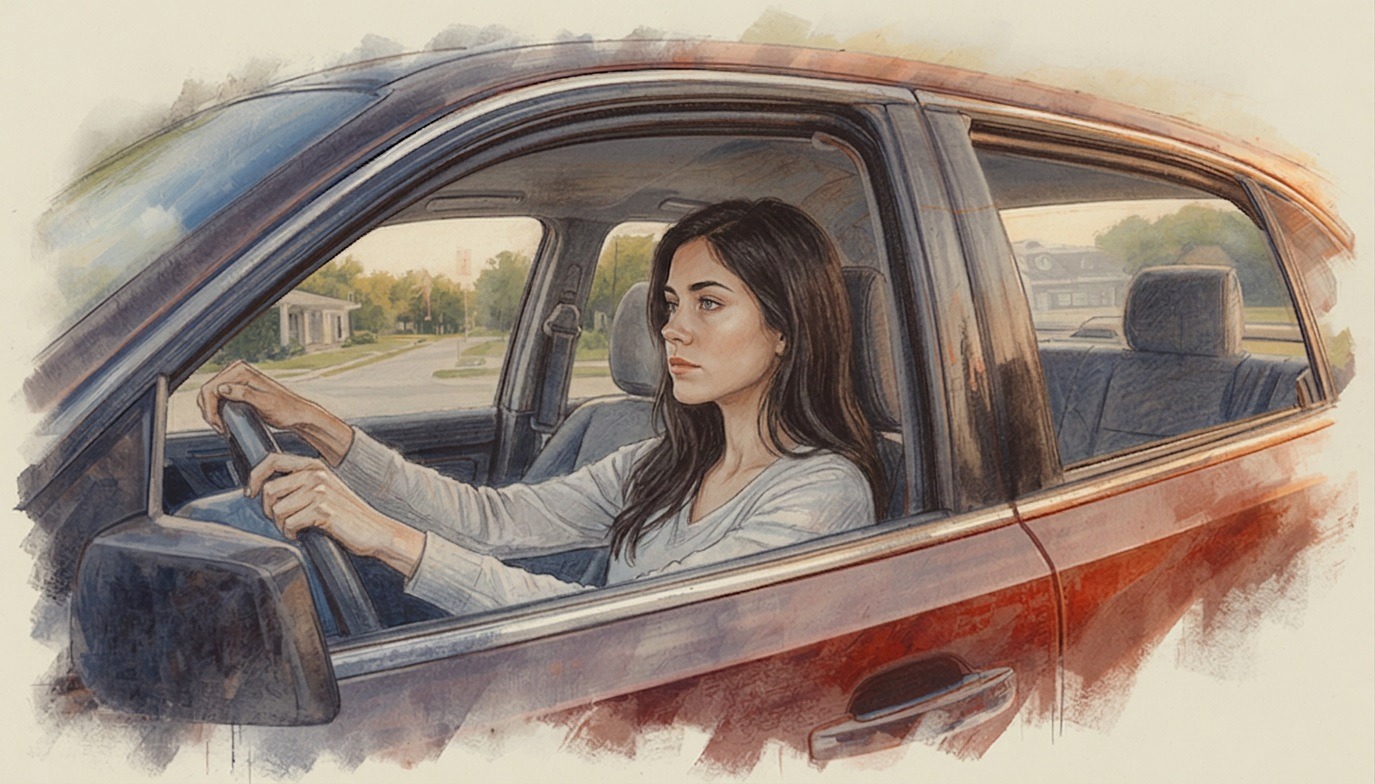
The second force is safety conditioning. Many women learn early that being vigilant reduces risk. In public, in relationships, even online, women are more likely to manage threats that others rarely have to think about. Programs and reports focused on women’s safety in public spaces reflect how common harassment and fear of violence can be, and how deeply this affects daily behavior.
There is also a structural layer: time poverty. UN Women has described time poverty as a meaningful dimension of well being with implications for gender equality, because when you have limited time due to unpaid work and care responsibilities, rest becomes a luxury your body does not trust.
When you combine time pressure with safety pressure, you get a nervous system that treats slowness as exposure.
A nervous system translation, in plain human language
Your body is built to protect you. If it senses safety, it can settle into a state where digestion, restoration, and connection work well. If it senses danger, it mobilizes energy: faster thoughts, tension, scanning, urgency. If danger feels overwhelming or inescapable, it can also drop into shutdown or numbness as a form of protection.
Polyvagal informed therapy is one framework that helps people understand these shifts and build safety cues gradually, rather than trying to force relaxation on a system that does not trust it yet.
Trauma and stress research also links post traumatic symptoms with changes in autonomic nervous system functioning, including patterns of hyperarousal and altered regulation.
Here is the core idea that changes everything: your body does not choose calm because your mind says it should. Your body chooses calm because it has enough evidence that calm is safe.
So our work is not to “relax harder.”
Our work is to build safety evidence.
The speed as safety loop
When slowness feels unsafe, speed becomes a strategy. It may not feel like a strategy. It might feel like personality. But often it follows a predictable loop.
Trigger → Threat story → Body alarm → Speed behavior → Short relief → Long cost
The short relief is real. Speed creates the sensation of control. But the long cost is also real: the nervous system never learns that stillness can be survivable.
| Part of the loop | What it can look like in real life | What your body is trying to do |
|---|---|---|
| Trigger | quiet evening, unanswered message, messy room, free hour | detect risk early |
| Threat story | “If I slow down, I will fall behind” or “Something bad will happen” | create urgency for protection |
| Body alarm | tight chest, racing thoughts, restless legs, scanning eyes | mobilize energy |
| Speed behavior | cleaning, planning, scrolling, working, fixing others | restore control quickly |
| Short relief | brief calm, sense of order, dopamine hit | reward the strategy |
| Long cost | burnout, resentment, chronic tension, insomnia | keep the nervous system stuck |
This loop is common in high time pressure lives, where it is difficult to feel spacious enough to rest, which time poverty research and policy reports highlight as a serious wellbeing issue.
A new frame: Slowness is a capacity, not a lifestyle
Some wellness content treats slow living like an aesthetic. Beautiful mornings, perfect routines, candlelit baths. If your nervous system fears slowness, that aesthetic can become another performance standard.
Instead, think like this:
Slowness is a capacity.
Capacity grows through repeated experiences of choice, safety, and return.
When you build slowness as capacity, you stop asking, “Why can’t I relax like other people?” and start asking, “What would make five percent more calm feel safe today?”
That question is kind. It is also strategic.
The slow safety ladder
If your system fears slowness, the goal is not a dramatic leap into long meditation. The goal is gradual exposure to safe stillness, like teaching your body a new language one phrase at a time.
| Ladder rung | What you do | Time | What it teaches your body |
|---|---|---|---|
| 1 | Pause with eyes open, feet on the ground, look around slowly | 10 to 20 seconds | stillness with orientation is safe |
| 2 | Do one slow action, like drinking water with full attention | 60 seconds | slowing down does not mean losing control |
| 3 | Rest with a clear container, set a timer, hand on chest | 2 minutes | rest has edges, I can return |
| 4 | Spacious calm with gentle structure, soft music, journaling | 10 minutes | feelings can rise without flooding me |
| 5 | Unstructured time with relational safety, co regulation nearby | 20 minutes | calm is easier with connection |
Polyvagal informed work often emphasizes building regulation through cues of safety, rhythm, and connection, not willpower alone.

The three proofs Your body needs before it will accept calm
Many women try to rest and feel worse because they skip these proofs.
Proof one: I have choice
Choice is safety. If you tell yourself “I must relax,” your body hears pressure. If you tell yourself “I can pause for one minute and stop if I need to,” your body hears agency. Agency lowers threat.
Proof two: I can come back
A common fear is that slowing down will spiral into collapse, sadness, or lost time. So we practice returning. Pause, then stand up. Rest, then wash your face. Calm becomes safer when you repeatedly prove you can re enter action.
Proof three: I will not be punished
Punishment can be external, like criticism or conflict. Punishment can be internal, like shame. If every rest is followed by self attack, your nervous system treats rest as threat. Research on self compassion interventions shows beneficial effects on outcomes like self criticism, stress, anxiety, and depressive symptoms, which can support a kinder internal climate where rest is not punished.
The calm receipt method, a nonconventional practice that actually works
Here is a practice that feels almost silly, yet it is powerful: collect calm receipts.
A calm receipt is a tiny piece of evidence that slowness did not cause catastrophe.
After any small slow moment, you write one sentence that proves safety.
Examples of calm receipts can sound like this: I sat for two minutes and nothing bad happened. I stopped answering messages for ten minutes and the world stayed intact. I ate slowly and I did not lose control. I rested and I did not become lazy, I became clearer.
This is not positive thinking. This is nervous system conditioning. Your body trusts evidence more than affirmations.
Keep calm receipts in a notes. Return to it when you feel the urge to speed up, and let your nervous system read its own history.
When silence is not soothing: Rhythmic calm instead
If silence makes you scan for danger, you do not need silent calm. You need rhythmic calm.
Rhythmic calm is calm with a pulse: predictable, repeating, gentle. Many nervous systems feel safer when calm is structured by rhythm.
Breathing is one of the simplest rhythms, and research reviews have examined how slow breathing practices can influence autonomic function and emotional regulation.
Try this approach in a way that avoids pressure. Sit upright. Keep your eyes open. Inhale normally, then let the exhale be a little longer, as if you are fogging a mirror slowly. Do not chase perfect technique. Your only goal is to signal to your body: I am not running.
If you want a simple count, use this shape: inhale for a comfortable count, then exhale for a slightly longer count. That “slightly longer” matters more than the exact numbers.
A map for what shows up when You slow down
Women often judge themselves for the reaction slowness triggers. Instead of judging, map it. Mapping turns fear into data.
| What you notice when you slow down | What it often means | A first response that feels safe |
|---|---|---|
| restlessness, irritation, urgency | mobilization, fight or flight energy | add gentle movement, then slow exhale |
| numbness, heaviness, blank mind | protective shutdown, overload | add warmth, texture, simple sensory cues |
| racing thoughts about others’ needs | caretaking as safety strategy | name one boundary, then one self need |
| sudden sadness, memories, tears | delayed emotion finally has space | shorten the slow moment, add support |
Trauma related reviews discuss how autonomic patterns can shift across arousal states, and why regulation often means building flexibility rather than forcing a single calm state.
Calm that respects Women’s safety reality
Sometimes your nervous system is correct. Sometimes you are in a space that is not fully safe. In that case, the goal is not to convince yourself everything is fine. The goal is to build calm with protective intelligence.
This is where many self care articles get it wrong. They treat calm as if the world is always safe. But global health and policy reporting shows that violence against women remains widespread and that safety in private spaces is not guaranteed for many.
So here is a grounded principle:
Calm is not denial. Calm is resourcing.
Resourcing means building inner steadiness while also respecting real world risk, using boundaries, support, and practical safety measures when needed. If you are currently in danger or fear violence at home or in a relationship, reaching out to local support services and trusted people is an act of calm, because it moves you toward safety.
The slow permission protocol, designed for Women who panic when resting
This is a short protocol that builds the three proofs: choice, return, and no punishment.
First, choose a “low stakes” time. Not when you are already overwhelmed.
Then do this:
You sit upright, eyes open. You look around slowly and name three neutral objects in your mind. You let your shoulders drop one millimeter. You exhale a little longer than you inhale. You say one believable sentence like “In this exact minute, I am allowed to pause.” You stop after ninety seconds. You stand up and take one intentional action, even tiny, like drinking water or opening a window.
You are training your nervous system to associate slowness with orientation, agency, and successful return.
How to stop punishing Yourself for resting
Many women do not fear rest itself. They fear what comes after rest: the shame voice, the inner audit, the mental list of what they should have done.
Self compassion is not indulgence. It is an internal environment where your nervous system does not expect attack. Meta analyses of self compassion related interventions suggest meaningful reductions in self criticism and improvements in distress related outcomes compared with controls, supporting the idea that a kinder inner voice can change how safe the body feels.
A practical way to humanize this is to use the “friend sentence.” When you notice shame after resting, ask: what would I say to a friend who took a ten minute break because she was exhausted? Then say a version of that sentence to yourself, not perfectly, just honestly.
This is not about becoming endlessly gentle. It is about becoming nonviolent with yourself.
Boundary calm: Scripts that protect Your nervous system
If you are always reachable, your body learns it must stay alert. Boundaries are not only relational tools. They are nervous system safety tools.
Here are scripts you can use without overexplaining, with a body cue that helps your system believe you.
| Situation | Script | Body cue to anchor safety |
|---|---|---|
| someone expects instant replies | “I will reply when I can, I am offline for a while.” | hand on chest, slow exhale before sending |
| you feel pulled into fixing | “I care about you, and I trust you to handle this.” | relax jaw, unclench tongue |
| you need protected rest | “I am resting now. If it is urgent, call me.” | feet on floor, look at one steady object |
| you feel guilt for saying no | “No is a complete sentence for my nervous system.” | soften shoulders, lengthen exhale |
Women’s safety and wellbeing work often highlights that reducing vulnerability is not just internal, it includes supportive environments and boundary setting in daily life.

A seven day slow permission plan that builds evidence fast
This is intentionally small. If it feels too easy, that is a feature. You are building proof, not performance.
| Day | Focus | Your slow practice | Your calm receipt sentence |
|---|---|---|---|
| 1 | Orientation | 3 times: 20 second pause, eyes open, look around | “I paused and I stayed safe.” |
| 2 | Return | 2 times: 90 second protocol, then stand and drink water | “I rested and I came back.” |
| 3 | Rhythm | 3 minutes: slow exhale practice with soft music | “My body can follow a gentle rhythm.” |
| 4 | Sensory safety | 5 minutes: warm tea, texture, scent, full attention | “Slowness can feel warm, not risky.” |
| 5 | Boundary | one small boundary, one small rest | “I protected my calm without apologizing.” |
| 6 | Relational calm | rest near someone safe or text someone supportive | “Connection makes calm easier.” |
| 7 | Spaciousness | 10 minutes: unstructured time with a timer | “Time can be open and I can handle it.” |
Breathing and paced respiration research supports the idea that slow breathing can influence parasympathetic activity and emotional regulation, which can complement this kind of gradual calm training.
The hidden reason some Women cannot slow down: Visibility fear
Here is a truth many women rarely say out loud: sometimes slowness feels unsafe because it feels like being seen.
When you are slow, you are more noticeable. You take up time. You take up space. You are not rushing to accommodate others. If you were taught that safety comes from being pleasing, useful, quiet, or unproblematic, then slowness can trigger a deep alarm: I might be judged. I might be resented. I might be targeted.
This is why building calm often requires not only nervous system practices, but also permission to be a full human woman.
Not a perfect woman. A full one.
Calm in motion: A better option than forcing stillness
If stillness is too much right now, use calm in motion. Calm in motion is gentle, repetitive movement that tells your body it is allowed to discharge energy without escalating.
Examples include walking slowly while noticing the sky, rocking slightly while seated, stretching your hands and wrists, rolling your shoulders in a small circle, washing your face with warm water in a deliberate way. You are not “working out.” You are giving your nervous system a bridge from mobilization to settling.
Trauma and autonomic research suggests that regulation is often about returning toward flexibility, and movement can be part of that return for some people.
How to know You are making progress
Progress here is not “I feel calm all the time.” Progress is subtler and more real.
You might notice that your shoulders drop faster after tension. You might notice you can sit for one minute without panicking. You might notice you do not reach for your phone immediately when silence appears. You might notice you can rest without immediately paying for it with shame.
Progress often looks like increased choice.
Choice is a nervous system milestone.
When You may need more support than self guided calm
Some fear of slowness is simply chronic stress. Some is trauma. Some is ongoing unsafe context. If slowing down triggers intense panic, dissociation, flashbacks, or a sense of danger that feels unmanageable, you deserve support that is not just an article.
Trauma informed therapy approaches, including those that integrate autonomic regulation frameworks, can be especially helpful for learning safety cues with guidance.
If you are in immediate danger or fear violence, consider contacting local emergency services or local organizations specializing in domestic violence support. You do not have to prove you are “bad enough” to seek help. Wanting safety is enough.
A note for the Woman who is tired of being fast
If you have lived as the alert one for a long time, slowness can feel like betrayal. Like you are dropping your guard. Like you are being irresponsible. Like you are tempting fate.
But calm is not carelessness.
Calm is your body learning that it can exist without bracing.
You do not have to jump into stillness. You can build it, step by step, with proof your nervous system believes. You can create calm receipts. You can practice rhythmic calm. You can use boundaries as safety. You can move slowly without becoming unsafe. You can let your body learn, over time, that rest is not a trap.
Slow can become safe.
Not as an idea, but as a lived experience.
Related posts You’ll love
- Alcohol as permission: Why Women use it to allow desire, anger, or rest (and how to reclaim those rights sober)
- Work anxiety explained: Why Your calm disappears the moment You walk in
- Decompression between roles: The powerful secret to a calmer, happier life
- Why You feel more calm alone (and what that means for Your relationships)
- How to stop letting tomorrow steal today’s peace
- The chameleon syndrome: Why so many Women shape-shift to survive (and how to feel safe being Yourself)
- 8 exercises to overcome the fear of being labeled ‘too ambitious’ as a Woman

FAQ: Calm for Women who feel unsafe being slow
-
Why does slowing down feel unsafe for some women?
For many women, “slow” gets linked to vulnerability. If your life experience taught your body that being alert prevents criticism, conflict, or danger, your nervous system may treat rest as exposure. This reaction is learned protection, not laziness.
-
Is it normal to feel anxious when I finally have time to relax?
Yes. When the pressure drops, your body sometimes releases stored stress as restlessness, racing thoughts, or the urge to “do something.” Calm often arrives in stages, and neutrality is a valid first goal.
-
What is time urgency anxiety, and how is it connected to calm?
Time urgency anxiety is the persistent feeling that you are behind, late, or not doing enough, even when there is no immediate deadline. It keeps your nervous system in a mobilized state, which can make quiet moments feel uncomfortable rather than soothing.
-
How can I make my nervous system feel safe enough to rest?
Start with tiny, “believable” pauses and build evidence. Keep your eyes open, orient to your environment, and use short timed rests so your body learns there is a clear beginning and end. Safety grows through repetition, not force.
-
What is the fastest way to calm down when slowing down triggers panic?
Use a short grounding reset: look around and name three neutral objects, press your feet into the floor, and lengthen your exhale slightly for several breaths. Then do one small “return action” like drinking water to prove to your body you can pause and come back.
-
Do I have to meditate to feel calm?
No. If stillness feels unsafe, choose rhythmic calm instead. Gentle movement, slow walking, humming, soft music, warm tea rituals, or paced breathing can be more tolerable and often more effective for anxious nervous systems.
-
Why do I feel guilty when I rest?
Guilt often comes from internalized expectations to be useful, available, and productive. If rest was historically criticized or treated as “selfish,” your nervous system may anticipate punishment. Practicing self-compassion and setting small boundaries can reduce the guilt-response over time.
-
Can I be productive and still choose calm?
Yes. Calm is not the same as doing nothing. Calm means your body isn’t in constant threat mode, which often improves focus, decision-making, and emotional steadiness, making your productivity more sustainable.
-
What if I live in an environment that is not fully safe?
Your body may be responding accurately to real risk. In that situation, calm should include protective intelligence: boundaries, support, safety planning, and reaching out to trusted people or local services. Nervous system practices can help, but they should never replace real-world safety.
-
How long does it take to retrain a nervous system that fears slowness?
There is no single timeline, but most people notice small shifts when they practice consistently in tiny doses. Think in weeks for early changes (less intensity, faster recovery) and months for deeper capacity (more ease with unstructured time). The key is repeatable, low-pressure practice.
-
Why do emotions or memories show up when I slow down?
Slowness can create space for feelings that were postponed during survival mode. That does not mean you’re getting worse; it often means your system finally has enough room to process. If it feels overwhelming, shorten the pause and add support.
-
What are gentle daily practices for women who feel unsafe being slow?
Try micro-pauses with eyes open, a two-minute timed rest, rhythmic breathing with longer exhales, calm-in-motion like slow walking, and one boundary that protects your availability. The goal is not perfect calm, but safer slowness.
Sources and inspirations
- Zaccaro, A., (2018). How Breath Control Can Change Your Life: A Systematic Review on Psycho Physiological Correlates of Slow Breathing. Frontiers in Human Neuroscience.
- Dana, D. (2018). The Polyvagal Theory in Therapy: Engaging the Rhythm of Regulation. W. W. Norton.
- UN Women (2019). World Survey on the Role of Women in Development 2019.
- Wakelin, K. E, (2021). Effectiveness of self compassion related interventions on self criticism: A systematic review and meta analysis.
- UN Women (2021). Safe Cities and Safe Public Spaces Global Results Report 2017 to 2020.
- Siciliano, R. E., (2022). Autonomic Nervous System Correlates of Posttraumatic Stress Symptoms in Youth: Review and evidence synthesis.
- Beutler, S., (2022). Trauma related dissociation and the autonomic nervous system: A systematic review. European Journal of Psychotraumatology.
- Laborde, S., (2022). Effects of voluntary slow breathing on heart rate variability: systematic review and meta analysis. Neuroscience and Biobehavioral Reviews.
- Han, A., (2023). Effects of Self Compassion Interventions on reducing psychological distress: meta analytic evidence.
- Carmichael, F., (2024). Time poverty and gender in urban sub Saharan Africa. Journal of International Development.
- World Health Organization (2024). Violence against women: Fact sheet.
- UN Women (2025). Facts and figures: Ending violence against women.
- World Health Organization (2025). Lifetime toll: 840 million women faced partner or sexual violence.
- UN Women (ongoing page, accessed 2026). Creating safe and empowering public spaces with women and girls.


Leave a Reply