
Table of Contents
1. When trauma speaks, ritual listens
There are moments when words stop working. You know the ones — when your chest tightens, your breath catches, and your mind floods with sensations you can’t quite name. Logic dissolves, and the body takes over. That’s the language of trauma. It doesn’t always speak in memories or thoughts; often, it whispers through tension, insomnia, panic, or numbness.
And if you’ve ever tried to “talk yourself out of it,” you know it rarely works. The mind argues that you’re safe, but the body insists otherwise. That’s because trauma isn’t just stored in memory — it’s encoded in the nervous system. It lives in muscle, heartbeat, breath.
Now imagine something different. Instead of trying to reason your way through distress, you move through it. You light a candle with intention. You wash your hands slowly, symbolically letting go of the day. You hum softly, feeling your chest vibrate until your breath steadies again. These are small, sacred acts — rituals — and they can quietly reshape how your nervous system responds to the world.
Rituals aren’t about religion or superstition. They’re about rhythm, repetition, and meaning — three things the traumatized brain craves. When life feels chaotic, ritual provides a container. It says to your body, Here is something predictable. Here is something safe.
In this article, we’ll explore how rituals can calm trauma responses, restore inner safety, and reconnect you with your own sense of sacred power. You’ll learn how science explains their soothing effect on the nervous system, and how to design rituals that fit your story — whether you prefer stillness or movement, solitude or connection.
Take a breath before we begin. Let this reading itself become a kind of ritual — a slow return to presence.
2. Trauma responses: Why the body still thinks it’s in danger
Trauma doesn’t end when the event ends. It ends when the body finally receives the message that it’s safe — and sometimes, that message gets lost for years.
What we call trauma responses — hypervigilance, dissociation, panic attacks, emotional shutdown — are the body’s learned ways of staying alive. They aren’t character flaws or weaknesses; they are overactive survival strategies. When something terrifying or overwhelming happens, the nervous system switches into defense mode: fight, flight, freeze, or fawn. These mechanisms were once lifesaving. The problem is, the brain can’t always tell that the danger is over.
Even after years have passed, your body might still tense at the sound of raised voices, your stomach may twist when someone steps too close, or your breath may shorten in a crowd. The trauma response loop keeps firing. Logic can’t switch it off, because logic doesn’t live where trauma does — it lives in the neocortex, while trauma is stored in the subcortical brain and body (van der Kolk, The Body Keeps the Score, 2014).
That’s why people often feel frustrated when traditional affirmations or talk therapy alone don’t bring relief. Healing trauma requires more than cognitive understanding. It requires somatic safety — a felt sense of calm that tells the body it’s okay to exhale.
This is where rituals come in. A ritual is a repeated, intentional act that connects meaning with movement. It can be as simple as a morning tea ritual that steadies your day, or as profound as a full moon release ceremony where you symbolically let go of what once hurt you. In both cases, the body participates in safety.
Rituals speak the same language as trauma — the language of rhythm, pattern, and sensory experience. They reach the body where logic cannot, teaching the nervous system that not every repetition equals danger, that predictability can mean peace.
So when your trauma responses flare — the racing heart, the sudden freeze, the numbness — think of them not as enemies, but as overprotective guardians who haven’t realized you’ve already survived. Rituals become your way of gently retraining them.
3. The science of ritual: Why Your brain finds comfort in repetition
You don’t have to believe in magic for rituals to work. Neuroscience is on their side.
3.1 Rituals calm uncertainty and lower anxiety
A 2018 study from Harvard Business School found that performing even arbitrary rituals before stressful events significantly reduced physiological anxiety and improved performance (Brooks, Organizational Behavior and Human Decision Processes). Participants who performed a simple, repetitive act — like drawing patterns or lighting a candle — showed measurable reductions in heart rate and cortisol.
The key wasn’t what they did, but that they did it with intention. The brain perceives ritualized action as structure amid chaos. When your life feels unpredictable, rituals create a sense of control — an anchor in uncertainty.
3.2 How the nervous system responds
When you repeat meaningful gestures — lighting a candle, touching a talisman, or taking slow synchronized breaths — your parasympathetic nervous system activates. This branch of your autonomic system is responsible for rest, digestion, and healing. Studies in trauma-sensitive mindfulness and somatic therapies show that repetitive, intentional movement can stimulate the vagus nerve, lowering heart rate and supporting regulation (Badola, 2025).
In essence, ritual gives the body a familiar melody to follow, helping it shift from survival to safety.
3.3 Symbolic meaning activates higher brain regions
Symbolism is what transforms repetition into ritual. Neuroscientific research suggests that when you assign meaning to an action, the prefrontal cortex — the center of self-reflection and interpretation — collaborates with emotional regions like the amygdala. This interaction helps reframe threat signals into manageable sensations.
Think of it this way: if trauma fragments your narrative (“something happened and I can’t make sense of it”), ritual helps restore it (“I do this because it represents safety, release, renewal”). Over time, this narrative coherence strengthens emotional resilience.
3.4 Rituals as social regulation
Many rituals — from communal meditation to collective chanting — also engage social safety systems. Research in social neuroscience shows that synchronized movement (like walking, singing, or breathing together) increases oxytocin, the bonding hormone linked with trust and calm (Hobson et al., 2018). Even if practiced alone, rituals can tap into an ancestral sense of belonging, echoing the communal rhythms humans evolved around.
3.5 The placebo — or the power of belief
Skeptics sometimes call ritual a placebo. But the placebo effect is not “fake”; it’s the mind’s ability to generate real physiological change based on expectation. When you perform a ritual with belief and focus, your brain releases neurochemicals that mirror the effects of external soothing. The difference is, you are both healer and healed.
This is the science behind self-created rituals: you are teaching your nervous system that predictability and meaning exist again — that chaos no longer rules your inner world.

4. The Language of ritual: Finding Your calming style
Not every ritual looks the same, nor should it. Just as trauma manifests uniquely in each body, the ritual that helps calm your trauma responses must feel personal, intuitive, and safe. Think of rituals as languages — some people speak through movement, others through stillness, others through sound or touch. The goal is not perfection, but resonance.
4.1 The anatomy of a ritual
A ritual always contains three elements: intention, action, and meaning.
- Intention sets the emotional tone — what do you seek from this act? Safety? Release? Reconnection?
- Action is the behavior or gesture — lighting a candle, writing a word, washing your hands.
- Meaning is the bridge — why this action matters to you.
When all three align, you create coherence. Your mind and body begin to associate that repeated act with calm. In time, the ritual itself becomes a neural shorthand for peace.
4.2 Micro-rituals: anchors in everyday moments
Micro-rituals are small acts you can perform in under a minute. They’re ideal for interrupting spirals or grounding during triggers. You might touch a necklace and whisper, “I’m safe now.” You might exhale through pursed lips when anxiety rises. You might light incense at your desk before logging into a stressful meeting.
The power lies not in grand gestures, but in consistency. Each repetition reinforces predictability — the opposite of chaos. Over time, your body begins to anticipate calm when it senses the first cue of your ritual.
4.3 Somatic rituals: speaking to the body directly
For those whose trauma responses are highly physical — trembling, tightness, dissociation — somatic rituals help the body complete what it once couldn’t. Slow, rhythmic motion (rocking, shaking, stretching) allows trapped energy to release safely.
For instance, you might create a morning ritual where you stand barefoot, roll your shoulders, sway gently, and breathe into your belly. Pair this with a grounding phrase like, “I am home in my body.”
Movement rituals work because they bypass the analytical mind and signal to your nervous system that it can soften without danger.
4.4 Symbolic rituals: meaning made tangible
Humans have always used symbols to translate emotion into matter. That’s why symbolic rituals — lighting a candle, placing stones, writing intentions on paper — can hold enormous therapeutic value. When you perform a symbolic act, you give the invisible (fear, grief, guilt) a visible form that can be witnessed, transformed, or released.
In trauma recovery, this is revolutionary. You no longer carry everything internally. You let the act carry part of the weight.
4.5 Communal and relational rituals: healing through togetherness
While solitary rituals can be deeply restorative, trauma often isolates. Sharing a ritual with others — a circle of breathwork, group meditation, or collective song — reawakens the brain’s social safety system. The synchronization of sound, breath, or gaze creates a physiological sense of belonging.
For survivors of relational trauma, this can be profound. The body learns that connection no longer equals danger — it can equal peace.
4.6 Nature-based rituals: grounding through the elements
The earth itself can be your co-regulator. Simple acts like sitting under a tree, touching running water, or burying a symbolic object in soil all signal to the nervous system that you are part of something vast and stable. Nature rituals are especially powerful for those who feel disembodied or “out of time.” The ground, quite literally, becomes your grounding.
5. Designing personal trauma-calming rituals
Now that you understand the anatomy of ritual, it’s time to craft one that’s uniquely yours. This process is less about “doing it right” and more about listening inward. You are not inventing something artificial; you’re giving form to what your nervous system has always needed: safety, repetition, meaning.
5.1 Begin with a safety map
Before you design your ritual, take a moment to reflect on what safe feels like for you.
- Is it warmth, softness, quiet, light?
- Is it movement or stillness?
- Is it being alone or being witnessed?
Write down sensory details — colors, textures, sounds — that help you feel grounded. Your ritual should include at least one of these elements.
5.2 Choose your anchor gesture
Pick one anchor gesture — something small and repeatable that you can always return to, even in distress. It might be:
- Placing your hand on your heart and taking a slow breath
- Whispering a grounding phrase
- Touching a symbolic object like a stone or necklace
- Stretching your arms outward and releasing tension
This becomes the heart of your ritual — the move your body will associate with calm.
5.3 Build layers of meaning
Once your anchor feels natural, add symbolic or sensory layers that feel authentic. For example:
- Elemental: include fire (a candle), water (a bowl), earth (a plant), air (deep breath).
- Intentional: pair your gesture with a phrase such as “I release what I no longer carry.”
- Sensory: include a scent, a song, or a texture that comforts you.
You’re teaching your senses that peace is multisensory — not abstract.
5.4 Define timing and structure
Consistency helps rituals imprint in your nervous system. Choose when to practice: perhaps at sunrise, before sleep, or right after moments of overwhelm. You might start and end the ritual with a small act of acknowledgment — lighting and extinguishing a candle, saying “thank you,” or writing one word of reflection.
5.5 Keep it flexible
Your ritual is a living organism, not a law. Some days it will feel nourishing; others, distant. That’s okay. Let it breathe. The goal is regulation, not rigidity.
5.6 Record your evolution
Keep a small notebook beside your ritual space. After each session, jot down sensations, emotions, or imagery that arose. Over time, you’ll see patterns: what works, what feels stale, when your body starts to soften more quickly. That awareness is the essence of self-regulation.
6. Rituals in practice: From symbol to somatic peace
Now let’s move from theory into lived practice. Below are narrative examples of trauma-calming rituals. Rather than giving you step-by-step instructions, let’s explore how each ritual feels from the inside — the emotional texture that makes it effective.
6.1 The candle and the breath
Imagine it’s evening. You’ve had a long, overstimulating day. You dim the lights, light a single candle, and watch the flame flicker. For a few breaths, you simply stare — letting your vision soften. You inhale deeply through your nose, exhale through your mouth, synchronizing your rhythm with the flicker’s pace.
As you breathe, you whisper: “This light stays. The fear fades.”
You don’t rush. You stay with the rhythm until your shoulders drop. Slowly, the part of your brain that was racing begins to follow the flame’s stillness. When you blow out the candle, you imagine exhaling the day’s tension. The flame becomes a metaphor your body understands: chaos into calm, energy into rest.
6.2 The stone and the river
This ritual belongs to those who carry trauma in their hands — gripping, clenching, always ready to defend. You take a smooth stone, walk to running water (or visualize it if none is near), and hold the stone against your palm. Feel its weight.
You whisper the words you’ve carried unspoken: “I couldn’t let go because I thought I had to hold on.” Then you release the stone into the flow. Watch the ripples expand outward. You’ve transferred something intangible — tension, guilt, memory — into matter, and allowed the earth to transform it.
In that moment, your body registers release as something physical. That’s how somatic rituals work: they make freedom tactile.
6.3 The circle of presence
Some rituals are meant to be shared. In a circle of trusted friends or a support group, you each hold a small candle. One by one, you speak a word that represents what you need — “peace,” “courage,” “forgiveness.” As each person speaks, everyone else inhales together, a soft chorus of shared breath.
This simple synchronization activates your social nervous system — the same system that trauma once taught you to distrust. You feel your heart rate slow, your chest expand, your isolation dissolve. Connection becomes safe again.
6.4 The nightly release
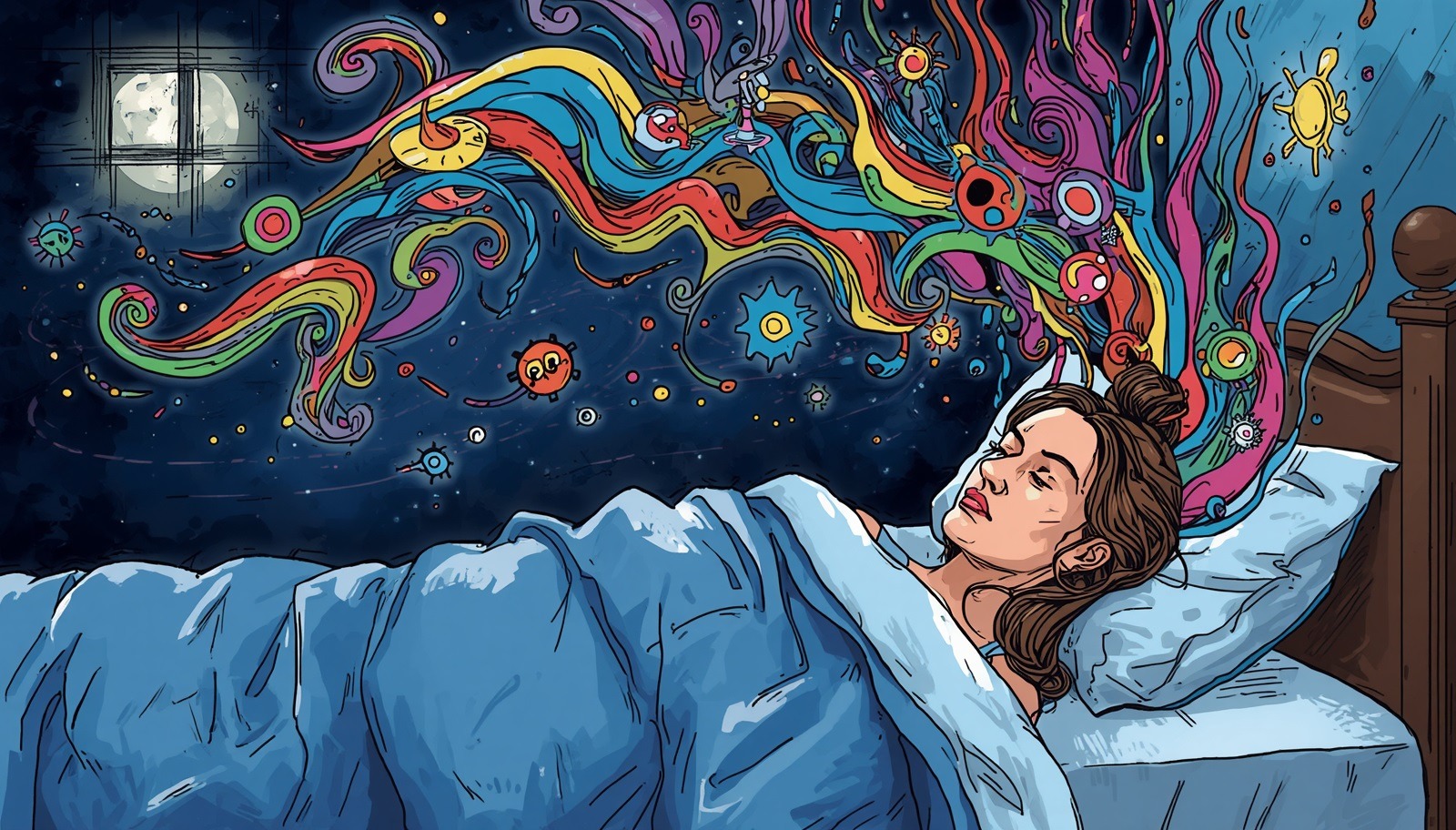
For those whose trauma responses flare at night — racing thoughts, hypervigilance, restless limbs — bedtime rituals can become medicine. Before sleep, you might write three sentences: one thing you felt, one thing you learned, one thing you release. Then you close the notebook, place it under your pillow, and whisper, “Tomorrow is another chance.”
The body learns that endings can be gentle. The act of writing and closing signals closure, giving your nervous system permission to rest.
These examples share one truth: rituals are not about pretending pain never happened. They are about giving pain a rhythm, a container, a place to rest. Every repetition teaches your nervous system that you are no longer helpless — you are an active participant in your healing.

7. Rituals and professional care: When inner practice meets outer support
Healing trauma often requires a web of support — not just self-guided practices, but safe professional containers that help you hold what arises. Rituals are not a replacement for therapy, medication, or medical care. They are companions: deeply personal tools that extend what you cultivate in therapy into your everyday life.
7.1 Rituals as stabilizers in trauma-informed therapy
In trauma recovery, stabilization always precedes deeper processing. Before you revisit painful memories, you need reliable tools to help your nervous system stay within its window of tolerance — that optimal zone where you can feel emotions without being overwhelmed.
Rituals make excellent stabilization anchors. When practiced regularly, they become muscle memory for calm. Therapists working within phase-based trauma models often encourage grounding practices between sessions — brief acts like touching a grounding object or performing slow, rhythmic breathing. Transforming those into rituals adds predictability and symbolic safety to the process.
If you’re in therapy, talk with your practitioner about your rituals. A trauma-informed therapist will likely support and help refine them, ensuring they align with your treatment goals and don’t unintentionally trigger distress.
7.2 Bridging the gap between therapy sessions
One of the hardest moments in healing is the space between therapy sessions — when insights are raw but integration has just begun. A well-chosen ritual can help carry therapeutic work into daily life.
For example, after processing a painful memory, you might close your session by lighting a candle at home and sitting in silence for a few minutes. This ritual marks the transition from “therapy space” to “home space,” signaling to your body that the work is done for today. Over time, your nervous system learns that healing can have edges — beginnings and endings — which fosters safety and containment.
7.3 Knowing when ritual isn’t enough
While rituals can powerfully support regulation, they have limits. If you notice that your distress is increasing — if flashbacks intensify, panic attacks worsen, or self-harm urges arise — that’s a sign to reach out for professional support.
Rituals work best when they complement evidence-based care, not replace it. Think of them as a bridge, not the entire road. The most empowered healing journey combines personal agency with professional guidance — a partnership of inner and outer care.
7.4 Cultural humility and spiritual sensitivity
It’s important to acknowledge that many rituals originate in spiritual or ancestral traditions. When exploring rituals, approach with cultural humility. Honor where practices come from, and adapt them respectfully. Healing rituals don’t need to borrow from someone else’s lineage — they can arise from your own lived experience. Even something as simple as pouring tea with intention can become sacred.
8. Pitfalls and adaptation: When rituals lose their rhythm
Like any healing practice, rituals can evolve, stagnate, or even backfire if not approached mindfully. Understanding common pitfalls keeps your ritual life fresh, ethical, and emotionally safe.
8.1 The trap of perfectionism
If you come from trauma, you may unconsciously approach healing with the same rigidity that survival demanded. You might think, If I don’t do it exactly right, it won’t work.
This is an old wound in disguise. Rituals lose power when they become obligations instead of invitations. Healing thrives on flexibility. Some days your ritual will feel profound; others, mechanical. That’s okay. Consistency matters more than intensity.
8.2 Emotional flooding or overexposure
Rituals can sometimes open emotional doors faster than expected. A symbolic release ritual, for instance, might evoke grief you didn’t anticipate. If this happens, pause. Ground yourself through breath, water, or contact with the environment. Remember: you can always modify the ritual to suit your current nervous system capacity.
The goal of ritual work is regulation, not catharsis. You don’t have to purge everything at once.
8.3 Ritual fatigue
If your ritual starts feeling dull, forced, or disconnected, it may simply need renewal. Symbols lose charge when overused. Try shifting the sensory element — use a different scent, light a different color candle, move your ritual outdoors. The nervous system loves novelty within familiarity: a small change inside a predictable frame.
8.4 Comparing your ritual to others’
It’s easy to scroll through social media and see someone’s moon altar, crystal grid, or ceremonial setup and feel inadequate. Remember: ritual is about resonance, not aesthetics. The most powerful rituals are often invisible to others — a breath in a crowded room, a quiet touch on the heart before speaking.
Your ritual doesn’t need to be Instagrammable. It only needs to work for your nervous system.
8.5 The avoidance loop
There’s a subtle danger in over-relying on rituals as a way to avoid deeper emotional work. If you notice you’re using ritual to numb, distract, or bypass — lighting candles instead of acknowledging anger, for instance — bring gentle awareness to it. Rituals are meant to support healing, not substitute for emotional truth.
You can always recalibrate: return to intention, simplify your practice, or discuss your pattern with a therapist.
9. Measuring progress and letting rituals evolve
Trauma recovery is rarely linear, and neither is ritual work. Healing unfolds like a spiral — revisiting old lessons with new depth. Tracking your progress helps you recognize growth that your mind might overlook.
9.1 Noticing nervous system shifts
Start by observing your physiological patterns. Over time, you might notice:
- You recover from triggers faster.
- Your breath deepens without effort.
- Your body signals fatigue or hunger more clearly.
- You sleep more peacefully.
These changes may seem small, but they are monumental signs of nervous system recalibration. Rituals train your body to associate repetition with safety instead of threat.
9.2 Emotional awareness and choice
As rituals take root, emotional waves may feel less like tsunamis and more like tides. You begin to notice feelings as they arise, rather than after they’ve swept through. This is emotional literacy — the foundation of self-trust.
If you journal about your ritual experiences, look for subtle progress indicators:
- Am I less afraid of stillness?
- Do I feel safer expressing emotion?
- Can I sense when I need rest or connection?
9.3 When to evolve your ritual
Every few months, reassess. Ask yourself: Does this ritual still reflect who I am becoming?
As healing deepens, the symbols that once held pain may now hold power. You might replace a ritual of release with one of gratitude. You might shift from solitary grounding to shared prayer or community gathering.
Change doesn’t mean failure. It means your nervous system has learned enough stability to explore new rhythms.
9.4 Celebrating milestones
Trauma recovery often goes uncelebrated — progress is quiet, invisible. Marking your growth through ritualized celebration restores balance. When you notice resilience (a peaceful day, a kind response to yourself, a full night’s sleep), take a moment to honor it.
You might light a candle and say, “This peace was earned.”
You might take a walk at sunrise to symbolize renewal.
You might simply breathe in gratitude.
Acknowledging progress anchors it into memory, teaching your nervous system that calm can be sustained — not fleeting.

10. The ritual of returning home to Yourself
Healing trauma is not a one-time revelation. It is a slow choreography of remembering safety — again and again. Each time you pause, breathe, light a candle, whisper an intention, or place your hand on your heart, you are retraining your nervous system to recognize home.
Rituals remind the body that peace is possible even after chaos. They whisper to the brain, You survived. You are safe now. Over time, those whispers become neural pathways — living proof that gentleness can be stronger than fear.
It’s easy to underestimate the power of repetition. But repetition is how the brain rewires. It’s how new habits form, how children learn language, how cells regenerate. Trauma is the memory of what went wrong, repeated over and over. Ritual is the memory of what can go right, repeated until it becomes truth.
When you create your ritual — whether it’s lighting incense, writing nightly reflections, or taking a mindful walk at dawn — you’re not performing something external. You’re embodying self-trust. You’re giving structure to tenderness. You’re turning healing into an art form that belongs entirely to you.
There will be days when you forget. Days when your ritual feels distant, when old fears return. That’s part of the rhythm too. Healing doesn’t ask for perfection — only return. Every return is a declaration: I am still here.
And maybe that’s the most sacred ritual of all — the act of coming back to yourself, no matter how many times you’ve left.
So tonight, before sleep, try this:
Place one hand on your chest, one on your belly. Take a slow, deep breath. Whisper softly: “I am here. I am home.”
That’s where all rituals begin. And where every healing ends!
Related posty You’ll love:
- How to calm Yourself after a conflict without suppressing
- How rainfall cleanses more than just the earth: A journey into calm, renewal, and inner healing
- The science of coloring as emotional regulation: How simple strokes calm the mind and heal the heart
- Why doodling unlocks a calmer mind: The science and soul of scribbles
- Why mountain air feels so refreshing for Your mind
- Healing exercises for mourning Your younger self: 11 trauma informed practices to grieve, reparent, and heal, FREE PDF
- Incident report: 47 applications, 0 replies, 1 nervous system crash. A trauma informed, AI era guide to job search recovery, regulation, and words that bring You back to Yourself
Frequently Asked Questions (FAQ)
-
Can rituals really help calm trauma responses?
Yes — rituals can significantly help calm trauma responses by giving the nervous system a sense of structure, predictability, and meaning. Research from Harvard Business School (Brooks, 2020) and recent trauma studies (Badola, 2025) show that repetitive, intentional acts reduce physiological anxiety and activate the parasympathetic “rest and digest” system. In simple terms: rituals remind your body that it is safe again.
-
What kinds of rituals work best for trauma healing?
The best rituals are the ones that feel authentic and calming to you. Some people prefer somatic rituals (gentle movement, breathwork, or touch), while others connect through symbolic rituals (lighting a candle, writing intentions, or cleansing with water). Nature-based rituals — like grounding barefoot on soil or sitting near trees — are also powerful for nervous system regulation.
-
Do I need to be spiritual or religious for rituals to work?
Not at all. Rituals are not limited to religion — they are simply intentional, repeated actions that give meaning to a moment. You can practice ritual entirely secularly: pouring your morning tea with mindfulness, journaling before bed, or exhaling intentionally after stress. What matters most is intention and consistency, not belief.
-
Can rituals replace therapy or medication for trauma?
No. Rituals are a supportive practice, not a substitute for therapy, medication, or medical treatment. They work best when integrated with trauma-informed care, such as EMDR, somatic experiencing, or mindfulness-based therapy. Think of rituals as emotional bridges — daily anchors that help you carry therapeutic progress into real life.
-
What if my ritual starts feeling forced or meaningless?
That’s normal. Over time, rituals can lose emotional charge if they become routine. Try refreshing your practice: change a symbol, alter the setting, or simplify your steps. You might also journal about what feels “off.” Remember — ritual should never feel like an obligation. If it starts to, pause and reconnect with your original intention.
-
Are there risks to doing trauma rituals alone?
For most people, gentle rituals are safe. However, some practices can trigger emotional flooding, especially if they involve deep symbolic release (like writing about painful memories). Always start small, and if distress rises, ground yourself — touch something solid, breathe, or contact a professional. If you have complex PTSD or active trauma symptoms, it’s wise to design rituals with a therapist’s guidance.
-
How often should I practice my ritual?
There’s no fixed rule — what matters is regularity. A short daily or weekly ritual is more effective than a long one you rarely do. Over time, the repetition trains your nervous system to associate that act with safety. You’ll notice that even thinking about your ritual begins to calm your body.
-
What’s the difference between a habit and a ritual?
A habit is something you do automatically (like brushing your teeth). A ritual adds meaning and mindfulness to that act. The difference lies in intention. When you light a candle to symbolize peace, or exhale consciously to release tension, you transform a habit into a healing ritual — a moment of connection with yourself.
-
How can I know if a ritual is really helping?
Notice your body’s feedback. Do you feel calmer afterward? Does your breath slow, your shoulders drop, your mind quiet? You might also track your responses in a journal — over weeks, you’ll likely see a reduction in intensity or frequency of trauma triggers. Subtle shifts (like sleeping better or reacting less defensively) are signs your nervous system is learning safety.
-
Can I combine different rituals together?
Absolutely. Many people blend symbolic, somatic, and nature-based rituals into a personal rhythm. For example, you might begin with slow breathing (somatic), light a candle (symbolic), and then step outside to feel the evening air (nature-based). Combining elements creates a layered experience — one that speaks to mind, body, and spirit at once.
-
How do I create a safe space for my rituals?
Choose a location that feels private and nurturing — a corner of your room, a balcony, a favorite spot in nature. Clear distractions, dim harsh lights, and include grounding elements like plants, textures, or soft music. This becomes your ritual sanctuary, a physical representation of inner safety.
-
Can rituals help with emotional numbness or dissociation?
Yes. For those who feel disconnected or numb, rituals help reawaken sensory awareness. Try using gentle tactile or sensory elements — warm tea, textured fabrics, essential oils, or grounding stones. These sensations remind your body that you are here, now. Over time, small sensory rituals help rebuild a felt sense of presence.
-
Why are rituals so effective for trauma survivors?
Because trauma is chaotic and unpredictable — and rituals are rhythmic and predictable. They restore what trauma dismantled: safety, order, and agency. Neuroscience confirms that predictable actions lower cortisol, increase vagal tone, and strengthen emotional regulation pathways. In short, rituals help you feel safe enough to heal.
-
What’s one daily ritual I can start right now?
Right now, take a deep, slow breath. As you exhale, imagine releasing a little tension. Whisper: “This breath is mine.”
Congratulations — you just performed a micro-ritual. It’s that simple. Healing begins one intentional breath at a time.
Sources and inspirations
- Badola, A., (2025). Mindfulness-Based Interventions for Psychological Trauma: An Integrative Review. Springer.
- Darby, R. J., (2023). Phase-Based Psychological Interventions for Complex Post-Traumatic Stress. ScienceDirect.
- Hobson, N. M., Schroeder, J., Risen, J. L., & Xygalatas, D. (2021). The Psychology of Rituals: An Integrative Review and Process-Based Framework. Personality and Social Psychology Review.
- Brooks, A. W., Schroeder, J., Risen, J. L. (2020). Rituals Improve Performance by Decreasing Anxiety. Organizational Behavior and Human Decision Processes.
- Orme-Johnson, D. W., (2024). Effectiveness of Meditation and Ritualized Mindfulness Techniques in Treating Post-Traumatic Stress. MDPI: Medicina.
- Kachadourian, L. K., (2021). Mindfulness as a Mediator Between Trauma Exposure and Psychological Outcomes. Frontiers in Psychology.
- Winblad, N. E.,(2020). Somatic Experiencing and Trauma Recovery: Neurophysiological Mechanisms of Regulation. Frontiers in Neuroscience.
- Operation Happy Nurse. (2024). Rituals and Trauma: The Psychology of Healing Through Repetition.
- Rituals, Religion, and Recovery. (2025). Exploring the Role of Spirituality in Mental Health Interventions. ResearchGate.
- Watkins, L. E., (2022). Treating PTSD: Advances in Emotion-Focused and Somatic Approaches. Frontiers in Behavioral Neuroscience.


Leave a Reply