
Table of Contents
Letting go as an act of love
Letting go is often misunderstood. People think it’s a single moment — a clean decision, a slammed door, an ending marked by strength. But for most women who’ve overstayed in relationships, letting go is not a moment at all. It’s a slow unwinding of emotional fibers that have been woven around another person for years.
It’s not about hate or even about closure. It’s about returning home to yourself after being emotionally entangled for so long that you’ve forgotten where your edges begin.
In therapy and somatic psychology, we now understand that relationships live not just in our minds but in our bodies. The nervous system adapts to another’s rhythm — their presence, voice, smell, habits — until even pain feels like home. So when the relationship ends, or when you’re trying to leave emotionally, your body resists. It doesn’t want to lose its familiar pattern, even if that pattern is hurting you.
That’s why these exercises are not about “moving on” quickly. They’re about moving through — through grief, craving, self-doubt, and silence — until you begin to meet yourself again with tenderness.
Letting go is not rejection. It’s a sacred remembering: that your life belongs to you.
The first detachment — Creating inner space
Before you can release someone emotionally, you have to make space for yourself to exist without them. Most women who overstay in relationships lose their inner spaciousness — their mental and emotional world becomes crowded by constant rumination, worry, or waiting.
This first exercise is deceptively simple yet profoundly powerful. It’s called the 10-Minute Reclamation.
Set aside ten quiet minutes daily. Sit somewhere safe and private. Place one hand on your heart, one on your lower abdomen.
Breathe slowly and say, either aloud or silently:
“For the next ten minutes, I belong only to myself.”
As you breathe, notice how your body reacts. Does it relax or tighten? Does your mind resist? Do thoughts about your ex arise immediately? If so, don’t fight them — just witness them like clouds passing by.
This practice isn’t about meditation in the traditional sense; it’s about reclaiming psychological real estate. Each time you do it, you re-train your body to recognize solitude as safety, not threat.
In a 2022 study published in Mindfulness and Self-Compassion Journal, researchers found that self-directed affirmations paired with somatic focus (like touch on the chest) increased emotional regulation in participants recovering from relationship trauma.
So when you say, “I belong to myself,” you are literally reprogramming your nervous system toward self-anchoring.
At first, it might feel lonely or even frightening. That’s normal. Remember: your body has been trained to associate connection with safety. You’re now teaching it a new truth — that you are your own safe place.
Grieving what You wanted, not just what You had
One of the hardest truths about letting go of a relationship you’ve overstayed in is this: you’re not only grieving what was — you’re grieving what could have been.
Most women stay too long because of potential: the fantasy of what the relationship might become if only love, timing, or healing aligned. When it ends, you lose not just the partner, but the future you were building in your mind.
This exercise is called “Two Letters and a Fire.”
Write two letters by hand.
The first one to your partner — everything you never said, the truth without restraint. Pour out the anger, longing, confusion, and love that still lingers. Don’t filter it. Let the words be messy, imperfect, human.
The second letter is to the version of yourself who stayed. Tell her what you understand now. Thank her for trying so hard, for believing in love, for hoping. Let her know she can rest now — she doesn’t have to carry the story anymore.
Then, read both letters aloud to yourself. Feel the tremble in your voice. Feel the release in your chest. And when you’re ready, burn them safely.
The fire is not symbolic revenge — it’s transformation. You’re returning emotional energy back to the elements.
A 2023 study from the Journal of Expressive Writing Therapy found that ritualized letter writing followed by symbolic release (burning, tearing, or burying) significantly reduced emotional rumination and increased closure among participants recovering from breakups.
It’s the act of making your feelings tangible — and then allowing them to leave your body.
You might cry. You might feel numb. Either is sacred. Grieving is not weakness; it’s your psyche metabolizing reality.
As the flames fade, whisper one sentence:
“I let go of what I imagined, so I can live what is real.”
The somatic unbinding — Releasing the body’s memory
Our bodies hold stories far longer than our minds do. You can tell yourself you’ve let go a hundred times, but your body still startles at certain smells, songs, or tones of voice. That’s because emotional attachment leaves somatic imprints — muscular tensions, breathing patterns, and hormonal cues that once synchronized with your partner’s.
This next exercise, The Body Memory Reset, comes from somatic trauma therapy and mindfulness practices.
Find a private space and sit or stand comfortably.
Close your eyes and imagine the relationship as an energetic cord connecting you to the other person. Don’t judge it — simply observe it. Notice where in your body you feel that connection most strongly: chest, stomach, throat, maybe your back.
Now, start breathing deeply into that area. On every exhale, imagine softening the grip of that cord — not cutting it violently, but loosening it with compassion. You’re not erasing love; you’re releasing ownership.
As you breathe, gently move your body in whatever way feels intuitive — stretching, swaying, shaking, or even trembling. This is your body’s way of discharging stored energy.
Research in Frontiers in Psychology (2021) on somatic release and trauma recovery showed that intentional movement paired with visualization significantly reduced emotional fixation and physiological stress responses related to attachment loss.
When you finish, place your hands over your heart and say:
“I release the energy that no longer belongs to me.”
Repeat this as often as needed, especially on days when you feel pulled back toward memories or cravings. Over time, your body begins to trust that safety doesn’t require attachment.

Rebuilding inner trust — Learning to feel safe within
After leaving a relationship you overstayed in, many women discover a quiet void where trust used to live. It’s not just mistrust in others — it’s mistrust in oneself. You may ask: How did I not see the signs? Why did I stay so long? How can I ever trust my judgment again?
These are not the questions of failure; they are the questions of healing.
This exercise, “The Mirror of Trust,” invites you to repair that inner bond.
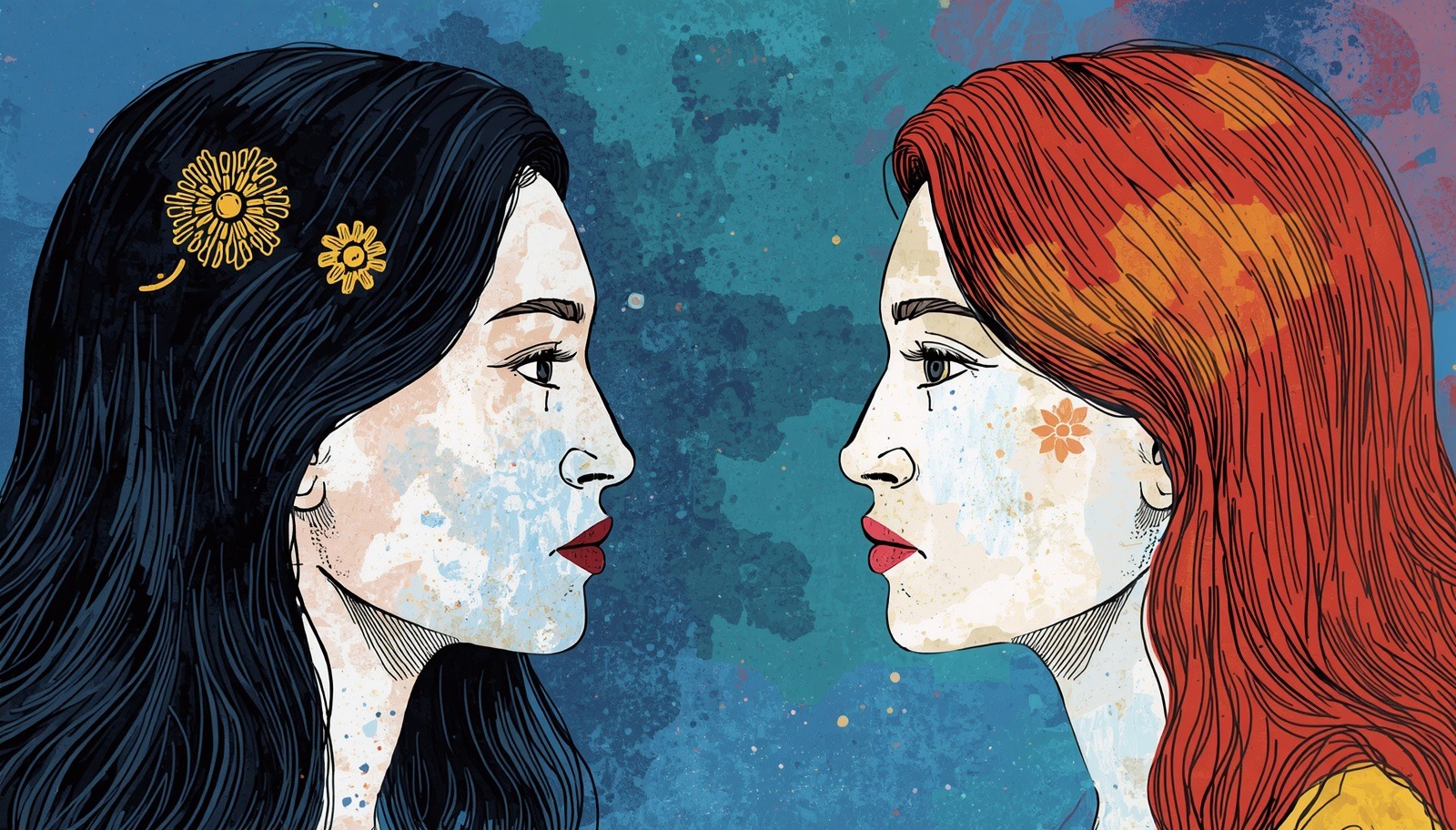
Each morning, stand before a mirror and look directly into your eyes for sixty seconds. It will feel uncomfortable at first — because true self-witnessing always is. Then, speak three sentences aloud:
“I forgive myself for what I didn’t know.
I trust myself to learn differently now.
I will not abandon myself again.”
Repeat them daily. Let the words sink beneath your logic and into your nervous system.
In a 2020 paper from the Journal of Self and Identity, researchers found that consistent self-affirmation focused on self-trust improved emotional resilience and reduced post-relationship guilt.
Rebuilding trust means understanding that the version of you who stayed was operating from love, not ignorance. She did what she thought would keep you safe. But now, safety is no longer about endurance — it’s about authenticity.
The more you practice looking at yourself with compassion instead of criticism, the stronger your inner anchor becomes.
Eventually, you’ll notice something subtle: when someone new enters your life, your body will tell you the truth before your mind does. That’s what self-trust feels like — your intuition no longer silenced, but finally heard.
Learning emotional independence — Being with Yourself without fear
When you’ve spent years emotionally orbiting someone else, solitude can feel like withdrawal. You’re not just missing a person — you’re missing the stimulation of being needed, the feedback of being seen, even the chaos that once defined connection.
To heal this, you must learn the art of emotional independence — the capacity to hold yourself through feelings without needing someone else to soothe or define them.
This exercise, called “The Self-Containment Practice,” helps you do just that.
When strong emotions arise — sadness, longing, anger — resist the urge to text, call, or scroll for distraction. Instead, sit somewhere comfortable, place both arms around yourself as if embracing a child, and say:
“This feeling belongs to me, and I can hold it.”
Stay with the feeling for ninety seconds — the average lifespan of an emotional wave in the body.
Neuroscientist Jill Bolte Taylor’s research found that when we resist feeding emotions with stories, their physiological charge dissipates naturally in under two minutes.
At first, you’ll want to escape it. You might cry or shake. But by staying, you teach your nervous system that discomfort is survivable — and that peace doesn’t depend on external validation.
Over time, this practice reclaims your emotional autonomy. You become the person who can sit with herself — not because she’s unfeeling, but because she’s finally safe within her own presence.
Transformative self-soothing rituals — Rewriting the sensory memory
When you’ve overstayed in a relationship, your senses — sight, smell, touch, sound — are often tied to the other person. A song triggers ache; a place evokes longing. You can’t reason with those triggers, but you can retrain them.
This section focuses on creating new sensory associations — because healing isn’t only cognitive; it’s embodied.
Try the “Ritual of Rewriting.”
Choose one sensory trigger that holds emotional charge — maybe a song, perfume, or café that reminds you of them. Instead of avoiding it, intentionally expose yourself to it while pairing it with something comforting and new.
Listen to that song while taking a warm bath. Visit that café with a close friend who makes you laugh.
Over time, your nervous system re-associates that trigger with calm instead of grief.
A 2021 study in Neuropsychologia on emotional memory reconsolidation found that pairing distressing sensory cues with safety experiences reduced their emotional intensity within weeks.
This is how you rewire attachment in real life — not by forgetting, but by rewriting the emotional meaning.
Create more rituals like this: lighting a candle before bed and saying, “I release the day.”
Cooking a meal for yourself slowly, like a love letter to your own body.
Filling your home with music, scent, and light that feel like you — not the echo of someone else’s taste.
Healing after overstaying isn’t about deleting memories; it’s about transforming them into reminders of resilience.
Reconnecting with desire and creativity
After long relationships, especially those marked by emotional suppression, many women notice their creative energy feels blocked. It’s as if their inner fire — the spark that once inspired joy or playfulness — went dormant while trying to maintain harmony.
Desire, in this context, isn’t only sexual. It’s the vital energy that makes life feel vivid again — the force that says, I want, I dream, I create.
This next practice, “Reclaiming the Spark,” invites you to reconnect with that life force.
Begin by writing a list of ten things that once made you feel alive — things you abandoned during the relationship. It could be painting, dancing, singing, traveling, writing poetry, or simply laughing with friends.
Then, choose one and do it this week — imperfectly, messily, but fully.
Notice how your body feels afterward. There’s often guilt that arises: Am I allowed to feel joy without them?
Yes — joy is not betrayal. It’s survival.
A 2020 study in The Journal of Creative Behavior found that engaging in even small creative acts post-breakup significantly improved emotional regulation and identity recovery. Creativity becomes a safe place to process complex emotions without language.
Reconnecting with desire teaches your nervous system that life continues — that your energy belongs to you again. Each act of creativity is a small rebellion against the part of you that believed love required losing yourself.

Reclaiming the body as home
After overstaying in a relationship, especially one filled with emotional neglect or manipulation, many women become disconnected from their own bodies. You might feel numb, tense, or unfamiliar in your skin — as if your body still belongs to the past.
This practice, “The Embodied Return,” helps you inhabit your body gently again.
Stand before a mirror in comfortable clothing or none at all. Place your hands over your heart, belly, and thighs — the places often burdened by judgment. Whisper softly:
“This body stayed. This body survived. This body is mine again.”
Then, begin a slow movement — stretching, swaying, touching your arms and shoulders with care. Feel the texture of your skin, the weight of your breath. You are reminding your nervous system that safety lives inside you now, not in the presence of another.
Research in Body, Movement and Dance in Psychotherapy (2022) confirmed that somatic self-touch and movement significantly improved self-compassion and reduced residual trauma symptoms in women post-breakup.
You can add scent to this ritual — lavender, sandalwood, or rose oil — and light soft music to engage your senses in gentleness.
Repeat it as often as you need. The goal is not sensuality but reclamation — returning to your body as the first and truest home.
The art of emotional freedom
Letting go is not forgetting. It’s remembering yourself.
You don’t erase the love; you simply stop letting it be the place where your worth lives.
The exercises in this guide are not steps toward detachment; they are pathways toward integration. They help you reclaim your attention, your energy, and your identity — the things that slowly slipped away while you were busy holding on.
Somatic release, ritualized writing, emotional containment, creative reawakening — all of these are ways to rebuild trust with your own nervous system. You’re showing it, again and again: You are safe now. You belong to yourself.
Healing doesn’t mean you’ll never remember the relationship. It means when you do, it won’t ache — it will remind you of how far you’ve come.
One day, you’ll wake up and realize you haven’t thought about them in weeks. You’ll laugh, not with relief but with peace. And in that moment, you’ll understand: letting go was never about losing someone.
It was about finally returning to you.
Related posts You’ll love
- The psychology of why Women overstay in relationships — and what keeps Them from leaving
- Practice corner: 10 exercises to help You stop playing small and step into Your power
- Temporal healing: Making peace with unfinished things
- Practice corner: Aging authentically — Letting go of the performance of grace
- Breaking cycles practice: A deep guide to parenting differently
- Practice corner: From last place to self-priority — A healing guide
- Practice corner: 8 exercises to stop disappearing in relationship and come back to Yourself. With FREE PDF!
- How Women slowly disappear in relationships without realizing it: Signs, psychology, and how to come back to Yourself

Frequently Asked Questions (FAQ)
-
How do I start letting go if I still love them?
Begin with gentle detachment: 10 daily minutes of self-anchoring breath, a “no contact” window, and one small self-care ritual. Love can exist while you choose your well-being.
-
What is emotional withdrawal after a breakup and how long does it last?
It’s the body recalibrating from attachment. Intense waves often peak in the first 2–6 weeks, easing with nervous-system tools (breath, movement, routine, sleep).
-
Are somatic exercises really helpful for letting go?
Yes. Slow breath, shaking, stretching, and self-touch down-regulate stress and unbind stored attachment, making thoughts less sticky and cravings shorter.
-
How do I stop ruminating about “what could have been”?
Use ritualized writing: two letters (to them and to the self who stayed), read aloud, then safely burn or tear. Pair with grounding breath to interrupt loops.
-
What if I’m tempted to text them?
Create a 90-second pause rule, tell one accountability friend, and replace the urge with a preset ritual (walk, cold splash, 10 deep breaths). Urges pass if not fed.
-
How can I rebuild self-trust after ignoring red flags?
Daily mirror practice with three sentences: “I forgive what I didn’t know. I learn differently now. I won’t abandon myself again.” Track small kept promises.
-
Is “no contact” always necessary?
It’s the fastest nervous-system reset. If contact is unavoidable (kids, logistics), keep it brief, factual, and scheduled; process emotions elsewhere.
-
How do I handle shared triggers like songs or places?
Re-pair the trigger with safety: revisit the cue while adding comfort (friend, warm bath, favorite scent). You’re rewriting the brain’s association.
-
How do I know I’m ready to date again?
When calm feels interesting, not “boring”; when boundaries feel natural; and when you can say “no” without guilt. Curiosity replaces craving.
-
What if I relapse and see them again?
Treat it as data, not failure. Note the antecedent (time, trigger, feeling), restore boundaries the same day, and recommit to your plan for 24 hours.
-
Can creativity really speed healing?
Small creative acts (music, journaling, dance) improve mood regulation and help rebuild identity separate from the relationship story.
-
What does healthy love feel like after letting go?
Regulating, consistent, and mutual. Your body feels safe; your needs are welcome; your boundaries are respected without negotiation.
Sources and inspirations
- Journal of Self and Identity (2020). Self-forgiveness and the rebuilding of inner trust after relationship loss.
- Journal of Creative Behavior (2020). The role of creativity in emotional healing post-breakup.
- Frontiers in Psychology (2021). Somatic release and attachment loss recovery.
- Neuropsychologia (2021). Memory reconsolidation and sensory re-association.
- Mindfulness and Self-Compassion Journal (2022). Somatic affirmations and self-regulation in post-relationship trauma.
- Body, Movement and Dance in Psychotherapy (2022). Somatic self-touch as trauma recovery for women.
- Clinical Psychology & Psychotherapy (2023). Somatic and mindfulness interventions in post-breakup healing.
- Journal of Expressive Writing Therapy (2023). Ritualized writing and emotional closure.


Leave a Reply