
Table of Contents
Why it hurts so much, what it does to Your self-worth, and how to reclaim Your space
If you have ever found yourself at a family table where every seat is taken by a couple except yours, you already know this: the hurt is not loud. It is quiet, subtle, and often invisible to everyone but you.
You smile for photos, hold your niece so you don’t look “empty-handed,” answer the same predictable questions about your love life, and laugh at jokes that sting a little. On paper, your life might look full. Yet in these moments, it can feel as though your relationship status is the only thing anyone sees.
This article is for you if you are the only single woman in a family of couples and you feel like the odd one out, the “unfinished story,” or the one everyone is quietly worried about. We will walk through the emotional reality of your experience, what research actually says about singlehood and well-being, the specific impact of family pressure, and—most importantly—how to stop letting these dynamics quietly erode your self-worth.
You will not find “just love yourself more” clichés here. Instead, think of this as a mindful, deep, and sometimes uncomfortable conversation with someone who sees your side of the story and treats it as valid and important.
The moment the room tilts: What it actually feels like
There is usually a moment when you first notice it.
Everyone is paired off on the couch during movie night. At dinner, the server asks if “you two” are together and then pauses when they realize you are the third. Your siblings and cousins are talking about mortgages, daycare, and in-law drama while you silently calculate whether you are allowed to talk about your latest solo trip without sounding self-absorbed—or worse, defensive.
This experience is not just social awkwardness. It is a form of relational displacement. You are not “out of the family,” but you are slightly out of the script the family currently lives in.
Psychologically, that displacement matters. Humans are wired for belonging. When you are the only one in your immediate family who does not share the dominant life stage or identity—here, being partnered—your nervous system registers difference as potential threat. You may feel hyper-attuned to comments, tone changes, and jokes, not because you are “too sensitive,” but because your brain is scanning for where you fit and how safe you are.
Research on social isolation shows that feeling excluded or disconnected carries health risks comparable to smoking, heavy alcohol use, and obesity. Interestingly, this is not just about how many people you see; it is about whether you feel emotionally seen and included. You can sit in a room full of people who love you and still feel deeply alone.
Being the only single woman in a family of couples adds another layer: your “difference” is highly visible, culturally loaded, and constantly commented on. You are not quietly different; you are observably, discussably different. And that keeps the wound a little open, even when you are doing your best to be gracious.
The invisible script: Why singleness still feels “wrong” in many families
To understand why your single status hurts so much more in your family context than, say, in your friend group, we have to talk about the invisible script that still shapes how women are seen.
For generations, women’s value was directly tied to marriage and motherhood. Even though many societies are shifting, remnants of this script linger in subtle ways: in who is expected to travel “home” for holidays, who is asked to help with childcare “because you’re free,” who is assumed to be emotionally available, and who is perceived as “settled.”
Large international studies still find that partnered people, on average, report slightly higher psychological well-being than those who are single, divorced, or widowed. But when researchers dig deeper, the story gets more complex. Gender, culture, and the quality of relationships all matter. Some recent research suggests that single women often report higher satisfaction with their relationship status—and even with life overall—than single men, especially when they have autonomy and supportive networks.
In other words, being partnered is not automatically better. But families often act as if it is the gold standard everyone should be striving toward. That script might show up in small remarks:
“Don’t worry, it will happen for you too.”
“I just want to see you settled.”
“You’re too picky.”
“You’ll understand when you have your own family.”
Each comment implies that your life is currently an in-between state, a waiting room before your “real” life begins. Over time, this can carve into your self-worth, especially if you already live in a culture that idealizes coupledom as the primary marker of adulthood and success.
Recent work on singlehood stigma shows that women who remain single are often seen as incomplete, pitied, or problematized, and that this stigma shows up as unsolicited advice, forced matchmaking, and assumptions that something must be wrong. When your entire family is living the “approved” script, it can make the stigma feel even sharper.
The “third wheel” effect: Micro-exclusions that accumulate
You might not be overtly excluded from anything. But you may notice tiny, repeated moments that subtly reinforce your difference.
At family gatherings, conversations naturally break into couple-based clusters. Partners share inside jokes about shared chores or arguments about parenting. When plans are made, they are often framed as “couples’ things,” even if technically you could join. Suddenly everyone is talking about “we” and “us,” and your “I” feels louder.
Qualitative research with single and childless women describes a recurring theme: they often feel as if their lives are treated as less legitimate or less adult compared to their coupled siblings or cousins, especially in family settings. Some women report feeling like perpetual guests in a family story that now belongs primarily to the couples and their children.
These micro-exclusions may look like:
Being seated at the end of the table, next to the children, or next to the elders rather than with peers.
Having your travel stories or career wins quickly redirected back to talk about babies, renovations, or in-laws.
Being asked to “be flexible” with your time and plans because you “don’t have a family to juggle.”
Listening to endless couple drama but feeling that you have no parallel right to share the complexity of your single life.
None of these moments, on their own, prove that your family doesn’t care. But they accumulate. Each small reminder that you are “the single one” can slowly teach your nervous system that you are slightly peripheral. That you should shrink, accommodate, and be grateful for whatever level of belonging you get.
In the language of psychology, this can create what some researchers call “singlehood stigma internalization”—starting to believe that your single status makes you less worthy, less adult, or less successful.

When love becomes pressure: The family’s anxiety about Your singlehood
There is a painful paradox at the center of this dynamic. Often, the people who hurt you with comments or pressure genuinely believe they are expressing care.
Parents may feel responsible for making sure you are “secure” before they die. Siblings may be projecting their own fears of loneliness, or their belief that safety can only be found in a couple. Extended family members may simply be repeating what was said to them at your age, without questioning whether it is kind.
Studies on social network pressure show that single people frequently experience pressure from friends and family to enter a romantic relationship, and that women report this pressure more strongly than men. This pressure might come in the form of direct questions, matchmaking, warnings about “waiting too long,” or even joking threats that you will “end up alone.”
But here is what is often missed: pressure does not create love. It creates shame and anxiety.
When you are repeatedly asked why you are single, your brain starts framing your status as a problem to be solved. You might feel defensive, even if you do want a partner one day. You might start questioning your choices, replaying past relationships, or interpreting each family gathering as a silent referendum on your desirability.
Meanwhile, your family’s anxiety can become fused with your own. If everyone around you seems worried about your singlehood, it becomes hard to separate their fear from your truth. You may start thinking, “If they’re this worried, maybe I should be too.”
Recent research on singlehood suggests that one of the strongest predictors of how well single people thrive is not simply whether they are single, but whether they feel pressured to change their status. People who feel low pressure to couple, and who experience their singlehood as a choice, tend to have higher well-being than those who feel high pressure and low control.
So it is not your status that quietly erodes your mental health—it is the combination of stigma, pressure, and the feeling that your life is on trial.
Singlehood as an identity, not a deficit
One of the most radical, healing ideas in current research is that singlehood can be an identity, not just a temporary state.
Recent work explores how some people experience being single as a core part of who they are—one that aligns with their personality, values, and preferred way of living. For these individuals, singlehood is not a problem to be fixed but a lens through which they relate to the world. They may cherish autonomy, deep friendships, creative projects, and community in ways that are harder to maintain in traditional couple structures.
This does not mean you have to declare, “I will be single forever,” to benefit from this perspective. What it does invite is a subtle but powerful shift: from “I am behind” to “I am living a valid path that is out of sync with my family’s timeline.”
When you begin to treat singlehood as one legitimate way of being an adult—rather than as a pre-relationship holding pattern—you start to reclaim authorship of your story. Your life choices no longer have to be justified through the lens of future partnership. They become meaningful in and of themselves.
Interestingly, some studies have found that single women, especially those who value independence and self-direction, may report high life satisfaction and relationship status satisfaction, contradicting the stereotype of the “miserable single woman.” The problem is that family narratives often lag behind this reality.
You may be living a thoughtful, intentional, richly connected life—and still be met with relatives who speak to you as if you are half-formed. That mismatch between your internal truth and your family’s perception is a core source of pain.
Naming it is not about blaming your family. It is about understanding that their view is not the whole truth. It is a story, shaped by their generation, culture, and fears. You are allowed to hold a different story.
The mental health cost: Loneliness, shame, and emotional exhaustion
It is tempting to minimize your feelings. After all, you have people around you. You may even have a busy social life outside your family. You might tell yourself, “I shouldn’t feel this lonely; other people have it worse.”
But emotional reality does not obey comparisons.
Recent polls and studies suggest that loneliness is increasingly common, with around one in three adults in some countries reporting frequent feelings of loneliness. Loneliness is not just about being alone; it is the gap between the connection you want and the connection you experience. Being the only single woman in a family of couples can widen that gap, even if you have many relationships in your life.
There are a few specific mental health patterns that often emerge in this context:
You may feel anticipatory anxiety before family gatherings, rehearsing how to answer questions about your love life or strategizing how to avoid certain conversations.
You may experience emotional hangovers afterward—feeling drained, sad, or oddly numb after smiling through the entire event.
You might notice shame: the creeping belief that your singleness proves something is wrong with you, even if you intellectually know that is not true.
Research on marital status and mental health has long suggested that relationship status is linked to well-being, but newer work paints a more nuanced picture. Some studies find that married women can show more mental health symptoms than men, and that the quality of relationships is far more predictive of well-being than the simple fact of being partnered. Other studies highlight that many single adults are doing well—especially when they have strong social support and a sense of agency over their lives.
What this means for you is important: if you feel low, anxious, or ashamed, the problem is not that you are single. The problem is the emotional environment you live in, including the messages you absorb from family, culture, and even your own inner critic.
Your pain is real not because partnership is missing, but because validation, respect, and understanding are missing.
Before You “fix” Your status: Repairing Your relationship with Yourself
In a family where everyone is paired, it is very easy to make one unconscious decision: “If I could just find someone, all of this would stop hurting.”
This thought is understandable. It promises a fast exit from a painful identity. But it carries a dangerous side effect: it turns love into a strategy to escape shame.
When romantic partnership becomes your main solution to family discomfort, it becomes almost impossible to choose well. You may feel tempted to stay too long in relationships that are wrong for you because they grant you temporary relief from being “the single one.” You may tolerate disrespect or incompatibility because the fear of returning to the family table alone feels unbearable.
There is growing evidence that both single and partnered people do best psychologically when they feel their relationship status is chosen, not coerced by pressure or fear. If the main engine behind your dating life is escaping judgment, you are not really choosing—you are reacting.
So before you focus on “fixing” your single status, it can be deeply healing to repair your relationship with yourself in three ways.
First, by acknowledging the grief. You are allowed to grieve not only relationships that ended, but also the family role you thought you would have. You might have imagined sharing pregnancy news at the same time as your sister, or raising cousins who grow up together. Mourning those fantasy timelines is part of making peace with the life you actually have.
Second, by separating desire from shame. Wanting a loving partner is beautiful and deeply human. Feeling ashamed for not having one yet is something else entirely. When you notice “I want” blended with “I should have by now,” gently untangle them. Desire can stay; shame is optional.
Third, by cultivating a deep, secure relationship with yourself. This is not a fluffy slogan. It means learning how to self-soothe after painful conversations, how to speak to yourself kindly when you feel “behind,” and how to build a life that feels meaningful today, not just in some imagined coupled future.
When you do this inner work, you no longer walk into family gatherings as “the single one trying to prove she is okay.” You walk in as a whole person whose worth is not up for debate.

Mindful strategies for surviving (and softly transforming) family gatherings
Let’s get very practical and very human here. Family events are often where your single status feels most stark. You cannot control how everyone behaves, but you can change how you prepare, how you respond, and how you care for yourself before and after.
One powerful approach is to create what you might think of as an “emotional go-bag” before you even walk through the door.
This does not mean armored detachment. It means deciding, in advance, how you will speak to yourself, who you will lean on, and what you will allow or not allow in conversations about your love life.
You might begin by setting intentions that are about you, not them. For example: “My goal tonight is to stay connected to my own worth, even if uncomfortable questions come up,” or “I will allow myself to leave conversations that feel like interrogations, without apologizing.”
Then, anticipate the predictable scripts. There are certain questions or remarks that you know are coming. Rather than being caught off guard each time, you can gently rehearse responses that feel self-respecting, warm, and boundaried.
You might say, “I appreciate that you care. Right now, I’m focusing on building a life that feels good to me, and I trust that the right relationship will grow from there.” Or: “I know love matters to you. It matters to me too. I also don’t want to rush into something just to avoid being single.”
Notice that these responses do not justify your life as a defense brief. They acknowledge care, name your priorities, and subtly shift the focus from “Why aren’t you coupled yet?” to “How are you choosing to live?”
Another piece of your emotional go-bag can be micro-breaks. Loneliness and shame escalate when you feel trapped. Before the event, decide that you are allowed to step outside, go for a short walk, or text a friend who “gets it” if you start to feel overwhelmed. These tiny exits are not dramatic; they are nervous system care.
Finally, consider creating a post-gathering ritual. Instead of just collapsing into bed, you might take a few minutes to journal: what hurt, what felt surprisingly good, where you advocated for yourself even in small ways. By processing the experience, you prevent it from fermenting into self-blame or vague sadness.
None of these strategies require your family to change first. They are about giving yourself psychological oxygen, so that you can move through these spaces without abandoning yourself.
Building a life that does not wait for “plus one”
One of the most quietly radical things you can do, especially as the only single woman in a family of couples, is to build a life that is not organized around waiting.
Waiting for the right person.
Waiting for your “real” family to begin.
Waiting for your parents to relax because “you’re finally settled.”
Research on well-being consistently shows that what supports mental health is not simply relationship status, but a mix of factors: purpose, autonomy, supportive relationships of all kinds, and feeling that you have some control over your life trajectory. Many thriving single women describe lives rich with friendships, creative work, community, spirituality, or activism.
This does not erase the pain of being different in a family of couples. But it does mean that your life can be full and deeply meaningful even as that pain exists.
In practical terms, this might look like investing in friendships as seriously as your siblings invest in their marriages, or treating your home as worthy of beauty and care even if you are the only one who lives there. It might mean planning trips that reflect your curiosities, not just your availability to babysit. It could involve mentoring younger women who feel boxed in by the same scripts you are slowly shedding.
Interestingly, some research has begun to highlight groups of single people who are doing particularly well—those who do not feel intense pressure to couple and who build identities around chosen values rather than default expectations. They are not waiting to be chosen; they are choosing.
From the outside, your family may still describe your life as “just you.” On the inside, you know that “just you” includes communities, projects, joys, and growth that are no less real than a partner’s presence.
If You do want a partner: Holding desire without desperation
None of this is an argument that romantic love does not matter. It matters deeply to many of us. You are allowed to want it with your whole heart.
The healing shift is this: instead of dating to escape being “the last single woman in the family,” you begin dating as someone whose life is already meaningful, looking for a relationship that adds to—not replaces—your existing wholeness.
Recent studies on relationship status and mental health suggest that high-conflict or unsatisfying relationships can be more harmful than being single, particularly for women. Rushing into partnership to satisfy family expectations may relieve one kind of pain but create another, more private one.
So if you do want a partner, it can be helpful to ask yourself gently:
Am I looking for someone from a place of genuine curiosity and desire, or mainly to quiet my family’s anxiety?
If I knew, with certainty, that my family would never again comment on my status, how would I approach dating differently?
What kind of relationship feels worthy of the life I have built, rather than just “good enough to change the subject at holiday dinner”?
By holding your desire this way, you give yourself permission to want a partner while refusing to make partnership the sole condition for your own self-respect.
A brief word to families and couples (If You ever want to share this)
Although this article is written for the woman who feels alone in a family of couples, it might one day be read by the couples around her. If you are a partner, sibling, or parent recognizing yourself in these dynamics, here are a few gentle invitations.
First, remember that your loved one’s life is not a problem to solve. When you ask about her love life, check your motive. Are you trying to relieve your own anxiety about what a “happy life” should look like? Or are you genuinely curious about how she is experiencing her world?
Second, notice how often you center conversations around couple and parenting topics by default. It is not about banning those subjects, but about making room for her stories as equally adult and equally significant. Her promotion, creative project, or solo trip is not “compensation” for being single; it is her real life.
Third, retire the jokes. What feels like playful teasing—“You’ll be next!” or “We have to find you someone!”—often lands as a reminder that she is under review. If you truly want her to feel loved, speak to her as if her worth is already settled.
Research on social relationships shows that feeling supported and included is one of the strongest buffers against loneliness and distress. You have enormous power, as a family, to either intensify or soften the quiet pain of your single member. Choose carefully.
You are not the “odd one out” in Your own life
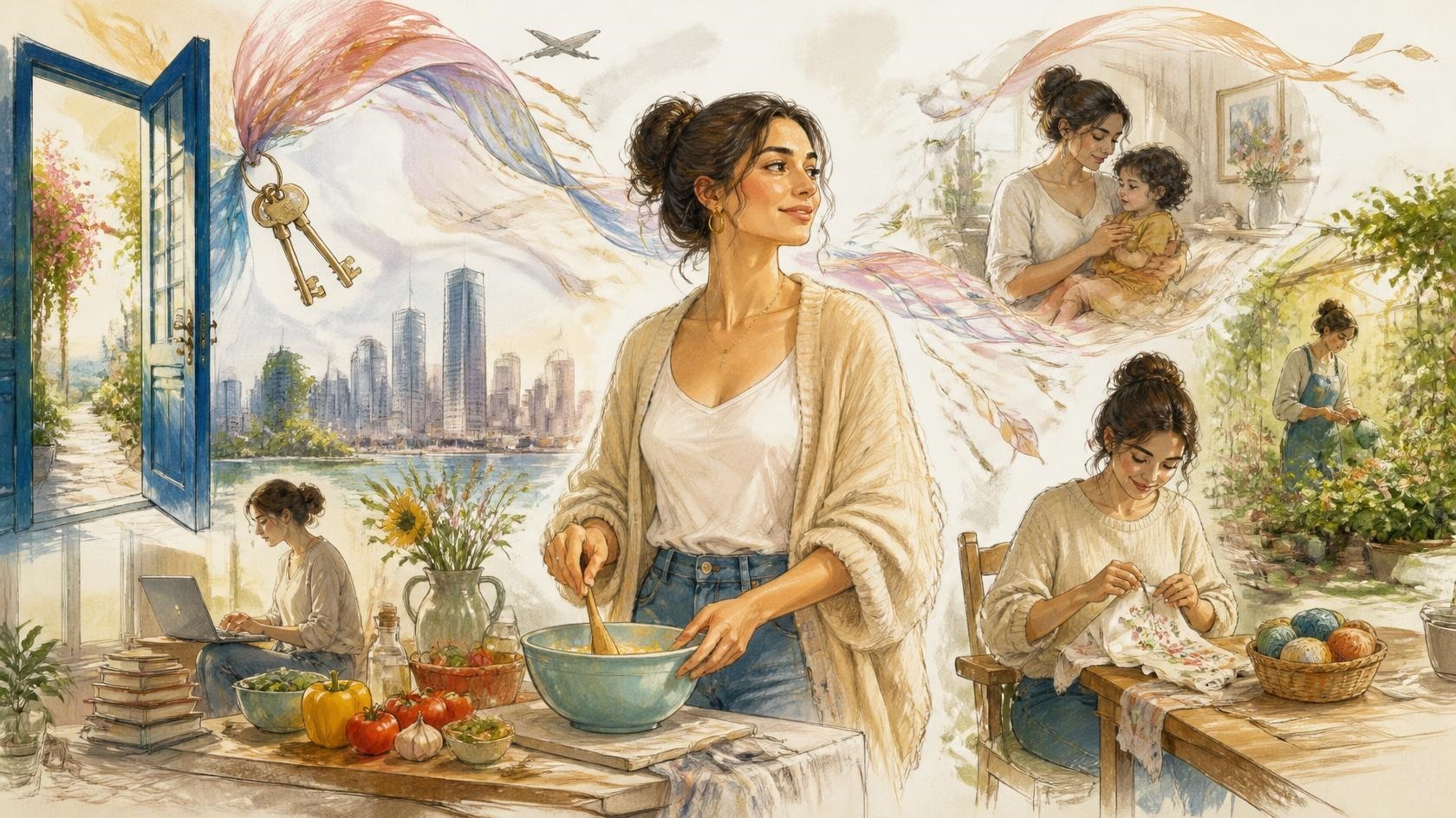
Being the only single woman in a family of couples can shape your inner landscape in ways that are hard to explain to people who have never experienced it. The discomfort is rarely dramatic; it is a steady hum in the background. It can touch how you see yourself, how you walk into rooms, how you make decisions, and how you imagine your future.
But your story is not a waiting room. It is a real, unfolding life.
You are allowed to feel the sting of insensitive questions and still love your family. You are allowed to grieve the roles you expected to have and still build new ones. You are allowed to want a partner deeply and still refuse to treat your singlehood as evidence of failure.
The most important shift is not convincing your family to change—though that would be lovely. It is reclaiming your right to see yourself as whole, now, regardless of who sits next to you on the couch at the next holiday gathering.
You are not the odd one out in your own life. You are the main character, deserving of compassion, respect, and a story that makes sense to you.
Related posts You’ll love
- Meta-emotions: Feeling bad about feeling bad — The science, the trap, and how to break the loop
- Values drift exposed: The science-backed blueprint to realign Your life
- De-role modeling: Break free from dysregulating ideals
- Regulated romance: Pacing intimacy without vanishing Yourself
- Outgrown heroine? Update Your personal myth today
- Sisterhood over rivalry: The evidence-based guide to building real Women’s alliances
- 10 mantras for rising stronger after rejection: Transforming pain into power
- 13 meditation techniques to transform Your life

FAQ: Being the only single Woman in a family of couples
-
Why does being the only single woman in my family hurt so much, even though I’m not “alone” in life?
It hurts because your difference is constantly on display in a space that is supposed to feel like home. Even if you have rich friendships, a meaningful career, and a life you truly enjoy, sitting at a table where everyone is paired can trigger a deep sense of being “out of sync.” Your nervous system notices that you are the only one not following the dominant script of “couple, marriage, kids,” and that can feel like a quiet form of exclusion. The pain is not proof that you are failing; it is a natural response to feeling like the odd one out in a place where you most want to feel fully accepted.
-
Is something wrong with me if I’m the only single woman in a family of couples?
No. Your relationship status is not a diagnosis and not a verdict on your worth. Families often confuse “different” with “wrong,” especially when they grew up with only one acceptable life path. Being the only single woman simply means your timeline and choices are different from those around you. It says nothing about your attractiveness, your capacity for love, or your potential to build a life that fits you. Nothing is “broken” just because your story does not match your family’s favorite script.
-
How can I cope with “Why are you still single?” without exploding or shutting down?
It helps to prepare for this question before it shows up. Instead of scrambling in the moment, choose one or two calm, self-respecting responses that feel true for you. You might say, “Right now I’m focusing on building a life that feels good to me, and I trust the right relationship will grow from there,” or “I’d rather be single than in a relationship that isn’t healthy for me.” The point is not to convince anyone; it is to protect your own dignity while staying grounded. Afterward, give yourself a moment to breathe, move your body, or text a supportive friend so the emotional sting doesn’t sit in your body all night.
-
How do I stop feeling “behind” when all my siblings and cousins are married or have kids?
Feeling “behind” comes from comparing your inside story to someone else’s outside milestones. It can help to gently question the idea that there is only one correct order for adulthood. You can remind yourself that you are not late; you are on a different path. Begin asking different questions: “Does my life feel meaningful right now?” “Am I honoring my values in how I spend my time, money, and energy?” “What am I proud of that has nothing to do with my relationship status?” As you answer those questions honestly, you start to measure your life with your own yardstick, not the family scoreboard.
-
How can I enjoy family gatherings when I feel like the “extra chair” at the table?
Enjoyment might not mean feeling comfortable every second; it might mean feeling more anchored in yourself while discomfort comes and goes. Before an event, set a simple intention like, “I want to have at least one nourishing conversation that is not about my love life,” or “I will allow myself to take breaks when I feel overwhelmed.” Plan small rituals of care: stepping outside for fresh air, going to the bathroom to do a few deep breaths, or checking in with a friend by message. Also, give yourself permission to redirect conversations: if everyone keeps asking about dating, you can gently say, “I’d love to talk about something else for a bit—let me tell you about a project I’m excited about.” You are allowed to steer the energy instead of just absorbing it.
-
Is it okay to want a partner and still enjoy my single life right now?
Not only is it okay, it is healthy. Wanting love does not require hating where you are. You can hold desire and contentment at the same time, the way you might enjoy your current job while still dreaming about a future role. When you allow yourself to live fully now, you reduce the pressure on future relationships to “fix” everything. That makes you more likely to choose a partner from a place of clarity and self-respect, not fear and urgency. You are allowed to say, “I love many parts of my life, and I would also love to share it with someone someday.” Both can be true.
-
How do I set boundaries with family members who keep pressuring me to “hurry up and find someone”?
Boundaries are less about delivering a perfect speech and more about repeating simple truths with calm consistency. You might say, “I know you care about me, but comments about my relationship status are stressful. I’d appreciate if we talked about other parts of my life instead.” If they bring it up again, you repeat the same message and, if needed, change the subject or excuse yourself from the conversation. Boundaries often feel awkward at first, especially in families that are used to commenting on everything. But over time, your repeated “no” to intrusive questions is also a “yes” to your peace and self-respect.
-
What can I do when my family treats my time as less important because I’m single?
When you are single, people often assume your schedule is infinitely flexible: you can travel whenever, babysit whenever, stay late, host holidays, and fill in the gaps for everyone else. To shift this, you first have to honor your own time as valuable. That means saying things like, “I can’t make that work this weekend, I already have plans,” even if those plans are with yourself. You are allowed to decline invitations that drain you or to negotiate: “I can help for a few hours on Saturday, but I won’t be free the whole day.” The more you treat your commitments—to rest, to friends, to your own projects—as real, the more others slowly learn to as well.
-
How can I stop internalizing the idea that my life is “less than” because I don’t have a partner or children?
Internalization happens when outside voices become your inner voice. To unlearn this, you need new inner language. Notice when you catch yourself thinking, “I’m behind,” “I’m the failure,” or “Everyone else grew up except me.” Gently challenge those thoughts: “Is that actually true, or is it just a story I’ve been handed?” Make space to name what your life holds right now that is meaningful: your resilience, your growth, your friendships, your creativity, your healing. You can also surround yourself—online or offline—with stories of women living full, nuanced lives outside traditional timelines. The more diverse examples of womanhood you see, the less believable the old script becomes.
-
How can I start seeing myself as “whole” instead of “waiting for my real life to begin”?
Begin by noticing all the ways you postpone your own joy until circumstances change. Statements like “I’ll do that when I have someone to go with,” or “I’ll decorate my place properly when it’s not just me,” quietly tell your nervous system that your current life is a rehearsal. Choose one area where you can stop waiting. Book the trip. Buy the nice bedding. Take the class. Host a dinner. Treat your present life as worthy of investment, not as a temporary holding pattern. Over time, your actions send a new message: “My life is happening now, and I am allowed to live it fully, with or without a plus one.”
Sources and inspirations
- Chan, R., Crawshaw, M., & Dykstra, P. (2023). Listening to the experiences of single and childless women in their late reproductive years: A qualitative study of narratives, identity and decisions. Journal of Social and Personal Relationships.
- Danvers, A. F., & colleagues. (2023). Loneliness and time alone in everyday life: A descriptive experience sampling study. Journal of Research in Personality.
- Girme, Y. U., Overall, N. C., & Faingataa, S. (2021). Unsupported and stigmatized? The association between singlehood and well-being. Journal of Social and Personal Relationships.
- Hoan, E., & colleagues. (2024). Gender differences in singles’ well-being. Journal of Social and Personal Relationships.
- Horton, C., & colleagues. (2025). Who does singlehood best? A latent profile analysis of single adults’ well-being, pressure to couple, and relationship goals. Frontiers in Psychology.
- Hsu, T. L., & Barrett, A. E. (2020). The association between marital status and psychological well-being: Evidence from a national sample. Journal of Family Issues.
- Sprecher, S., & Felmlee, D. (2021). Social network pressure on women and men to enter a romantic relationship. Interpersona.
- Tabkhi, F., & colleagues. (2025). Phenomenological investigation of negative attitudes towards marriage among young adults. BMC Psychology.
- Utoft, E. H., & colleagues. (2024). Women academics’ ambivalent experiences of singlehood. Women’s Studies International Forum.
- Zhao, L., & colleagues. (2022). The relationship between gender, marital status and mental health among middle-aged and older adults. Frontiers in Psychology.
- Grundström, J., & colleagues. (2021). Associations between relationship status and mental well-being across the life course. BMC Public Health.
- American Psychological Association. (2019). The risks of social isolation. APA Monitor on Psychology.
- American Psychiatric Association. (2024). One in three Americans feels lonely every week, new poll shows. Healthy Minds Monthly Poll.
- European Journal of Psychotraumatology Research Group. (2025). Exploring the factors associated with well-being and ill-being: Sociodemographic and intrapersonal predictors in adults. Journal of Social and Personal Relationships.

Leave a Reply