Table of Contents
1. The landscape: Stress, gender, and normalization
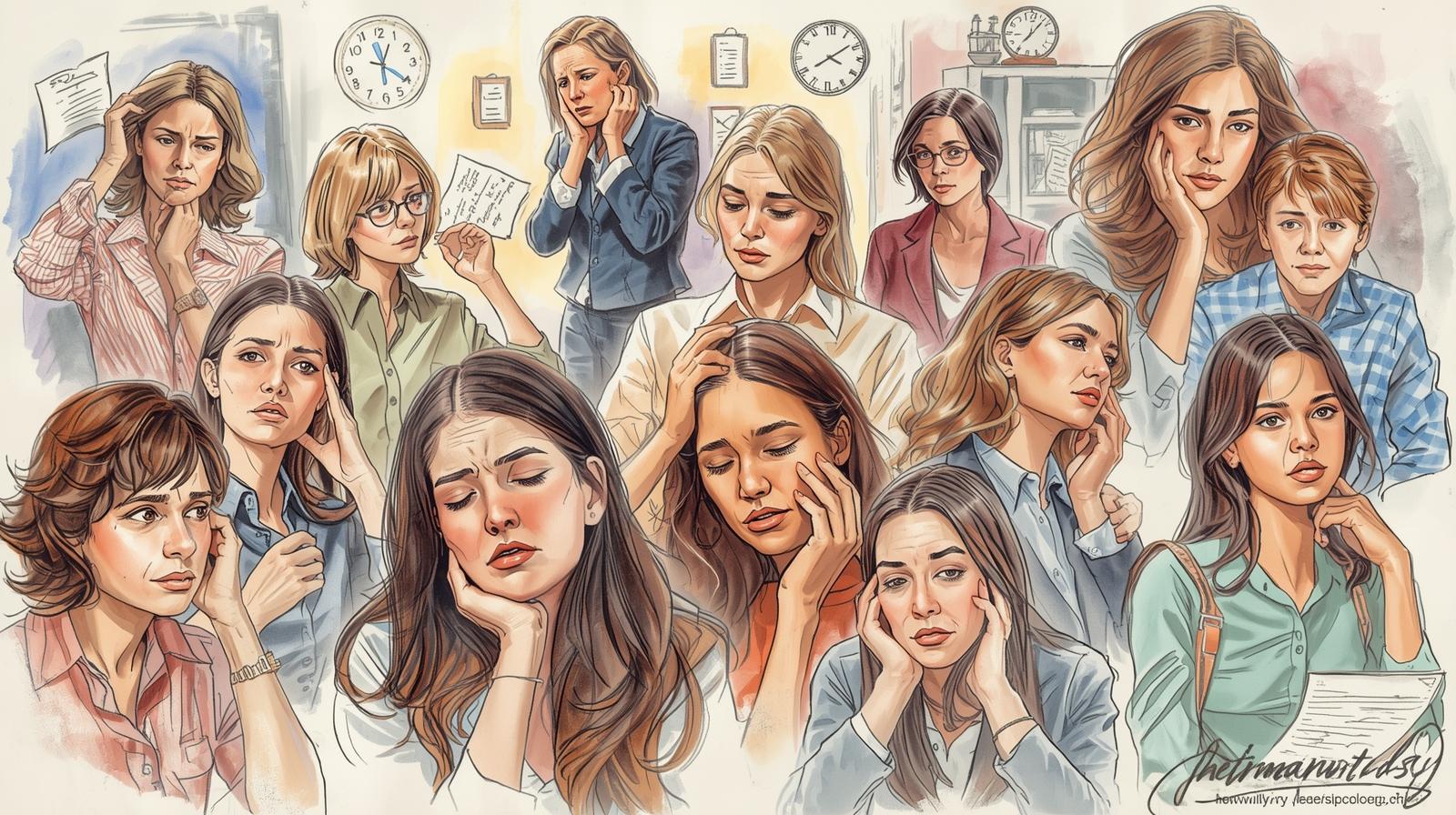
If you ask a modern woman how she’s doing, chances are she’ll say something like, “I’m fine—just tired.” It rolls off the tongue so easily, it sounds benign. But underneath that word “fine” often lies a quiet, throbbing exhaustion—a state of tension so constant it no longer feels remarkable. In many ways, this is the modern epidemic no one talks about: the normalization of chronic stress among women.
This normalization is not about dramatic breakdowns or visible crises. It’s about the invisible hum of survival mode that becomes background music. It’s about feeling perpetually “on,” juggling roles, responsibilities, expectations, and emotional labor—until rest feels foreign, even unsafe. When the body’s fight-or-flight response never quite shuts off, it adapts by redefining its baseline. What should feel like stress begins to feel like life.
Contemporary psychology defines chronic stress as the prolonged activation of the body’s stress response system, often in the absence of acute threats (McEwen & Gianaros, 2023). Unlike short-term stress—which can sharpen focus or boost performance—chronic stress quietly rewires the brain and body. It changes how the hypothalamic-pituitary-adrenal (HPA) axis releases cortisol, alters immune function, and reshapes emotional regulation networks (Shchaslyvyi, 2024). Over time, these biological shifts form what researchers call allostatic load: the accumulated “wear and tear” of trying to stay functional under constant strain.
What makes this especially complex for women is that chronic stress intersects with gendered social structures, expectations, and roles. The American Psychological Association’s 2023 Stress in America survey found that women consistently report higher average stress levels than men—and also higher guilt about taking breaks or asking for support (APA, 2023). This pattern reflects not just individual coping differences, but a deep cultural conditioning that teaches women to endure. The story of “resilience” often masks what’s really happening: adaptation through overextension.
1.1 The cultural illusion of “fine”
The word fine has become a linguistic shield. It signals competence, capability, and composure—but it often conceals depletion. Many women are socialized to downplay their suffering because expressing overwhelm risks being labeled “emotional,” “dramatic,” or “weak.” Over time, this self-censorship becomes internalized. Stress is no longer seen as a signal of imbalance, but as proof of effort or strength.
In workplaces, relationships, and even within family systems, women’s stress is often reframed as devotion. The mother who manages everything is “selfless.” The employee who never says no is “dedicated.” The partner who holds the emotional climate of the relationship together is “loving.” Yet beneath these compliments lies an implicit expectation: your ability to absorb stress is part of your value.
When these patterns become internalized, the nervous system adapts to a state of constant readiness. Physiologically, this looks like elevated cortisol, reduced heart rate variability, and flattened circadian rhythms. Psychologically, it manifests as a numbed relationship to one’s own needs. Emotionally, it results in a disconnection from rest, pleasure, and self-compassion. Slowly, fine becomes the new normal.
1.2 What Normalization Really Means
To “normalize” chronic stress means more than just tolerating it—it means integrating it into one’s identity. The body’s discomfort becomes background noise, and the mind reframes it as inevitable. Normalization is both a psychological and physiological phenomenon. It’s a kind of habituation: the nervous system adapts to ongoing stimuli until those stimuli stop registering as abnormal.
This process begins subtly. A woman might start skipping meals, sacrificing sleep, or ignoring tension headaches, telling herself it’s “just temporary.” When the body protests—fatigue, irritability, digestive issues—she responds not with curiosity but with dismissal: I just need to push through. Over time, the brain’s reward system reinforces this cycle. Enduring becomes a source of pride; exhaustion becomes evidence of worth.
Neuroscientific research supports this pattern. Chronic stress exposure alters activity in the amygdala, prefrontal cortex, and hippocampus—regions responsible for emotional processing, decision-making, and memory (Lorenz et al., 2025). The longer stress persists, the more the brain recalibrates to view tension as a “safe” state. This is why many women report feeling uneasy when they finally slow down; their nervous systems mistake calm for danger.
Normalization, then, is not weakness—it’s adaptation. It’s the body doing its best to survive in an environment that rarely grants pause. The tragedy is that what begins as resilience often hardens into resignation.
2. Mechanisms of adaptation: How stress becomes invisible
To understand why chronic stress becomes invisible, we need to examine how it embeds itself in biology, psychology, and behavior. The process is multilayered—spanning from hormones to habits, from neural circuitry to social scripts.
2.1 The body learns to live on overdrive
The human stress response was designed for acute threats: escaping predators, facing crises, mobilizing action. It wasn’t designed for unending exposure to deadlines, emotional caretaking, and existential uncertainty. Yet in modern life, the body rarely receives the signal that it’s safe again. This leads to what neuroscientist Bruce McEwen called “allostatic overload” (McEwen & Gianaros, 2023). The HPA axis continues to secrete cortisol long after the stressor has passed, flooding tissues with chemical reminders that danger still looms.
Women’s bodies may be particularly susceptible to this overactivation due to hormonal interactions. Estrogen and progesterone influence how stress hormones are metabolized, and fluctuations across the menstrual cycle can amplify stress sensitivity (Hodes, 2018). This doesn’t mean women are “weaker” under pressure—it means their physiology is uniquely responsive. But when stress is constant, that responsiveness becomes a liability. It traps the body in a loop of vigilance.
Over time, the body adapts to this heightened state. Cortisol receptors downregulate, immune function shifts, and inflammation becomes chronic. The result isn’t always overt illness—it’s a subtle flattening of vitality. You wake up tired. You can’t concentrate. You stop feeling joy. These aren’t moral failures; they’re biochemical consequences of sustained strain.
2.2 The mind learns to downplay distress
If the body adapts through biology, the mind adapts through narrative. Cognitive dissonance theory suggests that when reality conflicts with belief, we alter our interpretation to maintain coherence. For a woman taught to “handle everything,” admitting distress can feel like failure. To preserve identity, she redefines her stress as competence: I’m just busy. Everyone’s tired. It’s not that bad.
Psychologically, this is a form of emotional minimization. It allows survival in environments that don’t support vulnerability—but it also erodes self-attunement. When emotions like anger, sadness, or overwhelm are habitually suppressed, the brain’s interoceptive network (which tracks internal sensations) becomes desensitized. Studies using fMRI imaging show that chronic stress and emotional suppression can reduce activation in the insula—the brain region responsible for sensing internal states (Critchley, 2020). In plain terms: you stop hearing your own body.
This detachment doesn’t eliminate stress; it only masks it. Over time, suppressed emotions leak out as irritability, perfectionism, or physical pain. The person may appear composed while her nervous system is in silent chaos.
2.3 The culture rewards disconnection
The final mechanism is societal. Modern culture—especially Western, capitalist culture—rewards output over presence, doing over being. Rest has been commodified into self-care “products,” rather than recognized as a birthright. Social media glamorizes hustle, multitasking, and “boss energy,” while quietly punishing softness.
For women, this pressure is doubled: they’re expected to excel professionally while maintaining emotional fluency, relational caretaking, and aesthetic polish. The cultural script says: be everything, for everyone, all the time. It’s not surprising that many women’s nervous systems adapt by numbing.
Psychologist Hilary Jacobs Hendel (2021) describes this phenomenon as “living from the defensive self”—a mode of functioning where anxiety and repression replace authentic emotion. In this mode, a woman might excel externally but feel empty internally. The more she’s praised for being strong, the harder it becomes to acknowledge the cost of that strength.

3. Social, cultural, and structural pressures
If biology sets the stage, society writes the script. Women’s normalization of stress cannot be understood in isolation from the cultural systems that shape it. Patriarchal norms, economic structures, and relational expectations all contribute to the chronicity and invisibility of women’s stress.
3.1 The gendered architecture of responsibility
Women have always been positioned as emotional anchors in their families and communities. They are the ones who remember birthdays, mediate conflicts, manage children’s emotions, care for aging parents, and hold relationships together. This emotional labor, though vital, is rarely recognized or compensated. Sociologist Arlie Hochschild (2012) coined the term “the second shift” to describe how women perform a full day of paid labor and then return home to unpaid domestic and emotional work. A decade later, this “second shift” has evolved into a “permanent shift”—a 24/7 expectation of availability.
The result is not just physical exhaustion but existential depletion. When the invisible becomes expected, rest feels like rebellion. Many women internalize guilt when they slow down, as though caring for themselves violates an unspoken contract of service. Over time, this guilt reinforces the normalization of stress: the harder it feels to rest, the more the body associates stress with safety.
3.2 Economic insecurity and structural pressure
Beyond cultural narratives, structural inequities compound stress exposure. Globally, women are overrepresented in precarious, low-wage, or caregiving sectors—fields that offer little job security, few benefits, and minimal autonomy (Julià, 2022). The lack of financial control intensifies chronic stress and limits access to recovery resources such as therapy, time off, or holistic healthcare.
Furthermore, women still earn less on average than men across industries, a gap that widens with motherhood or caregiving responsibilities. This economic imbalance is not merely statistical—it’s somatic. Financial instability activates the same survival circuits as physical danger. The stress of “making it work” in an unequal system embeds itself in muscle tension, shallow breath, and sleepless nights.
When systemic inequities remain unaddressed, individuals internalize them as personal inadequacies. The woman juggling three roles doesn’t see a broken structure—she sees herself as failing to keep up. Thus, structural pressure becomes psychological, and chronic stress becomes self-blame.
3.3 The myth of the selfless Woman
At the core of normalization lies an ancient archetype: the selfless woman. From myth to modern media, femininity has been idealized as nurturing, forgiving, accommodating, and infinitely resilient. While compassion and care are profound human strengths, their distortion into self-erasure breeds pathology.
This myth teaches that worthiness is earned through sacrifice. A “good” woman puts others first, even to her detriment. When these ideals combine with capitalist productivity culture, the result is devastating: women who feel guilty for resting and proud of their exhaustion. They learn to normalize pain as proof of love.
This dynamic plays out in subtle ways. The mother who never stops, the employee who can’t say no, the friend who absorbs everyone’s emotions—all are performing versions of selflessness that society praises but rarely supports. The normalization of stress, then, becomes an act of loyalty—to roles, to ideals, to systems that don’t reciprocate care.
4. Consequences: The hidden costs of normalized stress
When stress becomes the default, its consequences slip beneath awareness. They do not appear as sudden collapse or dramatic illness; they emerge slowly, as subtle erosion — of joy, presence, and vitality. The tragedy of normalization is not simply that it hurts, but that it hides. By the time many women realize how far their stress has seeped into their lives, their bodies have already restructured around it.
4.1 The psychological toll
The most immediate consequence of normalized stress is psychological depletion. Studies show that women under chronic strain report higher levels of anxiety, depression, and emotional blunting than men (Wright, 2022). Yet these symptoms are often dismissed as “moodiness” or “burnout,” rather than seen as legitimate distress signals.
What makes this more insidious is that normalization numbs perception. A woman might not even recognize she’s anxious because anxiety has become her resting state. Irritability feels normal. Fatigue feels normal. Being unable to rest without guilt feels normal. This emotional dulling—sometimes referred to as learned stress response—mirrors trauma adaptation. The nervous system, overstimulated for too long, dampens its reactivity to avoid overwhelm. But in doing so, it also dampens access to joy, play, and intimacy.
Depression, in this context, is not always sadness—it is often exhaustion without reprieve. The sense of self shrinks to a survival role: keeping things functioning, holding it all together. Even therapy clients who seek help for burnout often struggle to articulate what they feel because they’ve forgotten what “unstressed” feels like. Their language of self has been colonized by busyness.
4.2 The physiological toll
Chronic stress is not just mental; it rewrites the body’s biochemistry. Long-term cortisol exposure disrupts nearly every major system: immune, cardiovascular, endocrine, and reproductive. The effects are well-documented but often minimized because they unfold gradually—until the damage is undeniable.
Inflammatory markers rise. Blood pressure and heart rate variability decline. Sleep becomes fragmented, digestion sluggish. Even cell aging accelerates; chronic stress has been linked to shortened telomeres, the protective caps at the ends of chromosomes (Epel , 2018).
For women, the consequences are often cyclical. Hormonal fluctuations make them more sensitive to stress hormones, while those same stress hormones can disrupt menstrual regularity, fertility, and perimenopausal transitions. The interplay between cortisol, estrogen, and progesterone creates a feedback loop where stress affects hormones, and hormonal imbalance, in turn, amplifies stress reactivity (Hodes, 2018). This is why many women report heightened anxiety or fatigue during hormonal shifts—not because they are fragile, but because their physiology is finely attuned to internal and external stress cues.
Another under-discussed manifestation is somatization: when psychological strain expresses itself as physical pain. Chronic back pain, digestive distress, headaches, or fibromyalgia-like symptoms can all be ways the body speaks the language of suppressed stress (Calderón-García, 2024). Women, socialized to prioritize others, often somaticize instead of verbalizing. When they finally seek help, their symptoms are too often dismissed as “psychosomatic,” perpetuating the very silencing that caused them.
4.3 The relational toll
Normalization also reshapes relationships. When stress becomes baseline, relational patterns follow suit. Many women find themselves overfunctioning in partnerships—taking emotional responsibility for others, rescuing, anticipating, explaining. The caretaking impulse, magnified by chronic stress, creates dependency loops. The woman becomes the emotional regulator for everyone but herself.
Over time, this imbalance breeds resentment and emotional distance. Intimacy requires presence, but presence requires space. When life is ruled by stress, there is no space left to feel. Relationships begin to operate on logistics instead of connection—shared calendars replacing shared vulnerability. In such environments, love often becomes another task to manage.
4.4 The existential toll
The deepest cost of normalized stress is existential: the erosion of selfhood. Chronic overextension blurs the distinction between doing and being. The self becomes instrumental—a collection of functions rather than a living presence. Many women report feeling “empty,” “hollow,” or “like a machine.” These are not poetic metaphors; they are the lived phenomenology of burnout.
Philosopher Byung-Chul Han (2017) calls this “the exhaustion society”: one in which individuals self-exploit under the illusion of freedom. Women, in particular, internalize this ideology. They become their own overseers, pushing themselves in the name of empowerment. Yet empowerment without rest is not liberation—it’s another form of control.
5. Breaking the normalization loop: Re-sensitizing awareness
Healing from chronic stress does not begin with grand gestures; it begins with noticing. The first step is not to change your life overnight, but to feel your life again. Awareness is the antidote to normalization because awareness reclaims choice.
5.1 Relearning the language of the body
The body has its own syntax of truth: breath, tension, temperature, heartbeat. When stress has been normalized, this language becomes muffled. Re-sensitizing means tuning back into the subtle cues you’ve learned to ignore.
One effective entry point is somatic tracking—gently observing bodily sensations without trying to fix them. This practice, rooted in both mindfulness and trauma therapy, helps reconnect neural pathways between the body and the prefrontal cortex. Over time, sensations like tightness, fluttering, or fatigue regain their rightful meaning: as messages, not inconveniences.
In this process, discomfort is not an enemy but a teacher. Each ache, each sigh, each shallow breath carries data about how you’ve been living. Listening is the first act of reclamation.
5.2 From coping to caring
Most women are experts at coping. They can organize, schedule, push through, make it work. But coping is about survival; caring is about thriving. The shift from coping to caring involves moving from control to compassion.
Caring means asking, “What do I need?” without judgment. It means treating rest not as reward but as right. It also means acknowledging that rest is political—an act of resistance in a culture that profits from your exhaustion. As Tricia Hersey, founder of The Nap Ministry, writes: “Rest is not a luxury. It is a human right, a divine reclamation of self.”
This shift requires unlearning decades of conditioning that equates self-care with selfishness. Genuine care is not about indulgence; it is about restoration. It is the quiet decision to honor your body’s limits instead of punishing them.
5.3 Rewriting the narrative of worth
Many women’s stress is sustained by a single belief: I must earn my worth. This belief fuels overwork and guilt, keeping the nervous system in a perpetual loop of striving. To break the loop, this core story must be rewritten.
Therapeutic frameworks like Compassion-Focused Therapy and Internal Family Systems emphasize reparenting the inner voice that demands perfection. In practice, this means noticing when you speak to yourself with harshness and consciously choosing warmth instead. It means reframing “I should be doing more” into “I’m doing enough.” Over time, this internal dialogue shifts physiology: self-compassion activates the parasympathetic nervous system, the branch of calm and repair.
5.4 Community as medicine
Healing from normalized stress is not a solo endeavor. Individual mindfulness cannot mend collective exhaustion. What does begin to help is connection—safe, reciprocal, and non-competitive. Community co-regulates the nervous system. Shared vulnerability dismantles shame.
When women gather without performance—when they speak the truth of their fatigue without judgment—something ancient stirs: belonging. In this belonging, the nervous system learns safety not through isolation but through resonance. The message becomes: you do not have to hold it all alone.

6. Toward collective change: Redefining the culture of stress
If chronic stress is systemic, then healing must be systemic too. Normalization is sustained not only by individual coping but by the architecture of our society. To truly shift the baseline, we must reimagine how we live, work, and relate.
6.1 Redesigning work and value
The modern economy idolizes productivity at the expense of presence. Success is measured by output, not wellbeing. Yet research consistently shows that rest, flexibility, and autonomy increase both health and productivity (Van Kraaij, 2020).
Workplaces can begin to shift by redefining performance metrics to include mental health and humane pacing. Companies that implement mental health days, flexible schedules, and transparent workload distribution report lower turnover and higher creativity. But these changes require leadership that values sustainability over optics.
On a cultural level, we must challenge the myth that busyness equals importance. Doing less is not laziness; it is discernment. Every “no” to overextension is a “yes” to life.
6.2 Reclaiming the feminine principle
Patriarchal systems have long glorified the linear: progress, speed, competition, achievement. The feminine principle—cyclical, intuitive, restorative—has been marginalized. Yet this principle is precisely what our world needs to counterbalance burnout culture.
Reclaiming it does not mean excluding men or idealizing softness; it means restoring balance. It means honoring rest as part of creation, receptivity as part of strength, and slowness as a form of wisdom. In this rebalancing, women model a new paradigm of power: one rooted in embodiment, not exhaustion.
6.3 Policy, equity, and care infrastructure
Systemic transformation must include policy. Paid parental leave, affordable childcare, wage equity, and accessible healthcare are not luxuries—they are stress interventions. Countries with robust care infrastructures report significantly lower gendered stress disparities (OECD, 2023).
Advocating for these policies is not just political; it’s physiological. When society supports rest and care, women’s bodies can finally exhale.
6.4 Intergenerational healing
Normalization of stress is learned—and therefore can be unlearned. Each generation inherits not only genetic patterns but emotional templates. When mothers model exhaustion as love, daughters internalize the same. When mothers model rest as boundary, daughters inherit peace.
Breaking this cycle begins with awareness and gentle rebellion. Each time a woman chooses to rest instead of rush, to express instead of suppress, she rewires history. Her calm becomes her child’s inheritance.
6.5 The new normal
The goal is not a stress-free life; that would be impossible. The goal is a life in which stress is met, not merged with. A life where rest is not rationed but respected. Where strength includes softness, and where women’s bodies no longer have to scream to be heard.
The new normal begins when enough of us say: I’m done performing fine.
7. Invitation to practice
It takes courage to recognize that what has always felt “normal” might actually be a chronic state of survival. For countless women, the normalization of stress has been a quiet inheritance—woven into family dynamics, reinforced by culture, and rewarded by systems that value productivity over peace. Yet to notice this truth is already to begin healing. Awareness breaks the spell. It loosens the grip of adaptation.
The real work of healing is not dramatic. It begins in small, radical acts of noticing. It’s in the moment you catch yourself saying, I’m fine, and pause to ask, Am I really? It’s in the breath you take before answering another request, the pause before automatically saying yes, the quiet morning when you let yourself do nothing and call it enough.
The nervous system, once stretched thin, does not heal through speed. It heals through rhythm. It heals when you let yourself move from constant vigilance to gentle curiosity. Healing begins when you treat your body not as an inconvenience to manage but as a living companion to listen to. This re-sensitization—the return to inner listening—is not regression. It’s remembrance.
Imagine a world where women no longer equate worth with endurance. Where a woman’s calm is not seen as passivity, but as power reclaimed. Where communities measure success not by how much one produces, but by how deeply one feels alive. Such a world may sound idealistic, but every movement toward it begins with individual consciousness. Every act of rest, every honest conversation about exhaustion, every time a woman says “I can’t keep living this way” plants a seed of collective change.
This article began with a question—why do women normalize chronic stress? But perhaps the more vital question is: what happens when they stop? When women collectively refuse to perform fine, the world must reorganize around truth. Systems that thrive on overwork and under-recognition begin to tremble. Cultures that praise exhaustion as virtue lose their hold.
And what rises in its place is something far more sustainable: lives paced by authenticity rather than urgency, relationships rooted in reciprocity rather than obligation, and a collective nervous system learning to breathe again.
So if you take only one practice from this reflection, let it be this: become curious about your baseline. Notice what you call normal. Feel where tension hides. Ask what parts of you have learned to equate stress with safety. And then, slowly, gently, begin to build a new baseline—one where ease is not an exception, but a homecoming.
Let this be your quiet rebellion. Let it be the way you return to yourself!
Related posts You’ll love
- Temporal healing: Making peace with unfinished things
- When “aging gracefully” becomes a silent demand: The cultural pressure to grow old quietly
- Parenting differently in the 21st Century: How Women transform the legacies They inherited
- The pain of being “chosen last” in relationships: Why it hurts more than You think
- The feminine fear of being labeled “too ambitious”: Unpacking the hidden cost of shrinking ourselves
- How Women hide their power in everyday conversations: Subtle patterns that silence strength
- This is what happens when a Woman finally stops pushing so hard: The psychology of burnout, overfunctioning, and returning to herself
- Why Women are taught to shrink their dreams

FAQ: Why Women normalize chronic stress
-
What does it mean to “normalize” chronic stress?
Normalizing chronic stress means your body and mind begin treating ongoing tension as the default state. The stress response stays partially activated, symptoms feel ordinary, and signals like fatigue, irritability, and shallow sleep blend into the background. Over time, this blunts awareness, delays help-seeking, and makes rest feel unfamiliar rather than restorative.
-
Why are women particularly vulnerable to normalizing stress?
Many women shoulder overlapping roles at work and home while performing invisible emotional labor. Cultural scripts reward self-sacrifice and constant availability, and structural factors like pay gaps and precarious work amplify pressure. Physiology also matters: hormonal fluctuations can interact with the stress system, increasing sensitivity during certain life phases.
-
What are early signs I’ve started to normalize stress?
You say “I’m fine” while feeling persistently tired, wired, or both. You can’t fully relax on days off. Small aches, digestive issues, headaches, and restless sleep feel routine. You feel guilty resting, overfunction in relationships, and measure worth by productivity rather than wellbeing.
-
How does normalized stress affect hormones and the menstrual cycle?
Chronic activation of the HPA axis can disrupt cortisol rhythms, which in turn influences estrogen and progesterone signaling. Many women notice cycle irregularity, worsened PMS or PMDD symptoms, lower libido, and more pronounced fatigue during high-stress periods or major hormonal transitions.
-
Can chronic stress look like depression even if I’m still “high-performing”?
Yes. A common presentation is functional exhaustion: concentration dips, joy flattens, and irritability rises while outward performance continues. This is not a character flaw; it is a nervous system running on reserve power.
-
What health risks are linked to long-term normalized stress?
Long-term strain is associated with elevated inflammation, blood pressure changes, reduced heart-rate variability, immune dysregulation, higher cardiometabolic risk, and somatic pain syndromes. It can exacerbate anxiety and depressive disorders and increase vulnerability around perimenopause and postpartum windows.
-
How do I begin reversing the normalization of stress?
Start with gentle awareness practices that re-sensitize you to internal cues: short body scans, paced breathing, and mood journaling. Pair this with micro-boundaries such as a tech cut-off time, protected recovery breaks, and a deliberate pause before agreeing to new commitments. Consistency matters more than intensity.
-
What is the difference between coping and caring for myself?
Coping keeps you functioning in the short term. Caring creates conditions for repair. Coping might mean caffeine and a late night; caring means sleep hygiene, nourishment, and support. When in doubt, ask: does this choice restore me or merely push the crash further away?
-
How does emotional labor contribute to chronic stress in women?
Emotional labor includes anticipating needs, smoothing conflict, and holding the relational climate at home and work. When it is unrecognized and unevenly distributed, women internalize a constant “manager mode,” which taxes attention, sleep, and physiological recovery.
-
What role does community play in healing from normalized stress?
Safe, reciprocal community helps regulate the nervous system through co-regulation. Honest conversations about fatigue reduce shame, and shared norms—like no-meeting windows or childcare swaps—transform rest from a private luxury into a collective practice.
-
Which workplace changes most effectively reduce chronic stress?
The biggest levers are predictable workload, autonomy over schedule, realistic staffing, visible mental-health policies, and leadership that models boundaries. Flexible arrangements and outcome-based evaluations reduce “always-on” pressure and improve recovery.
-
When should I seek professional help?
Seek support if stress symptoms persist beyond a few weeks, interfere with sleep, appetite, mood, libido, or relationships, or if you experience panic, persistent sadness, or thoughts of self-harm. Trauma-informed therapy, somatic modalities, or integrative primary care can be especially helpful.
-
Does perimenopause change how stress feels?
Yes. Fluctuating estrogen and progesterone can shift stress sensitivity, sleep quality, temperature regulation, and mood. Many women benefit from a layered approach that includes sleep stabilization, resistance training, protein-forward nutrition, and targeted clinical guidance.
-
What is one small daily practice that makes a real difference?
Adopt a two-minute reset ritual at natural transition points—before opening email, after meetings, before entering home. Sit, lengthen your exhale, scan for tension, and ask what would make the next hour kinder to your body. Tiny patterns compound into a new baseline.
Sources and inspirations
- American Psychological Association. (2023). Stress in America: The state of our nation. Washington, DC: APA. Retrieved from here
- Byung-Chul, H. (2017). The Burnout Society. Stanford University Press.
- Calderón-García, A., Romero-Moreno, R., & Hernández, S. (2024). Gender differences in autonomic and psychological stress among teachers. Frontiers in Psychology.
- Critchley, H. D., Harrison, N. A., & Garfinkel, S. N. (2020). Interoception and emotion: Integrating physiology and neurobiology. Trends in Cognitive Sciences.
- Epel, E. S., Puterman, E., Lin, J., Blackburn, E. H., & Cole, S. W. (2018). Stress and cell aging: Chronic stress, cortisol, and telomere dynamics. Psychoneuroendocrinology.
- Hodes, G. E., & Epperson, C. N. (2018). Sex differences in vulnerability and resilience to stress across the life span. Biological Psychiatry.
- Hochschild, A., & Machung, A. (2012). The Second Shift: Working Families and the Revolution at Home. New York: Penguin Books.
- Julià, M., Vanroelen, C., & Van Aerden, K. (2022). Precarious employment and chronic stress across genders. International Journal of Environmental Research and Public Health.
- Lorenz, T., Becker, A., & Kranz, G. S. (2025). Chronic stress may amplify gender differences in amygdala activation to surprise stimuli. Frontiers in Neuroscience.
- McEwen, B. S., & Gianaros, P. J. (2023). Stress mechanisms, allostatic load, and resilience. Nature Reviews Neuroscience.
- OECD. (2023). Gender equality and well-being: How care policies shape health outcomes. Paris: OECD Publishing.
- Shchaslyvyi, A. Y., Petrova, D. A., & Kalina, O. (2024). Chronic stress pathways and physiological mechanisms: An integrative review. Frontiers in Neuroscience.
- Van Kraaij, A. W. J., Van Dijk, A. E., & De Jonge, J. (2020). The relationship between chronic stress, heart rate variability, and gender factors in occupational health. Journal of Medical Internet Research.
- Wright, B. J., Wilson, C., & Gianotti, M. (2022). Gender moderates the association between chronic stress and executive control. Frontiers in Behavioral Neuroscience.



Leave a Reply