Table of Contents
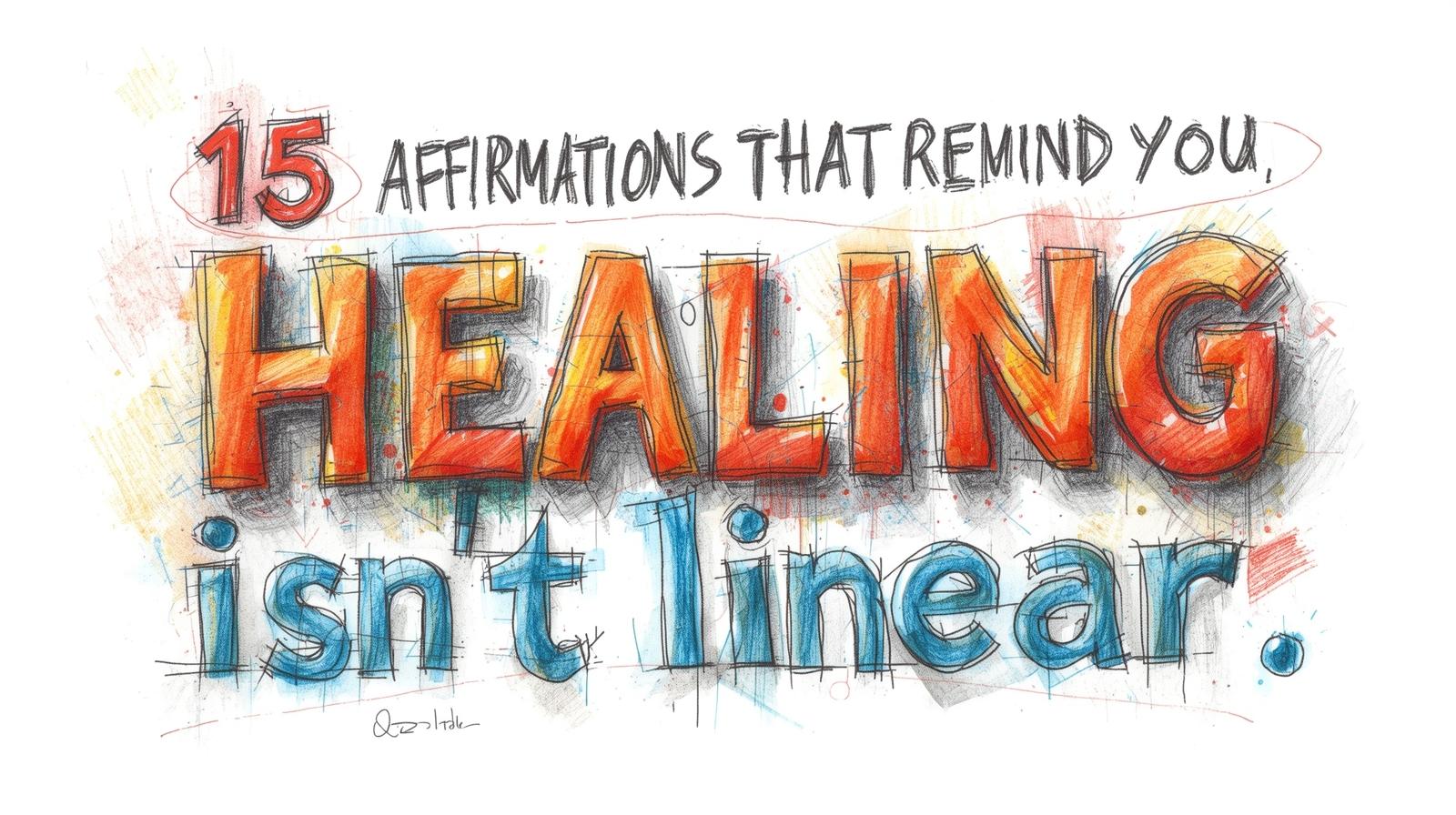
Healing isn’t linear
Healing rarely unfolds in the way we imagine it will. When many of us first step into the process of recovery—whether from trauma, loss, heartbreak, burnout, or years of neglect—we envision something that resembles a straight path forward. We imagine progress building on itself day by day, like stacking bricks into a wall that slowly becomes more stable and complete.
The truth is far less predictable, and also far more human. Healing is not a line. It is not a ladder. It does not move only upward. Instead, it is a spiral. It curves, it bends, it doubles back on itself, it circles lessons we thought we had already learned and asks us to sit with them again, this time with new eyes.
For those who are in the middle of the process, this unpredictability can feel discouraging. We tell ourselves we “should be further along.” We compare our progress to others, or to an idealized timeline we once envisioned. The moment we feel pain after a good week, we panic, believing everything has been undone. But none of that is true. Every step, including the ones that feel like steps backward, is part of healing. Every difficult day is still proof of movement.
That is why affirmations are powerful companions for the healing journey. They are not magical phrases that instantly erase pain, but they are reminders that bring us back to perspective, compassion, and truth when our inner critic takes over. Affirmations gently interrupt the harsh voices in our minds and offer a softer, wiser narrative. They remind us that our humanity is not a flaw, that imperfection does not cancel progress, and that every pause or stumble is still part of the unfolding path.
In the following sections, you will find affirmations crafted specifically to support non-linear healing. Each one is more than just a sentence—it carries meaning, emotion, and guidance. After the affirmation itself, you will find a reflection, an explanation of how these words can meet you where you are, and a gentle exploration of how you might embody them in daily life.
Affirmation 1: “I honor every step—forward and backward—as part of my healing.”
One of the hardest things about recovery is learning to accept setbacks without interpreting them as failure. This affirmation teaches us to see each movement as part of a larger dance. Imagine a wave moving toward the shore. It surges forward, then it pulls back, but every motion belongs to the same ocean. Your healing is like that. When you have days where you feel strong and connected, you are riding the forward crest. When you feel tired, angry, or fragile, that is the wave pulling back. But neither cancels the other out. Both are essential to the tide.
By repeating this affirmation, you remind yourself that even the difficult days are contributing to the bigger picture. You are not broken for stumbling. You are not back at the beginning. You are honoring the whole dance of your journey.
Affirmation 2: “This feeling is not permanent, and I am not broken.”
When pain intensifies, it often feels endless. The brain has a way of convincing us that the current discomfort is the only truth we will ever know. This affirmation disrupts that illusion. By saying the words “this feeling is not permanent,” you anchor yourself in the reality that emotions are like weather systems. Storms pass. Clouds shift. Even when the sky is heavy, light still exists behind it.
The second part, “I am not broken,” is even more important. Many survivors of trauma internalize the belief that there is something fundamentally wrong with them. But healing is not about becoming flawless; it is about remembering your wholeness even as you carry scars. Saying this out loud becomes an act of reclamation. You are reminding yourself that pain is an experience, not an identity.
Affirmation 3: “There’s beauty in the messy, and growth in the pause.”
We live in a culture that glorifies productivity and visible progress. We are taught to celebrate milestones but rarely to honor the in-between moments. Yet healing requires both motion and stillness. This affirmation encourages you to see the pauses not as failures but as fertile ground.
Think of a seed buried underground. For months, it looks like nothing is happening. Yet inside, the seed is splitting, reshaping, stretching roots into the dark soil. Only later will the green stem break through the surface. That underground pause is not wasted time; it is transformation. Similarly, when your healing feels stagnant or messy, remember that something is growing quietly within you. The pause is part of the process.
Affirmation 4: “Progress includes the days I retreat and regroup.”
Healing requires rest. Without it, the nervous system cannot reset, and the heart cannot integrate what it has learned. Too often, people feel guilty for needing a break, believing it means they are weak or lazy. This affirmation reframes retreat as wisdom.
Imagine climbing a mountain. At times, you stop at a resting point. You sit, drink water, and catch your breath. You might even walk back a few steps to find steadier ground. None of this means you have abandoned the climb. It means you are sustaining yourself so you can continue. Saying this affirmation out loud helps you remember that retreat is not regression; it is resilience.
Affirmation 5: “I release the pressure of perfection and embrace unfolding.”
The myth of perfection is one of the greatest enemies of healing. We are not meant to “get it right” every time. We are meant to unfold, layer by layer, like a flower opening to the sun. Some petals bloom quickly, others take longer, and sometimes the process looks uneven. That is okay.
When you repeat this affirmation, you are actively softening the inner demand that says you must have it all together. You are giving yourself permission to be in process, to be imperfect, to be evolving. Healing is not a performance. It is an intimate, living unfolding, and you are allowed to take your time.
Affirmation 6: “Each breath I take carries me deeper into compassion.”
Breath is often overlooked because it is so ordinary, yet it is the anchor that keeps us tethered to the present moment. When you whisper this affirmation, you are transforming a biological rhythm into a spiritual reminder. Each inhale becomes an act of receiving life. Each exhale becomes an act of release. Inhaling compassion is not about instantly erasing pain—it is about softening the harsh edges that pain creates inside of you.
Imagine yourself in the middle of a stressful day, caught between overwhelm and exhaustion. The temptation is to tense up, to push through, to carry the weight without pause. But in that very moment, if you can place your hand on your chest, close your eyes, and repeat, “Each breath I take carries me deeper into compassion,” your nervous system begins to shift. You remind yourself that compassion is not something distant that needs to be earned; it is something as close as your own lungs. Each breath carries you closer to gentleness, to patience, to presence.

Affirmation 7: “My timeline is unique, worthy, and unfolding in its own rhythm.”
Comparison can be poisonous in the healing process. You may look at others who seem “further ahead” and feel shame for not being at the same point. You may even compare yourself to an earlier version of who you were, longing for the days when you felt lighter or more in control. This affirmation disrupts that spiral. It declares that your timeline is not meant to look like anyone else’s.
Think of a forest. In one patch of soil, flowers bloom quickly in the spring, while a nearby oak tree may take decades to fully spread its branches. Neither is wrong. Both have value. Both contribute beauty in their own way. The same is true for your healing. The pace of your growth is not less sacred because it is slower, or because it unfolds differently than what you expected. When you affirm that your timeline is unique and worthy, you reclaim trust in your own rhythm, and you give yourself permission to heal at the speed that your soul requires.
Affirmation 8: “I give myself permission to heal in spirals, circles, and curves.”
Many people are taught that healing is a ladder you climb. You leave the bottom behind and step up rung by rung until you reach the top. But in reality, healing often feels more like a spiral staircase. You circle back to familiar lessons, but each time you return, you stand at a slightly higher vantage point.
This affirmation allows you to welcome that spiral rather than fear it. When you encounter old triggers or familiar pain, you may be tempted to think, “I’m back where I started.” But that is rarely true. You are revisiting the same place with new strength, new tools, and new awareness. It is like walking a circle through a meadow—you see the same flowers, the same path, but the season has changed, and your perspective is different. Giving yourself permission to heal in spirals means releasing the pressure to always move “up” and instead honoring the depth that comes from moving in curves.
Affirmation 9: “I trust the rhythm of my soul’s unfolding—even when I can’t see the pattern.”
There are seasons when healing feels invisible. You may be doing the work—attending therapy, practicing self-care, reflecting in your journal—but you look around and wonder why nothing seems to be changing. This is when trust becomes essential.
Repeating this affirmation is like placing your faith in an unseen seed. You may not witness growth above ground yet, but something is stirring beneath the soil. Roots are extending, foundations are being formed. Just because you cannot see the pattern does not mean it is absent. Your soul has its own rhythm, one that may not be logical or visible but is nonetheless real. By affirming your trust in this rhythm, you choose to release control and allow your journey to unfold with mystery and grace.
Affirmation 10: “Tenderness toward myself fuels my strength.”
Many people equate strength with toughness, with pushing through without complaint. But the paradox of true resilience is that it emerges from softness. Tenderness allows you to hold your own heart with care, which in turn makes you stronger than harshness ever could.
Imagine a wounded child who has scraped their knee. If you yell at the child to toughen up, the pain only deepens. But if you kneel down, wash the wound gently, and speak softly, the child feels safe to continue. The same is true for your inner self. When you approach your pain with tenderness, you are not indulging weakness—you are cultivating the kind of compassionate strength that makes real endurance possible. This affirmation invites you to remember that your softness is not a liability. It is the fuel that sustains you.
Affirmation 11: “Even on hard days, my persistence is proof of healing.”
Healing is not measured only by the absence of pain. Sometimes the greatest evidence of progress is the fact that you keep showing up even when it hurts. This affirmation recognizes that resilience lies in persistence, not in perfection.
If you woke up this morning and carried yourself through the day, even while struggling, that is healing. If you allowed yourself to cry rather than numb out, that is healing. If you sought support instead of isolating, that is healing. It is easy to dismiss these moments because they feel ordinary, but they are extraordinary proof of growth. When you repeat this affirmation, you celebrate your own courage for continuing, even on the days that test you.
Affirmation 12: “Grief, growth, joy—each emotion has value and voice, and I listen.”
Many of us learned to categorize emotions as good or bad. Joy is welcomed, but grief and anger are shunned. This creates imbalance, because in truth, every emotion carries wisdom. Grief tells us where love once lived. Anger signals a boundary that was crossed. Joy reminds us of our aliveness.
When you say this affirmation, you declare that all emotions are worthy of being heard. You no longer silence the parts of yourself that feel heavy or complicated. Instead, you listen, you witness, you hold space. By doing so, you integrate rather than suppress. Your healing becomes richer because it includes the whole spectrum of who you are.
Affirmation 13: “I am becoming, slowly, steadily, beautifully.”
Healing does not always announce itself with grand changes. Sometimes it happens so subtly that you do not notice until you look back months later and realize you respond differently to situations that once crushed you. This affirmation honors that slow, steady transformation.
Imagine a pot of water warming on the stove. At first, nothing seems to change, but with time, the temperature rises until suddenly the water is boiling. Your healing is like that gentle heat—quiet, gradual, yet powerful. By repeating this affirmation, you remind yourself that you are not static. You are becoming. Even if it feels small, the becoming is still beautiful.
Affirmation 14: “Every sunrise is a chance to begin again—with wisdom I already carry.”
One of the most comforting truths is that every day is a fresh start. No matter how heavy yesterday was, the sunrise brings an invitation to try again. This affirmation teaches you to release the weight of past days while also recognizing that you are not starting from nothing. You carry with you the wisdom of every experience.
Picture yourself standing on the shore at dawn. The night was long, the waves relentless, but as the sun rises, the water glows with new light. That is what each day offers: a chance to begin again. By speaking this affirmation, you allow yourself to welcome the morning not as pressure to be perfect but as an opening to continue with gentleness and courage.
Affirmation 15: “I deserve gentleness, especially when the road feels uneven.”
Many people offer compassion to others but deny it to themselves. They believe they must earn kindness by doing everything right, by being strong, by never faltering. This affirmation is a direct rejection of that belief. It declares that you are worthy of gentleness not in spite of your struggles, but especially because of them.
When the road feels uneven, when you stumble or falter, that is the moment you need kindness the most. Picture a traveler carrying a heavy pack on a rocky path. Would you yell at them to move faster, or would you offer them water and a place to rest? The answer is obvious. This affirmation is a reminder to treat yourself as kindly as you would treat that weary traveler. You deserve gentleness, always, but especially when things feel hard.

Bringing affirmations into daily life
Reading affirmations once can be uplifting, but the true transformation comes from weaving them into your daily rhythm. Healing is not about a single epiphany—it is about repetition, reinforcement, and re-grounding, especially on the days when you forget what you once knew. Affirmations are most powerful when they become companions rather than distant ideals.
One way to begin is by creating a morning ritual. Before checking your phone or engaging with the outside world, take a moment to sit with yourself. Close your eyes and place a hand over your heart. Breathe slowly, and choose one affirmation that resonates most deeply with how you feel today. Speak it aloud or whisper it silently. The act of naming it gives direction to your day, like setting a compass. Even if challenges come, you have already chosen a gentle truth to return to.
Movement is another way to anchor these truths. You might pair an affirmation with walking, stretching, or yoga. As your body moves, repeat the words rhythmically. This integrates the affirmation not just into your mind but into your physical being. Healing, after all, lives in the body as much as in the mind.
Finally, bedtime is a powerful window for affirmations. As you prepare for sleep, the mind is in a more receptive state. Whispering an affirmation then allows it to settle deeply into your subconscious. You might place a notebook by your bed and write down one affirmation each night, letting that be the last thing you read before closing your eyes. This practice can create a gentle bridge between your waking struggles and your dreaming rest, reminding you that even in sleep, healing continues.
Rituals of reconnection
Rituals do not have to be elaborate to be sacred. A ritual is simply an intentional act performed with awareness and meaning. Affirmations can become the heart of simple rituals that reconnect you to your healing path.
One beautiful ritual is the “mirror practice.” Stand before a mirror and meet your own eyes, even if it feels uncomfortable. Speak your chosen affirmation aloud. Notice what emotions rise—discomfort, resistance, or perhaps unexpected relief. Stay with them. Over time, this practice helps soften self-criticism and cultivates a kinder relationship with your reflection.
Another ritual is creating an affirmation altar. You do not need anything extravagant. A small corner of a shelf with a candle, a stone, or a piece of paper where you write your affirmation is enough. Each time you pass this space, pause to breathe and repeat your words. This transforms affirmations into a physical presence in your home, a reminder that healing has a place in your daily environment.
Water can also be a ritual ally. When you drink a glass of water, whisper your affirmation into it first. Imagine the words infusing the water with intention. As you sip, allow yourself to feel as if you are literally drinking in your affirmation. This symbolic act reminds you that healing is not abstract—it is something you can embody, something you can nourish yourself with.
What to do when affirmations feel hollow
It is common to resist affirmations at first. Sometimes you may say the words and immediately feel doubt. If you whisper “I am not broken” and your mind screams back “Yes, you are,” it does not mean the affirmation is failing. It means your old belief system is strong. Healing requires patience with this resistance.
The key is not to force yourself to instantly believe but to allow the words to plant seeds. Think of an affirmation as a seed placed into the soil of your subconscious. You do not demand the seed sprout overnight. You water it, you expose it to light, and you trust that growth will happen invisibly at first. The more you repeat the words, the more the old narrative weakens, and the new one takes root.
You can also modify affirmations to meet yourself where you are. If “I love myself fully” feels impossible, try “I am learning to love myself more each day.” Meeting yourself with honesty prevents affirmations from becoming a source of shame. They are meant to comfort, not to pressure.
The non-linear journey: Embracing setbacks with grace
The essence of this article is remembering that healing is not linear. Even with affirmations, there will be days when you feel like you have slid backward. On those days, the temptation is to abandon the practice, to believe it is not working. But those days are precisely when affirmations are needed most.
Setbacks are not proof of failure. They are proof that you are human. Imagine a musician practicing a difficult piece. Some days they play smoothly, other days they stumble over the same notes. But the stumbling is not wasted. It strengthens memory, builds patience, and deepens skill. Healing works the same way. Each time you fall, you are also rehearsing the act of standing again. That act itself is progress.
When you face setbacks, choose an affirmation that directly addresses your fear. If you feel broken, repeat “This feeling is not permanent, and I am not broken.” If you feel shame about slowing down, repeat “Progress includes the days I retreat and regroup.” By aligning the affirmation with the struggle, you create a dialogue that helps carry you through.
Becoming at Your own pace
Affirmations are not spells that erase hardship. They are gentle companions, words of power that shift your perspective in the moments when you are most tempted to give up. They remind you that the spiral, the pause, the setback, and the triumph are all part of the same journey. They remind you that you are not failing because your healing does not look like a straight line. You are simply human, unfolding in your own rhythm.
Perhaps the most important thing to carry from this guide is that you do not have to rush. Healing has no deadline. Your journey is worthy because it is yours. If all you can do today is take one slow breath and whisper one affirmation, that is enough. That is healing.
Every time you return to these words, you are choosing hope. Every time you remind yourself of your wholeness, you are nurturing resilience. Every time you honor the non-linear path, you are embodying the deepest truth: you are becoming, slowly, steadily, beautifully. And that, in itself, is sacred.
Related posts You’ll love:
- 25 mantras for healing after a silent goodbye: Finding peace, closure, and self-love
- The subconscious power of repeating a single word daily
- 15 power phrases for days You feel like giving up
- I am enough: 50 self-love affirmations that will change Your inner voice
- 20 mantras for courage before big life changes: Words to anchor Your heart
- Why so many Women secretly mourn their younger selves: The hidden grief of girlhood, identity, and healing
- Friendship breakups hurt differently — why they’re so confusing and how to stop self-blaming with healing mantras

Frequently Asked Questions (FAQ) about affirmations and non-linear healing
-
What does “healing isn’t linear” really mean?
When we say healing isn’t linear, we mean that recovery and growth do not happen in a straight upward line. Instead, the process often includes ups and downs, breakthroughs and setbacks, moments of clarity followed by confusion. This is completely normal and does not mean you are failing—it simply means you are human.
-
Can affirmations really help with emotional healing?
Yes. Affirmations do not replace therapy or professional support, but they are powerful tools for reshaping your inner dialogue. By repeating compassionate and grounding statements, you create new mental pathways that help reduce self-criticism, calm the nervous system, and build resilience during difficult times.
-
How often should I repeat affirmations to feel the benefits?
Consistency matters more than frequency. Even spending two to five minutes daily can make a difference over time. You might repeat them in the morning to set the tone for your day, at night before sleep, or whenever you feel discouraged. The key is not perfection, but gentle repetition until the affirmations begin to feel natural.
-
What if affirmations feel fake or forced at first?
It is common for affirmations to feel uncomfortable in the beginning. If a statement feels too far from your current belief, you can soften it. For example, instead of “I love myself completely,” you might say, “I am learning to love myself more each day.” Over time, as you practice, the words will begin to feel more authentic and believable.
-
Which affirmations are best when I feel like I’m moving backward?
On days when you feel like you have regressed, choose affirmations that remind you setbacks are part of the process. Phrases like “I honor every step—forward and backward—as part of my healing” or “Progress includes the days I retreat and regroup” help shift your perspective from failure to compassion.
-
Can I use affirmations alongside therapy or meditation?
Absolutely. In fact, affirmations can enhance both therapy and meditation. During meditation, affirmations can become mantras to focus your attention. In therapy, they can reinforce insights you are working on with your therapist. Think of them as supportive companions that complement deeper healing practices.
-
Are affirmations only for people healing from trauma?
Not at all. Affirmations can support anyone navigating change, growth, or emotional challenges. Whether you are dealing with grief, stress, burnout, or simply trying to develop more self-compassion, affirmations provide gentle reminders that keep you grounded and connected to your own resilience.
-
Should I write affirmations down or just say them?
Both methods are effective. Writing affirmations down can deepen the connection and make them feel more tangible. Saying them out loud engages your voice and body, reinforcing the words emotionally. Many people find it powerful to combine both—writing affirmations in a journal and then speaking them aloud.
-
How can I stay motivated to use affirmations when healing feels slow?
Motivation often fades when progress feels invisible, which is why affirmations are so valuable. They remind you that slowness is not failure and that every step matters. To stay consistent, you can place affirmations on sticky notes around your home, set reminders on your phone, or create a small ritual that makes the practice feel sacred rather than like a chore.
Sources and inspirations
- Brown, Brené. Atlas of the Heart: Mapping Meaningful Connection and the Language of Human Experience. Random House, 2021.
- Siegel, Daniel J. The Mindful Therapist: A Clinician’s Guide to Mindsight and Neural Integration. W. W. Norton & Company, 2010.
- Emerson, Donald G. “The Process of Healing: A Spiral Model.” Journal of Integrative Psychology, Vol. 12, No. 4, 2018.
- Salter, Anne. “Non-Linear Trajectories in Recovery from Trauma.” Trauma Psychology Today, Vol. 5, Issue 2, 2022.
- Ceccarelli, Lisa. Embodied Affirmations: A Practitioner’s Guide to Mind-Body Healing. InnerPath Press, 2023.
- Gilbert, Paul. Mindful Compassion: Using the Power of Mindfulness and Compassion to Transform Our Lives. New Harbinger, 2010.
- Siegel, Tina Payne. “The Healing Journey: Integrating Words of Power with Somatic Awareness.” International Journal of Mind-Body Wellness, Vol. 3, No. 1, 2024.
- Hain, Rachel. “Online Support Communities and Affirmation Sharing in Non-Linear Healing.” Cyber-Psychology Review, Vol. 8, Issue 3, 2025.




Leave a Reply