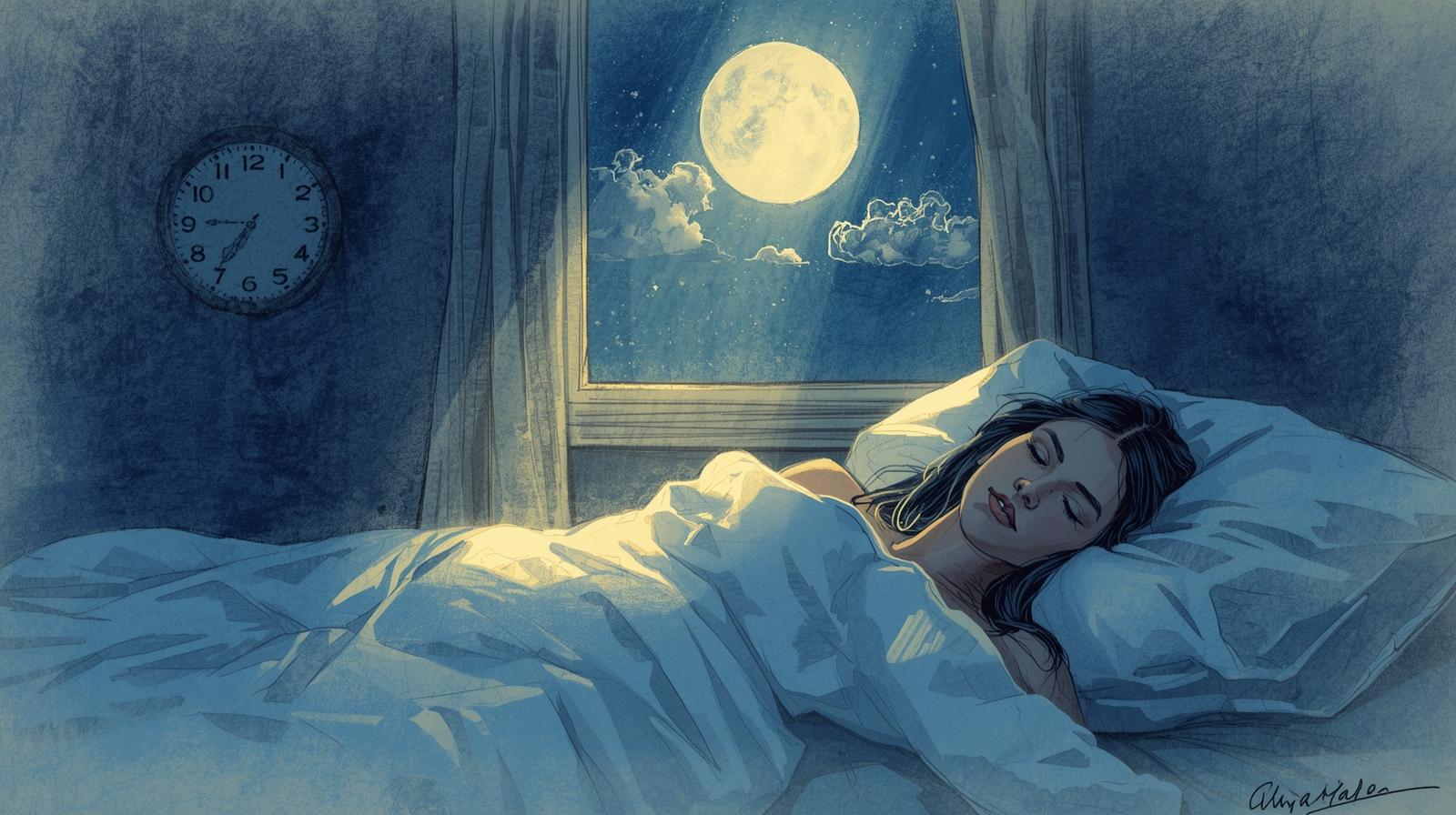
The quiet mystery of 3AM
It happens suddenly. You glance at your phone in the dark, and the glowing screen reads 3:00 AM. Your heart beats a little faster as your mind becomes alert in the stillness of the night. The world outside is quiet, yet inside your body, something feels unsettled. You toss and turn, sometimes falling back asleep, sometimes lying awake for what feels like hours. And the question lingers: why does this keep happening at the same time?
Many people experience this strange and consistent pattern of waking at 3AM, and it often feels more than just coincidence. While sleep disruptions are common, the particular hour of three in the morning carries both scientific explanations and symbolic associations that span across cultures, psychology, and spirituality. It’s an hour that has been described as the body’s stress window, the mind’s processing time, and even the soul’s whispering hour.
This article will guide you through the many layers of what it means when you wake up at 3AM. We’ll begin with the foundations of sleep science to understand how the body naturally cycles through rest, then move into the emotional and psychological factors that can disrupt it. From there, we will explore the deeper symbolic and spiritual interpretations that humans have attached to this hour throughout history. You’ll also find gentle, practical insights on how to reclaim your rest and learn to listen to what your body and mind are telling you during these wakeful moments.
By the end, you may come to see your 3AM awakenings not as random interruptions, but as meaningful signals—an invitation to tune into your inner rhythms and uncover what might need healing, calming, or realignment in your life.
The science of sleep and the body’s natural rhythms
To understand why waking at 3AM is such a common phenomenon, we need to begin with the biological architecture of sleep itself. Sleep is not a uniform state but a cycle that moves through distinct stages, each serving unique restorative functions. These stages include light sleep, deep slow-wave sleep, and rapid eye movement (REM) sleep, during which vivid dreaming occurs. On average, a full sleep cycle lasts about ninety minutes, and most adults experience four to six cycles per night.
Around the middle of the night—typically between two and four in the morning—the body enters a natural transition between deeper and lighter phases of sleep. This window is physiologically more vulnerable to disturbances. During the first half of the night, slow-wave sleep dominates, allowing the body to focus on repair, immune strengthening, and physical recovery. In the second half, REM stages become longer and more intense, engaging emotional memory processing and neurological integration.
The circadian rhythm, which is the body’s internal 24-hour clock, also influences this pattern. Cortisol levels, which are generally lowest around midnight, begin to rise around three or four in the morning in preparation for the coming day. This hormonal shift is designed to gently nudge the body toward wakefulness closer to sunrise, but in individuals experiencing stress or imbalance, it can trigger premature awakenings. In other words, your body may simply be biologically tuned to wake up in this window, but the reasons behind why you stay awake—or feel restless—require a closer look.
The role of stress, anxiety, and cortisol spikes in 3AM awakenings
For many people, waking at three in the morning is directly connected to stress physiology. Cortisol, often referred to as the stress hormone, is a crucial player in the body’s circadian rhythm. Under normal conditions, it rises gradually toward dawn. However, in times of chronic stress or anxiety, cortisol release can become dysregulated. Instead of a gentle rise, the body experiences a sudden spike, which can trigger a stress response powerful enough to wake you.
When you open your eyes at 3AM with your mind racing, your nervous system is often stuck in a loop of hypervigilance. This is the body’s fight-or-flight system responding even though no immediate external danger is present. The result is difficulty returning to sleep, accompanied by intrusive thoughts, restlessness, or even physical sensations such as a racing heartbeat.
Anxiety also amplifies this phenomenon because the mind tends to latch onto worries during the stillness of the night. Without the distractions of daytime, unresolved fears and unprocessed emotions surface more clearly. Research in sleep psychology has shown that nighttime awakenings are more common among individuals with high stress loads, trauma histories, or perfectionist tendencies. The brain uses the night as a processing chamber, but for those under strain, this process interrupts rest rather than supports it.
This perspective helps explain why even when nothing in the environment has changed—no noise, no light, no physical discomfort—you may find yourself awake at the same haunting hour. The culprit lies within the stress cycle itself, signaling that your body and nervous system are asking for balance and release.
How emotional wounds and subconscious processing show up at night
Beyond stress hormones and biological rhythms, the night also becomes a stage where unresolved emotional experiences surface. The subconscious mind, which operates beneath the level of daily awareness, uses sleep as an opportunity to process fragments of memory, conflict, and unhealed pain. This is particularly active during REM sleep, when emotional memory consolidation occurs.
When you wake at 3AM, it is often a sign that your psyche is wrestling with something unintegrated. Old wounds, suppressed grief, or lingering fears can emerge in the quiet of the night, unmasked by the absence of daytime busyness. This is why many people report waking at this hour with feelings of sadness, guilt, or even existential unease, despite not consciously thinking about these issues during the day.
Therapists often describe nighttime awakenings as the subconscious mind’s way of “knocking at the door.” In waking life, unresolved emotions may be pushed aside to maintain functionality, but in the still hours of the night, those same emotions seek acknowledgment. Instead of interpreting these awakenings as purely disruptive, they can be seen as invitations to listen inward. Your body and mind are not betraying you; they are signaling that something requires your attention, compassion, or healing.
This understanding reframes the 3AM awakening not as a sign of dysfunction, but as a meaningful intersection between biology and psychology. It highlights the deep connection between emotional well-being and sleep quality, reminding us that true rest cannot exist in the absence of emotional integration.
Spiritual and symbolic meanings behind the 3AM wake-up
For centuries, cultures and spiritual traditions around the world have attached profound significance to the hour of three in the morning. Known in folklore as the “witching hour” or “spiritual veil hour,” it has been described as a time when the boundary between the physical and spiritual worlds is thinnest. In some traditions, it is believed that this hour offers heightened intuition, clearer access to dreams, and even spiritual visitations.
From a symbolic perspective, waking at 3AM can be interpreted as the soul’s attempt to communicate something important. Many spiritual teachers suggest that this hour represents a call to consciousness—a gentle nudge from the universe to reflect, meditate, or open oneself to deeper truths. Some people report experiencing profound clarity, inspiration, or a sense of presence during these wakeful moments, as though the silence of the night makes them more receptive to spiritual guidance.
There are also cross-cultural associations that tie this hour to transformation. In Chinese medicine, the body’s energy meridians are believed to follow a twenty-four-hour clock, and the hours between one and three in the morning are connected to the liver, an organ associated with anger, cleansing, and emotional detoxification. Waking during this time, according to this perspective, may reflect the body’s attempt to process unresolved emotional burdens or release stagnant energy.
While scientific explanations help us understand the mechanics of sleep, the spiritual dimension gives us a more poetic lens. Waking at 3AM may not always be purely physical or psychological—it may also be an invitation to connect with aspects of the self that transcend ordinary consciousness. For some, this is comforting; for others, it can be unsettling. Yet even in its mystery, the experience often carries a sense of significance that should not be dismissed.
Cultural and historical perspectives on the “witching hour”
Long before neuroscience gave us the language of circadian rhythms and cortisol spikes, people across cultures noticed that the early hours of the morning carried a unique energy. In medieval Europe, three in the morning became known as the “witching hour,” a time associated with heightened supernatural activity. Writers and storytellers described it as a moment when the veil between worlds was thinner, when witches practiced their craft, and when spirits were said to walk freely. Though rooted in folklore, these associations reflected a collective recognition that something about the night’s deepest hours felt charged, mysterious, and different.
In Christian tradition, three o’clock in the morning was sometimes considered an inversion of three o’clock in the afternoon—the time when Jesus was believed to have died on the cross. This gave the hour a darker reputation, with some framing it as a moment of spiritual trial or even demonic influence. Whether or not one subscribes to these beliefs, they shaped centuries of cultural attitudes toward the 3AM wake-up, infusing it with an aura of unease.
Other traditions, however, interpreted the hour more positively. In Buddhist practice, monks often wake in the very early morning to begin chanting, meditating, or engaging in spiritual rituals. The silence and stillness of this time are seen as conducive to deeper states of awareness and presence. Similarly, in yogic traditions, the period just before dawn—known as brahmamuhurta—is considered especially sacred for meditation and spiritual practice.
The persistence of these varied cultural narratives underscores a timeless truth: waking at 3AM is not just a quirk of biology but a phenomenon that has captivated human imagination for centuries. Whether viewed with fear, reverence, or curiosity, this hour has always invited us to look beyond the ordinary and consider what lies beneath the surface of consciousness.
The connection between trauma, nervous system dysregulation, and sleep patterns
While cultural stories frame 3AM as mysterious or spiritual, modern psychology offers another crucial perspective: trauma and nervous system dysregulation. For people who have lived through difficult experiences, the body often carries imprints of those events long after they’ve ended. These imprints can show up in hypervigilance, heightened startle responses, or difficulty feeling safe enough to relax fully. Sleep, which requires a surrender of control, can be particularly disrupted in such cases.
Nighttime awakenings, especially around three in the morning, are common in people with histories of trauma or unresolved stress. The nervous system, still primed to scan for danger, may interpret even minor internal shifts—such as hormonal changes or muscle adjustments—as potential threats. This activates the sympathetic nervous system, jolting the person awake. The quiet darkness amplifies the sense of unease, leading to racing thoughts or even panic.
Research into post-traumatic stress disorder (PTSD) has found that sleep disturbances are among the most persistent symptoms, with nightmares, insomnia, and nighttime hyperarousal being especially common. Even outside of formal diagnoses, anyone carrying unprocessed grief, fear, or relational wounds may find their body echoing this pattern. The 3AM wake-up, then, can be understood as a somatic expression of the nervous system’s unfinished healing work.
Rather than interpreting these awakenings as failures, it may be more compassionate to see them as evidence of the body’s resilience. Your system is working hard to keep you alert and alive, even if the threat is no longer present. Healing involves slowly teaching the nervous system that safety exists in the present moment, allowing rest to become more restorative and uninterrupted.

How lifestyle habits and environment influence nighttime wake-ups
Although biology, psychology, and spirituality play major roles, we cannot ignore the practical impact of lifestyle and environment on 3AM awakenings. Small daily choices accumulate and affect the body’s ability to sustain deep rest.
Caffeine, alcohol, and heavy meals close to bedtime can all interfere with the natural progression of sleep cycles, making awakenings more likely. Alcohol in particular may help people fall asleep quickly, but it disrupts REM sleep and increases the likelihood of waking in the second half of the night—the very window when 3AM awakenings occur. Similarly, stimulants such as caffeine may linger in the bloodstream longer than expected, subtly agitating the nervous system.
The sleep environment also plays a role. Noise pollution, inconsistent temperatures, and exposure to artificial light—especially blue light from screens—can disrupt circadian rhythms and weaken the quality of rest. Even when these disruptions are not consciously noticed, the body may react with fragmented sleep and middle-of-the-night wakefulness.
Lifestyle stressors further contribute. Overwork, lack of downtime, and constant exposure to digital media keep the mind in a state of overstimulation, which does not easily switch off at night. Without adequate wind-down rituals, the nervous system struggles to shift into the parasympathetic “rest and digest” mode, leading to restless awakenings.
What this shows is that waking at 3AM cannot be pinned on a single cause. It is often the result of a delicate interplay between internal states and external conditions. Creating supportive routines and environments, while addressing deeper emotional and physiological factors, offers the most sustainable path toward more restful nights.
What it really means for Your healing journey if You often wake at 3AM
When the clock strikes three and your eyes open again and again, it can be tempting to see it as nothing more than a frustrating sleep problem. Yet if we step back, the pattern may carry a deeper message. Waking at 3AM often reflects an inner call to notice what is out of alignment, whether on the physical, emotional, or spiritual level.
From a physiological standpoint, it may mean your stress cycle needs attention, or that your lifestyle habits are inadvertently disrupting your natural rhythms. From a psychological angle, it may suggest that unprocessed emotions are seeking acknowledgment. From a spiritual perspective, it may symbolize an awakening of consciousness, an invitation to reflect or reconnect with something larger than yourself.
Seen in this holistic way, the 3AM wake-up becomes less of an enemy and more of a messenger. It is your body’s way of saying: slow down, listen, and realign. The fact that it recurs at the same time each night only adds weight to its meaning. The body and mind are speaking in rhythm, not randomness.
For many, integrating this perspective shifts the emotional tone of the experience. Instead of lying awake in frustration, you may begin to ask yourself gentle questions: What is my body trying to tell me? What emotions are surfacing that I haven’t faced? What changes in my daily life might bring me closer to balance?
Ultimately, these questions guide you toward healing, because they invite you into dialogue with yourself. If you listen closely, the quiet of three in the morning may reveal truths that the noise of daytime never allows. In this way, the 3AM awakening transforms from a restless interruption into a meaningful step on the path of self-awareness and wholeness.
Practical approaches to restoring deep, uninterrupted rest
Understanding why you wake at three in the morning is the first step; the next is learning how to gently restore balance so your nights become more restful. True healing requires addressing both the immediate sleep disruptions and the underlying causes that create them.
One of the most effective approaches begins with establishing a consistent bedtime routine. The human nervous system thrives on rhythm and predictability, and a calming evening ritual signals to the body that it is safe to let go. This might include dimming the lights an hour before bed, turning off electronic devices that emit stimulating blue light, and engaging in grounding practices such as journaling, gentle stretching, or meditation. These small acts help prepare both body and mind for deeper rest.
Breathwork and relaxation techniques are also valuable tools for those who wake in the middle of the night. Slow, diaphragmatic breathing activates the parasympathetic nervous system, which counteracts the stress response and helps the body return to a state of calm. Mindfulness meditation, body scans, or soothing visualizations can also shift the focus away from anxious thoughts and back toward relaxation.
On a physiological level, reducing caffeine and alcohol intake, especially in the afternoon and evening, supports more stable sleep cycles. Creating an environment that is cool, dark, and quiet further enhances the quality of rest. For those who wake frequently, keeping a journal by the bedside can provide a way to externalize worries that surface at 3AM, transforming racing thoughts into written reflections rather than sleepless spirals.
Equally important is daytime care. Movement, exposure to natural light, balanced nutrition, and periods of intentional rest all strengthen the circadian rhythm. When the body is supported throughout the day, it is more likely to find balance during the night.
The goal is not to eliminate waking altogether—it is natural for the body to stir briefly during the night—but to create conditions that allow you to drift back into sleep with ease, rather than staying caught in wakeful unrest.
When to seek professional support
While lifestyle adjustments and self-care practices can make a meaningful difference, there are times when professional guidance becomes essential. If waking at 3AM is chronic, accompanied by significant distress, or leaves you feeling exhausted during the day, it may point to underlying conditions that require treatment.
Sleep disorders such as insomnia, sleep apnea, or restless leg syndrome can all contribute to nighttime awakenings. Consulting with a sleep specialist can provide clarity through assessments such as sleep studies, which reveal patterns that might not be visible otherwise.
Mental health professionals also play an important role, particularly when 3AM wake-ups are tied to unresolved trauma, anxiety, or depression. Therapy offers a safe space to explore the emotions and memories that may surface during the night. Modalities such as cognitive-behavioral therapy for insomnia (CBT-I), trauma-informed therapy, or somatic approaches can help retrain the mind and body toward deeper rest.
It is also worth speaking with a medical provider if you notice additional symptoms such as night sweats, heart palpitations, or sudden changes in mood or energy. These could indicate hormonal imbalances, thyroid issues, or other physiological factors that disrupt sleep.
Seeking help is not a sign of weakness; it is an act of self-care. Your body’s nightly patterns are signals worth honoring, and professional support ensures you are not navigating them alone.
Transforming 3AM wake-ups into opportunities for awareness
Waking at three in the morning is not merely an inconvenience—it is a window into the complex interplay of biology, psychology, and spirit. From the rise of cortisol to the echoes of emotional memory, from ancient cultural interpretations to modern neuroscience, the reasons are as layered as the human experience itself.
Rather than interpreting these awakenings as failures, you might begin to see them as invitations. They remind you to pay attention to the body’s rhythms, to acknowledge emotions waiting for compassion, and to consider the possibility of deeper spiritual connection. At their core, 3AM awakenings are less about broken sleep and more about the soul’s conversation with the self.
With understanding, practical adjustments, and—when needed—professional guidance, these wakeful hours can transform from restless disruptions into meaningful moments of awareness. In listening to them, you may find not only better sleep but also greater alignment with your body, your emotions, and your life’s deeper rhythm.
Related posts You’ll love:
- Watching sunsets as super therapy: The science, psychology, and healing power of nature’s evening ritual
- Self-massage techniques for releasing daily tension: An expert guide
- Tension mapping: How to notice where Your body stores stress
- The healing magic of lying on the floor for 10 minutes
- How to transition from work mode to relax mode: A complete guide to inding inner calm after busy days
- Powerful brain rest secrets to wake up energized, not exhausted
- Late bloomer energy: Why Your ‘delayed’ life is secretly Your biggest superpower

Frequently Asked Questions: Why You wake up at 3AM
-
Why do I keep waking up at 3AM every night?
Waking up at 3AM is often linked to the body’s natural sleep cycles and hormonal rhythms. Cortisol, the stress hormone, begins to rise in the early morning, which can trigger wakefulness. Stress, unresolved emotions, lifestyle habits, and even spiritual or symbolic interpretations may also contribute.
-
Is waking up at 3AM a sign of anxiety?
Yes, anxiety can play a significant role. When the mind is under stress, the nervous system often becomes hyper-alert at night. This makes it harder to stay asleep and more likely to wake in the early morning hours. Many people experience racing thoughts or restlessness at this time.
-
What does waking up at 3AM mean spiritually?
Spiritually, many traditions see the 3AM hour as a time when the veil between the physical and spiritual worlds is thin. Some interpret it as a call to reflection, meditation, or inner awareness. In Chinese medicine, waking at this time is associated with the liver meridian, linked to emotional processing and release.
-
Can waking up at 3AM be a symptom of trauma?
Yes. People with trauma histories often experience disrupted sleep. The nervous system may remain in a state of hypervigilance, making it difficult to stay in deep rest. Nighttime awakenings, especially around 3AM, can be the body’s way of expressing unresolved emotional or somatic tension.
-
How can I stop waking up at 3AM?
To reduce 3AM wake-ups, focus on both lifestyle and emotional health. Create a calming evening routine, limit caffeine and alcohol, and keep your sleep environment cool, dark, and quiet. Practices like breathwork, mindfulness, or journaling can also help. If the problem persists, consulting a sleep specialist or therapist is recommended.
-
Should I be worried if I wake up at 3AM often?
Occasional wakefulness is normal, but if you consistently wake at 3AM and struggle to fall back asleep, it may signal underlying stress, health conditions, or emotional concerns. If it leaves you fatigued or distressed during the day, seeking professional support can help identify and resolve the root cause.
-
Why is 3AM sometimes called the “witching hour”?
Historically, many cultures viewed 3AM as a mysterious time. In European folklore, it was seen as an hour of heightened supernatural activity. In spiritual traditions, it is sometimes considered a sacred time for prayer, meditation, or deeper awareness.
-
Can lifestyle habits cause me to wake at 3AM?
Absolutely. Alcohol, late caffeine intake, irregular bedtimes, heavy evening meals, or too much screen exposure can all disrupt sleep cycles. These habits may increase the likelihood of waking during the vulnerable 3AM window.
Sources and inspirations
- American Academy of Sleep Medicine. (2014). International Classification of Sleep Disorders (3rd ed.). Darien, IL: American Academy of Sleep Medicine.
- Baglioni, C., Spiegelhalder, K., Lombardo, C., & Riemann, D. (2010). Sleep and emotions: A focus on insomnia. Sleep Medicine Reviews.
- Harvey, A. G. (2002). A cognitive model of insomnia. Behaviour Research and Therapy.
- Hirshkowitz, M., Whiton, K., Albert, S. M., Alessi, C., Bruni, O., DonCarlos, L., … & Adams Hillard, P. J. (2015). National Sleep Foundation’s sleep time duration recommendations: methodology and results summary. Sleep Health.
- Lavie, P. (2001). Sleep disturbances in the wake of traumatic events. New England Journal of Medicine.
- National Institute of Mental Health. (2021). Anxiety Disorders. Retrieved from here Roth, T. (2007). Insomnia: Definition, prevalence, etiology, and consequences. Journal of Clinical Sleep Medicine.
- Walker, M. (2017). Why We Sleep: Unlocking the Power of Sleep and Dreams. New York: Scribner.




Leave a Reply