Table of Contents
Why learning to switch off is the hidden key to self-care
Every day we are told to optimize, to push, to hustle, and to prove our worth through endless tasks. Technology makes us more connected than ever, but it also blurs the once-clear boundaries between work and personal life. The office no longer has walls, and the workday no longer has an end. Emails arrive at midnight, Slack pings during dinner, and the temptation to “just finish one more thing” stretches endlessly into the evening.
What this means is that many of us live in a perpetual state of “work mode.” Even when the laptop is shut and the commute is behind us, the mind keeps spinning. We replay conversations, rehearse tomorrow’s meetings, and plan out imaginary scenarios of what could go wrong. Our bodies are at home, but our minds are still in the office, tethered to the invisible thread of responsibility.
This inability to transition from work to relaxation is more than an inconvenience. It is a slow erosion of well-being. Without rest, the nervous system never fully recovers. Without presence, relationships suffer. Without calm, sleep becomes shallow, creativity dwindles, and joy quietly slips away.
And yet, the art of transition is possible. It requires intention, awareness, and practice, but once mastered, it can transform not just evenings, but the entire rhythm of your life. This article is your guide to that art. Rooted in psychology, neuroscience, and holistic self-care practices, it will help you understand why your mind struggles to switch off and how you can create rituals that lead you gently into peace. More than that, it will invite you to see relaxation not as wasted time, but as a profound act of self-love — one that nurtures your body, mind, and spirit in ways that ripple through every part of your life.
Why the mind refuses to let go: The psychology of work mode
The human brain is designed for survival. Thousands of years ago, vigilance kept our ancestors alive. To notice threats, anticipate danger, and stay alert was essential. In today’s world, those same survival mechanisms are triggered not by predators but by emails, deadlines, and the subtle pressure of performance.
When you are in work mode, your brain operates in what psychologists call a task-positive state. You are goal-directed, focused, and analytical. This state is supported by the prefrontal cortex, the brain’s command center for planning and problem-solving. But once activated, this system does not simply shut down when the workday ends. It lingers, replaying unresolved issues and searching for solutions even when you are trying to relax.
This lingering is often referred to as cognitive residue. Imagine your brain like a desk after a busy day. Papers are scattered, notes are half-written, and nothing feels fully put away. Cognitive residue is that mental clutter — unfinished thoughts, open loops, and subtle worries that refuse to let you rest. Research shows that people who carry this residue into their evenings experience higher stress, poorer sleep, and reduced ability to enjoy leisure time.
What makes this especially challenging is the cultural narrative that being constantly “on” is a badge of honor. Many of us feel guilty when we are not productive. Even in moments of stillness, the inner critic whispers: “You should be doing more.” This guilt keeps us tethered to work mode long after the day has ended.
Recognizing this psychological pattern is the first step toward freedom. It allows us to understand that the difficulty in switching off is not weakness or lack of discipline. It is a predictable response of the brain — one that we can learn to gently re-train.
The nervous system’s hidden role: From fight-or-flight to rest-and-digest
Beneath our thoughts lies the body’s operating system: the autonomic nervous system. It has two main branches, and the balance between them determines whether we feel wired or calm.
During the workday, most of us spend hours in sympathetic dominance, commonly known as the fight-or-flight state. The sympathetic nervous system is not inherently bad. It sharpens attention, increases heart rate, and floods the body with energy — all of which are useful when handling deadlines or giving presentations. The problem is that our bodies were never meant to stay in this state all day long.
Relaxation requires a shift into the parasympathetic nervous system, often called rest-and-digest. This state lowers blood pressure, slows the heart rate, enhances digestion, and releases neurotransmitters like serotonin and dopamine that create feelings of safety and ease. But the transition is not automatic. Without rituals or cues, the body can stay stuck in sympathetic overdrive well into the night, making relaxation feel elusive.
What this means is that transitioning from work mode to relax mode is not only a mental process but a physiological one. It is about teaching the body to switch gears, to move from vigilance to safety. Practices like slow breathing, gentle movement, and sensory cues act like signals to the nervous system, telling it: “You are safe now. It’s time to rest.”
The price of skipping the transition
Many people skip this step altogether. They leave work only to dive into another form of busyness: errands, childcare, endless scrolling, or even binge-watching without presence. On the surface, it might feel like distraction equals relaxation. But the body knows the difference.
When we fail to transition, the consequences accumulate. Chronic stress hormones continue to circulate, leading to headaches, muscle tension, digestive problems, and weakened immunity. Emotionally, we become irritable, impatient, and disconnected. We may sit at the dinner table but not truly be there, our minds still spinning with unfinished tasks.
Relationships suffer too. Loved ones feel the absence of our attention, and children often sense when a parent’s mind is elsewhere. Over time, this erosion of presence can create distance and misunderstanding. And on a professional level, lack of recovery eventually leads to burnout. Far from making us more productive, skipping the transition diminishes our long-term capacity to perform and thrive.
In truth, honoring the shift from work to rest is not indulgence — it is maintenance of the soul. It preserves the balance that allows us to bring our best selves both to our jobs and to the people and passions we love.
Ritual as the bridge: How small acts transform the evening
Human beings are creatures of rhythm. Our ancestors lived by cycles of day and night, planting and harvest, work and rest. In the modern world, we often forget these natural boundaries, but our bodies still crave them. Rituals are the way back.
A ritual is simply a repeated action infused with meaning. It does not need to be elaborate. It could be as simple as changing clothes after work, taking a shower, or stepping outside for a brief walk. The power of ritual lies not in complexity but in consistency. When repeated, the brain begins to associate the ritual with a state of transition. Over time, it becomes a signal: work is over, relaxation begins.
Rituals work best when they engage the senses. Lighting a candle and inhaling its scent, listening to calming music, or wrapping yourself in soft clothing are all sensory anchors. These cues bypass overthinking and speak directly to the nervous system. The more layers of sensory experience you add, the stronger the signal becomes.
Think of ritual as closing one door before opening another. It is the conscious punctuation mark that says: “That chapter of the day is complete. Now another one begins.”
Breathing into calm: The science of mindful decompression
Among all rituals, the breath is perhaps the most powerful. It is the one function of the body that is both automatic and under our conscious control. This makes it a direct line to the nervous system.
When we are in work mode, the breath becomes shallow and fast, reflecting the body’s heightened state. By slowing the breath, we send a message back to the body that it can relax. Research shows that even a few minutes of deep breathing reduces cortisol, lowers blood pressure, and increases feelings of calm.
One technique is the 4-7-8 breath. You inhale gently through the nose for four counts, hold for seven, and exhale slowly for eight. The long exhale is particularly effective because it activates the vagus nerve, which triggers the parasympathetic response. After just a few rounds, the body begins to soften, and the mind follows.
Pairing breathwork with mindfulness enhances the effect. Simply noticing the rise and fall of the chest, the coolness of the inhale, or the warmth of the exhale anchors you in the present. Thoughts of work may drift in, but mindfulness teaches you not to chase them. Instead, you let them pass like clouds across a wide sky, returning always to the rhythm of the breath.
In this way, breath becomes both anchor and bridge — rooting you in the now while carrying you gently from stress into peace.

Movement as release: The body’s need to reset
Work mode often leaves the body in subtle tension. Shoulders hunch over keyboards, jaws clench unconsciously, and legs stiffen after hours of sitting. This physical imprint of stress lingers, and unless it is released, it continues to whisper “work” even when the mind tries to relax.
Gentle movement acts as a reset button. Yoga stretches, tai chi flows, or even a slow evening walk can release muscular tightness and signal closure to the body. Movement also completes what researchers call the stress response cycle — the body’s natural way of discharging adrenaline and returning to equilibrium.
Importantly, this movement need not be strenuous. The goal is not performance but release. Even standing up to stretch your arms toward the ceiling, rolling your shoulders, or shaking out tension for a few minutes can create a felt sense of transition. In those moments, the body whispers back: “It’s safe now. The day is done.”
The role of environment: How spaces shape our ability to relax
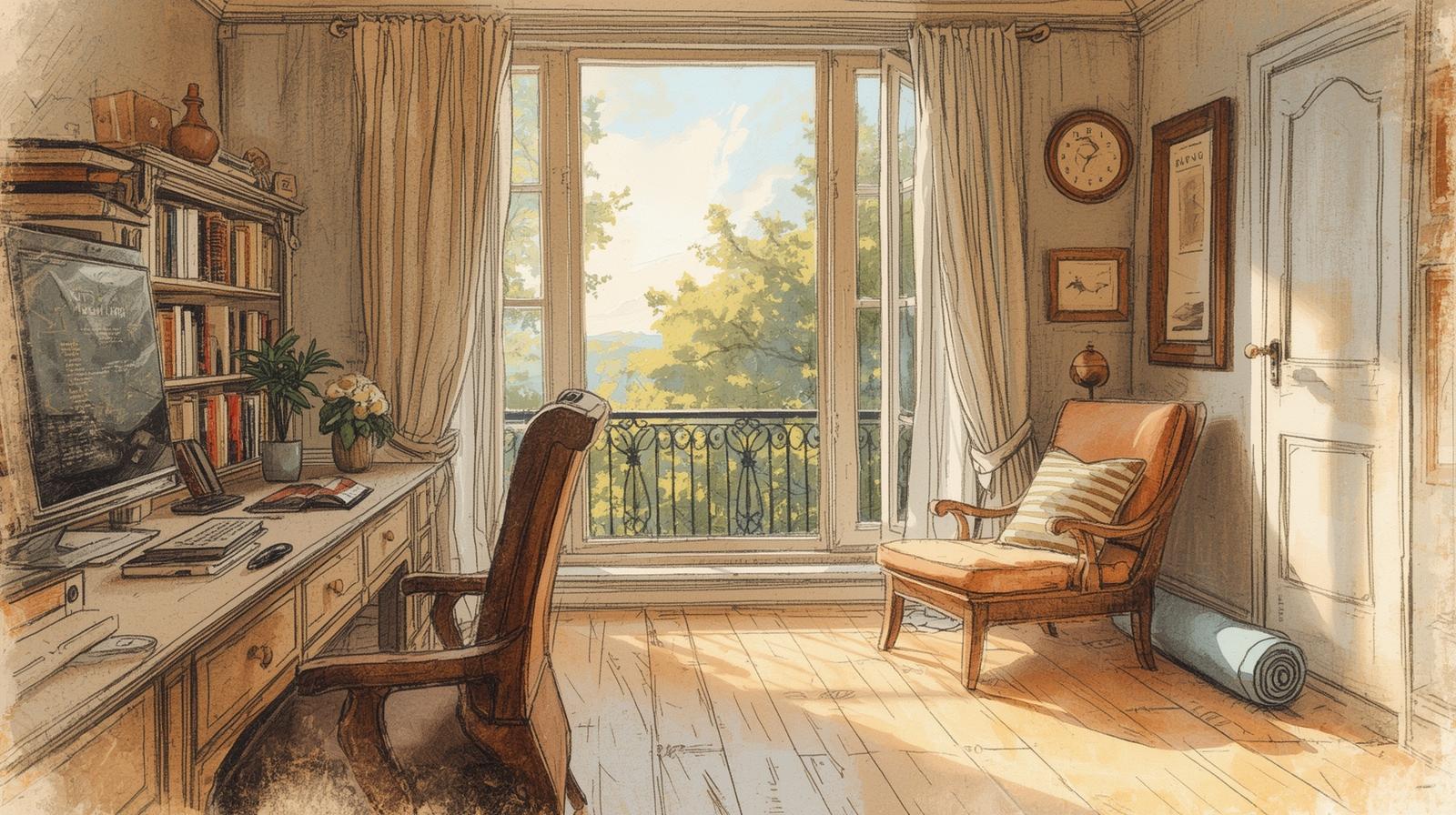
Our environments are not neutral. Every space we inhabit carries emotional weight and sensory cues that shape how we feel. If your home is filled with reminders of work — an open laptop on the kitchen table, piles of papers in the living room, notifications chiming from your phone — it will be almost impossible to fully enter relax mode. Your nervous system interprets these visual cues as signals that tasks are unfinished, keeping you tethered to work mode.
Creating a transition-friendly environment is an act of self-love. It does not require a complete redesign of your home; even small adjustments can have powerful effects. If you work from home, designate a specific spot for your desk and avoid letting it spill into spaces where you rest. At the end of the day, close your laptop, put it away, and if possible, leave the room entirely. These physical boundaries reinforce mental ones, teaching your brain that work has a beginning and an end.
Lighting also plays a significant role. Bright, cool-toned light mimics daytime and keeps the brain alert, while warm, softer lighting encourages relaxation. Consider dimming the lights in the evening or lighting a candle as a signal that the workday has closed. Scents can be equally powerful. Lavender, chamomile, sandalwood, and bergamot are all known to have calming effects on the nervous system. Playing soothing music or natural soundscapes further layers the sensory experience, creating an environment that feels safe and inviting.
Your environment should become a gentle ally in your transition. When you walk through the door, change into clothes that feel comfortable. Clear away clutter, even if only in the space where you spend your evenings. By surrounding yourself with cues of calm, you allow your body to receive the message: this is a place of restoration, not work.
Evening rituals: Extending the transition into deep recovery
Evenings are not simply leftovers of the day; they are sacred windows for renewal. The quality of your evening sets the tone for your sleep, your mood the next morning, and your overall sense of balance. If the transition from work to relax mode is the bridge, then the evening routine is the gentle path that leads you deeper into recovery.
Simple practices, when done consistently, become powerful rituals of closure. For some, reading a book in bed creates a soft landing for the mind. For others, taking a warm shower or bath washes away not just physical dirt but the energetic residue of the day. Warm water has been shown to lower cortisol and signal to the body that it is time to prepare for rest.
Some people find evening rituals in creative expression — painting, cooking a nourishing meal, or even tending to plants. These activities engage different parts of the brain than work tasks, encouraging a shift from analytical thinking into sensory, present-moment awareness. Whatever the ritual, the key is to choose activities that bring you joy without demand, presence without pressure.
Digital boundaries: Protecting Your mind from the endless scroll
Perhaps the greatest barrier to relaxation in our era is the device we carry everywhere. Smartphones are both lifelines and leashes. They keep us connected but also keep us tethered. Notifications, emails, and the endless scroll of social media all act as micro-reminders of work or comparison. The nervous system responds to each ding and buzz with a tiny surge of adrenaline, keeping us alert when we should be winding down.
Research shows that blue light emitted from screens interferes with melatonin production, the hormone that signals sleep. This means that late-night screen use does not only overstimulate the mind but also biologically delays rest. Creating digital boundaries is therefore one of the most powerful steps you can take to transition into relax mode.
Set a cutoff time for work-related communication. Decide, for example, that after 7 p.m., you will not check email. Inform colleagues or clients if necessary, framing it not as unavailability but as a commitment to balance that ultimately benefits your productivity. Consider placing your phone in another room during dinner or your evening wind-down routine.
Replacing screen time with analog activities—like reading a physical book, listening to music, or engaging in conversation—reminds your nervous system that the day is slowing. This digital detox, even if only for an hour or two before bed, creates space for calm to unfold naturally.

Sleep as the ultimate transition: Entering the deepest state of renewal
If relaxation is the bridge, then sleep is the sanctuary on the other side. No practice is more restorative to the human body than deep, high-quality sleep. And yet, for those who remain stuck in work mode, sleep is often the first casualty. Racing thoughts, restless tossing, or waking in the night to ruminate on unfinished tasks are all signs that the nervous system has not fully shifted into rest mode.
The transition into sleep should be gradual, a gentle dimming rather than a sudden switch. Creating a pre-sleep ritual trains the body to recognize the cues of bedtime. This may include lowering lights, practicing gentle stretches, or reading something calming. Some people find that repeating the same soothing action—such as making a cup of herbal tea or listening to soft music—helps signal the brain that sleep is approaching.
Importantly, sleep is not just rest for the body but active repair for the brain. During deep sleep, the brain consolidates memories, clears waste products, and restores cognitive capacity. Chronic sleep disruption has been linked to higher risks of anxiety, depression, and even long-term neurological decline. By prioritizing your transition into sleep, you are investing in not only tonight’s rest but your long-term mental health.
Sleep, then, becomes the ultimate act of transition, completing the cycle of the day. It is the profound surrender where work cannot reach you, the daily reminder that you are more than your productivity.
The long-term benefits of honoring the transition
At first, transitioning from work to relax mode may feel like effort. Rituals must be created, boundaries established, and new habits formed. But over time, these practices become natural, and the benefits accumulate in ways that ripple through every aspect of life.
Physically, your body recovers more fully. Tension dissipates, immune function strengthens, and energy is replenished. Emotionally, you find yourself more present, more patient, and more capable of enjoying the simple moments that often get overshadowed by busyness. Relationships improve as loved ones experience the gift of your undivided attention.
Professionally, paradoxically, honoring rest makes you more effective. Studies consistently show that recovery enhances creativity, problem-solving, and long-term productivity. By stepping away from work, you return with fresh perspectives and renewed energy. In this way, the transition from work mode to relax mode is not a detour from success but a foundation for it.
Most importantly, the practice of transition shifts your relationship with yourself. You begin to see that you are not a machine to be optimized but a human being who deserves restoration. Each ritual, each boundary, each moment of presence becomes a declaration of self-love. Over time, you stop measuring your worth by how much you accomplish and start honoring it by how deeply you allow yourself to live.
Rest as radical self-love
In a culture that glorifies hustle, learning to rest is a radical act. To transition from work mode to relax mode is to reclaim your humanity from the grip of endless productivity. It is to say: I am more than my tasks, more than my deadlines, more than the emails that never stop arriving. I am a being who needs restoration, joy, and presence.
When you choose to create rituals, honor your nervous system, set boundaries, and welcome sleep, you are choosing not just relaxation but life itself. You are choosing to be whole, to be present with the people you love, and to cultivate inner calm that cannot be shaken by the demands of the day.
On CareAndSelfLove.com, we believe this transition is not just about reducing stress. It is about awakening to a more balanced way of living — one where work and rest support each other, where productivity and peace coexist, and where self-love is not an afterthought but the ground upon which everything else is built.
Each evening, when you close the door on work and step into the sanctuary of calm, remember: this is not wasted time. This is sacred time. This is you, coming home to yourself.
Related posts You’ll love:
- The role of MINIMALISM in creating a calm mindset
- How to use movement to process emotions: An expert guide for healing
- How to create a picnic ritual for relaxation: A complete guide to mindful outdoor calm
- Evening gratitude meditation: How to end Your day with peace, presence, and inner calm
- Waking up without stress: Gentle alarm ideas for peaceful mornings
- If You need a drink to relax, Your calm is borrowed, not built
- If You only feel relaxed on vacation, this article is for You!

Frequently Asked Questions (FAQ about transitioning from work mode to relax mode
-
Why is it so hard to switch off after work?
The difficulty in switching off is not a personal weakness but a natural function of the brain. When you are working, your mind operates in a task-focused state fueled by stress hormones like cortisol and adrenaline. Even after you finish, your nervous system may remain in this heightened state for hours. Psychologists call this lingering effect “cognitive residue,” meaning your mind is still replaying or anticipating tasks. Without intentional rituals to mark the end of the day, the body doesn’t get the signal that it is safe to rest, making relaxation feel elusive.
-
What are the most effective ways to signal my body that work is done?
Small, repeated actions—what we call rituals—are the most effective. Changing clothes after work, shutting down your computer, taking a short walk, or lighting a candle can all serve as powerful signals. These sensory cues—sight, sound, smell, touch—bypass the overthinking mind and directly tell the nervous system: “The workday is finished.” Over time, your brain begins to associate these actions with safety and calm, making the transition smoother and faster.
-
How can I stop thinking about work at night?
Rumination is one of the biggest obstacles to evening calm. Journaling before bed can help externalize lingering thoughts so your brain doesn’t have to keep replaying them. Practicing mindfulness also trains the mind to notice thoughts without chasing them. Breathwork is particularly effective; when you focus on slow, steady breathing, the nervous system shifts away from stress mode, and the racing thoughts begin to lose their grip. Remember, the goal isn’t to force your mind blank but to create enough distance so work thoughts pass naturally.
-
Does exercise help with the transition into relax mode?
Yes—movement acts like a reset button for the nervous system. Stress accumulates physically in the body, tightening muscles and elevating heart rate. Gentle exercise such as yoga, stretching, or walking helps discharge excess energy and complete the stress response cycle. It doesn’t have to be strenuous; even a few minutes of mindful movement tells your body the workday is truly over and helps create a bridge into calm.
-
How do digital devices affect my ability to relax?
Digital devices are one of the biggest barriers to relaxation. Notifications and emails act as micro-reminders of work, keeping your mind tied to tasks. On top of that, the blue light from screens interferes with melatonin production, delaying sleep. Setting digital boundaries—such as turning off work emails after a certain hour or leaving your phone in another room before bed—helps protect your transition into relax mode. Instead, try replacing late-night scrolling with analog activities like reading, listening to music.
-
Can better sleep really depend on how I transition after work?
Absolutely. Sleep is the body’s deepest form of recovery, but it depends heavily on how well you wind down beforehand. If your nervous system is still in “work mode” by bedtime, you’re more likely to experience restless nights or shallow sleep. By creating an intentional evening transition—through breathwork, environment changes, or calming rituals—you prepare both mind and body for restorative rest. Over time, this improves not only your sleep quality but also your mood, energy, and resilience during the day.
-
Is relaxing after work really productive?
Yes, though not in the conventional sense. Rest is what makes sustainable productivity possible. Research shows that downtime allows the brain to consolidate memory, process emotions, and restore energy for creative problem-solving. Far from being wasted time, relaxation is the foundation of long-term focus, innovation, and emotional well-being. By prioritizing the transition into calm, you actually enhance your effectiveness in both work and personal life.
Sources and inspirations
- American Psychological Association. (2019). Stress in America: Stress and Current Events. APA.
- Brosschot, J. F., Gerin, W., & Thayer, J. F. (2006). The perseverative cognition hypothesis: A review of worry, prolonged stress-related physiological activation, and health. Journal of Psychosomatic Research.
- Craig, A. D. (2002). How do you feel? Interoception: The sense of the physiological condition of the body. Nature Reviews Neuroscience.
- Davidson, R. J., & McEwen, B. S. (2012). Social influences on neuroplasticity: Stress and interventions to promote well-being. Nature Neuroscience.
- Goleman, D. (2013). Focus: The Hidden Driver of Excellence. Harper.
- Kabat-Zinn, J. (2013). Full Catastrophe Living: Using the Wisdom of Your Body and Mind to Face Stress, Pain, and Illness. Bantam Books.
- Porges, S. W. (2011). The Polyvagal Theory: Neurophysiological Foundations of Emotions, Attachment, Communication, and Self-Regulation. W. W. Norton & Company.
- Sapolsky, R. M. (2004). Why Zebras Don’t Get Ulcers: The Acclaimed Guide to Stress, Stress-Related Diseases, and Coping. Holt Paperbacks.
- Siegel, D. J. (2012). The Developing Mind: How Relationships and the Brain Interact to Shape Who We Are. Guilford Press.
- Walker, M. (2017). Why We Sleep: Unlocking the Power of Sleep and Dreams. Scribner.



Leave a Reply