Table of Contents
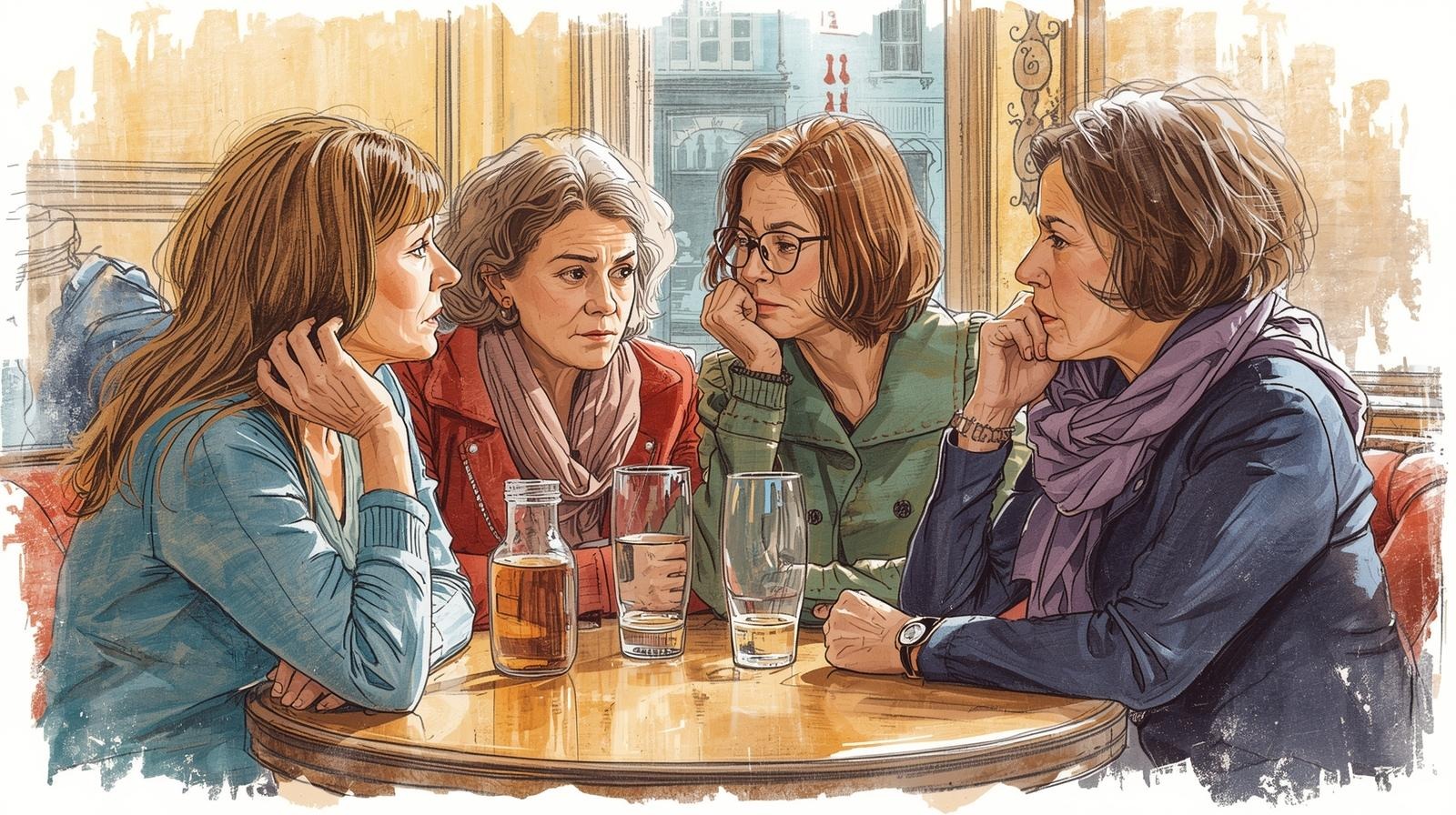
At some point in midlife, many women notice a strange shift. You still care about people. You still love your friends. You still show up, perform, deliver, manage, soothe, solve, host, lead, parent, partner, caretake, smile.
And yet… you stop reaching out.
Not dramatically. Not with a goodbye speech. More like a slow lowering of the volume on your own needs, until your inner world becomes something you carry alone. You tell yourself it’s temporary. You tell yourself it’s maturity. You tell yourself you’re busy. You tell yourself everyone else is busy too. You tell yourself you’ll text tomorrow.
Tomorrow becomes weeks.
Weeks become seasons.
Then one day you realize: the people you would call in a crisis feel further away than they used to. It isn’t necessarily conflict. It isn’t necessarily betrayal. It’s silence. Your silence, their silence, the kind of drift that happens when life becomes a tight hallway and connection starts to feel like furniture you can’t fit through the door.
This is what I mean by the midlife silence epidemic. It’s not only loneliness, although loneliness is part of it. It’s the growing, culturally reinforced pattern of women going quiet precisely when they need relational support the most.
Public health voices have started naming loneliness and social isolation as serious societal and health concerns, not just personal sadness. The World Health Organization’s Commission on Social Connection describes loneliness and social isolation as widespread and consequential for health and society. The U.S. Surgeon General’s advisory similarly frames social connection as a protective factor with broad health implications.
But here’s the part that often gets missed in big reports and headlines: midlife silence does not always look like “I have no one.” It can look like “I have people, but I don’t want to bother them.” It can look like competence that has become a cage.
If you’ve been telling yourself you’re fine, even while your chest feels heavy, this article is for you.
What “midlife silence” actually is
Midlife silence is not simply having fewer friends. It’s not even always about being lonely. It’s a change in your internal reach out system.
You want contact, but contact feels expensive.
You have people, but asking feels risky.
You miss closeness, but you don’t want to perform the whole backstory of your life just to earn it.
Midlife silence is a nervous system pattern as much as it is a social pattern. It often develops when life demands increase and emotional bandwidth gets thinner. Reaching out begins to feel like opening a door you might not have the energy to keep open.
Many women describe a loop that quietly repeats:
Need → hesitation → delay → “later” → drift → shame → more hesitation
The loop is not proof you’re broken. It’s proof you’ve adapted to pressure.
The tragedy is that the adaptation meant to protect you often ends up isolating you.
Why midlife is a perfect storm for going quiet
Midlife commonly stacks roles in a way that looks normal on the outside and feels relentless on the inside. Work responsibility often peaks. Parenting changes, sometimes into the emotionally complex years of adolescence or launching. Aging parents may need care. Partnerships shift. Bodies shift. Identity shifts.
When researchers look at loneliness transitions internationally, they find that major family and household changes such as divorce and widowhood are strong predictors of moving into loneliness. This matters because it shows that loneliness is not only about personality or “trying harder.” It’s often about life structure.
Now add a layer many women minimize: the midlife body.
Perimenopause and menopause can bring sleep disruption, mood volatility, anxiety spikes, cognitive fog, and a sense of internal unpredictability. A systematic review and meta analysis found higher risk for depressive symptoms and diagnoses during perimenopause compared with premenopause. When your inner weather is unstable, social contact can feel like one more variable.
Then add stigma. Many women carry a silent rule: do not be too needy, too emotional, too messy, too much. That rule can be particularly loud in midlife, because you’re expected to be the stable one.
So the storm becomes:
More responsibility + less rest + more transition + more stigma + less time for repair + higher vulnerability cost
Silence starts to make sense.
The paradox: Being surrounded and still feeling alone
Midlife silence is confusing because it can exist alongside constant interaction. Meetings, family logistics, school schedules, caregiving appointments, group chats, client calls, texts, and planning.
You are “around people” all the time.
But you may not feel held.
A useful distinction is this:
Social exposure is not the same as social nourishment.
Your brain can be busy with humans while your body still feels alone.
This is part of why public health framing matters. The Surgeon General advisory emphasizes that social connection is protective and that lack of connection has broad negative outcomes. The point is not to scare you. The point is to validate what you already know in your bones: connection is not extra. It’s foundational.
The most common midlife thought that fuels silence: “I don’t want to bother anyone”
Many women don’t avoid reaching out because they don’t care.
- They avoid it because they care too much about being “acceptable.”
- They imagine the other person reading their message and thinking, “Ugh, not this.”
- They imagine a pity response.
- They imagine rejection.
- They imagine being perceived as needy.
So they choose dignity over risk, except it’s not dignity. It’s self abandonment that looks like strength.
This “burden story” often sounds practical, but it frequently grows out of shame, depletion, and years of being rewarded for emotional self containment.
It can also be reinforced by real access barriers to support. For example, a KFF analysis reported that among women who felt they needed mental health care, some could not access appointments, and many did not try to seek care even though they said they needed it. When systems are hard to access, the internal story becomes, “Help isn’t available anyway,” and silence becomes the default.
The burden story usually hides a more honest truth:
I don’t want to be a burden because I don’t know if I’m allowed to have needs.

A nonstandard lens: The reach out threshold
Instead of asking, “Why am I like this?” try asking, “What’s my reach out threshold right now?”
A reach out threshold is the amount of internal friction you must overcome to contact someone. Midlife often raises that threshold, even for women who used to be socially confident.
Why?
Because midlife increases four costs at the same time: energy cost, vulnerability cost, time cost, identity cost.
Here is a simple model you can use as a mirror.
Table: The reach out cost equation
| Part of the cost | What it feels like in real life | Why it rises in midlife |
|---|---|---|
| Energy cost | I’m too tired to talk, explain, or follow up | sleep disruption, role overload, emotional labor, hormonal changes |
| Vulnerability cost | What if I’m dismissed or judged | accumulated disappointments, stigma around “needing,” fear of rejection |
| Time cost | I don’t have space for a whole conversation | schedules tighten, caregiving demands increase |
| Identity cost | Reaching out conflicts with who I think I should be | “strong woman” conditioning, caretaker identity, competence as armor |
If you recognize yourself here, the goal is not to force yourself into bigger social effort. The goal is to lower the cost.
The friendship container problem: Midlife removes automatic closeness
A quieter reason women don’t reach out is that friendship infrastructure changes.
Earlier life has built in containers: school, university, early career workplaces, shared housing, frequent social overlap. Midlife often removes those containers and replaces them with logistics.
Friendship starts requiring intentional design.
Research tracking friendship contact across the lifespan and cohorts shows patterns of change in frequency of contact with friends across ages and over time. You don’t need to memorize findings to feel the truth: without repeated contact, even good bonds can drift.
And when drift happens, a second barrier appears: repair awkwardness.
Many women don’t reach out because they think they need a perfect reentry story. They feel they must explain the time gap, apologize, justify, and show up polished.
So they don’t show up at all.
Silence feels easier than vulnerability plus awkwardness.
When menopause meets social life: The bandwidth squeeze
Midlife connection is not only psychological. It can be physical.
When sleep quality drops, anxiety rises, or mood becomes more reactive, the social world can start feeling louder and less safe. Perimenopause is associated with higher risk of depressive symptoms compared to premenopause in meta analytic evidence.
This matters because depressed mood and anxiety don’t just create sadness. They often create withdrawal. The world feels less rewarding. Communication feels harder. Your brain tells you it’s safer to conserve energy.
So you isolate, not because you don’t want people, but because your body is trying to survive.
Midlife silence is often biology meeting culture.
Caregiving and the silence spiral
Caregiving is one of the most common midlife realities and one of the most isolating.
When you are caring for others, your schedule becomes less flexible and your nervous system stays on alert. Research examining caregiver burden and depressive symptoms underscores that caregiver burden is a risk factor for depressive symptoms, and newer work uses network analysis to explore how specific burden components relate to depressive symptoms.
Even if you are not clinically depressed, the daily strain can narrow your social capacity.
A silence spiral often forms:
Responsibility → fatigue → reduced outreach → fewer micro moments of support → more fatigue → more withdrawal
In that spiral, “I’ll reach out when things calm down” becomes a promise that never arrives, because caregiving rarely “calms down” on its own.
Digital connection can become a mirage
Many women are constantly in contact online, yet still emotionally alone. That can be especially true in midlife because digital contact is efficient and low friction, but it can also be shallow.
Research has examined associations between social media use and loneliness and how motives for using social media may relate to loneliness outcomes. The important takeaway is not “delete your apps.” It’s that you cannot assume scrolling replaces being emotionally met.
Your nervous system recognizes the difference between:
I saw your post
and
I heard your voice and felt your presence
Midlife silence can deepen when digital interaction replaces real time connection, especially when you’re already depleted and real time contact feels demanding.
Stigma turns silence into secrecy
Silence is not always about time. Sometimes it’s about fear.
Fear of being judged. Fear of being labeled unstable. Fear of confidentiality breaches. Fear of being “that woman who is always struggling.”
A qualitative study of low income, midlife Black and Latina women explored barriers to mental health treatment and highlighted themes related to stigma and concerns that keep women from initiating or continuing care. While that study is about treatment, the emotional mechanics apply broadly: when a person expects shame, they choose secrecy.
Secrecy feels protective.
Secrecy also starves you.
The “social health” reframe: It’s not just mental, it’s structural
A powerful shift happens when you stop viewing midlife silence as a personal flaw and start viewing it as a social health issue.
The WHO Commission on Social Connection calls for action to strengthen social connection and frames it as a serious and under recognized determinant of health. A Lancet Public Health commentary around that report describes social health as a neglected pillar, reinforcing the idea that connection deserves the same seriousness as physical and mental health.
This matters because self blame is gasoline for silence.
When you think your isolation is your fault, you withdraw more.
When you recognize your isolation as a predictable outcome of modern midlife structures, you can design against it without shame.
Table: The silence loop diagnostic
| Silence driver | What it sounds like inside your head | The hidden need underneath | The lowest friction next move |
|---|---|---|---|
| Role overload | I cannot add one more thing | relief and containment | send a 20 second voice note that does not require an immediate reply |
| Burden story | I’ll be too much | permission to be human | ask for one specific form of support, not your whole life story |
| Drift awkwardness | It’s been too long, it would be weird | repair without self punishment | send a reconnection message that names time passed without apologizing |
| Body changes | I feel unlike myself, I can’t predict my mood | gentleness and pacing | choose connection that fits your nervous system, short walk, daylight call |
| Caregiving strain | If I stop, everything collapses | shared load and witnessing | ask one person for a practical micro help or a check in window |
| Stigma and secrecy | If they knew, they would judge me | safety and dignity | choose the one person who has earned your truth |
If one row made you exhale, that’s information. Your nervous system is telling you where the cost is highest.
Why “just reach out” is bad advice
“Just reach out” is like telling someone with insomnia to “just sleep.”
It ignores the threshold.
What helps is lowering the threshold, not shaming yourself for having one.
That means making outreach smaller, safer, clearer, and more bounded.
It also means understanding what social connection actually does for health. The evidence base described in Holt Lunstad’s work in World Psychiatry emphasizes that social connection is linked with mental and physical health outcomes. You don’t have to turn yourself into an extrovert. You only need enough consistent connection to buffer stress and keep you out of the isolation ditch.
The low friction reach out method
This is designed for tired women, private women, high functioning women, the women who can hold everyone else but feel clumsy asking to be held.
The aim is not a dramatic confession. The aim is a relational micro dose.
Think of it like this:
Small consistent contact beats rare perfect contact.
Step one: Send a signal, not a demand
A demand triggers pressure. A signal opens a door.
A signal sounds like: “You came to mind.” “I miss you.” “No need to reply fast.” “Just wanted to say hello.”
A demand sounds like: “We need to talk.” “I’m not okay.” “Why haven’t you checked on me?”
You are not wrong for wanting deep care. The point is sequencing. When you have been quiet for a while, signals rebuild safety faster than demands.
Step two: Name one true sentence
Midlife silence often includes an internal belief that you must explain everything to deserve support.
You don’t.
One true sentence is enough.
One true sentence might be: “This season has been heavier than I expected.” Or: “I’ve been quieter than usual and I miss feeling close.” Or: “My nervous system has been on overload.”
Truth, one sentence, no performance.

Step three: Add permission and a boundary
Boundaries lower the vulnerability cost for both people.
Permission can be: “No pressure to respond quickly.” Or: “I don’t need advice, I just wanted to connect.” Or: “Even a short check in would mean a lot.”
A boundary is not cold. It’s clarity.
Step four: Offer a small container
Midlife connection often fails because it’s too undefined.
A container is short and clear: ten minutes, a walk, a coffee, a voice note exchange, a Sunday check in.
Containers reduce the time cost.
Table: Reach out messages You can actually send
| Situation | Message that is honest without being heavy | Why it lowers the threshold |
|---|---|---|
| Reconnecting after months | Hey, I realized it’s been a while. I miss you. If you’re open to it, I’d love a short catch up soon. | names the gap without shame and offers a small container |
| When you fear being a burden | I’m having a heavier week. I don’t need fixing. I’d just love a gentle check in if you have space. | reduces the other person’s fear of emotional labor |
| When you only have small energy | No need to reply fast. I just wanted you to know I’m thinking of you and I’m glad you’re in my life. | connection without obligation |
| When menopause or mood shifts are involved | My body and mood have been unpredictable lately and I’ve been withdrawing. If you’re free for a short walk or call this week, I’d really appreciate it. | normalizes withdrawal and asks for a simple form of presence |
| When you want truth but fear judgment | Can I be a little real for a minute? I’ve been quieter than usual and I miss feeling close. | asks consent and increases relational safety |
Use these as templates, not scripts. Your voice matters. The goal is to make contact feel doable.
Receiving without apologizing: The skill that breaks silence
Many women can reach out, but then sabotage the support by minimizing it.
They apologize for having feelings.
They shrink their needs.
They rush to reassure the other person that it’s not a big deal.
This keeps the connection surface level, and surface level connection does not feed the nervous system.
Try one sentence that changes the pattern:
Thank you for listening. It means more than you think.
No apology. No justification. No shrinking.
Just truth.
What if they don’t respond?
This is the fear behind so much midlife silence: the moment I reach out, I will discover I don’t matter.
Non response hurts. It can also mean many things that have nothing to do with your worth.
Still, you need a dignity protecting approach.
Let the sequence be:
Ouch → reality check → self compassion → next move
- Ouch: “That stung.”
- Reality check: “Their bandwidth is not my value.”
- Self compassion: “Reaching out was brave.”
- Next move: “I try one more person, or I rest and try tomorrow.”
- You are building a system, not chasing one perfect response.
Why midlife silence is often a repair deficit, not a lack of love
A nonconventional truth: midlife often holds a backlog of unprocessed grief.
Not only grief from death, but grief from change.
- The friendship that faded without closure.
- The version of you that existed before burnout.The marriage that shifted.
- The career that didn’t become what you hoped.
- The body that no longer feels predictable.
- The family role that became heavier.
In research on loneliness transitions, family and household changes are highlighted as important predictors of loneliness onset. Behind many of these changes is grief, and grief without witnessing often turns into withdrawal.
Silence is sometimes grief with no language.
If you can name that, even privately, the silence loosens.
Designing a personal social safety net
You don’t need a massive friend group. You need a system that doesn’t collapse if one person is busy.
Think of it as a personal social safety net, built from different types of support.
- One connection for laughter.
- One connection for truth.
- One connection for practical help.
- One connection for belonging, often a group, class, volunteering, community space.
This matters because when one person is your only outlet, the burden story gets louder. When support is distributed, reaching out becomes less scary.
Research comparing midlife loneliness across contexts suggests broader structural differences matter, and it also reminds us that personal design happens inside those structures.
You are not failing at friendship. You are living in a life stage that requires different architecture.
Table: Connection micro doses that fit real midlife life
| Micro dose | Time required | What it gives your nervous system | Why it works in midlife |
|---|---|---|---|
| Voice note check in | 30 to 60 seconds | warmth, tone, human presence | low time cost, high emotional signal |
| Walk and talk | 15 to 30 minutes | co regulation, movement, reduced intensity | movement lowers stress and makes talking easier |
| Shared errand call | 10 minutes | companionship without performance | reduces the sense that connection must be an “event” |
| Weekly anchor text | 1 minute | consistency | predictability lowers outreach anxiety |
| Group container | 60 minutes weekly or biweekly | belonging, repetition, momentum | repeated contact rebuilds friendship infrastructure |
If your brain says, “This sounds too small to matter,” that’s the perfection reflex. Midlife silence rarely breaks with huge gestures. It breaks with consistent, low friction contact.
The mental health layer: When silence becomes risk
This article is supportive and educational, not a substitute for professional care. If you are experiencing persistent hopelessness, inability to function, or thoughts of self harm, please seek immediate professional help in your location.
It also helps to recognize that many women report needing mental health services and still do not receive them, sometimes due to access constraints and sometimes because they do not attempt to seek care even when they feel they need it. Silence can be both a symptom and a barrier.
You deserve support that fits your life and your nervous system.
A short mindful practice for today: The two minute connection audit
Set a timer for two minutes. Write without editing.
Start with: “When I imagine reaching out, I’m afraid that…”
Then continue with: “Under that fear, what I actually need is…”
Most women are surprised by what appears. The need is often not drama. It’s not rescuing. It’s not constant attention.
- It’s witnessing.
- It’s warmth.
- It’s a place to exhale.
- It’s the relief of not carrying everything alone.
That need is not weakness. It’s human.
The smallest reach out is still a reach out
If you’ve been silent, your next move does not have to be perfect. It only has to be real.
- You are allowed to be a woman with needs.
- You are allowed to be held, not only to hold.
- You are allowed to reach out before you collapse.
In a culture that rewards women for coping quietly, reaching out is a form of self respect.
Connection is not a luxury. It’s health!
Related posts You’ll love
- The reach out reset: A 14 day practice for Women to break the midlife silence epidemic with FREE PDF
- Futurelessness: The anxiety of plans that don’t stick, and the quiet art of rebuilding a future You can believe in
- The libido anxiety loop: How fear hijacks desire and how to break the cycle without forcing Yourself
- Your brain learns to quit: Why repeated effort with no results trains helplessness, and how to rebuild change that actually sticks
- Menopause panic confusion: When Your body feels like an alarm
- A two week crash prevention reset for Women who feel one text away from losing it
- When “aging gracefully” becomes a silent demand: The cultural pressure to grow old quietly
- How to transform loneliness into self-discovery
- How to stop waiting for Your life to begin: 12 evidence-based exercises to reconnect with the present and feel more alive now, FREE PDF
- Why does it feel like my real life hasn’t started Yet? The psychology of waiting for a version of life that never arrives

FAQ: The midlife silence epidemic
-
Why do women in midlife stop reaching out to friends?
Many women stop reaching out in midlife because the emotional “cost” of connection rises while the time and energy available for connection shrinks. Midlife often includes peak role load: work pressure, parenting transitions, caregiving for parents, relationship changes, and a body that may be going through perimenopause or menopause. When you are carrying a lot, reaching out can feel like one more task, one more explanation, one more chance to be misunderstood. Silence can become a self protection strategy, even when you deeply crave closeness.
-
Is midlife loneliness in women the same as being alone?
Not necessarily. Midlife loneliness in women often happens even when you have people around you. You can have a partner, coworkers, family, group chats, and still feel emotionally unseen. Loneliness is less about the number of contacts and more about the quality of felt connection, the sense of being safe, known, and supported. Many women experience “social exposure without social nourishment,” meaning they interact constantly but rarely feel genuinely met.
-
What are the most common reasons women don’t reach out in midlife?
The most common reasons include feeling like a burden, shame about needing support, exhaustion, lack of time, fear of rejection, awkwardness after drifting, and the belief that everyone else is too busy. Some women also carry a strong “competence identity,” where asking for connection feels like admitting weakness. In addition, menopause related symptoms such as sleep disruption, anxiety, and mood changes can reduce social energy and increase withdrawal, making reaching out feel harder than it used to.
-
How does menopause or perimenopause affect social connection and reaching out?
Hormonal shifts can influence sleep, mood, stress sensitivity, anxiety, and emotional bandwidth. When your nervous system feels less stable, socializing can feel louder, more demanding, or less rewarding, so withdrawal becomes more likely. Many women also feel pressure to “just cope” because menopause is treated as something you should handle quietly. If you notice you’re isolating during perimenopause or menopause, it doesn’t mean your personality changed. It often means your body is asking for gentler, lower effort forms of connection.
-
What is the “midlife silence epidemic” and why is it increasing?
The midlife silence epidemic describes a growing pattern where women become quieter socially in midlife, even when they want connection. It increases because modern life is structured in ways that reduce repeat contact and community containers. Friendships require more intentional design once work schedules tighten, caregiving increases, and daily life becomes more logistical. Digital contact can also create the illusion of connection while reducing real time emotional closeness. Over time, small gaps become larger gaps, and silence becomes the default.
-
How can I reach out without feeling needy or embarrassing?
The goal is to lower the pressure and increase clarity. Start with a “signal” rather than a heavy emotional dump. A simple message like, “You came to mind. No pressure to reply fast. I’d love a short catch up when you have space,” is warm, specific, and not overwhelming. You can also name what you need in one sentence and add a boundary: “I don’t need advice, I just want to feel connected.” This reduces fear on both sides and makes reaching out feel safer.
-
What should I text a friend after months of silence?
A good reconnection text is short, warm, and doesn’t punish you for the time gap. For example: “Hey, I realized it’s been a while. I miss you. If you’re open to it, I’d love to catch up soon, even briefly.” This works because it names the drift without over apologizing and invites a small container of connection. The biggest mistake is waiting until you have the perfect explanation. You don’t need a full backstory to deserve reconnection.
-
What if I reach out and they don’t respond?
Non response can hurt, but it doesn’t automatically mean you don’t matter. People miss messages, feel overwhelmed, struggle with their own mental health, or avoid intimacy for reasons unrelated to you. If you don’t hear back, give it a little time and consider one gentle follow up that doesn’t shame them. If there’s still no response, treat it as information about capacity, not your worth. Then redirect your energy toward someone safer or toward building additional support, so your emotional world isn’t dependent on one person.
-
How do I rebuild female friendships in midlife when life is busy?
Rebuilding friendships in midlife works best with small consistency rather than big plans. Choose connection “micro doses” that match real life: a 15 minute walk, a short call while running an errand, a weekly voice note, or a monthly coffee that’s scheduled in advance. Midlife friendships often fade because there are fewer automatic containers, so you create one. The most effective approach is predictable, low friction, repeatable contact that doesn’t require perfect timing or high energy.
-
Can social media make midlife loneliness worse?
It can, especially if it replaces deeper connection. Social media offers constant contact cues, but it doesn’t always provide nervous system level closeness. You might feel socially “busy” while still feeling emotionally alone. This is particularly common in midlife because scrolling is efficient when you’re exhausted, while real conversations can feel demanding. If you notice you’re more connected online but lonelier inside, consider trading some digital time for one real conversation a week. You don’t have to quit social media, you just need balance.
-
How do caregiving and emotional labor contribute to isolation in midlife?
Caregiving and emotional labor reduce flexibility, increase stress load, and make social time feel less accessible. When you are the person everyone relies on, you may feel guilty taking time for yourself, even when you desperately need support. Over time, you stop reaching out because you’re saving energy for responsibilities, and the silence grows. A helpful shift is to treat connection as part of your health plan, not a reward you earn after you finish caring for everyone else. Even small support can reduce the sense of carrying everything alone.
-
When should I seek professional support for loneliness or withdrawal?
If withdrawal is persistent, paired with hopelessness, major sleep disruption, panic, depressive symptoms, or difficulty functioning, professional support can be an important next step. Also consider reaching out for help if your isolation feels compulsive, like you want connection but feel unable to initiate it. Therapy, group support, or coaching can help reduce shame and teach practical relational tools. You deserve support that fits your stage of life. Midlife is not supposed to be a decade of silent suffering, even if you’ve been taught to cope quietly.
Sources and inspirations
- Augustsson, E., Keller Celeste, R., Fors, S., Rehnberg, J., Lennartsson, C., & Agahi, N. (2025). Friends and trends: Friendship across life phases and cohorts. Archives of Gerontology and Geriatrics.
- Badawy, Y., Spector, A., Li, Z., & Desai, R. (2024). The risk of depression in the menopausal stages: A systematic review and meta analysis. Journal of Affective Disorders.
- Bonsaksen, T., Ruffolo, M., Price, D., Leung, J., Thygesen, H., Lamph, G., Kabelenga, I., & Geirdal, A. Ø. (2023). Associations between social media use and loneliness in a cross national population: Do motives for social media use matter? Health Psychology and Behavioral Medicine.
- Department for Digital, Culture, Media and Sport. (2022). Mental health and loneliness: The relationship across life stages. UK Government.
- Holt Lunstad, J. (2024). Social connection as a critical factor for mental and physical health: Evidence, trends, challenges, and future implications. World Psychiatry.
- Infurna, F. J., Dey, N. E. Y., Gonzalez Avilés, T., Grimm, K. J., Lachman, M. E., & Gerstorf, D. (2024). Loneliness in midlife: Historical increases and elevated levels in the United States compared with Europe. American Psychologist.
- Kaiser Family Foundation. (2022). Large shares of women report needing mental health services but many don’t get them.
- Office of the Surgeon General. (2023). Our epidemic of loneliness and isolation: The U.S. Surgeon General’s advisory on the healing effects of social connection and community. U.S. Department of Health and Human Services.
- Sheftel, M. G., Margolis, R., & Verdery, A. M. (2023). Life events and loneliness transitions among middle aged and older adults around the world. The Journals of Gerontology: Series B.
- Tabi, S., Myles, A., Merceir, R., Ore Onitolo, D., Devlin, A., Fisher, S., & Morrison, M. F. (2025). “You got to keep it secret”: Barriers to mental health treatment among low income midlife women: A qualitative study. Community Mental Health Journal.
- World Health Organization. (2025). From loneliness to social connection: Charting a path to healthier societies (WHO Commission on Social Connection flagship report).
- World Health Organization. (2025). Report of the WHO Commission on Social Connection.
- Wrede, N., Töpfer, N. F., Wilz, G., & Pfeiffer, K. (2025). Decomposing the association between caregiver burden and depressive symptoms in family caregivers of older adults: A network analysis. Journal of Affective Disorders.




Leave a Reply